Introduction
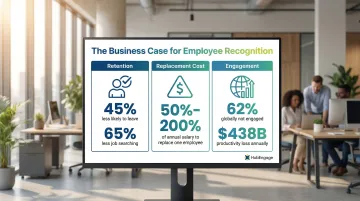
Most employees don't feel recognized at work—and the cost is staggering. According to Gallup's State of the Global Workplace 2025 Report, 62% of employees globally are not engaged, with lost productivity costing the global economy $438 billion annually. Replacing an employee typically costs between 50% to 200% of their annual salary, making retention a critical financial priority for every organization.
Recognition directly moves the needle on retention: well-recognized employees are 45% less likely to leave their organizations within two years, and the most effective programs combine everyday gestures with structured rewards.
The challenge for HR and engagement leaders is building programs that reach every employee — from the office to the frontline — through their preferred channel.
This article covers 24 recognition ideas and rewards — organized from low-cost daily practices to structured formal programs — so you can match the right approach to your workforce and budget.
Key Takeaways
- Recognition drives retention: Well-recognized employees are 45% less likely to leave within two years
- Effective recognition must be timely, specific, and personal—generic praise has minimal impact
- The best programs combine peer-to-peer, top-down, monetary, and experiential recognition rather than relying on a single type
- Traditional recognition programs leave out frontline and deskless workers—80% of the global workforce
- Reaching every employee requires multi-channel delivery: mobile apps, SMS, digital displays, and email
Why Employee Recognition Matters
Recognition directly impacts your bottom line through three critical pathways: retention, productivity, and employer brand.
Retention and Turnover Prevention
Gallup and Workhuman's longitudinal research shows that well-recognized employees are 45% less likely to have turned over after two years. Employees currently receiving high-quality recognition are 65% less likely to be actively job searching. With replacement costs ranging from 50% to 200% of annual salary, recognition is a direct investment in workforce stability.
Productivity and Performance Amplification
Recognition reinforces the specific behaviors organizations want repeated—not just rewarding outcomes, but acknowledging effort, collaboration, and values alignment. O.C. Tanner's 2023 Global Culture Report found that integrated recognition increases the odds of "Great work" by 1,181% and "High engagement" by 784%. When employees see specific contributions acknowledged publicly, that behavior spreads — others take notice and follow suit.
Employer Brand and Talent Attraction
Recognition strengthens your employer brand, making your company more attractive to top candidates. Research from O.C. Tanner shows that when recognition is core to company culture, candidates are 2x more likely to accept a job offer. This matters most in industries where recruiting costs compound fast:
- Healthcare — high burnout rates drive constant backfill cycles
- Hospitality and retail — seasonal turnover inflates annual recruiting spend
- Manufacturing — skilled worker shortages make retention critical
24 Employee Recognition Ideas & Rewards
The most impactful recognition programs layer multiple types of recognition to reach employees with different preferences, roles, and work environments. No single approach works for everyone, so building a comprehensive strategy is essential.
Low-Cost & Everyday Recognition (Ideas 1–6)
These six ideas require little to no budget but have an outsized impact when done consistently and authentically. Frequency matters more than grand gestures.
1. Handwritten Thank-You Notes
Personal, memorable, and zero cost. A handwritten note from a manager or senior leader carries emotional weight that email cannot replicate. Harvard Business Review research on public sector workers found that those who received a letter reported feeling significantly more valued and recognized than those who didn't.
2. Verbal Public Shout-Outs in Team Meetings
Public acknowledgment builds visibility and team morale. Call out specific contributions during all-hands meetings or team huddles, naming the behavior and explaining why it mattered.
3. Employee Spotlights in Internal Newsletters or Intranet
Especially effective for remote or distributed workers who are otherwise "invisible." Feature employee stories, achievements, and milestones in regular communications.
4. Personalized Birthday and Work Anniversary Messages from Leadership
Automated greetings are fine, but personalized messages from senior leaders show genuine care. Mentioning a specific project or quality — rather than a generic "happy anniversary" — is what makes the difference.
5. One-on-One Recognition Calls from Senior Leaders
For frontline employees who rarely interact with leadership, a five-minute call from a VP or C-suite executive can be a genuine career highlight.
6. Digital Kudos Boards
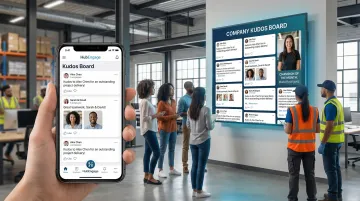
Create a visible space where anyone can post appreciation notes. Platforms like HubEngage host kudos boards across mobile apps and digital displays simultaneously, so recognition reaches frontline and deskless workers — not just desk-based staff checking email.
Monetary & Tangible Rewards (Ideas 7–12)
Monetary rewards signal organizational investment in employees and are most effective when tied to specific achievements rather than given generically.
7. Spot Bonuses for Exceptional Work
Give promptly after the achievement. O.C. Tanner's research shows that small, generic cash awards (like $5) can actually decrease engagement, whereas $50–$250 awards drive substantial lifts. Timeliness and specificity matter more than amount.
8. Gift Cards Through a Rewards Platform
Digital gift cards offer flexibility and personalization. HubEngage's partnership with Tango Card enables organizations to automate and personalize digital rewards at scale, offering domestic and global e-gift card catalogs that employees can redeem immediately.
9. Extra Paid Time Off
In an Incentive Research Foundation study, 49% of employees ranked getting a paid day off within their top three preferences. Time off respects employees' personal lives and signals trust.
10. Company Swag or Personalized Gifts
Tailor gifts to individual interests—not generic. A gift that reflects an employee's hobbies or passions shows you see them as a whole person.
11. Charitable Donations Made in the Employee's Name
For values-driven employees, a donation to a cause they care about can be more meaningful than cash. Let employees choose the charity.
12. Wellness Perks or Stipends
Gym memberships, mental health apps, or wellness days invest in long-term employee wellbeing — and they tend to generate more goodwill than equivalent cash because they feel personal, not transactional.
Peer & Team Recognition (Ideas 13–18)
Peer recognition is often more meaningful than top-down recognition alone because colleagues see day-to-day effort that managers may miss. When peers can openly celebrate each other, the entire team's sense of belonging improves.
The Visibility Gap
Nearly half (44%) of employees say they've been passed over for raises and projects because someone misconceived their skills, and 48% say bosses regularly underestimate their contributions. Peer recognition fills this gap by surfacing contributions that might otherwise go unnoticed.
13. Formal Peer-to-Peer Recognition Programs
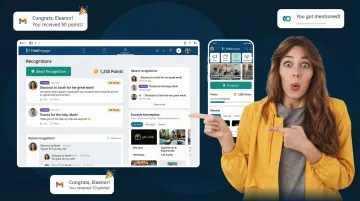
Implement a nomination or points system where employees can recognize each other. 41% of employees want recognition from peers, compared to 37% who want it from managers. Platforms like HubEngage enable peer recognition through gamified points systems, where employees earn points for recognizing colleagues and can redeem those points for rewards.
14. Dedicated Team Shout-Out Channels
Create channels on your communication platform specifically for recognition. HubEngage's architecture auto-formats recognition posts for each channel — whether that's a mobile app notification, an SMS alert, or a digital display — so no one misses a shout-out regardless of how they work.
15. Team Meals or Shared Experiences
Group rewards for collective wins reinforce teamwork. Celebrate project completions with team lunches, happy hours, or group activities.
16. Group Bonuses or Team Incentives
Tie bonuses to shared milestones — a completed product launch, a safety record, a quarter without turnover. Shared stakes create shared accountability in ways individual rewards cannot.
17. Social Media Recognition
Amplify employee achievements on the company's public channels. This builds pride and strengthens your employer brand simultaneously.
18. Team Celebration Events
Mark project completions or milestones with both in-person and virtual formats. Structuring remote participation — assigned roles, breakout rooms, shared activities — prevents it from feeling like an afterthought.
Formal & Milestone Programs (Ideas 19–24)
Informal and peer recognition keeps daily morale high, but formal programs ensure recognition happens consistently — not only when someone remembers. Milestone-based recognition is especially powerful for retention.
19. Employee of the Month/Quarter Awards
Use clear, transparent criteria to avoid favoritism. Rotate categories to recognize different types of contributions—performance, teamwork, innovation, and values alignment.
20. Annual Awards Ceremonies
Celebrate multiple categories of achievement, not just performance. Recognize values demonstration, collaboration, innovation, and leadership.
21. Service Milestone Celebrations
Celebrate meaningful tenure marks (1 year, 5 years, 10 years) with tiered rewards. Organizations that offer career achievement programs keep employees an average of two years longer. For deskless workers, the first year is critical—53% leave within their first year.
22. Professional Development Opportunities as Rewards
Courses, certifications, or conference attendance are especially motivating for career-growth-oriented employees. 87% of Millennials rate professional development as highly important, and 70% of Gen Z workers are actively developing skills weekly.
23. Leadership Fast-Tracking or Stretch Assignments
Signal trust and career investment by giving high performers challenging projects or leadership opportunities. This recognizes potential, not just past performance.
24. Recognition Walls
Physical walls in the office or digital displays on the intranet/app where achievements are permanently displayed and celebrated. HubEngage's digital signage capabilities push recognition content to TV screens across office locations and branches, keeping achievements front-and-center for every employee who walks through the door.
Best Practices for Building a Recognition Program That Works
Personalization: One Size Does Not Fit All
Recognition lands differently for different people. Some employees thrive on public acknowledgment; others find it uncomfortable. Gather employee preferences through surveys and offer choice in how recognition is delivered. Let employees opt for private thank-yous, public shout-outs, or team celebrations based on their comfort level.
Recognize Quickly and Name the Specific Behavior
Recognition given weeks after an event loses impact. Gallup recommends recognition every seven days to ensure employees know the significance of their recent achievement. The most effective recognition names the specific behavior or contribution and explains why it mattered to the team or company.
Generic recognition: "Great job on the project!"
Specific recognition: "Thank you, Sarah—the way you led the client onboarding this week showed exactly the initiative and care we value. Your extra effort made a real difference to the team and the client."
Integrate Recognition with Performance Management
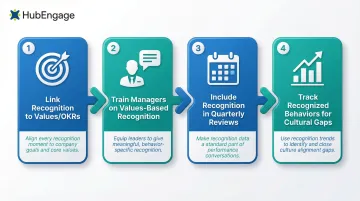
Recognition works best when it reinforces broader culture and values, not as a standalone program. Tie recognition criteria to what the organization actually cares about, and it becomes a cultural driver rather than a feel-good gesture.
Practical ways to build this alignment:
- Link recognition criteria directly to company values or OKRs
- Train managers to reference specific values when giving recognition
- Include recognition milestones in quarterly performance conversations
- Track which behaviors get recognized to identify cultural gaps
Include Frontline, Remote, and Deskless Employees
More than 2.7 billion workers (80% of the global workforce) are deskless, employed in factories, fields, stores, healthcare facilities, and construction sites. Yet 19% of frontline employees say they're never recognized by their manager, and less than half receive any recognition from leaders or peers in a given month.
Recognition programs built only for office environments miss the majority of workers in industries like healthcare, retail, and manufacturing. Mobile-first and multi-channel delivery addresses this gap. Platforms like HubEngage reach employees across mobile apps, SMS, digital displays, email, and web portals—so recognition gets through regardless of work location or device access.
Common Mistakes HR Leaders Make with Employee Recognition
Treating Recognition as a One-Time or Seasonal Event
Employee Appreciation Day is nice, but inconsistency erodes trust and the impact of any individual recognition gesture. Recognition must be ongoing, not a once-a-year checkbox.
Making Recognition Competitive or Scarce
Limiting recognition to a single winner (such as a single Employee of the Month award) can breed resentment and exclusion rather than motivation. Inclusive, contribution-based programs avoid this by:
- Celebrating multiple employees across different achievement types
- Recognizing behaviors and efforts, not just outcomes
- Removing the zero-sum dynamic that turns peers into competitors
Over-Relying on Monetary Rewards
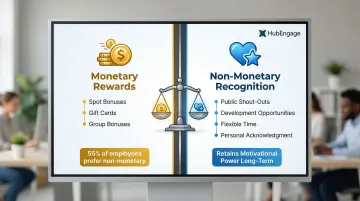
A strong majority (55%) of employees prefer non-monetary rewards. Cash bonuses matter, but they lose motivational power quickly. WorldatWork research found that cash bonuses did not highly correlate to motivation or job satisfaction once employees began treating them as expected compensation. Pairing monetary rewards with personal, timely acknowledgment — a specific shout-out, a development opportunity, or flexibility — keeps recognition meaningful long after the bonus is spent.
Conclusion
No single recognition idea works for every team. The most effective programs are layered, consistent, personal, and accessible to all employees regardless of role or location. Start with low-cost, everyday recognition to build frequency and authenticity, then add structured programs and meaningful rewards as your culture matures.
Scaling that kind of program across office, remote, and frontline teams is where the right platform makes a real difference. HubEngage's gamified employee experience platform supports peer-to-peer and manager-led recognition, automated milestone celebrations, and digital rewards through Tango Card — all delivered across mobile apps, digital displays, SMS, email, and web portals from a single system.
Request a demo to see how HubEngage helps organizations build recognition cultures that reduce turnover and improve engagement.
Frequently Asked Questions
What are examples of employee recognition rewards?
Employee recognition rewards range from monetary incentives like gift cards, spot bonuses, and extra paid time off to experiential rewards such as team events, wellness perks, and professional development opportunities. Symbolic recognition includes awards, certificates, and leadership acknowledgment that reinforces company values.
What is the best reward for employee recognition?
The "best" reward depends on the individual: some employees value flexible time off most, others prefer professional development or charitable donations. Personalized recognition outperforms generic rewards. Gather employee preferences through surveys and offer choice in how recognition is delivered.
What is the difference between formal and informal employee recognition?
Formal recognition follows a structured program with clear criteria, such as Employee of the Month or annual awards ceremonies. Informal recognition is spontaneous and day-to-day, like verbal praise, thank-you notes, or team shout-outs. Formal programs build consistency; informal recognition keeps appreciation visible between milestones.
How do rewards and recognition support employee engagement?
Recognition reinforces desired behaviors, makes employees feel valued and seen, and creates emotional connection to the organization. When employees know their contributions matter, they're more likely to stay engaged, perform at higher levels, and remain with the company long-term.
What is an example of an employee recognition statement?
"Thank you, Alex—the way you led the client onboarding this week showed exactly the initiative and care we value. Your extra effort made a real difference to the team and the client." Strong recognition statements name a specific behavior, explain why it mattered, and tie it to company values.
What is an example of an employee rewards and recognition program?
A comprehensive program might include monthly peer nominations with gift card rewards, quarterly manager-led awards tied to company values, and annual service milestone celebrations with tiered gifts. Effective programs layer peer-to-peer, top-down, monetary, and experiential recognition to reach employees with different preferences and work environments.