Introduction
Today's workforce is no longer confined to a single office floor. Employees are spread across warehouses, hospitals, retail stores, remote home offices, and field sites, working different shifts, in different time zones, often without a corporate email or desktop computer.
In that environment, traditional recognition breaks down. Manual processes, physical plaques, and one-size-fits-all rewards simply don't keep pace with how work actually happens now.
Most organizations already know recognition matters. The gap isn't in awareness—it's in execution. Recognition that's infrequent, inconsistent, and invisible to most employees fails to deliver the cultural and retention outcomes leaders expect. According to Gallup research, only one in three workers in the US strongly agrees that they received recognition or praise for doing good work in the past seven days. When half your workforce never sees or receives recognition, the program isn't just underperforming — it's actively contributing to disengagement.
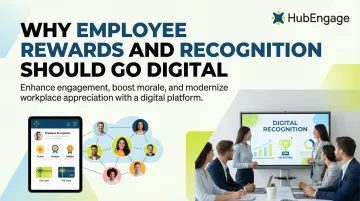
Going digital with employee rewards and recognition means making recognition faster, fairer, more personal, and measurably more effective. This article explains why that shift is no longer optional.
Key Takeaways
- Traditional recognition programs miss large portions of the workforce—especially frontline and remote employees
- Real-time digital recognition reaches every employee—regardless of location, shift, or device
- Personalization at scale becomes possible—employees choose rewards that actually motivate them
- Analytics track who's recognized, how often, and what that recognition does to retention rates
- Organizations still running manual recognition programs are losing employees to workplaces that make people feel seen
What Is Digital Employee Rewards and Recognition?
Digital employee rewards and recognition refers to the use of software platforms and automated tools to deliver, track, and manage recognition moments and reward delivery—replacing manual, paper-based, or siloed approaches that struggle to scale.
Digital recognition covers the full range of recognition moments, all managed through one system:
- Automated milestones like work anniversaries and birthdays
- Peer-to-peer recognition
- Manager-to-employee awards
- Program-wide incentives and challenges
Instead of relying on HR to remember every milestone or managers to manually track achievements, the platform handles the logistics so recognition happens reliably.
The goal is that every employee feels seen, valued, and motivated—and digital tools are what make that possible consistently across an entire organization. When recognition becomes systematic rather than sporadic, it stops being a nice-to-have and starts driving measurable business outcomes.
Key Advantages of Going Digital
Switching to digital recognition changes more than the delivery mechanism. It changes who gets recognized, how meaningfully, and whether HR can prove it's working. Here's what that looks like in practice.
Every Employee Gets Recognized — Not Just the Ones at Desks
Traditional recognition programs are designed around office-based employees. That means frontline workers, warehouse teams, field staff, and remote employees are systematically left out—often never receiving timely or visible recognition.
Digital platforms solve this by delivering recognition via mobile apps, SMS, digital signage, and email. Every employee—regardless of shift, location, or role—receives and sees recognition in real time.
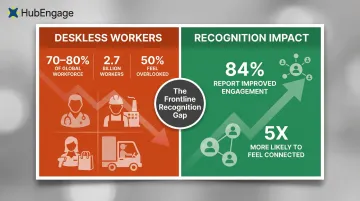
Deskless workers comprise 70-80% of the global workforce—2.7 billion workers across healthcare, manufacturing, retail, and logistics. Yet half of all global frontline workers feel their company cares more about desk workers than them, and 49% feel they have a bigger impact than office colleagues but aren't recognized for it.
Visibility matters beyond the individual moment. Peer-to-peer recognition seen company-wide builds culture, not just morale. Digital platforms create a public feed of appreciation where achievements are celebrated across the organization. 84% of companies with social recognition report measurably improved employee engagement, and workplace cultures with integrated recognition are 5x more likely to help employees feel connected.
KPIs impacted:
- Employee retention rates (especially frontline)
- Recognition program participation rates
- Employee Net Promoter Score (eNPS)
When this advantage matters most:
- Organizations with distributed, hourly, or shift-based workforces
- Companies that have scaled rapidly and can no longer rely on managers to personally track every milestone
Personalization That Makes Recognition Actually Mean Something
Generic rewards—a $25 Amazon card for everyone, a company mug—signal low effort rather than genuine appreciation. Employees increasingly recognize the difference, which undermines the program's intent.
Digital platforms enable personalization. Employees can select from a catalog of rewards that reflect their actual preferences. Automated milestone triggers ensure recognition happens at the right moment without relying on a manager remembering.
78% of employees now expect personalized rewards that align with their individual preferences. Custom awards drive results—recipients are 5x more likely to do great work and 4x more likely to be engaged.
That outcome traces back to one thing: feeling genuinely seen as an individual, not as a role to be filled. Employees who choose rewards that fit their lives—49% prefer a paid day off; 33% prefer points they can accumulate and redeem—respond with the discretionary effort and loyalty that no scripted award program produces.
KPIs impacted:
- Employee engagement scores
- Reward redemption rates
- Manager-reported team morale
- Absenteeism rates
When this advantage matters most:
- Multi-generational workforces with varying preferences
- Organizations where manager bandwidth is limited and recognition has become sporadic or formulaic
Data Visibility That Turns Recognition Into a Strategic Tool
Traditional recognition programs are black boxes. HR leaders have no reliable data on who is being recognized, how often, by whom, or whether the program is driving any measurable outcome.
Digital platforms create a real-time recognition data layer. Dashboards show recognition frequency by team, manager, and department. Alerts flag when certain teams or individuals haven't been recognized in extended periods. Reporting ties recognition activity to retention and engagement metrics.
Without data, recognition programs get cut when budgets tighten. With it, HR can walk into leadership reviews with dashboards showing exactly which teams are at retention risk and what recognition activity preceded every departure trend.
Longitudinal data from 2022 to 2024 show that well-recognized employees are 45% less likely to have turned over after two years. Employees recognized weekly are 9x more likely to feel a sense of belonging and 6x more likely to see a long-term future at their company.
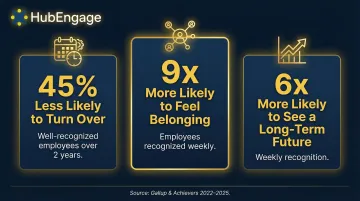
When HR can demonstrate that recognition frequency directly correlates with retention and engagement, the program gains executive support and sustainable funding.
KPIs impacted:
- Voluntary turnover rate
- Time-to-productivity for new hires
- Manager effectiveness scores
- HR program ROI reporting
When this advantage matters most:
- Organizations going through rapid growth, M&A, or culture transformation
- HR leaders who need to justify recognition program spend to leadership or finance
What Happens When Recognition Stays Traditional
Staying manual has practical consequences. HR teams spend hours tracking milestones via spreadsheets or calendar reminders. Recognition gets delayed or missed entirely. Some managers consistently recognize their teams while others don't—creating a culture of favoritism rather than fairness.
The downstream effects are measurable. Employees who don't feel adequately recognized are twice as likely to say they'll quit in the next year. Inconsistency at scale becomes toxic. When frontline workers see office employees recognized publicly while their contributions go unacknowledged, it creates resentment and amplifies turnover in already high-churn roles.
The cost is measurable. Turnover costs for frontline/hourly workers average 40% of salary, 80% for technical/professional roles, and 200% for leaders and managers. When recognition fails to prevent even a small percentage of preventable turnover, the financial impact far exceeds the cost of modernizing the program.
Employees who've experienced inconsistent or performative recognition don't just disengage quietly — they stop trusting the program entirely. Rebuilding that trust requires consistent, visible action, not just a policy update. That's the gap digital recognition is designed to close.
How to Get the Most Value from Digital Recognition
The platform is only as effective as the behaviors it supports. Digital recognition works best when participation is embedded into daily workflows rather than treated as a separate HR activity. Peer recognition should be as natural as sending a Slack message, not logging into a separate portal.
Gamification keeps participation consistent long after launch. Platforms that apply points, leaderboards, and achievement badges to recognition activity prevent the early drop-off that undermines so many programs. HubEngage's platform-wide gamification—applied across recognition, communications, and engagement activities—is built specifically to sustain that momentum for frontline and distributed teams.
Its partnership with Tango Card takes this further, connecting recognition to tangible rewards employees can redeem immediately within the same platform ecosystem.
Sustaining that momentum requires more than good tooling, though. Reviewing outcomes matters as much as activity. Recognition platforms generate data—HR leaders should review recognition patterns quarterly to identify gaps, celebrate wins, and recalibrate. The goal is a living program that improves, not a one-time rollout.
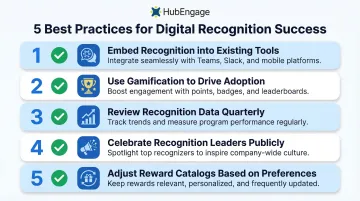
Key practices:
- Embed recognition into existing communication tools (Teams, Slack, mobile apps)
- Use gamification to reward participation and drive adoption
- Review recognition data quarterly to identify underserved teams or managers
- Celebrate recognition leaders publicly to model desired behavior
- Adjust reward catalogs based on employee preferences and redemption rates
Conclusion
Digital recognition removes the friction, inconsistency, and blind spots that prevent acknowledgment from reaching every employee, every time it's earned. Human connection stays at the center—the technology just ensures it actually happens.
The advantages compound. Organizations that commit to digital recognition see improved engagement, reduced turnover, and stronger culture over months and years—not overnight, but consistently and measurably.
The workforce has changed. Recognition programs need to keep up. Platforms like HubEngage make it straightforward to build recognition into daily work—across every team, channel, and location—so no contribution goes unseen.
Frequently Asked Questions
What's the best employee recognition platform?
The best platform depends on workforce type and program goals. Look for multi-channel delivery (mobile, web, SMS), integration with existing HR tools, personalization options, and built-in analytics. Platforms like HubEngage combine recognition with gamification and communications in one unified system designed for frontline and distributed teams.
How to implement employee recognition programs?
Start by defining what behaviors and milestones to recognize. Choose a platform that matches your workforce's access needs—mobile-first for frontline workers, integrated with Teams or Slack for office staff. Set peer and manager recognition guidelines upfront, and review participation metrics quarterly.
What are examples of awards and recognition?
Common examples include work anniversary gifts, peer-to-peer kudos, performance-based awards, milestone bonuses, and on-the-spot digital rewards. The most effective are timely, visible to the team, and tied to specific behaviors or achievements.
What is the difference between rewards and recognition?
Recognition acknowledges a contribution: a public thank-you, a shoutout, a certificate. Rewards are tangible incentives tied to that moment—a gift card, bonus, or points. Both work best together; recognition provides meaning, while rewards reinforce the value of the contribution.
How does digital recognition improve employee retention?
Employees who feel consistently recognized are 45% less likely to leave after two years. Digital tools make recognition more frequent and visible, closing the gap between high-performing employees and those who feel invisible. When recognition happens weekly rather than annually, employees are 6x more likely to see a long-term future at the company.
Can digital employee recognition work for frontline or remote workers?
Yes—this is where digital recognition provides the greatest advantage. Platforms that deliver recognition via mobile apps, SMS, and digital signage ensure frontline, shift-based, and remote employees receive and see recognition in real time without needing a desk or corporate email. This closes the recognition gap for the 70-80% of the workforce that traditional programs systematically miss.