Introduction
Most intranet projects fail quietly. The platform launches, adoption peaks in the first few weeks, and then usage drops — leaving HR teams with an expensive tool nobody logs into. The real damage isn't the wasted license fee. It's the disengaged employees, fragmented communication, and lost alignment that follow.
The stakes are high. According to Gallup's 2025 State of the Global Workplace report, global employee engagement fell to 21% in 2024, with lost productivity costing the global economy $438 billion. Poor communication compounds this problem: companies with 100,000 employees lose an average of $62.4 million annually due to inadequate internal communication.
The right platform drives adoption, extends communication reach, and holds distributed or frontline workforces together. The wrong one compounds every engagement problem you already have. This guide gives you a practical framework for making that choice with confidence.
Key Takeaways
- Modern intranet platforms centralize communication, knowledge, and engagement well beyond static document portals
- Match your workforce reality: desk-based, frontline, remote, or hybrid teams have fundamentally different access needs
- Evaluate platforms on adoption design, multi-channel reach, personalization, AI capabilities, and integration fit
- Avoid selecting on features alone, ignoring mobile access for deskless workers, and adding another siloed tool to your fragmented stack
- HubEngage unifies communications, recognition, engagement, and AI tools in one modular platform built for frontline and distributed teams
What Is an Intranet Platform?
An intranet platform is a private digital hub where organizations centralize communications, knowledge, culture, and employee services. Modern intranet solutions have evolved dramatically from legacy static portals that only stored documents and required manual updates.
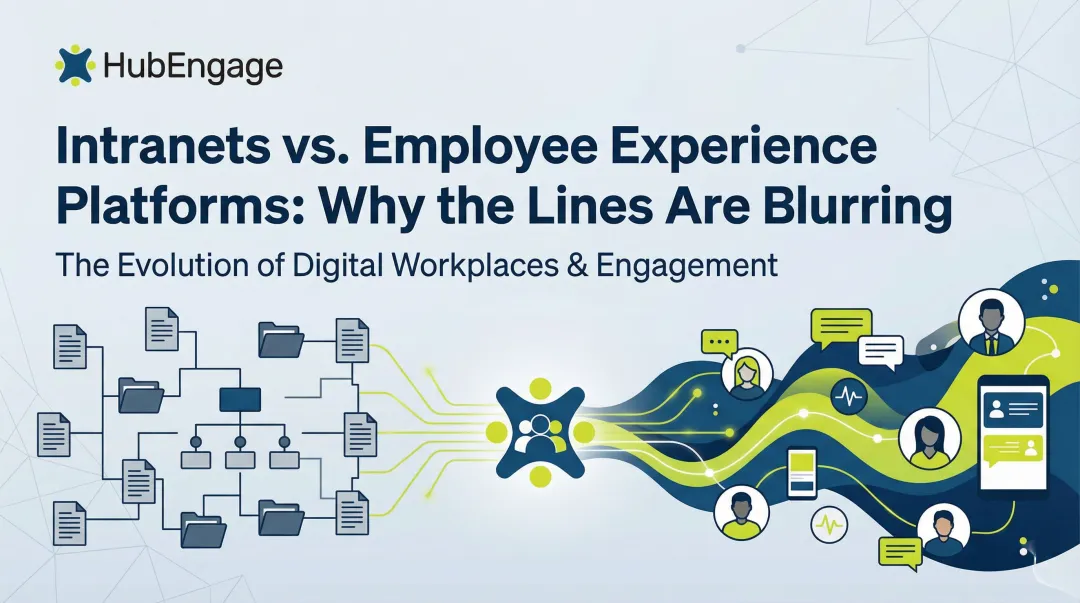
Today, intranet solutions exist on a spectrum. Gartner defines modern Intranet Packaged Solutions (IPS) as unified, multichannel software products that deliver internal communications, knowledge bases, and self-service functions across web, mobile, email, and digital signage. Meanwhile, Employee Experience Platforms (EXPs) go further, connecting people to each other, their work, and career moments through AI-powered systems with bidirectional workflows.
Core Components of a Modern Intranet
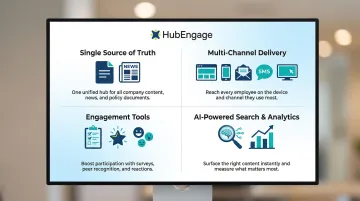
A well-built intranet typically includes four core capabilities:
- Single source of truth for company news, policies, and knowledge — reducing email overload and information scatter that fragment employee attention
- Multi-channel delivery across web, mobile apps, email, SMS, and digital displays so employees receive information through the channels they actually use
- Engagement tools — pulse surveys, peer recognition, social reactions, and gamification — that turn the intranet from a one-way broadcast into a two-way culture builder
- AI-powered search and analytics that help employees find answers instantly while giving HR and comms teams visibility into what content gets read, ignored, or shared
Why Organizations Invest in Intranet Platforms
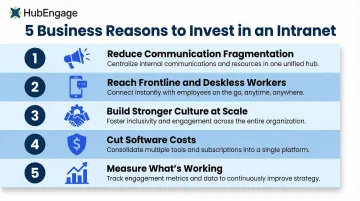
The business case for a modern intranet goes beyond convenience. Organizations typically invest to solve specific, measurable problems:
- Reduce communication fragmentation — consolidating announcements, policies, and updates that currently scatter across email, Slack, and shared drives
- Reach frontline and deskless workers who don't sit at a desk and miss critical information sent only via email or desktop tools
- Build a stronger culture at scale, especially across distributed teams, multiple locations, or post-merger integrations
- Cut software costs by replacing multiple point solutions (recognition, surveys, knowledge base) with a unified platform
- Measure what's working through engagement analytics, read receipts, and survey responses that show whether communications actually land