Introduction
Most intranet launches fail not because of the technology, but because employees never feel the platform is theirs. A well-chosen name is the first step toward changing that dynamic.
When your intranet is called "Company Portal" or "Employee Hub #2," it signals that this is just another administrative tool pushed from the top down. When it carries a name that reflects your culture, mission, or how people actually work together, employees start to see it as a space built for them — and they show up for it accordingly.
This post covers why naming matters, a curated set of intranet name ideas organized by category, real-world examples from major brands, and a practical framework for choosing the right name. Whether you're launching a new platform or rebranding an underused one, the right name shapes first impressions, drives adoption, and gives employees a reason to return.
Key Takeaways
- A strong intranet name boosts adoption and daily usage by giving the platform a memorable identity employees want to engage with
- Top names fall into six categories: culture-based, practical, brand-aligned, playful, acronym-driven, or industry-specific
- Involving employees through polls or naming contests increases buy-in and adoption before launch
- Companies like DHL, Pfizer, and Pima Federal Credit Union have used creative naming to drive measurable results
Why Your Intranet Name Matters
A generic label like "Company Portal" makes employees feel the tool is administrative rather than collaborative. It's forgettable, uninspiring, and signals that this space was built for management, not for them. A distinctive name tells employees this platform was designed with their needs in mind—and that shift in perception directly impacts daily habit formation and voluntary usage.
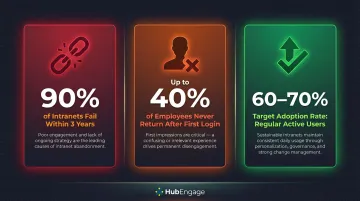
The adoption crisis is real. 90% of intranets fail within three years due to poor user experience and low engagement. Up to 40% of employees log in once and never return. A healthy modern intranet should achieve 60–70% regular employee adoption, yet many organizations struggle to reach even half that benchmark.
A well-chosen name directly impacts adoption rate by making the intranet easier to reference in conversation, promote internally, and recall without effort. When employees say "Did you check The Hive?" or "Post that to Compass," the name becomes part of the workplace vocabulary—not a chore to remember or explain.
The name also functions as internal branding. It sets the tone for how the intranet is perceived from day one. Each choice telegraphs something about your culture before a single post is published:
The name also functions as internal branding. It sets the tone for how the intranet is perceived from day one. Each choice telegraphs something about your culture before a single post is published:
- Pulse — signals innovation and real-time connection
- Central — suggests practicality and efficiency
- Catalyst — promises transformation and momentum
- Commons — implies inclusivity and shared ownership
New hires absorb that message the moment they're introduced to the platform. Whether your culture is collaborative or top-down, fast-moving or process-driven, the right name makes your stance clear.
Creative Intranet Name Ideas by Category
Naming approaches are not one-size-fits-all. The right category depends on company size, industry, and culture. Use these categories as a starting framework to guide your brainstorming process.
Culture & Values-Based Names
This approach draws from the company's mission, values, or personality to create a name that acts as a daily reminder of what the organization stands for. These names work best for organizations with strong, clearly defined cultures where employees already identify with core values.
Examples:
- Pulse – Suggests real-time connection and organizational heartbeat
- Compass – Implies guidance and direction
- Roots – Emphasizes foundation and shared origins
- Anchor – Conveys stability and reliability
- Horizon – Signals forward-thinking and vision
- Summit – Represents achievement and collective goals
- Catalyst – Promises transformation and action
- Momentum – Suggests energy and progress
- Spark – Implies innovation and inspiration
- Cornerstone – Indicates foundational importance
- Canvas – Evokes creativity and collaboration
- Thread – Represents connection and continuity
Practical & Descriptive Names
Straightforward names communicate the intranet's function clearly. This approach is ideal for organizations that prefer clarity over creativity or have global, multilingual workforces where simple names translate easily and avoid cultural confusion.
Examples:
- Connect – Direct and functional
- Link – Simple and universal
- Central – Indicates hub status
- HQ – Suggests headquarters and authority
- Hub – Classic and clear
- One – Emphasizes unity
- Base – Implies foundation
- Source – Suggests origin of information
- Portal – Traditional but clear
- Home – Welcoming and familiar
- Place – Neutral and accessible
- Network – Emphasizes connection
Brand-Aligned Names
Extending the company name into the intranet name builds brand consistency and instant recognizability. This approach is particularly valuable during onboarding, when new hires are learning multiple systems and need clear signals about which platform belongs to which function.
Naming patterns:
- [Company]Net – Example: "AccorNet" or "AdidasNet"
- My[Company] – Example: "MyPfizer"
- [Company]Hub – Example: "AccentureHub"
- [Company]One – Example: "SalesforceOne"
- [Company]World – Example: "PfizerWorld"
- [Initial]-Link – Example: "D-Link" for a company starting with D
Playful & Creative Names
Metaphor-driven or imaginative names give the intranet a personality employees actually want to engage with. These work best for companies with casual, people-first cultures where creativity is valued over formality.
Examples:
- The Hive – Suggests collaboration and community
- Orbit – Implies connection and movement
- The Watercooler – Evokes informal conversation
- The Clubhouse – Friendly and inclusive
- The Loop – Indicates staying informed
- Basecamp – Suggests home base and preparation
- The Lobby – Welcoming entry point
- Switchboard – Retro nod to connection
- The Square – Public gathering space
- Launchpad – Action-oriented and energizing
- The Beacon – Guidance and visibility
- Wavelength – Alignment and harmony
Acronym & Persona Names
Acronyms work best when they spell a meaningful word rather than a forced string of letters. A pronounceable acronym becomes a name employees actually use — and remember.
Successful acronym examples:
- VERN – Veridian Employee Resource Network (Veridian Credit Union achieved nearly 100% daily adoption among 600 employees)
- ADICT – Adecco Intranet Collaborative Tool (broke down silos for 9,000 users)
- Sparkle – System Providing Access to Research Knowledge Learning & Education (De Beers)
Persona or mascot naming gives the intranet a human or character name, making it feel approachable and conversational. This style works especially well in close-knit or mid-sized organizations where personality-driven branding resonates.
Successful persona examples:
- Dwight – Pima Federal Credit Union (pop culture reference; 120 of 150 employees log in daily)
- VERN – Functions as both acronym and persona, wears bowties and tells jokes
- Coco – VodafoneZiggo (friendly, mobile-first persona for field technicians)
Industry-Specific Name Ideas
Naming with industry terminology creates instant relevance and professional resonance. Employees feel the portal was built for their specific work context, not adapted from a generic template.
Healthcare:
- Pulse, Rounds, Chart, Vitals
Retail:
- The Floor, Counter, Rack, Stockroom
Hospitality:
- Front Desk, The Lobby, Concierge
Manufacturing:
- The Line, Assembly, The Yard, Shift
Logistics & Energy:
- Navigator, The Core, The Grid, Pipeline
Real-World Company Intranet Names That Worked
These examples show how real companies turned their culture into a name employees actually use.
| Company | Intranet Name | Why It Works |
|---------|---------------|--------------|
| DHL | Smart Connect | Reflects efficiency and logistics identity; reaches 600,000 global employees with 282,991 monthly active users |
| Pfizer | PfizerWorld | Brand-aligned, global scale; serves 90,000+ employees with subscription-based personalization |
| Pima Federal Credit Union | Dwight | Pop culture reference that drove adoption; 120 of 150 employees log in daily, eliminating 15–20 company-wide emails daily |
| Suncor Energy | The Core | Industry-relevant, suggests central source of truth |
| Adidas | adiweb | Clean brand extension, simple and recognizable |
| Fonterra | Milkyway | Playful industry nod to dairy, memorable and on-brand |
| Veridian Credit Union | VERN | Acronym + persona hybrid; nearly 100% daily adoption among 600 employees |
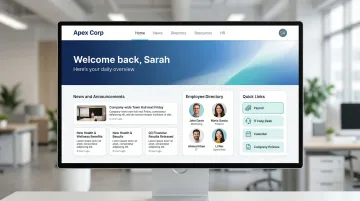
What these names have in common: short enough to say in a sentence, tied to the brand or industry in some recognizable way, and distinctive enough that employees remember them without being reminded.
Common Naming Mistakes to Avoid
Don't choose names that:
- Won't survive casual use — "My Global Source of Information and Resources" is a title, not a name
- Rely on insider jargon — "InnovCenter" loses anyone outside the innovation team
- Create search confusion — "You AND Me" is hard to type into a search bar or say without awkward pauses
- Depend on a metaphor most staff won't share — "The Ship's Logbook" needs explaining every time
How to Choose the Right Intranet Name for Your Company
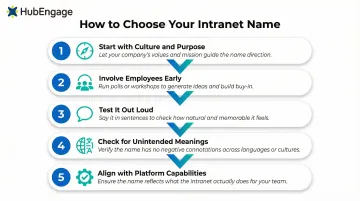
Step 1 — Start with Culture and Purpose
Before brainstorming names, answer two questions:
- What values does this platform represent?
- What do we want employees to do here?
The answers shape your naming approach. A collaboration-first intranet calls for different language than a compliance-and-news hub.
If your platform is designed to break down silos, names like "Connect" or "Bridge" make sense. If it centralizes knowledge, names like "Source" or "Library" fit better.
Step 2 — Involve Employees Early
An internal naming contest generates more creative options than any single team can produce — and it builds pre-launch buy-in before the platform even launches.
Companies that involve employees in naming see measurably higher adoption. TDECU involved employees through listening sessions and contests, ensuring the platform was designed with real user needs in mind. Oxfam America crowdsourced the name "Padare," resulting in colleagues using the name daily and feeling ownership over the platform.
Best practice: Curate a shortlist of 4–6 names and let employees vote. The winning name arrives with built-in advocacy.
Step 3 — Test It Out Loud
Try the name in common intranet-related phrases:
- "Did you see the update on [Name]?"
- "Post the report to [Name]."
- "Check [Name] for the new policy."
If it sounds awkward or requires explanation, it likely won't survive daily use. Also test with "the," "our," and "my" in front of it to see which article makes it flow best.
Step 4 — Check for Unintended Meanings
For global or multilingual organizations, shortlisted names should be reviewed for unintended connotations in other languages or regional dialects. What sounds neutral in English may land poorly elsewhere. Run your finalists past native speakers in your key markets before committing.
Step 5 — Align the Name with Your Platform's Capabilities
A name like "Connect" or "The Hub" promises a certain experience — and your intranet software needs to deliver on it. If the name implies connection but employees can't easily reach colleagues, or implies knowledge access but search is poor, the name becomes a liability. Platforms like HubEngage are built to match ambitious names — with AI-powered search, multi-channel delivery, gamified engagement, and social collaboration tools that give employees a reason to keep coming back. Choose a name that fits what the platform genuinely does today, not just what you hope it will do eventually.
Conclusion
Naming a company intranet is one of the few low-cost, high-impact decisions in an intranet launch. The right name lowers the barrier to adoption, builds early emotional investment, and gives communicators a brand anchor to build campaigns around. Done well, it turns a tool into a place people actually want to show up.
Start your naming process using the categories and examples in this post. Involve your employees early, test your finalists out loud, and make sure the platform behind the name can actually deliver on the promise.
When you're ready to build that platform, explore HubEngage's gamified intranet solution—built for distributed and enterprise teams. Request a demo to see how AI-powered search, recognition, and multi-channel reach can bring your named intranet to life.
Frequently Asked Questions
What is a good name for a company intranet?
A good intranet name is short, easy to say out loud, and reflects your company's culture or the platform's purpose. Options range from culture-based names like "Pulse" or "Compass" to brand-aligned formats like "My[Company]" or "[Company]Hub." The best names are memorable and feel like they belong to your organization.
What should be on a company intranet?
A company intranet should cover news and announcements, HR resources, employee directories, knowledge bases, and recognition features. The best intranets go beyond broadcasting — they include forums, comments, and social features for two-way communication. According to Staffbase research, companies with high-involvement intranets report a 47% increase in knowledge sharing.
What is another name for an intranet?
Company intranets are commonly referred to as employee portals, internal portals, company hubs, digital workplaces, or employee experience platforms. Many organizations give their intranet a unique branded name—like "Dwight," "The Core," or "PfizerWorld"—to create a stronger identity and drive adoption.
Is the term intranet still used?
"Intranet" remains widely used in HR and IT contexts, but the category has evolved significantly. Modern intranets now encompass mobile apps, AI search, social features, and digital signage, leading many vendors and practitioners to use broader terms like "employee experience platform" or "digital workplace." The global digital workplace market is projected to grow from $67.57 billion in 2025 to $161.82 billion by 2030, reflecting the category's expansion.
What is an enterprise intranet?
An enterprise intranet is a private, organization-wide platform used to share information, manage internal communications, and connect employees across departments and locations. Enterprise-grade solutions must support large user bases, complex permissions, multilingual content, and integrations with systems like HRIS and payroll platforms.