Introduction
Starting a new job triggers a mix of excitement and anxiety. New hires wonder: Will I fit in? Did I make the right choice? Will my team accept me? A thoughtful welcome message can shift that experience immediately, replacing uncertainty with belonging and setting a positive tone from day one.
Most companies, though, underinvest in this moment. Only 12% of employees strongly agree their organization does a great job of onboarding new employees, and 70% of new hires decide whether a job is the right fit within the first month—with 29% deciding within the first week. That window is shorter than most hiring managers expect.
The good news: getting it right doesn't require a policy overhaul. This article offers 30 ready-to-use welcome messages organized by sender and scenario, along with practical tips on what makes them land—and how to make sure every new hire actually receives one.
Key Takeaways
- Welcome messages shape first impressions and build belonging before new hires walk through the door
- The best messages feel personal and specific, not generic or templated
- Messages should come from HR, the manager, the CEO, and team peers for a complete welcome experience
- Remote and frontline workers need intentional digital delivery to receive the same welcome experience as on-site staff
- Delivery channel matters: reach new hires on day one via SMS, mobile apps, or digital signage
Why Welcome Messages Matter for New Employees
New employees experience a unique psychological state during their first days—excitement mixed with self-doubt, eagerness tempered by uncertainty. A warm, genuine welcome message reduces that anxiety, builds a sense of belonging, and establishes an emotional connection to the team and organization.
The business impact is measurable:
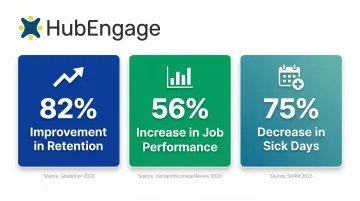
- Organizations with strong onboarding improve new hire retention by 82% and productivity by over 70%
- Workplace belonging drives a 56% increase in job performance and a 50% reduction in turnover risk
- Belonging also correlates with a 75% decrease in employee sick days
Those numbers reflect all employees. For frontline, remote, and distributed workers, the stakes are even higher.
These employees don't walk into an office on day one to meet colleagues face-to-face or absorb culture through physical presence. Deskless workers make up 80% of the global workforce (2.7 billion people), yet 83% don't have company email addresses. For these employees, a deliberate welcome message delivered through accessible channels is often their only human touchpoint during those crucial first hours.
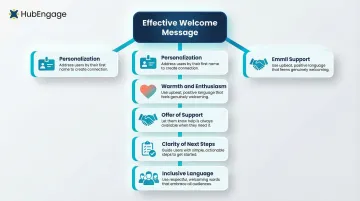
What Makes an Effective Welcome Message
Personalization
Using the new hire's name and referencing something specific—their role, a skill they bring, or a detail from the interview—transforms a generic greeting into genuine connection. A templated message with no personalization signals that the hire is just a number. Reference their specific contributions: "Your experience in supply chain logistics will be invaluable to our operations team."
Warmth and Enthusiasm
Tone matters. Authentic warmth sounds like "We've been looking forward to this since we made the offer," not hollow corporate-speak like "On behalf of the organization, we extend our welcome." Write like you're greeting a valued colleague, not issuing a press release.
Offer of Support
Effective messages go beyond a greeting—they make support feel real. "Reach out to me directly with any questions" lands better than a vague "we're here for you." Specific offers build psychological safety: "Text me if you can't find the building entrance" or "I'll stop by your desk at 10 a.m. to check in."
Clarity of Next Steps
The best welcome messages reduce first-day overwhelm by providing context. Tell new hires who to ask for, what the first week looks like, or where to find resources. A few specifics help immediately:
- Who to report to and when
- What the first-day schedule looks like
- Where to pick up equipment or access credentials
Inclusive Language
Welcome messages avoid assumptions about gender, background, or personal life. Use gender-neutral language, skip references to family situations you haven't confirmed, and reflect your organization's commitment to diversity from the very first communication.
30 Best Welcome Messages for New Employees
The following 30 messages are organized by sender and scenario. Customize each with the employee's name, role, and personal details to feel genuine rather than templated.
From the Manager or Team Lead
Manager messages carry particular weight. The direct manager relationship shapes a new hire's day-to-day experience and sets the tone for psychological safety. When the manager takes an active role in onboarding, employees are 3.4 times as likely to feel their onboarding process was successful.
1. Role-Specific Welcome "Hi [Name], welcome to the team! I've been looking forward to having you join us since our last interview. Your background in [specific skill] is exactly what we need to tackle [specific project]. I'll meet you Monday at 9 a.m. in the main lobby—look for the guy in the blue jacket. See you soon!"
2. Team Integration Focus "[Name], the whole team has been counting down to your start date. We're excited to have your expertise in [area] on board. I've scheduled a team lunch for your first day so everyone can meet you in a relaxed setting. If you have any questions before Monday, text me anytime at [number]."
3. First-Day Logistics "Welcome, [Name]! Monday will be great—I'll meet you at reception at 8:30 a.m. and walk you through your first day. We'll cover your workspace setup, introduce you to the team, and review your first-week schedule. No need to stress about parking; I've reserved a spot for you in the north lot. Looking forward to working together."
4. Supportive and Reassuring "Hi [Name], welcome aboard! Starting a new role can feel overwhelming, but I want you to know I'm here to support you every step of the way. We'll take onboarding at your pace, and there's no such thing as a silly question. Reach out anytime—my door (and inbox) are always open."
5. Mission-Driven Welcome "[Name], I'm thrilled you're joining our team. Your passion for [relevant interest/value] aligns perfectly with what we're building here. I can't wait to see the impact you'll make. Let's connect Monday morning to talk through your first projects and how you'll contribute to our mission."
From HR
HR welcome messages do two things at once: they signal to the new hire that someone is actively looking out for them, and they give practical guidance so nothing falls through the cracks on day one.
6. Comprehensive Onboarding Overview "Welcome to [Company], [Name]! We're excited to have you join us on [start date]. I've sent your onboarding checklist to your personal email—please complete the forms by Friday. On your first day, stop by HR at 8 a.m. for orientation. If you have questions about benefits, paperwork, or logistics, I'm here to help at [email/phone]."
7. Resource-Focused Welcome "Hi [Name], welcome to the team! I'm [HR Name], and I'll be your main point of contact for all onboarding questions. I've uploaded your new hire packet to our portal—you'll find everything from benefits enrollment to company policies. Don't hesitate to reach out if anything is unclear. We're here to make your transition smooth."
8. Culture and Community "[Name], we're thrilled you're joining the [Company] family! Beyond the paperwork, we want you to feel connected from day one. I've enrolled you in our new hire buddy program—[Buddy Name] will reach out this week to answer questions and help you settle in. Welcome aboard!"
9. Pre-Boarding Engagement "Hi [Name], congratulations again on joining [Company]! While your official start date is [date], we'd love to stay connected before then. I'm sending you access to our employee app where you can explore company news, meet your future teammates, and get familiar with our culture. Looking forward to your first day!"
10. Benefits and Support "Welcome, [Name]! I'm [HR Name], and I manage employee benefits and onboarding support. I know benefits can be confusing, so I've scheduled a one-on-one call with you during your first week to walk through your options. In the meantime, if you have any questions about your offer, relocation, or first-day logistics, just reply to this email."
From the CEO or Senior Leadership
A message from the CEO signals that the new hire's arrival matters at every level of the organization. That visibility is especially powerful for building early connection to company mission and vision.
11. Mission and Vision Connection "[Name], welcome to [Company]! I'm [CEO Name], and I wanted to personally welcome you to the team. We're building something meaningful here, and your skills in [area] will help us achieve [specific goal]. I'm excited to see the impact you'll make. Don't hesitate to reach out—I love hearing from our team members."
12. Personal Investment "Hi [Name], I heard you're joining us on Monday, and I couldn't be more excited. We interviewed a lot of talented people for this role, but you stood out because of [specific reason]. I'm confident you'll thrive here and contribute to our success. Welcome aboard, and I hope to meet you in person soon."
13. Company Values Emphasis "Welcome, [Name]! At [Company], we're driven by [core value], and from your interview, it's clear you share that commitment. I'm thrilled to have you on the team and look forward to seeing how you embody our values in your work. If you ever have ideas or feedback, my door is always open."
14. Growth and Opportunity "[Name], welcome to [Company]! You're joining us at an exciting time—we're growing fast, and there will be plenty of opportunities for you to learn, lead, and make your mark. I'm looking forward to seeing where your career takes you here. Let's connect during your first month to hear your early impressions."
15. Gratitude and Confidence "Hi [Name], I wanted to reach out personally to say how grateful we are that you chose to join [Company]. We know you had other options, and we're honored you picked us. I have full confidence you'll do great things here. Welcome to the team, and thank you for being part of our journey."
From Team Members and Peers
Peer messages build immediate social belonging. They humanize the team before day one, reduce first-day awkwardness, and give new hires at least one friendly face to look for when they walk in the door.
16. Friendly Introduction "Hey [Name], welcome to the team! I'm [Peer Name], and I sit right next to where you'll be working. If you need help finding the coffee machine, figuring out the printer, or just want to grab lunch, let me know. Looking forward to working with you!"
17. Shared Interest Connection "Hi [Name], I'm [Peer Name] from the [Team]. I saw on your LinkedIn that you're into [hobby/interest]—me too! It'll be great to have another [interest] fan on the team. Let me know if you want to grab coffee during your first week and chat about the role. Welcome aboard!"
18. Helpful Resource Offer "[Name], welcome! I'm [Peer Name], and I joined the team six months ago, so I remember what it's like to be new. If you have any questions about how things work around here—formal or informal—feel free to reach out. I'm happy to help you get up to speed."
19. Team Culture Insight "Hey [Name], welcome to the crew! I'm [Peer Name], and I've been here for [time period]. This is a great team—everyone's supportive, and we actually enjoy working together. We usually do team lunches on Fridays, so you'll get to know everyone quickly. Excited to have you on board!"
20. Collaboration-Focused "Hi [Name], I'm [Peer Name], and I work on [project/area]. I heard you have experience with [skill], which is awesome because we've been needing someone with that background. I think we'll end up collaborating a lot, and I'm looking forward to it. Welcome to the team!"
For Remote or Frontline Employees
Remote and frontline employees rarely benefit from in-person greetings, making a digital or written welcome message their primary first impression of the team. Employees hired remotely are less likely to feel included and have weaker relationships with their teams.

21. Remote Worker Welcome "Hi [Name], welcome to [Company]! I know starting remotely can feel isolating, but we're committed to making sure you feel connected from day one. I've scheduled a video call with you Monday at 9 a.m. to walk through your first week. In the meantime, join our team Slack channel—everyone's excited to meet you virtually!"
22. Frontline Shift Worker "[Name], welcome to the team! I know your schedule is different from the office crew, but you're just as important to what we do here. I've left a welcome packet in your locker with your badge, uniform info, and shift details. I'll stop by during your first shift to introduce myself and answer any questions. Glad to have you with us!"
23. Field-Based Employee "Hi [Name], welcome aboard! Since you'll be working in the field, I wanted to make sure you have everything you need before your first day. I've sent your equipment, credentials, and territory info to your personal email. I'll call you Monday morning to check in and make sure you're all set. Looking forward to working together!"
24. Multi-Location Team Member "Welcome, [Name]! You'll be based at our [Location] site, and while you won't see me in person often, I want you to know I'm here to support you. I've connected you with [Local Manager Name], who will be your day-to-day contact. I'll also schedule monthly check-ins with you so we stay connected. Excited to have you on the team!"
25. Healthcare/Retail/Hospitality Worker "[Name], welcome to [Company]! I know your role keeps you on your feet and interacting with customers all day, so I'll keep this short. Your shift supervisor, [Name], will meet you at the start of your first shift to get you oriented. If you have questions before then, text me at [number]. Thanks for joining our team—we're lucky to have you!"
Short and Punchy Welcome Messages
Not every situation calls for a long message. When you're pressed for time, or when the relationship is new and a brief note feels more natural, these shorter options deliver warmth without the formality.
26. Simple and Sincere "[Name], welcome to the team! We're excited to have you here. Let me know if you need anything—I'm here to help."
27. Enthusiastic and Direct "Hi [Name], today's the day! Welcome aboard. Let's make great things happen together."
28. Supportive and Warm "Welcome, [Name]! You're going to do great here. Don't hesitate to reach out if you need anything at all."
29. Team-Focused "[Name], the team is thrilled you're here. Welcome! We're looking forward to working with you."
30. Motivational and Positive "[Name], welcome to [Company]! Your journey starts today, and we couldn't be more excited to have you with us."
Tips for Delivering Welcome Messages That Actually Reach Every Employee
Even the best-written message fails if it arrives through the wrong channel or too late. Timing and delivery method matter. A welcome email sent after the first day, or a message to a frontline worker who doesn't use corporate email, simply won't land.
For distributed, deskless, or multi-location teams, channel choice is everything. About 61% of deskless workers use their personal phones to access company information, yet 69% of organizations rely primarily on email — a channel more than half of deskless workers can't easily access.
A multi-channel platform like HubEngage helps HR and communications teams close that gap — delivering day-one welcome messages via whichever channel each employee actually uses:
- Mobile app for frontline and field workers
- SMS for employees without corporate email access
- Email for desk-based staff
- Digital signage for shared workspaces and common areas
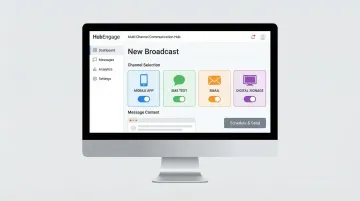
The most reliable approach is a standardized welcome workflow that triggers automatically when a new hire is added to your system. It should include messages from HR, the direct manager, and the team — delivered through each employee's preferred channel. That consistency protects the day-one experience regardless of who handles onboarding.
Conclusion
Welcome messages are a small act with outsized impact. They shape a new hire's first impression of culture, signal belonging, and set the tone for long-term engagement. The 30 examples above give HR teams and managers a starting point they can adapt to any role, industry, or communication style.
Organizations that treat day-one communication as a strategic priority rather than an afterthought build stronger engagement from the start. Don't just pick a message that fits — establish a repeatable welcome process so every new hire receives the same warmth, regardless of who's handling onboarding that week.
For teams managing communications across a distributed workforce, HubEngage's multi-channel platform delivers welcome messages to every employee — whether they're at a desk, in the field, or on the frontline.
Frequently Asked Questions
What is a good welcome message for a new employee?
A good welcome message is warm, personal, and specific. It uses the employee's name, acknowledges their role or something unique about them, and includes an offer of support or an invitation to connect. Avoid generic corporate language like "on behalf of the organization"—write like you're greeting a valued colleague.
What is a short warm welcome quote for a new employee?
A few options worth using: "Welcome to the team—we're genuinely glad you're here." Or: "We've been looking forward to this. Welcome aboard!" Or: "Day one starts now, and we couldn't be more excited." Keep it under two sentences, genuine, and human.
When should you send a welcome message to a new employee?
Ideally before or on the first day. Send a pre-boarding message after offer acceptance to maintain connection, then send day-one messages from the manager and team when the employee logs in or arrives. Employees who engage in preboarding are more than 80% more likely to show up on day one. A delayed welcome feels like an afterthought.
Who should send the welcome message to a new employee?
Multiple people should send messages: HR for process and logistics, the direct manager for role context, senior leadership for mission connection, and teammates for social belonging. This multi-sender approach reinforces that the new hire matters at every level of the organization.
What should you avoid in a new employee welcome message?
Avoid overly formal or robotic language, generic copy-paste messages with no personalization, making assumptions about the employee's background or personal life, and sending the message so late that it loses its impact. Don't use corporate jargon or buzzwords—write like a human welcoming another human.
How do you welcome a remote or frontline new employee?
Remote and frontline employees need extra care since they don't experience an in-person welcome. Reach them through channels they actually use—SMS, a mobile app, or a short video—and make the message feel personal, not like an automated HR ticket. Reference their specific environment and offer support that fits their situation.