Gamification isn't just a trendy add-on. Its real value appears in measurable day-to-day behaviors: sustained program participation, peer connection, and a felt sense of recognition—all of which directly influence whether employees stay or leave. When designed well, gamification transforms wellness from a passive benefit into an engaging experience that activates the psychological drivers keeping employees committed over time.
This article explains the specific, operational advantages of gamification in wellness programs and the direct retention outcomes it produces—not theory, but the mechanisms and metrics HR leaders can act on.
Key Takeaways
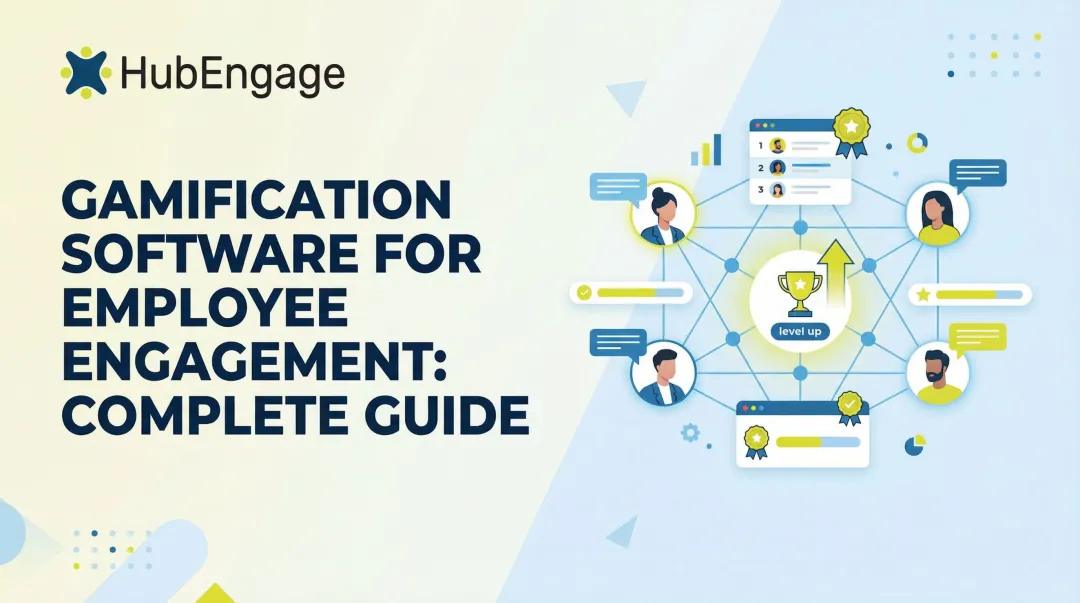
- Gamification applies game mechanics—points, badges, leaderboards, challenges—to make health initiatives more engaging and habit-forming
- Higher wellness participation correlates strongly with improved engagement scores and reduced voluntary turnover
- Social features like team challenges foster belonging, a top driver of retention
- Progress visibility helps employees feel recognized and valued, which directly supports long-term loyalty
- Gamification works best when it balances extrinsic rewards with intrinsic motivators—not just in wellness, but across the full employee experience
What Is Gamification in Wellness Programs?
Gamification in wellness is the application of game design elements—points, badges, leaderboards, challenges, progress bars—to workplace health and well-being activities. It drives consistent participation and behavior change by tapping into psychological motivators like achievement, progress, and belonging that sustain engagement beyond the initial launch.
Where it's typically applied:
- Step challenges and physical activity tracking
- Mental health check-ins and mindfulness streaks
- Nutrition tracking and hydration goals
- Sleep programs and wellness assessments
- Team-based health competitions
- Benefit utilization campaigns
The real objective is sustained participation—long enough for behavior change to take hold and produce measurable outcomes. When employees stay engaged with wellness programs over weeks and months, the downstream effects show up in engagement scores and turnover rates.
Key Advantages of Gamification in Wellness Programs for Employee Retention
Each of the three advantages below ties directly to operational outcomes HR and engagement leaders track: participation rates, belonging scores, recognition frequency, and voluntary turnover.
Sustained Wellness Participation Through Habit-Forming Mechanics
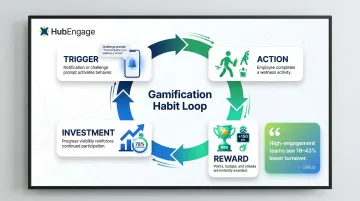
The central challenge with wellness programs isn't launch-day interest—it's sustained participation. Most programs see rapid drop-off after the first few weeks. The Illinois Workplace Wellness Study found that while 56% of participants completed initial screenings, only 31.4% completed screenings plus at least one wellness activity. Gamification addresses this directly through the brain's dopamine loop: earning points or completing a streak triggers a reward response that reinforces repetition of the behavior.
How it works in practice:
- Immediate feedback through progress bars, streak counters, and point totals gives employees a sense of forward momentum daily
- Milestone badges mark longer-term achievements and encourage employees to maintain behaviors to "protect" their streak or ranking
- Optimally challenging goals support the psychological need for competence, making activities feel achievable yet meaningful
Sustained wellness participation correlates with lower absenteeism, reduced burnout, and higher self-reported engagement—all leading indicators of lower voluntary turnover. Gallup's research shows teams with high employee engagement experience turnover rates 18% to 43% lower than teams with low engagement. Reduced absenteeism and healthcare utilization translate into lower operating costs; employees who are physically and mentally well are more productive and less likely to leave.
KPIs impacted:
- Wellness program participation rate
- Program completion rate
- Absenteeism rate
- Employee engagement score (eNPS or pulse survey)
- Voluntary turnover rate
Habit-forming mechanics have the highest impact in large or distributed workforces—frontline, manufacturing, healthcare, and retail environments—where employees have limited time and inconsistent access to wellness resources. Gamification creates consistent, low-friction touchpoints that fit into demanding schedules.
Social Connection and Team Cohesion That Reduces Flight Risk
A significant share of employee exits—particularly among frontline and deskless workers—stem from disconnection: from colleagues, from the organization's mission, and from a supportive community. SHRM and Fidelity research shows deskless workers have a 26% turnover rate versus 16% for office workers. Team-based wellness gamification directly counters this by creating shared goals, visible peer progress, and collective achievement.
Real-world mechanics:
- Team step challenges where groups work toward collective goals
- Group fitness targets with shared progress tracking
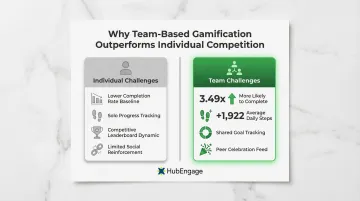
- Collaborative leaderboards where departments compete together rather than individuals competing against each other
- Social feeds where employees celebrate each other's wellness milestones
Research from BetterUp shows that a high sense of belonging is associated with a 50% reduction in turnover risk. Employees with a low sense of belonging and few friends at work have a 313% stronger intention to quit their jobs.
Employees who feel socially connected at work show measurably lower turnover intent. Social features in gamified programs—sharing achievements, reacting to peers' progress, joining team challenges—replicate the community-building function that many traditional offices provided but distributed or shift-based teams lack.
Research on player motivations shows that team-based, cooperative challenges outperform individual competitive leaderboards. A 2011 study found participants in team challenges were 3.49 times more likely to complete the challenge and logged an average of 1,922 more steps per day than solo participants. This reflects what psychologists Deci and Ryan identified in Self-Determination Theory: Relatedness—feeling genuinely connected to others—is a core driver of sustained motivation, not just a nice-to-have.
KPIs impacted:
- Employee belonging/inclusion scores
- Peer recognition frequency
- Team participation rates in wellness programs
- Long-term retention rates by team or department
This advantage is most pronounced for hybrid and remote teams with limited face-to-face interaction, distributed workforces across multiple sites, and organizations navigating cultural change or post-merger integration where cohesion is still fragile.
Recognition and Progress Visibility That Build Long-Term Loyalty
Employees who don't feel recognized leave. Wellness gamification creates a continuous, low-cost recognition loop—badges, milestone achievements, leaderboard appearances, and completion certificates all make effort visible in ways most managers never have time to replicate manually.
When wellness achievements surface in shared feeds, internal communications, or tangible rewards (gift cards, extra PTO, wellness stipends), gamification shifts wellness from an HR compliance exercise into a genuine signal that the organization values its people.
Recognition consistently ranks among the top drivers of employee engagement and retention. Research from Workhuman and Gallup shows that well-recognized employees are 45% less likely to have turned over two years later. When gamification automates ongoing recognition through visible progress and peer celebration—without requiring managers to remember every milestone—it creates a consistently reinforcing environment that reduces the "invisibility" that drives disengagement.
Unlike one-time bonus programs, gamified progress is cumulative and visible over time, feeding an employee's sense of mastery and purpose—intrinsic motivators that sustain commitment beyond any single extrinsic reward.
KPIs impacted:
- Recognition event frequency
- Manager and peer recognition scores
- Employee satisfaction with benefits
- Benefit utilization rates
- Retention rates among active wellness program participants vs. non-participants
The effect is most pronounced in high-burnout roles—healthcare workers, customer-facing staff, and high-volume operations employees—where visible acknowledgment of personal well-being efforts has an outsized impact on morale and loyalty.
What Happens When Wellness Programs Lack Gamification
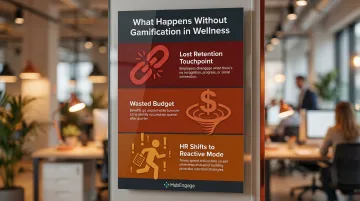
Static, non-gamified wellness programs follow a predictable pattern: high launch-day enrollment followed by rapid drop-off, low sustained participation, and ultimately zero measurable impact on retention or engagement. Employees complete a biometric screening or a one-time wellness survey and never return to the program.
Downstream effects on retention:
- Removes a key retention touchpoint — employees miss the social connection, recognition, and sense of progress that sustained wellness participation builds
- Wastes budget with no behavioral change — organizations spend on wellness benefits that generate no results while turnover costs accumulate
- Shifts HR into reactive mode — time goes toward exit interviews and re-hiring instead of sustaining conditions that make people want to stay
The Illinois Workplace Wellness Study and multiple large-scale RCTs found no significant effects on medical spending, absenteeism, or job tenure when wellness programs lacked engagement mechanisms. Without sustained participation, wellness programs become expensive checkbox exercises with no measurable retention impact.
How to Get the Most Value from Gamification in Wellness Programs
Gamification produces durable retention outcomes when designed intentionally. Three conditions matter most:
- Always-on consistency, not one-time challenges
- A balance of extrinsic rewards with intrinsic motivators like social recognition and progress visibility
- Regular review of participation analytics to inform program adjustments
Design for Encouragement, Not Shame
Excessively competitive mechanics—individual leaderboards that shame rather than celebrate—or rewards that feel transactional can erode intrinsic motivation over time. Research on Self-Determination Theory shows that expected, tangible rewards can undermine intrinsic motivation through the "overjustification effect," where employees start performing activities only for the reward rather than personal growth or connection. Design systems that prioritize social and intrinsic motivators alongside tangible rewards.
Integrate Gamification Across the Full Employee Experience
Gamification embedded across the full employee experience—wellness activities, peer recognition, communications engagement, learning completions—produces compounding retention effects. When employees earn recognition for both hitting a step goal and completing a compliance training, gamification becomes part of the culture rather than a standalone wellness module.
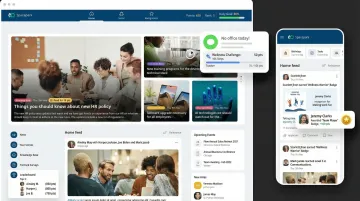
HubEngage is built around this principle, applying gamification across wellness challenges, recognition, internal communications, and surveys. Employees accumulate a continuous sense of progress and belonging rather than engaging only when a wellness campaign is active.
Practical Implementation Tips
- Define measurable wellness goals upfront (for example, 70% participation in monthly challenges) and track progress weekly
- Run collaborative challenges where departments work toward shared goals rather than competing individually
- Review participation dashboards regularly and celebrate top contributors in company-wide communications
Conclusion
Gamification in wellness programs earns its place in the retention strategy not because it makes work "fun," but because it activates the psychological drivers—habit formation, social connection, and continuous recognition—that keep employees engaged and committed over time.
The advantages compound when gamification is applied consistently and embedded in the full employee experience. Each wellness achievement builds on the last. Team challenges deepen peer relationships, and recognition moments accumulate into something employees actually feel — a workplace that notices them.
Employees now compare offers based on how much a company actually invests in their well-being — not just what's listed in a benefits summary. Gamified wellness programs give organizations a concrete, visible way to demonstrate that investment every single day.
Frequently Asked Questions
How do wellness programs increase employee retention in the workplace?
Wellness programs improve retention by reducing burnout and absenteeism while signaling that the organization genuinely values employees' whole-person health. That sense of being valued drives engagement and belonging — the two factors most directly linked to employee loyalty.
How does gamification increase retention?
Gamification increases retention by using progress tracking and rewards to build consistent participation habits in wellness activities. It also fosters social connection through team challenges and delivers continuous recognition that reinforces employees' sense of being valued — each of which directly reduces voluntary turnover.
What is wellness gamification?
Wellness gamification is the application of game mechanics—points, badges, leaderboards, challenges, and progress tracking—to workplace health and well-being programs, with the goal of driving consistent participation and lasting behavior change.
What are the 4 pillars of gamification?
The four commonly cited pillars are:
- Goals: Clear objectives that give employees something concrete to work toward
- Feedback: Immediate progress signals like points and progress bars
- Rewards: Recognition and incentives for hitting milestones
- Social Interaction: Team challenges and shared achievements that build community
Can gamification in wellness programs backfire?
Yes. Systems that over-emphasize individual competition or purely transactional rewards can erode intrinsic motivation and create unhealthy rivalry — making employees less comfortable engaging with wellness programs at all. Success depends on balancing social and intrinsic motivators alongside tangible rewards.
What metrics should HR track to measure gamified wellness program success?
Review these KPIs on a quarterly cadence:
- Wellness program participation and completion rates
- Employee engagement scores and eNPS
- Absenteeism rates
- Voluntary turnover among participants vs. non-participants
- Recognition event frequency