Introduction
Low employee engagement costs the global economy US$8.9 trillion annually, or 9% of global GDP, according to Gallup's 2024 State of the Global Workplace report. Behind that number: higher turnover, declining work quality, communication breakdowns, and a workplace culture where employees clock in and check out.
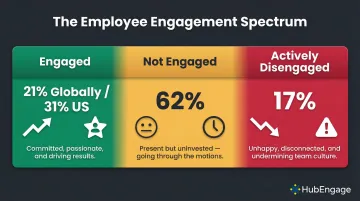
The scale of the problem is hard to ignore. Only 21% of employees globally are engaged, while 62% are not engaged and 17% are actively disengaged. This guide covers practical strategies — from recognition and communication to feedback and culture — that build genuine engagement rather than relying on superficial perks or one-time initiatives.
Key Takeaways
- Employee engagement is the emotional investment employees make in their work—not just satisfaction
- Key drivers include purpose, manager quality, recognition, growth opportunities, and clear communication
- Sustainable engagement comes from consistent, multi-layered strategies—not isolated perks or one-time initiatives
- Organizations that measure engagement and act on results see higher retention, productivity, and culture scores
- Unified platforms that combine communication, recognition, and feedback sustain engagement at scale
What Employee Engagement Really Means (and What It Doesn't)
Employee engagement reflects the involvement and enthusiasm of employees in their work and workplace. It's the emotional connection, enthusiasm, and commitment employees feel toward their work and organization—far beyond job satisfaction or compliance. While a satisfied employee may not quit, they might not produce valuable work; engagement requires a connection to the work's impact and a genuine investment in outcomes.
The Three Employee Personas
Gallup identifies three distinct employee categories that define the engagement spectrum:
- Engaged employees are thriving at work, highly involved, enthusiastic, and act as psychological "owners" who drive results
- Not engaged employees are quietly quitting—psychologically unattached, putting in time but not energy or passion
- Actively disengaged employees are loudly quitting—resentful that their needs aren't being met and potentially undermining engaged coworkers
Most workforces skew heavily toward the bottom two categories. In the United States, only 31% of employees are actively engaged at work, while 17% are actively disengaged.
Perks Don't Equal Engagement
Free lunches, ping-pong tables, and one-time bonuses don't create engagement. These temporary mood-boosters might improve satisfaction momentarily, but they don't address what employees actually need.
Real engagement comes from psychological needs being met consistently:
- Purpose — understanding how their work connects to something meaningful
- Recognition — feeling seen and valued for their contributions
- Growth — having clear paths to develop skills and advance
- Clarity — knowing what's expected and why it matters
- Psychological safety — feeling safe to speak up, take risks, and be themselves
Organizations that confuse the two misallocate resources — and watch turnover stay stubbornly high.
The Core Drivers of Employee Engagement
Purpose and Meaningful Work
Employees who understand how their role connects to a larger mission are more engaged. Employees with a strong sense of purpose at work are 5.6 times as likely to be engaged in their jobs, according to Gallup. Research published in the Journal of Management Studies found that meaningful work has large correlations (r = 0.70+) with work engagement, commitment, and job satisfaction.
When employees see the direct impact of their work on customers, communities, or organizational mission, they invest more discretionary effort. Leaders must consistently connect daily tasks to broader organizational goals and communicate how individual contributions matter.
Manager Quality and Coaching Relationships
Managers account for 70% of the variance in team employee engagement. The manager relationship is the single most influential factor in day-to-day engagement. High-impact managers share a few consistent habits:
- Coach rather than micromanage
- Focus on individual strengths, not just correcting weaknesses
- Actively advocate for their team members
High-engagement managers establish a weekly coaching habit that includes discussing goals, development, and strengths. They provide specific, timely feedback and make employees feel seen—not just evaluated. Low-engagement managers, by contrast, struggle most with delivering recognition and frequent feedback.
Recognition and Feeling Valued
Consistent, timely, and personalized recognition meets a core psychological need for acknowledgment. Turnover drops from 18% to 11% when employees receive recognition versus none, and down to 7% for employees receiving and giving recognition. In fact, 68% of employees plan to stay at their organization for five years or more when their recognition needs are fulfilled.
Recognition works best when it's:
- Frequent — not just annual reviews or milestone moments
- Specific — tied to behaviors or outcomes, not generic praise
- Inclusive — reaching frontline and deskless workers who are often excluded from traditional programs
Growth and Development Opportunities
84% of employees agree that "Learning adds purpose to my work," according to LinkedIn Learning's 2025 Workplace Learning Report. Access to learning and career development affects employees' likelihood to stay and their level of engagement. Employees who feel stagnant disengage faster than those who see a growth path.
To keep high-potential employees engaged, organizations should invest in:
- Structured learning programs and skills development
- Mentorship and coaching relationships
- Internal mobility pathways
- Regular career-development conversations with managers
Clear Expectations and Psychological Safety
Employees who don't know exactly what is expected of them—or who fear speaking up—cannot be fully engaged. Google's Project Aristotle found that the highest performing teams were the ones with the greatest psychological safety, where members felt safe to share ideas and mistakes without fear of embarrassment. A meta-analysis of 136 independent samples found psychological safety is positively related to work engagement (r =.45) and task performance (r =.43).
Clarity and safety are foundational, not supplemental. Without them, even the best recognition and development programs will fail.
Proven Strategies to Improve Employee Engagement
Strengthen Onboarding From Day One
Engagement begins before an employee's first day. A structured, meaningful onboarding experience sets the tone for long-term commitment. 70% of new hires decide if a new job is the right fit within the first month, with 29% knowing within the first week.
The stakes are high: 40% of overall employee turnover occurs within the first year, and 33% of new hires leave within the first 90 days. Much of this early attrition is preventable through intentional onboarding that clarifies expectations, builds relationships, and connects new employees to organizational purpose from day one.
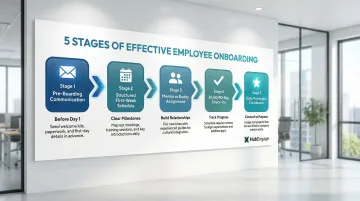
Effective onboarding includes:
- Pre-boarding communication that starts before the first day
- Structured first-week schedules with clear milestones
- Assigned mentors or onboarding buddies
- Regular check-ins at 30, 60, and 90 days
- Early opportunities to contribute meaningfully
Build a Culture of Consistent Recognition
An effective recognition culture is frequent (not just annual), specific (tied to behaviors or outcomes), and accessible across all employee types. More than half (55%) of U.S. employees either do not receive recognition at all or do not receive recognition that satisfies strategic pillars.
Peer-to-peer recognition is especially powerful for building team belonging. Best-in-Class companies are 41% more likely to empower employees to recognize each other for great work. Traditional recognition programs that rely on desktop access or email routinely miss frontline and deskless workers — organizations must ensure recognition is accessible via mobile, SMS, and digital displays to reach 100% of the workforce.
Key recognition best practices:
- Enable peer-to-peer recognition alongside manager recognition
- Make recognition mobile-accessible for frontline workers
- Tie recognition to specific behaviors and company values
- Provide both social recognition (public acknowledgment) and tangible rewards
- Track recognition frequency to identify gaps
Invest in Communication That Actually Reaches Every Employee
Many organizations face a critical communication gap, particularly those with large frontline, remote, or distributed workforces. 84% of employees in frontline roles feel they don't receive enough direct communication from headquarters.
The scale of this problem is significant. Approximately 80% of the global workforce — more than 2.7 billion employees — is considered "deskless," yet 80% of deskless workers report not receiving adequate communication from their employers.
Critical messages reach corporate employees but miss deskless workers entirely when organizations rely solely on email or intranet. Multi-channel communication strategies that deliver information via mobile, SMS, digital displays, and email ensure no employee is left out.
This is where a platform like HubEngage helps organizations close that gap. HubEngage auto-formats content for each channel — mobile apps, web intranet, email, SMS, and digital signage — and reaches all employee types in one click, eliminating the need to manually reformat and distribute messages separately to each channel.
Create Pathways for Growth and Development
When employees can see a clear path forward, they stay engaged. Without visible growth opportunities, high-potential employees disengage quietly — and often leave before anyone notices. Structured development programs, mentorship, and regular career conversations give employees a reason to invest in the organization investing in them.
Practical development strategies:
- Offer structured learning programs accessible via mobile for deskless workers
- Create mentorship pairings between senior and junior employees
- Prioritize internal promotions and lateral moves
- Hold quarterly career-development conversations (not just annual reviews)
- Provide clear competency frameworks showing advancement paths
Use Feedback Loops and Pulse Surveys Intentionally
Surveys only build trust when they lead to visible action. Surveys with no follow-through erode it. If leaders conduct a survey but take no action on the results, employee engagement will likely decrease and turnover will increase.
Pulse surveys are a faster, more frequent alternative to annual surveys that give leaders real-time visibility into team sentiment without survey fatigue. 75% of organizations now listen to employees at least quarterly, compared to just 18% surveying more than once per year a decade ago. Continuous listening allows leaders to address needs in real time rather than reacting to six-month-old data.
Effective feedback practices:
- Deploy short pulse surveys monthly or quarterly
- Share results transparently with teams
- Discuss findings in team meetings and set improvement goals
- Follow up on previous survey action items
- Close the loop by showing employees their voices led to change
Leverage Gamification and Technology to Drive Participation
Gamification — applying game mechanics like points, challenges, leaderboards, and rewards to everyday work activities — dramatically increases employee participation in engagement programs such as recognition, learning, surveys, and communications.
83% of employees who receive gamified training feel motivated, while 61% of those who receive non-gamified training feel bored and unproductive. Microsoft's gamified training increased employee engagement 3.5 times. By 2028, 40% of large warehouse operations and distribution centers will have deployed employee engagement and gamification tools.
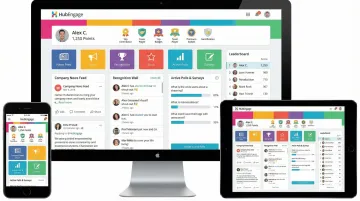
Platforms applying gamification across the entire employee experience — not just a single feature — produce higher sustained engagement. HubEngage unifies communications, recognition, surveys, social engagement, and learning in one platform — with points, badges, and leaderboards applied across all activities — so HR and communications leaders can drive consistent participation and track what's actually working.
The Manager Factor: Why Engagement Lives or Dies at the Team Level
70% of the variance in team engagement is determined solely by the manager. Fixing culture at the executive level without equipping managers is insufficient. The manager's daily interactions, coaching approach, and ability to create psychological safety determine whether employees thrive or disengage.
What High-Engagement Managers Do Differently
The strongest driver of employee engagement is weekly meaningful feedback — and it's precisely where most managers fall short. High-engagement managers build a consistent weekly coaching habit that covers goals, development, and individual strengths.
In practice, that means:
- Recognizing contributions specifically, not generically
- Advocating for team members' growth and visibility
- Delivering feedback that makes employees feel seen — not just assessed
Low-engagement managers, by contrast, struggle most with recognition and frequent feedback. The behaviors that matter most to employees are the ones their managers are least likely to practice.
Developing Engagement-Capable Managers
Organizations can develop engagement-capable managers through:
- Teach structured one-on-one frameworks so managers know how to run effective weekly conversations
- Track manager effectiveness through team engagement scores, not just output metrics
- Offer training specific to recognition, feedback delivery, and strengths-based coaching
- Create peer learning communities where managers share challenges and refine their approach
- Build in regular coaching checkpoints to help managers address their areas for growth
How to Measure Employee Engagement — and Why Most Approaches Fall Short
The Spectrum of Measurement Methods
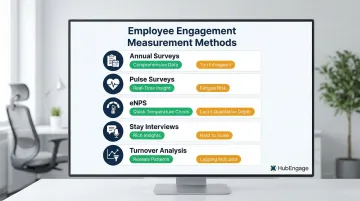
Organizations measure engagement through annual engagement surveys, pulse surveys, eNPS (Employee Net Promoter Score), stay interviews, turnover analysis, and people analytics dashboards. Each method has tradeoffs:
- Annual surveys provide comprehensive data but are too infrequent to catch rapid sentiment shifts
- Pulse surveys offer real-time insights but require careful design to avoid survey fatigue
- eNPS gives you a quick temperature check, but without qualitative follow-up it tells you little about why scores look the way they do
- Stay interviews provide rich qualitative insights but don't scale easily
- Turnover analysis only surfaces problems after they've already become costly — a lagging indicator by design
Why Most Companies Under-Measure or Mis-Measure Engagement
Most companies rely solely on annual surveys, use "percent favorable" metrics that inflate perceived engagement, or fail to take visible action on survey results — which destroys trust in the measurement process itself. When employees see action, they trust the process and engage more deeply.
The data-without-action gap is a real attrition risk. When organizations accumulate feedback without a coherent response, employees stop responding — and eventually stop engaging.
Connecting Measurement to Action
Measurement only creates value when someone acts on it. Leaders and managers need to discuss findings with their teams, set specific goals, and follow through — that follow-through is what convinces employees their voices are actually heard.
Platforms that surface continuous data — participation rates, recognition frequency, survey sentiment, communication reach — allow HR teams to spot disengagement signals early and course-correct before attrition spikes. Engagement survey data collected six months to a year prior can even be used to build a demographic profile of employees who left voluntarily, helping organizations predict future turnover and intervene before it repeats.
Frequently Asked Questions
What is workforce engagement?
Workforce engagement measures how emotionally invested employees are in their work — including their motivation to contribute and their alignment with organizational goals. Unlike satisfaction (which is passive), engagement drives the discretionary effort that actually moves performance.
What are the 5 C's of employee engagement?
Each C addresses a different driver of engagement:
- Clarity — employees know what's expected of them
- Connection — relationships with team and a sense of purpose
- Contribution — feeling that one's work genuinely matters
- Credibility — trust in leadership and organizational integrity
- Communication — open, transparent information sharing at all levels
What are the four types of employee engagement?
Engagement spans four dimensions:
- Cognitive — mental investment and focus on work
- Emotional — sense of belonging and genuine care about outcomes
- Physical — the energy and effort employees bring each day
- Social — connection to colleagues and the broader workplace community
What are the three P's of employee engagement?
The three P's cover the core human needs that sustain engagement:
- Purpose — meaningful work tied to a larger organizational mission
- People — quality relationships with managers, peers, and teams
- Progress — growth, recognition, and a sense of forward momentum in one's career
What is workforce engagement management (WEM)?
Workforce engagement management is a framework built for contact centers and high-volume service environments—that combines tools and practices to manage employee performance, scheduling, quality, and satisfaction in service of both employee experience and customer outcomes. Outside contact centers, the term "employee engagement" covers the same goals but applies more broadly across every function and industry.