Workplace appreciation has evolved from an optional perk into a strategic tool for improving employee engagement, job satisfaction, and retention. When employees feel valued for their contributions, they are more likely to stay motivated, productive, and committed to their organization.
According to SHRM research, recognition programs positively influence employee retention, highlighting their growing importance in today’s workplace.
To strengthen company culture and create meaningful employee experiences, organizations are increasingly investing in an employee recognition platform. These platforms make it easier to celebrate achievements, encourage peer-to-peer recognition, and reinforce company values.
In this article, we will explain the fundamentals of employee recognition, compare leading platforms and best strategies for employee recognition.
Key Takeaways:
- Employee recognition software improves engagement, increases productivity, and reduces employee turnover effectively.
- Top recognition platforms combine rewards, recognition, automation, analytics, and employee appreciation.
- Modern recognition apps support remote, hybrid, frontline, and deskless employees everywhere.
- Successful recognition programs combine rewards, appreciation, milestones, and culture-building activities effectively.
- Choose software with easy use, integrations, reporting, scalability, and engagement features.

What is Employee Recognition?
At its core, employee recognition is about showing appreciation for an employee’s contributions, behaviors, or achievements. It goes beyond paychecks and promotions as it is those everyday and milestone moments where organizations acknowledge effort, performance, and impact. Recognition can be:
- Formal – structured programs like annual awards or performance-based bonuses.
- Informal – quick peer-to-peer shoutouts or manager thank-yous.
- Monetary – spot bonuses, gift cards, or incentives.
- Non-Monetary – public praise, development opportunities, or symbolic awards.
When supported by the right recognition platform, organizations can scale these moments of appreciation consistently across the workforce. Explore more on employee recognition awards to see creative categories and examples.
Why Use Employee Recognition Software & Apps?
Employee recognition software and apps streamline how organizations celebrate employees. From milestone celebrations to peer-to-peer shoutouts, these platforms simplify and automate recognition so nothing is overlooked.
Key benefits:
- Boosts morale and retention
- Encourages peer-to-peer recognition via mobile apps.
- Provides analytics to measure impact.
- Ensures inclusivity for remote, hybrid, and deskless employees.
For program-level strategies, visit our employee recognition programs guide.
Top 20 Employee Recognition Software & Apps in 2026: Comparison Table
Below is a snapshot of the main pros and cons of some of the best employee recognition platforms. Use this as a quick reference before diving into the full table.
HubEngage
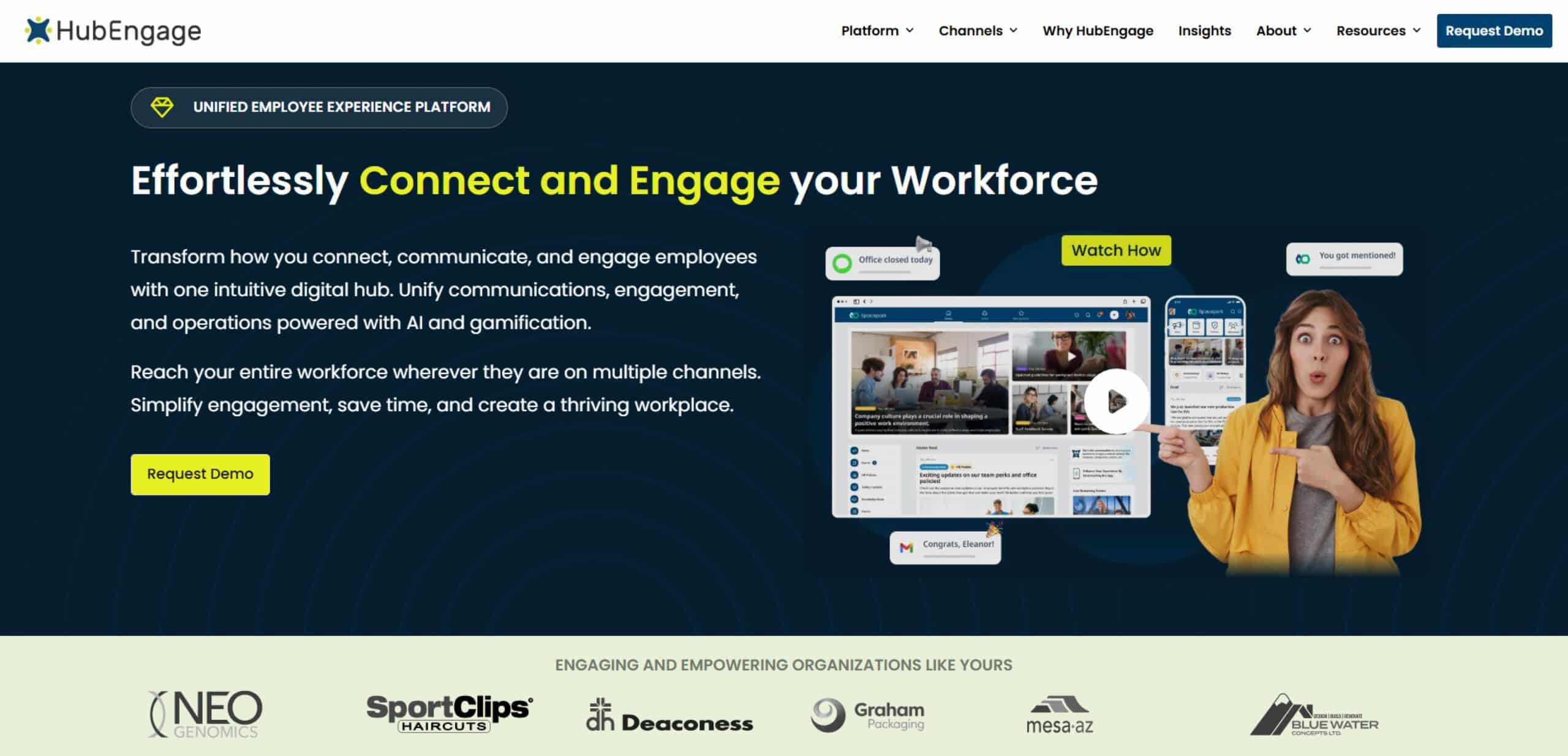
Pros: Multi-channel delivery, gamified, fun, customizable, integrates with comms hubs, strong analytics.
Cons: Best suited for organizations looking for a robust platform rather than a piecemeal solution.
Transition tip: Ideal for businesses that want more than recognition alone.
Bonusly
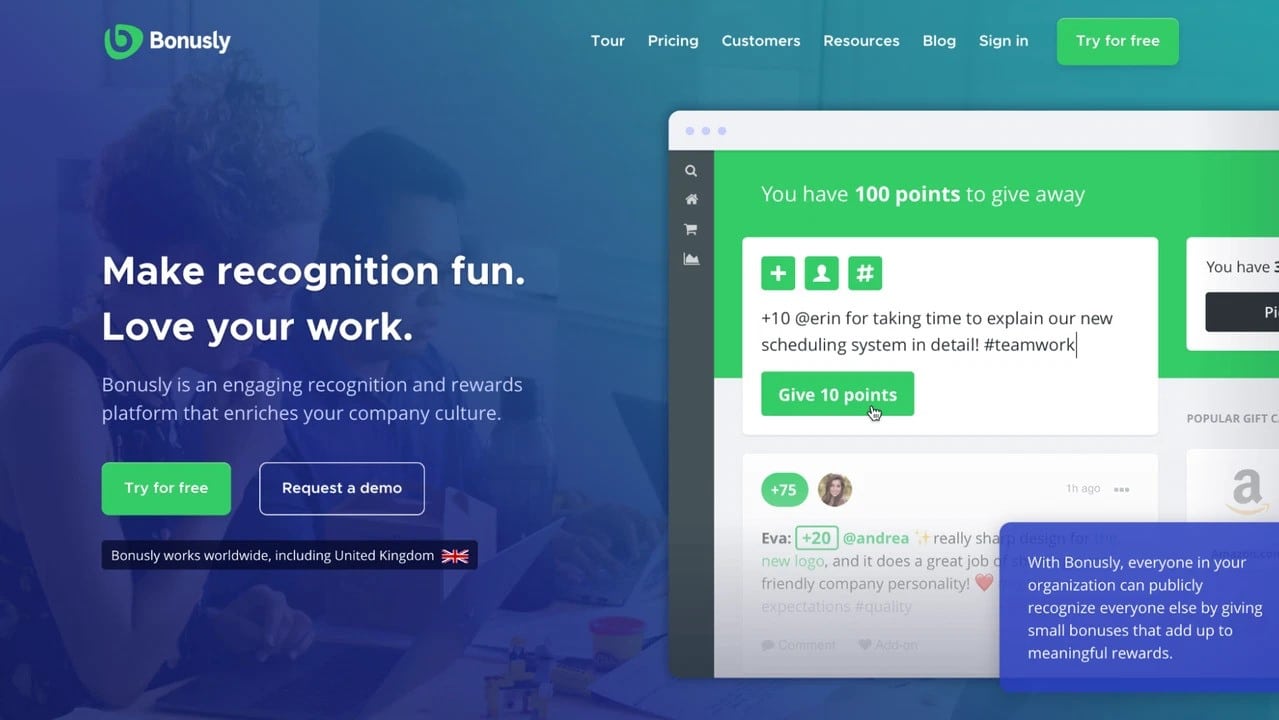
Pros: Affordable, fun peer-to-peer micro-bonuses, strong integrations.
Cons: Limited for large-scale enterprise programs.
Transition tip: Great choice for small to mid-sized companies.
Awardco
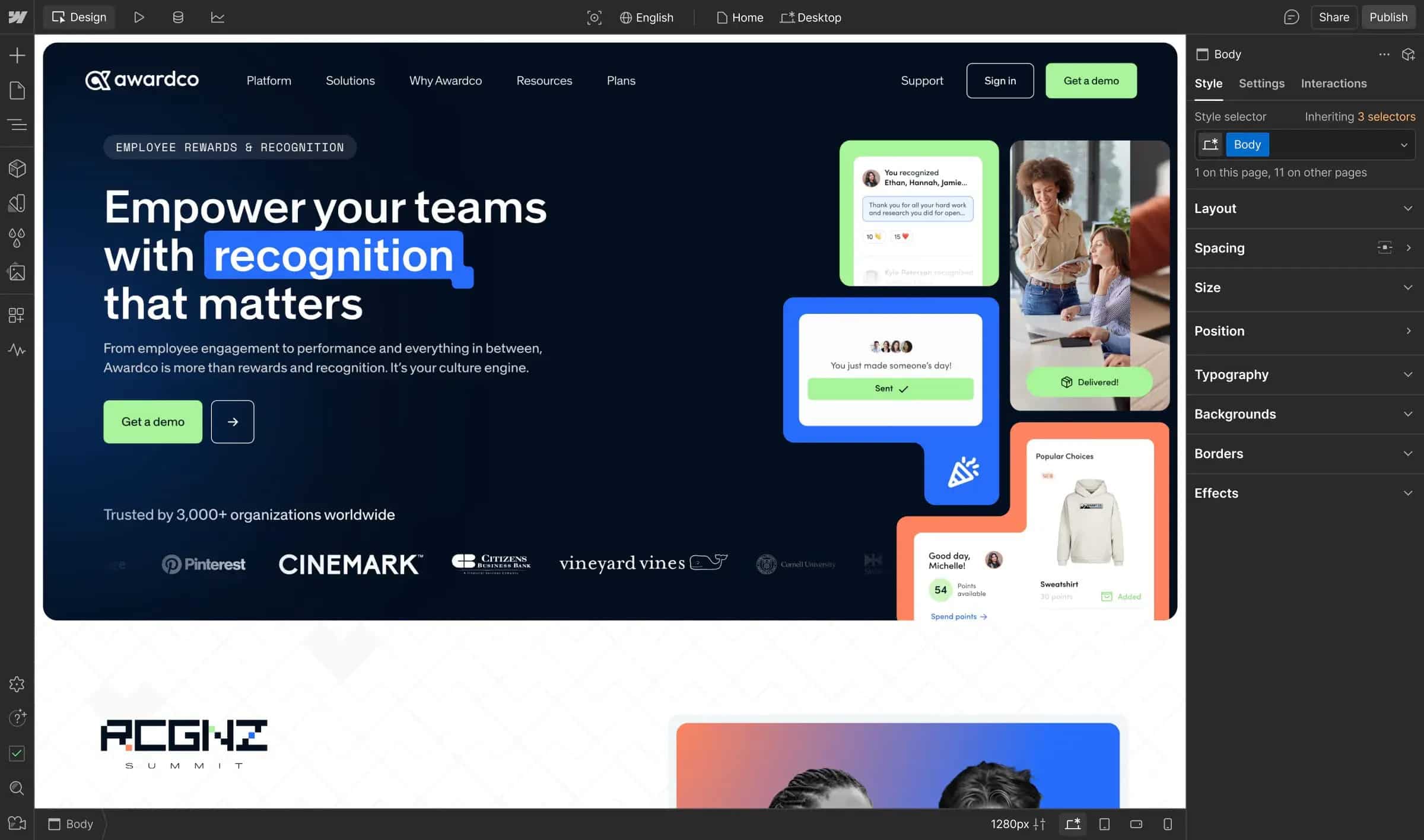
Pros: Huge reward catalog, no markups, Amazon partnership.
Cons: Higher starting cost ($5,000+ annually) may not suit SMBs.
Transition tip: Best for organizations seeking a vast reward marketplace.
Workhuman
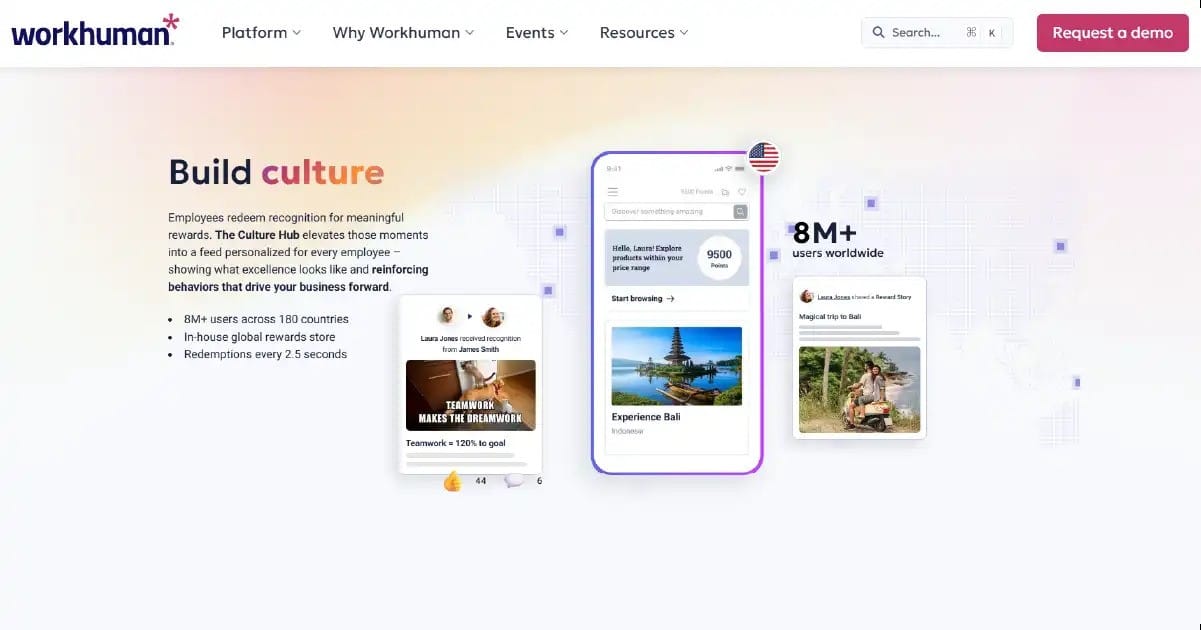
Pros: Enterprise-grade, AI-driven, strong analytics.
Cons: Pricing not transparent; best for large global orgs.
Transition tip: Suited for multinational enterprises.
NectarHR
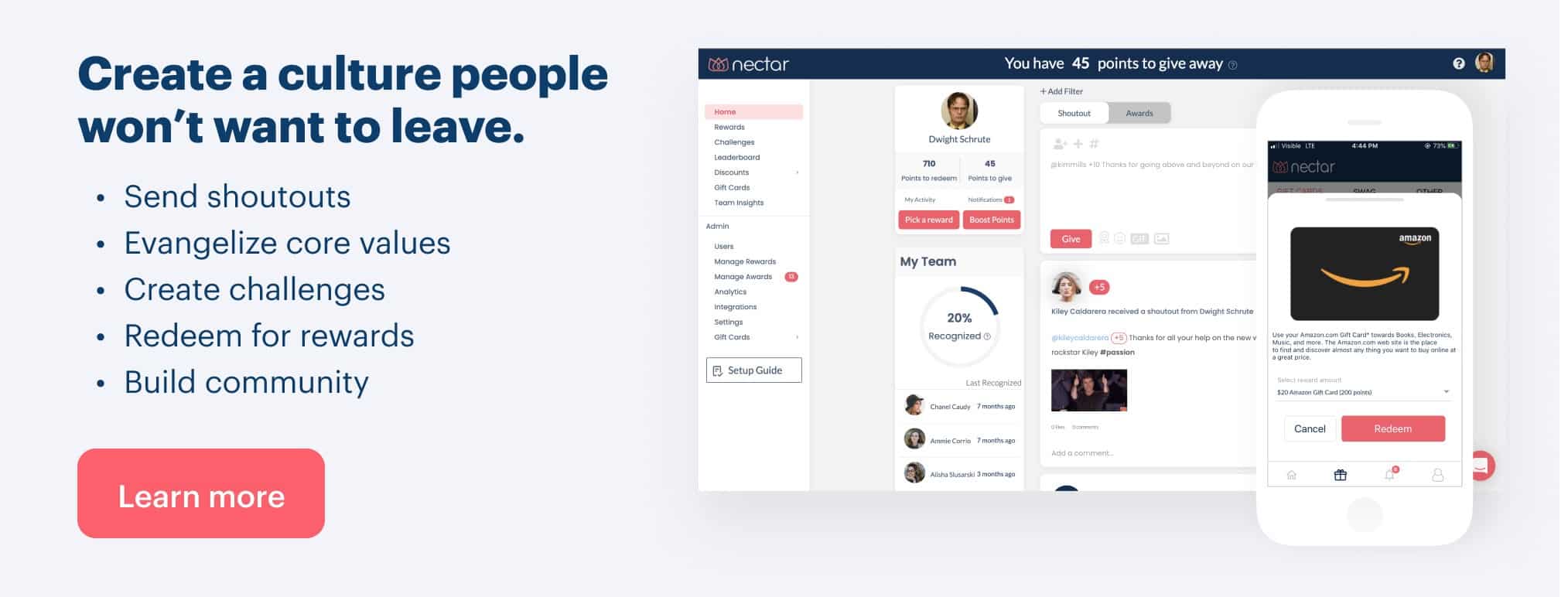
Pros: Nectar is affordable and easy to adopt, with a familiar social-media-style interface and strong integrations across Slack, Microsoft Teams, and leading HRIS platforms.
Cons: The analytics suite lacks depth for enterprise needs, and monthly point caps can feel limiting for highly active recognizers.
Transition Tip: Perfect for culture-first companies ready to embrace peer-to-peer recognition without the complexity or overhead of enterprise tools.
Guusto
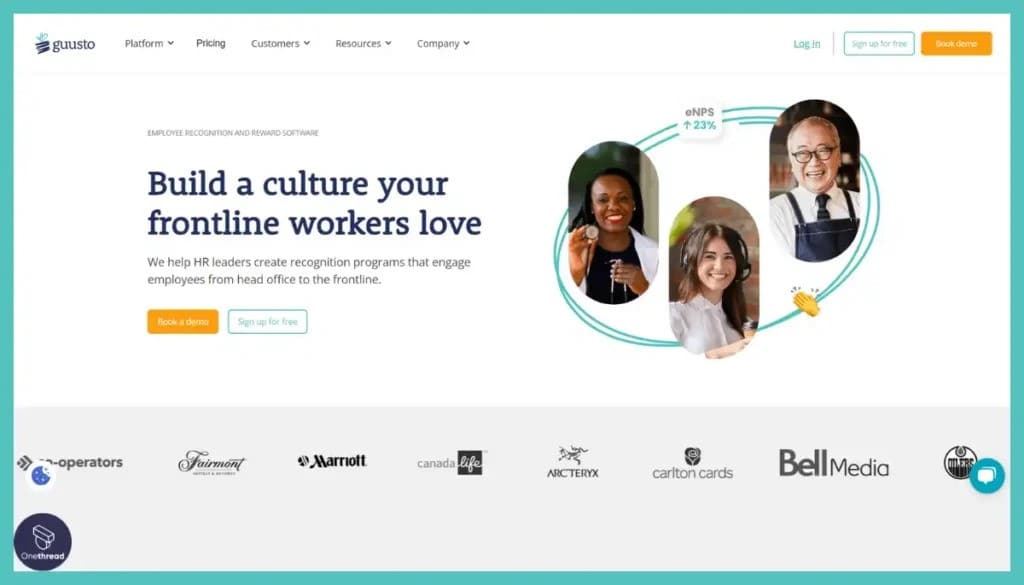
Pros: Budget-friendly, simple, strong for frontline/hybrid workers.
Cons: Smaller feature set compared to enterprise platforms.
Transition tip: Practical for hybrid or deskless teams.
Below is a detailed comparison of the leading employee recognition platforms and apps with verified pricing and review data (as of Jan 2026):
| Platform | Pricing (Starting) | Best For | Highlight Features | Integrations |
|---|---|---|---|---|
| HubEngage | From $1/user/month (Pro) | SMBs & Enterprise | Multi-channel, gamification, gift cards, AI, surveys | Slack, Teams, HRIS |
| Bonusly | $2.70–$5/user/month | Peer-to-peer rewards | Micro-bonuses + analytics | Slack, Teams, Jira |
| Awardco | $5,000+/year minimum | Enterprise & deskless | Amazon-backed catalog + no markups | Microsoft, Salesforce |
| Workhuman | Quote-based pricing | Global organizations | AI-powered “Human Intelligence” | HRIS, Workday |
| Motivosity | $3/user/month + setup fee | Culture-driven teams | ThanksMatter debit card | Slack, Teams, Outlook |
| Guusto | $3/user/month | Hybrid/frontline | Print + digital gift cards | HRIS, API available |
| Empuls | $2.50/user/month | All-in-one engagement | Recognition + surveys + wellness | Slack, MS Teams, Gmail |
| Assembly | $2–$3/user/month | Value-based culture | AI-assisted praise messaging | Asana, Google Workspace |
| Kudos | Custom pricing | Mid to large orgs | Values-based recognition, eCards | MS Teams, Outlook |
| Reward Gateway | Custom pricing | Global orgs | Recognition + perks + wellbeing | HR systems, APIs |
| Nectar | $2.75/user/month | SMBs | Peer recognition, Slack integration | Slack, Teams |
| O.C. Tanner | Custom pricing | Enterprise legacy | Service awards + culture alignment | HR systems |
| Achievers | Custom pricing | Global enterprises | Values-based, analytics-driven recognition | MS Teams, Outlook |
| Terryberry | Custom pricing | All company sizes | Service awards + wellness incentives | HR platforms |
| Blueboard | Custom pricing | Experiential rewards | Travel & experience-based recognition | HR systems, APIs |
| Applauz | Free up to 20 users | Small businesses | Affordable recognition + custom rewards | Slack, Teams |
| Perkbox | £2.50/user/month | UK/global SMBs | Recognition + perks + wellbeing | Integrations available |
| Kazoo/WorkTango | Custom pricing | Mid-size to enterprise | Recognition + performance + surveys | HR systems, Teams |
(Details reflect the latest available pricing, review scores, and integrations verified as of Jan 2026. This table is updated quarterly to ensure accuracy.)
How to choose the right Employee Recognition Software?
Below is the checklist we use for comparing peer recognition platforms based on your workforce, budget, and business needs.
| Check | What to Look For |
|---|---|
| Ease of use | Simple recognition process for employees and managers |
| Mobile access | Support for remote, frontline, and deskless teams |
| Integrations | Connections with Slack, Teams, HRIS, and email |
| Rewards and pricing | Flexible rewards with clear and predictable costs |
| Analytics | Reports on participation, engagement, and recognition gaps |
| Scalability | Ability to support more employees and locations |
Effective Employee Recognition Methods
When it comes to keeping employees engaged, recognition methods matter. Organizations achieve the best results by combining multiple recognition approaches.
| Method | Role/Function |
| Peer-to-Peer Recognition | Encourages appreciation across all levels and departments. |
| Manager Recognition | Reinforces performance and desired workplace behaviors. |
| Monetary & Non-Monetary Rewards | Balances tangible rewards with meaningful appreciation. |
| Milestone Celebrations | Recognizes work anniversaries, promotions, certifications, and achievements. |
Explore more employee reward ideas that you can try in your organization.
Designing an Employee Rewards & Recognition Program
To design a program that works, organizations should follow a structured approach:
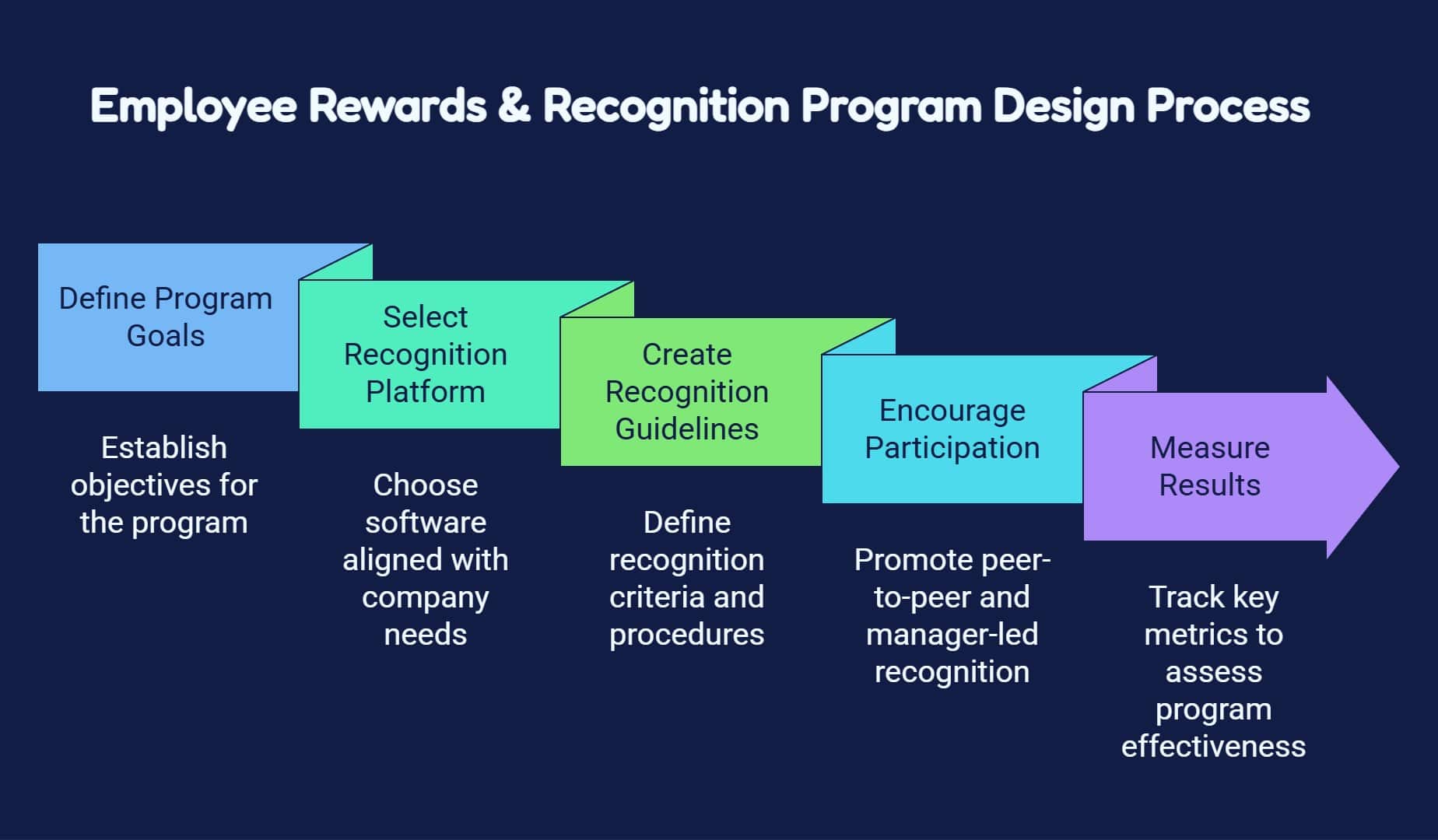
To understand these steps in detail, explore our complete guide on employee recognition programs.
Key Recognition Topics Explained
Monetary Rewards
Bonuses, gift cards, and pay-based recognition are powerful motivators when paired with genuine appreciation.
Modern employee recognition software lets managers automate and personalize these rewards. Learn more in detail by exploring our full guide on the benefits of monetary rewards.
Spot Awards
Spot awards are instant recognitions for going above and beyond. They reinforce positive behavior at the right moment, ensuring employees feel valued in real time. Discover our blog to learn how to implement spot awards.
Employee Spotlight
Employee spotlight programs highlight individuals in newsletters, intranets, or digital signage. They build community and showcase achievements beyond standard KPIs. Explore creative employee spotlight ideas and questions.
Employee Appreciation Days
Special days of recognition such as Employee Appreciation Day boost morale. However, the best companies extend appreciation throughout the year to ensure ongoing engagement.
Explore our blog on employee appreciation day ideas to get inspiration and implement for your team.
Intrinsic vs. Extrinsic Rewards
Recognition is most effective when it balances intrinsic motivators like growth, mastery, purpose with extrinsic rewards such as bonuses, perks, awards. The best employee recognition platforms help managers understand when to use each. Dive deeper into intrinsic and extrinsic rewards for examples.
Workplace Recognition
Workplace recognition shapes culture. It reinforces values, creates trust, and answers the core question employees ask daily: Does my work matter?
Employee recognition software and apps make recognition accessible and frequent, ensuring appreciation is woven into daily workflows. Learn more about workplace recognition and why it matters.
Rewards and Benefits
While often used interchangeably, rewards and benefits are distinct. Rewards are tied to performance and achievements. While benefits are part of the overall compensation package like healthcare, retirement plans, and PTO.
Both play critical roles in employee satisfaction, but recognition programs work best when rewards complement core benefits. Explore our full guide on the differences between rewards and benefits.
How Recognition Software & Apps Automate Engagement?
Modern recognition platforms replace manual work with automated engagement features such as:
- Automated birthday and anniversary celebrations.
- Push notifications via apps for instant recognition.
- Gamification with leaderboards and badges.
- Integrated surveys to collect feedback.
Why Recognition Software Matters?
Recognition software matters because it drives measurable outcomes:
- Spotlight Top Performers: Helps identify and celebrate employees who consistently contribute exceptional work.
- Promote Peer Recognition: Encourages employees to appreciate and acknowledge each other’s contributions.
- Optimize Budgets: Uses analytics to maximize the impact of recognition and reward spending.
- Encourage Inclusivity: Ensures recognition reaches employees across global, hybrid, remote, and frontline workforces.
Learn how recognition connects to employee benefit programs.
Do Employee Recognition Programs work?
Employee recognition programs are proven to improve engagement, productivity, and retention. This happens when an employee
- Gets valued and appreciated
- Experience greater job satisfaction
- Develop stronger loyalty to the organization
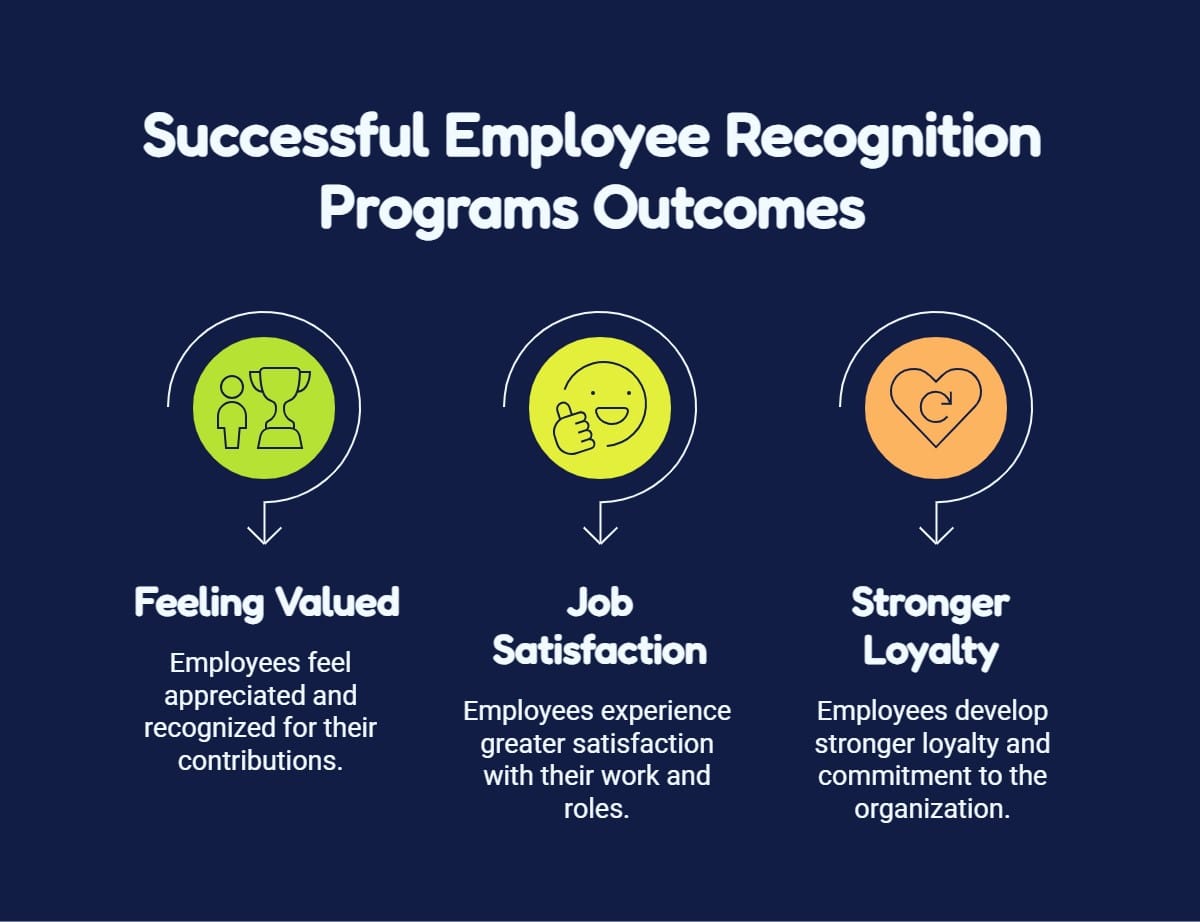
With this you build deeper connections with their teams, and are more likely to contribute positively to workplace culture.
How do Employee Recognition Platforms support Team Recognition?
Having an employee recognition software make it easy for managers and coworkers to celebrate achievements in real time with the help of following features:
Peer-to-Peer Recognition
Enables employees to recognize and appreciate colleagues for their contributions and achievements.
Automated Milestones
Automatically celebrates birthdays, work anniversaries, and service milestones to ensure no important event is missed.
Rewards Management
Allows organizations to offer gift cards, points, incentives, and other rewards tied to recognition programs.
Social Recognition Feeds
Creates a visible stream of employee achievements and appreciation, encouraging engagement and a culture of recognition.
Are there other ways to Reward and Recognize Employees?
Combining monetary as well as non-monetary rewards often delivers the best results for employee satisfaction and engagement. For example:
- Bonuses
Cash rewards given to employees for exceptional performance, achievements, or exceeding goals. - Gift Cards
Flexible rewards that employees can use for shopping, dining, entertainment, or other purchases. - Extra Time Off
Additional paid leave that helps employees maintain a healthy work-life balance. - Public Praise
Recognition shared publicly to boost employee morale, motivation, and visibility within the organization. - Employee Spotlights
Highlights employee accomplishments, contributions, and success stories to inspire others.
Compliance, Taxation & Legal Considerations in Employee Rewards
Employee rewards may have various tax, legal, and compliance implications depending on the country, industry regulations, and reward type.
| Compliance Type | Key Considerations | Examples |
| Tax Compliance | Ensure taxable rewards are properly reported and payroll taxes are withheld when required. | Cash bonuses |
| Payroll Compliance | Rewards processed through payroll must comply with wage regulations and be accurately recorded. | Performance bonuses |
| Employment Law Compliance | Ensure reward programs comply with labor laws and maintain fair eligibility criteria. | Employee incentive plans |
| Equal Opportunity & Anti-Discrimination Compliance | Rewards should be distributed fairly without discrimination based on protected characteristics. | Employee of the month awards |
| Data Privacy Compliance | Must comply with privacy regulations governing data collection, storage, and processing. | GDPR, CCPA |
Scaling Recognition Programs for Global & Distributed Workforces
Modern employee recognition software helps organizations deliver consistent recognition across remote, hybrid, and global teams.
Multi-Language Support
Allows recognition participation in preferred languages, promoting inclusivity, engagement, communication, and workforce connection.
Flexible Reward Options
Provides diverse rewards, ensuring meaningful recognition, personalization, employee satisfaction, motivation, and engagement.
Mobile Accessibility
Enables recognition anytime through mobile devices, supporting engagement, remote workers, and real-time appreciation.
Transform Recognition with HubEngage Employee Recognition Hub
Our robust employee recognition platform offers top-down, bottom-up, and peer-to-peer recognition programs, along with nomination processes, automated milestone acknowledgments, engagement prompts, and gamified leaderboards.
The platform promotes participation by rewarding points not only when employees are recognized but also when they recognize others, submit nominations, applaud achievements, and leave comments, helping increase adoption and engagement.
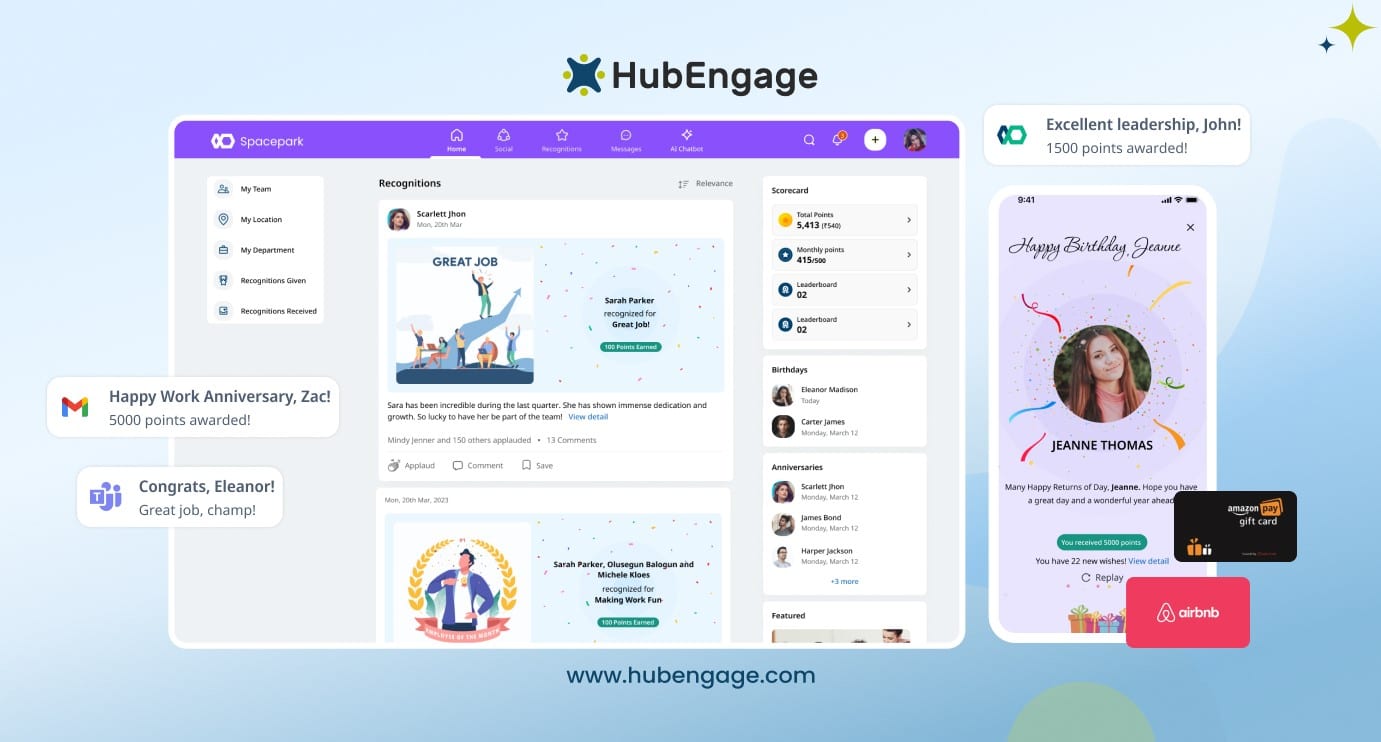
Employees can conveniently redeem accumulated points through a rewards marketplace featuring digital gift cards along with integrations to merchandise vendors for branded rewards. Recognition can be shared through multiple channels including mobile apps, web, email, SMS, digital signage, Slack, and Microsoft Teams.
Organizations may implement the recognition hub as a standalone solution or enhance it with additional modules from our employee experience platform, including an intranet, social feed, AI-powered surveys, messaging tools, and an AI chatbot.
Key Features:
- Peer-to-peer, manager, and company-wide recognition
- Automated birthdays, anniversaries, and milestone celebrations
- Gamification points, badges, and leaderboards for giving rewards.
- Multi-channel recognition across web, mobile, email, and chat tools
- Rewards marketplace with gift cards and branded merchandise options
Conclusion
Employee recognition software has become an essential investment for organizations looking to improve engagement, strengthen workplace culture, and retain top talent.
Having the right platform, businesses can create meaningful recognition experiences that motivate employees, reinforce company values, and drive measurable results.
Whether you need peer-to-peer recognition, rewards, or enterprise-wide engagement tools, the right solution can make a lasting impact.
To see how a unified approach can transform your workplace, explore the HubEngage Employee Experience Platform by scheduling a personalized demo today.
Employee Recognition Software FAQs
What is the best employee recognition software?
It depends on company size and needs. For an all-in-one solution, HubEngage is a strong choice due to its multi-channel capabilities, while Bonusly and Awardco are popular for peer-to-peer and enterprise recognition respectively.
How much does employee recognition software cost?
Pricing ranges from free upto $2–$5 per user per month for most SMB-focused platforms. Enterprise tools usually require custom quotes and larger budgets.
Why are employee recognition apps important?
Recognition apps make it easy for employees and managers to give real-time, consistent recognition—especially in remote or deskless environments—keeping engagement high.
How do I choose the right recognition platform?
Look for features like peer-to-peer recognition, integration with your existing tools (Slack, Teams, HRIS), budget controls, and reporting. Match platform strengths with your company culture and size.
What types of rewards can be offered?
Rewards range from monetary incentives like bonuses and gift cards to non-monetary recognition such as public praise, development opportunities, and symbolic awards.
What is the ROI of employee recognition programs?
According to Gartner, SHRM, and McKinsey studies, organizations with strong recognition programs see higher productivity, lower turnover, and improved engagement. ROI comes from reduced hiring costs, increased output, and stronger employee loyalty.
How does AI improve employee recognition software?
AI enhances recognition platforms by suggesting timely recognition moments, analyzing sentiment in messages, personalizing rewards, and providing predictive insights on engagement trends.
How can recognition programs avoid favoritism and unconscious bias?
Recognition programs can reduce favoritism by using clear criteria, transparent processes, diverse reviewers, and regular audits. Employee recognition software helps track participation and ensures fair recognition opportunities for everyone.
What role does peer-to-peer recognition play in building team trust?
Peer-to-peer recognition strengthens team trust by encouraging appreciation among coworkers. It improves collaboration, boosts morale, and creates a supportive workplace culture where employees feel valued by colleagues.
How can employee recognition be aligned with company values and behaviors?
Organizations can align recognition with company values by rewarding behaviors that reflect core principles. Recognition platforms can link awards and praise directly to specific values and goals.
What are common mistakes that reduce the impact of recognition programs?
Common mistakes include inconsistent recognition, lack of transparency, delayed appreciation, ignoring employee preferences, and focusing only on top performers. Regular and meaningful recognition delivers better results.
How can recognition programs stay relevant as organizations scale?
Recognition programs remain effective by using scalable software, gathering employee feedback, updating reward options, and ensuring recognition reaches remote, hybrid, and frontline employees consistently.
Can recognition software support both formal and informal recognition?
Yes, employee recognition software supports formal programs like service awards and informal recognition such as peer shout-outs. This combination helps create a continuous culture of appreciation.
How does real-time recognition differ from annual or milestone-based recognition?
Real-time recognition rewards employees immediately after achievements, reinforcing positive behaviors quickly. Annual or milestone recognition celebrates long-term contributions, anniversaries, and major accomplishments over time.
What safeguards help ensure recognition programs remain inclusive over time?
Inclusive recognition programs use transparent guidelines, equal participation opportunities, diverse reward choices, and regular reporting. Monitoring recognition trends helps ensure all employees receive fair acknowledgment.