Why do organizations face Intranet Challenges?
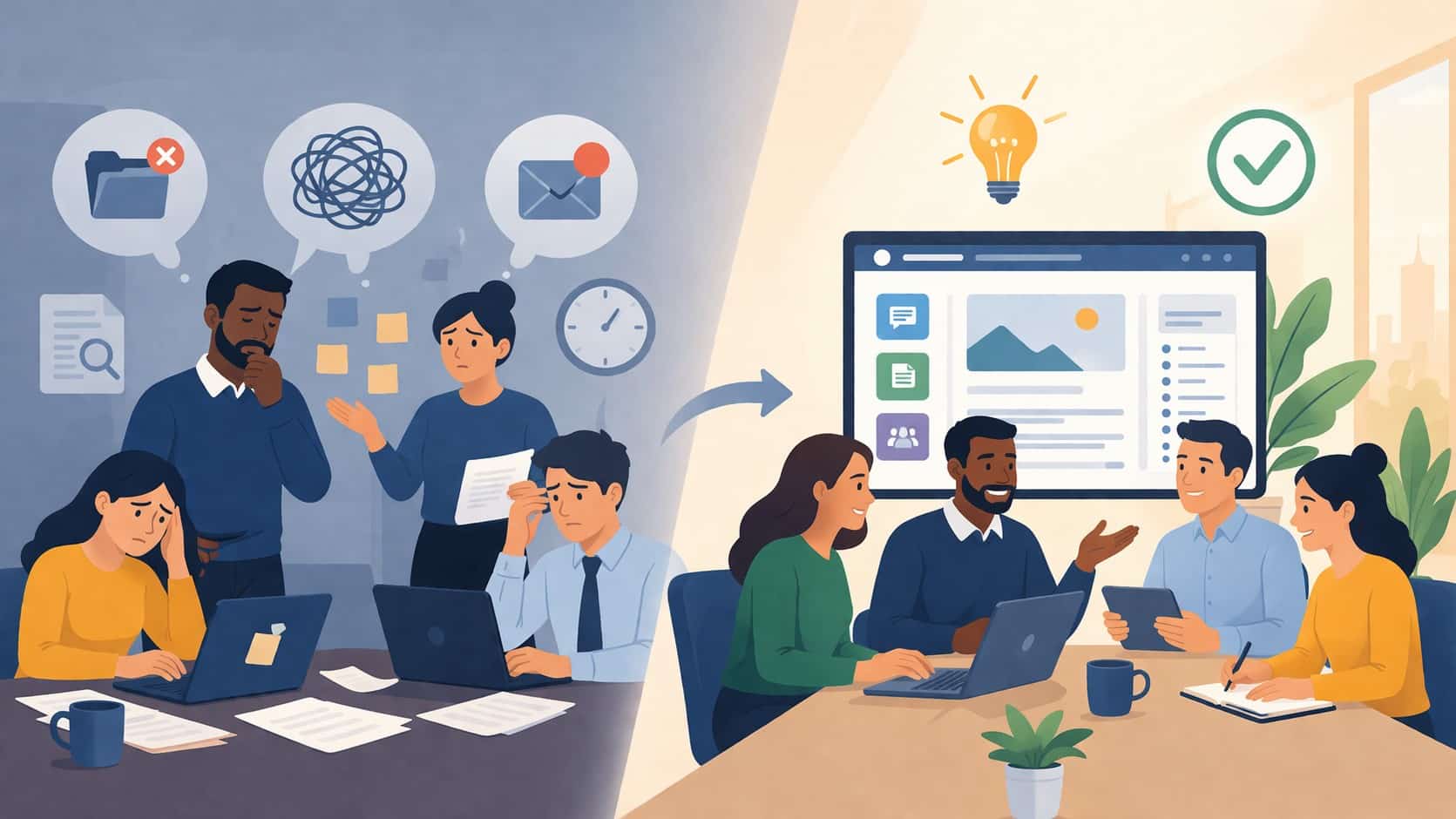
Intranet platforms were originally designed to centralize communication, streamline workflows, and enhance employee collaboration. However, despite significant investments, many organizations still struggle with persistent intranet challenges that limit adoption and business value.
As organizations grow and digital workplaces evolve, the expectations from an Employee Intranet have changed dramatically. Today’s workforce demands mobile access, personalized experiences, and seamless integrations yet many legacy systems fall short.
We have seen that both the challenges of designing intranets and the challenges of using intranets contribute equally to poor outcomes. Without a user-first approach and continuous optimization, intranets quickly become outdated. In this article we have listed out various challenges of using intranets, their impact and how to solve these problems.
Key Takeaways
- Intranet challenges are common and usually come from poor user experience, and no ownership.
- Employee adoption is the most important factor. If people don’t use it, the intranet won’t deliver value.
- Modern intranets should be mobile-friendly, personalized, and connected to everyday tools.
- Good search and clear content ownership help employees find information faster and build trust.
- Removing the communication gaps helps the teams work better together and stay aligned.
- Using analytics helps you keep improving performance of intranet over time.
Why many Intranets fail to deliver business value?
Many organizations launch intranet platforms with high expectations but fail to achieve measurable ROI. The real problem is using intranets as static content hubs rather than dynamic employee experience platforms.
As per Gallup only about 23% of employees worldwide are engaged at work, highlighting a major opportunity for better communication tools. In our experience, intranets fail due to:
- Lack of clear strategy and ownership
- Poor user experience and outdated interfaces
- Limited employee engagement features
- Weak integration with workplace tools
- Inconsistent content governance
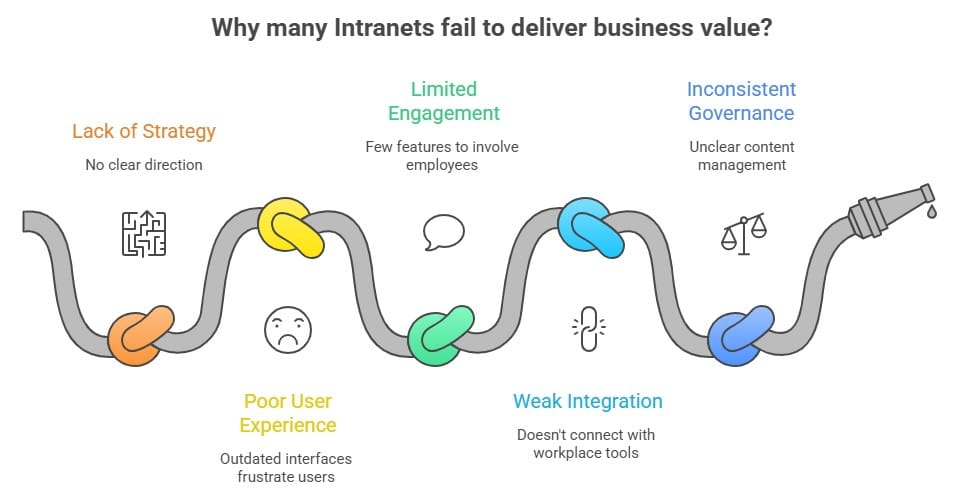
These issues highlight deeper challenges of designing intranets that fail to align with modern workforce needs.
Common Intranet Challenges organizations face
1: Low Employee Adoption
One of the most critical intranet challenges is low adoption. If employees don’t actively use the platform, it fails entirely.
How to Solve It?
- Launching with a strong internal communication strategy
- Providing onboarding and training
- Ensuring leadership participation
- Delivering relevant and personalized content
2: Poor User Experience and Complex Navigation
Complicated interfaces decrease the use of the platform as it creates a lot of frustration and causes a bad user experience.
How to Solve It?
- Design intuitive, user-friendly interfaces
- Simplify navigation structures
- Use modern UI/UX principles
- Conduct regular usability testing
3: Outdated and Irrelevant Content
If the content is not updated regularly then it becomes outdated which decreases the engagement of the user in the intranet.
How to Solve It?
- Establish content governance policies
- Assign content owners
- Regularly audit and update information
4: Difficulty in finding information
Employees generally waste a lot of time in searching the information they are looking for such as documents and policies.
How to Solve It?
- Implement advanced search functionality
- Use tagging and metadata
- Organize content logically
5: Lack of Mobile Accessibility
With remote and hybrid work, mobile access is essential. Companies with no mobile friendly intranets makes teamwork difficult.
How to Solve It?
- Adopt mobile-first intranet platforms
- Provide apps for on-the-go access
6: Limited Employee Engagement
Traditional intranets do not have interactive features, which leads to poor user experience and low engagement.
How to Solve It?
- Add social features like likes, comments, and polls
- Recognize employee achievements
- Encourage two-way communication
7: Information Silos Across Departments
Generally, departments work on their own which creates many communication gaps leading to less productive work.
How to Solve It?
- Break down silos with cross-functional content
- Centralize communication
- Promote collaboration tools
8: Poor Integration With Workplace Tools
Disconnected systems usually makes it difficult to keep up a smooth business workflow.
How to Solve It?
- Integrate with HR systems, collaboration tools, and productivity apps
- Use APIs for seamless connectivity
9: Lack of Personalization for Employees
Having a lot of generic content makes it difficult to engage workforces having team members of different personalities.
How to Solve It?
- Use AI-driven personalization
- Segment audiences based on roles, location, and preferences
10: No Clear Governance or Ownership
Without ownership, intranets become unsafe to use and trust thereby causing a big threat to the data safety.
How to Solve It?
- Define governance frameworks
- Assign roles and responsibilities
- Monitor performance metrics
The impact of solving Intranet Challenges on Employee Experience
When organizations successfully address intranet challenges,it leads to a positive impact on employee experience. Let us learn more about below:
| Factor | Impact |
| Employee engagement | Higher satisfaction and retention |
| Productivity | More efficient workflows |
| Communication | Faster information flow |
| Collaboration | Clear organizational goals |
Modern intranet platforms play a very important role in shaping employee experience, especially for distributed teams.
How HubEngage helps organizations overcome Intranet Challenges?
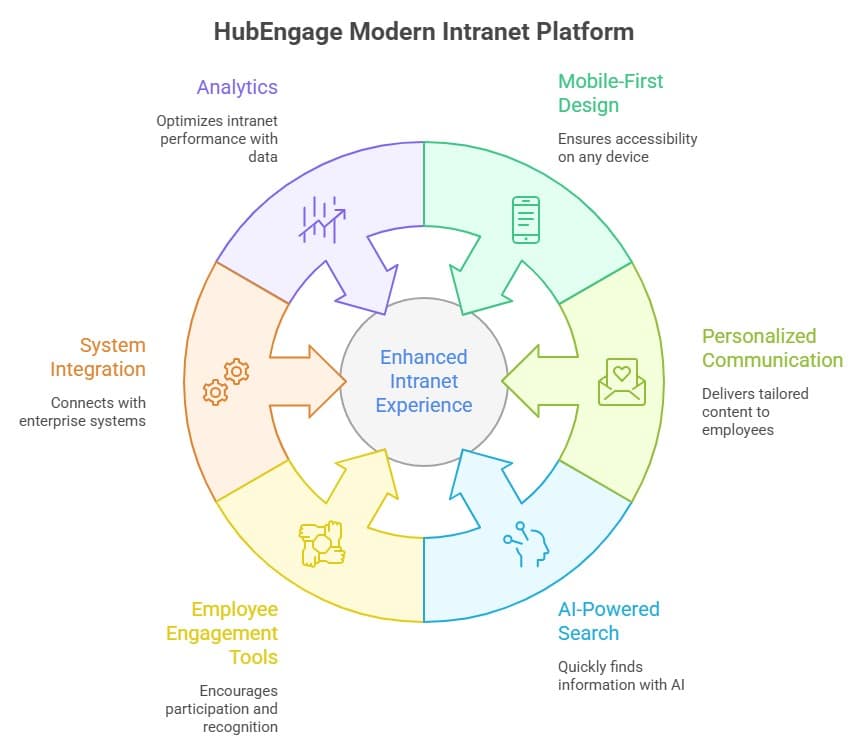
Modern organizations need more than just an intranet as they need a comprehensive workforce experience platform. This is where HubEngage comes in by offering a dynamic intranet platform as a part of its employee experience suite. Below are its key features that help in making it happen.
Mobile-First Intranet Platform for Better Accessibility
Offers a mobile-first design, ensuring employees can access critical information anytime, anywhere.
Personalized Employee Communication and Content Delivery
With advanced targeting, employees receive relevant content tailored to their roles and preferences.
AI-Powered Search and Knowledge Discovery
Enables employees to quickly find information, reducing one of the biggest challenges of using intranets.
Built-In Employee Engagement Tools
From surveys and polls to recognition programs, HubEngage drives meaningful engagement.
Seamless Integration with Enterprise Systems
Integration with major workplace tools, eliminating silos and improving workflows. Learn more about modern Intranet Software solutions.
Analytics and Insights to improve Intranet Performance
Advanced analytics help organizations continuously optimize their intranet strategy.
Final Thoughts
Overcoming intranet challenges requires a strategic use of modern technology, and a strong focus on employee experience.
By addressing both the challenges of designing intranets and the challenges of using intranets, organizations can transform their intranet into a powerful driver of engagement and productivity.
With platforms like HubEngage, organizations can move beyond traditional intranets and build a truly connected digital workplace. If you want to learn how it works then book a demo.
Intranet Challenges FAQs
Why do many intranets struggle with employee adoption?
Many intranets fail due to poor user experience, lack of relevance, and insufficient communication strategies.
How can companies improve intranet engagement?
By incorporating latest social features, personalization, and consistent communication strategies.
What makes a modern intranet more effective?
A modern intranet is mobile-friendly, personalized, integrated, and designed for employee engagement.
How can organizations modernize their existing intranet?
They can adopt modern platforms, redesign user experiences, and integrate with workplace tools.
What role does mobile access play in intranet success?
Mobile access ensures employees can stay connected and informed regardless of location, significantly improving adoption and engagement.