
Communication is often associated with conversations between teams, leaders, and employees. However, some of the most impactful communication happens internally within our own minds. This is where understanding about intrapersonal communication becomes essential.
As organizations invest in tools like an employee communication platform to improve collaboration, it is equally important to recognize how internal dialogue influences decision-making, productivity, and emotional well-being.
In this guide, we will explore the intrapersonal communication definition, its types, real-world examples, and how it shapes workplace success.
Key Takeaways:
- Intrapersonal communication is internal dialogue shaping thoughts, emotions, and decisions.
- Strong self-awareness improves leadership, productivity, and workplace performance.
- Self-talk, reflection, visualization, and emotional processing are parts of intrapersonal communication
- Positive self-talk and mindfulness enhance confidence and stress management.
- Regular reflection and feedback drive continuous personal and professional growth.
What is Intrapersonal Communication?
In simple terms, intrapersonal communication refers to the communication that occurs within an individual’s mind. It involves thoughts, self-talk, internal reflection, and emotional processing that guide how we interpret the world and respond to situations.
It is an internal dialogue and mental processes individuals use to understand themselves, evaluate situations, and make decisions. Beyond just thinking, it includes how we analyze experiences, regulate emotions, and prepare for interactions with others.
Understanding intrapersonal communication helps in designing environments where employees can think clearly, stay motivated, and make informed decisions.
Key Characteristics of Intrapersonal Communication
Intrapersonal communication has several defining characteristics:
- Internal Process: It happens entirely within an individual’s mind.
- Continuous: Our thoughts and internal dialogue are ongoing throughout the day.
- Self-Reflective: It involves analyzing experiences, actions, and emotions.
- Influential: It directly impacts behavior, decision-making, and external communication.
- Emotionally Driven: Feelings play a major role in shaping internal conversations.
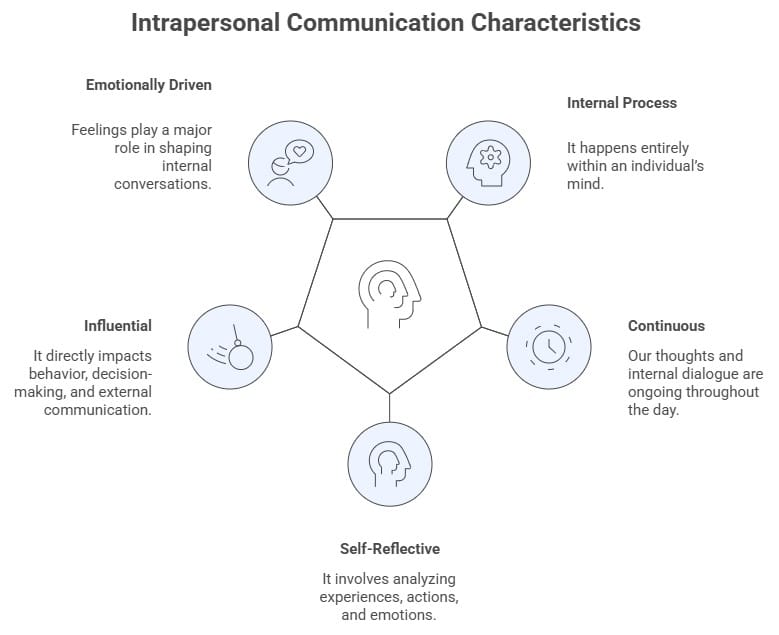
These characteristics highlight why intrapersonal communication is foundational to effective workplace communication and leadership.
Types of Intrapersonal Communication
Understanding the types of intrapersonal communication helps organizations and individuals improve self-awareness and performance.
Self-Talk
Self-talk refers to the internal dialogue we have with ourselves. It can be positive such as motivating and confidence-building or negative like self limitation.
Self-Reflection
Self-reflection involves analyzing past actions, decisions, and experiences to learn and improve. Managers often rely on self-reflection after team meetings or projects to identify what worked and what could be improved.
Visualization
Visualization is the process of mentally imagining outcomes or scenarios. It is widely used by leaders and high performers to prepare for challenges and achieve goals.
Emotional Processing
This type involves understanding and managing emotions internally. Employees who effectively process emotions are better equipped to handle stress, conflict, and workplace challenges.
Examples of Intrapersonal Communication
To better understand the concept, here are some practical examples of intrapersonal communication in the workplace:
- Preparing mentally before a performance review (e.g., rehearsing key achievements and anticipating questions to boost confidence).
- Reflecting on feedback received from a manager (e.g., noting improvement areas and planning specific actions for next quarter).
- Deciding how to respond to a challenging email (e.g., pausing, reframing tone, and drafting a calm, professional reply).
- Setting personal goals for career growth (e.g., outlining quarterly milestones like certifications, skills, and measurable outcomes).
- Managing stress during high-pressure situations (e.g., using breathing techniques and positive self-talk before critical deadlines).
These examples of intrapersonal communication show how internal dialogue directly influences workplace behavior and outcomes. To learn more about such communication strategies, explore these internal communications examples.
Importance of Intrapersonal Communication
Intrapersonal communication is critical because it forms the foundation of all other communication types in following ways:
- Decision-making quality
- Emotional intelligence
- Leadership effectiveness
- Conflict resolution
- Workplace relationships
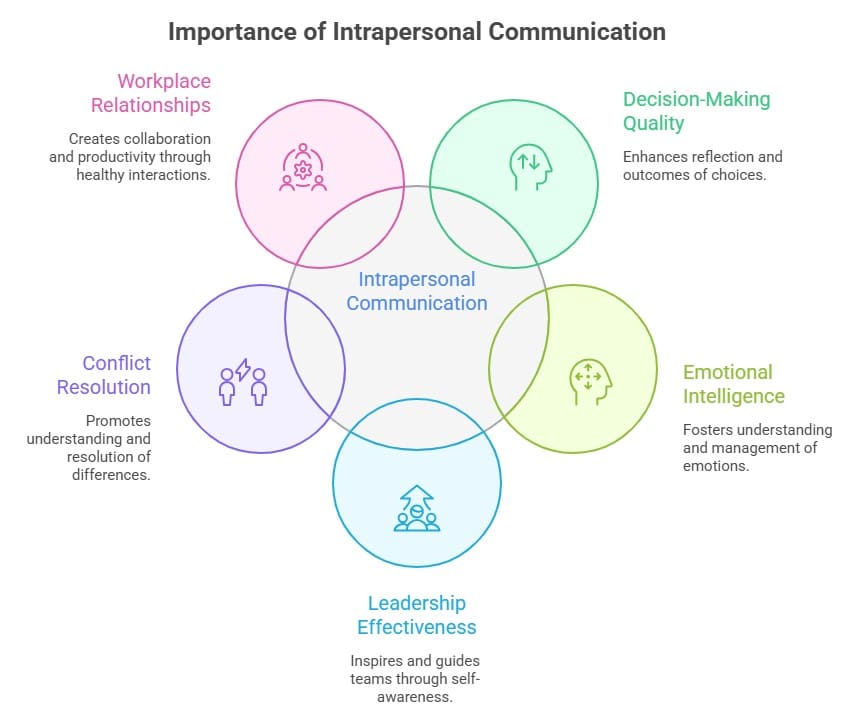
A study by Forbes found that only 10-15% of people believe they are truly self-aware which shows a big gap in intrapersonal communication effectiveness.
With this we can say that individuals with higher self-awareness tend to perform better in leadership roles and exhibit stronger emotional intelligence.
Benefits of Intrapersonal Communication Skills
Developing strong intrapersonal communication skills offers several benefits:
- Improved Decision-Making: Clear internal dialogue leads to better choices.
- Enhanced Emotional Intelligence: Better understanding of emotions improves interpersonal relationships.
- Increased Productivity: Focused thinking reduces distractions and improves efficiency.
- Better Stress Management: Emotional processing helps manage workplace pressure.
- Stronger Leadership Skills: Leaders with strong self-awareness inspire and guide teams effectively.
| Benefit | Business Impact |
| Decision-Making | Faster, more accurate choices |
| Emotional Intelligence | Stronger teamwork and communication |
| Productivity | Improved focus and efficiency |
| Stress Management | Better resilience under pressure |
| Leadership | More effective and confident leaders |
How to Improve Intrapersonal Communication?
Organizations and individuals can actively improve intrapersonal communication through the following strategies:
Practicing Mindfulness
Mindfulness helps individuals stay present and aware of their thoughts and emotions without judgment.
Journaling and Self-Reflection
Writing down thoughts and experiences helps clarify thinking and identify recurring patterns.
Developing Positive Self-Talk
Replacing negative thoughts with constructive ones improves confidence and performance.
Goal Setting and Personal Evaluation
Setting clear goals and regularly evaluating progress enhances focus and accountability.
Leveraging modern internal communication tools can also support structured reflection and feedback loops within organizations.
How HubEngage supports Intrapersonal Communication in the workplace?
While intrapersonal communication happens internally, the workplace environment plays a significant role in shaping it. HubEngage’s workforce experience platform helps organizations create a culture that supports healthy internal dialogue by:
- Enabling Continuous Feedback: Employees receive real-time insights that encourage reflection and growth.
- Providing Recognition Tools: Positive reinforcement improves self-talk and confidence.
- Supporting Surveys and Pulse Checks: These tools help employees evaluate their experiences and emotions.
- Delivering Personalized Content: Employees receive relevant information that aids decision-making.
| HubEngage Feature | Intrapersonal Communication Benefit |
| Continuous Feedback | Improves self-awareness and decision-making |
| Recognition Option | Encourages positive self-talk and confidence |
| Employee Surveys | Supports emotional reflection and insights |
| Personalized Content | Helps employees think clearly and act effectively |
In critical situations such as crisis communication, clear internal communication combined with strong intrapersonal awareness helps employees respond effectively and stay resilient.
Conclusion
Intrapersonal communication shapes how employees think, decide, and perform which makes it a critical driver of productivity, leadership, and engagement. When organizations actively support self-awareness and reflection, they unlock stronger outcomes across teams.
If you are looking to elevate employee experience and internal communication then you should explore our employee communication platform. Book a demo today to see how you can empower your workforce from within.
Intrapersonal Communication FAQs
How does intrapersonal communication influence workplace productivity?
Intrapersonal communication improves productivity by helping employees focus, manage emotions, and make better decisions.
Can intrapersonal communication improve leadership skills?
Yes, leaders with strong intrapersonal communication skills demonstrate higher self-awareness, better decision-making, and stronger emotional intelligence.
How is intrapersonal communication connected to emotional intelligence?
It forms the foundation of emotional intelligence by enabling individuals to understand and regulate their emotions.
What role does self-awareness play in intrapersonal communication?
Self-awareness is a core component, allowing individuals to recognize their thoughts, emotions, and behaviors.
Can intrapersonal communication help with stress management?
Yes, effective emotional processing and positive self-talk enable individuals to manage stress, build resilience, maintain focus, and respond calmly to workplace challenges and pressure daily.
How do digital workplace platforms support internal reflection and feedback?
Platforms like HubEngage provide tools for feedback, recognition, and surveys that encourage self-reflection and continuous improvement.
How can organizations encourage employees to develop intrapersonal communication skills?
Organizations can promote mindfulness practices, provide feedback tools, and create a culture that values self-awareness and continuous learning.
Related Links:
employee communication platform | internal communication tools | internal communications examples | crisis communication