
Intranet design is no longer just about looks but more about making meaningful employee experiences that give high engagement, productivity, and easy to use. As companies invest in modern technologies, having a human-centered intranet design is very important for success.
A great Employee Intranet should feel simple, personalized, and easy to use which helps employees find what they need quickly while making good teamwork and communication.
In this guide, we will show how human-centered intranet design can make your intranet website design into a good employee experience platform.

Key Takeaways
- Human-centered intranet design focus on what an employee needs, which makes it easy to use, and drives engagement.
- A modern intranet design should be simple, personalized, and have mobile-first experiences.
- Effective intranet website design has simple navigation, strong search, and clear content layout.
- Well-structured intranet page design makes it easy to find content and saves time.
- The best intranet designs use modular layouts, and simple UI tools that are easy to use.
- Continuous improvement, personalization, and the right intranet software are important for long-term success.
What Is Human-Centered Intranet Design?
Human-centered intranet design focuses on building digital workplace experiences around the needs, behaviors, and expectations of employees. Instead of making the intranet as per the departments and systems, it focus on how employees will use the tools, and communication channels.
This way will makes sure that intranet page design is based on real-world workflows, making it easy for employees to complete tasks, stay updated, and stay well connected.
A great intranet design is not just about how it looks but more about how well it helps employees in their day-to-day work. When companies create intranet experience with employee needs, they decrease friction, increase productivity, and create a more connected digital workplace.
Why Human-Centered Design Matters in Modern Intranet Platforms?
Organizations today are having a big problem of less use of the intranet. Reports from McKinsey show that employees spend up to 1.8 hours per day looking for information on internal systems. This takes up a lot of time which decreases productivity as well as employee satisfaction. Human-centered intranet design can solve these problems by:
- Improving usability and decreasing friction
- Higher employee satisfaction
- Increasing platform usage rates
- Supporting hybrid and remote work environments
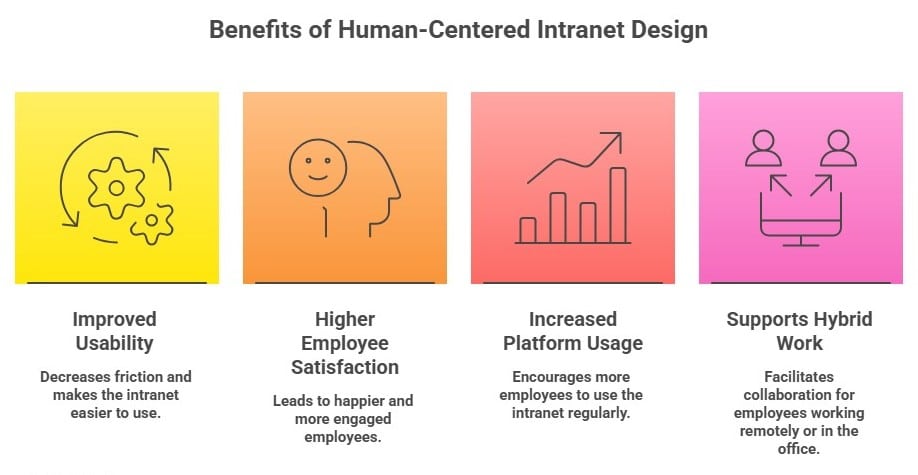
Modern intranet design is not an option anymore. It is a competitive advantage for companies that focus on employee experience.
Core Principles of Human-Centered Intranet Design
These foundational principles guide modern intranet design, helping organizations create intuitive, user-focused experiences that improve usability, drive adoption, and enhance employee engagement.
Designing Around Employee Needs
We start by understanding employee personas, roles, and daily workflows. Executives, HR teams, frontline workers, and managers all interact with the intranet differently. Designing around these needs ensures relevance and usability.
Simplicity and Usability
The best intranet designs remove complexity. Clean layouts, clear labels, and intuitive interfaces reduce the learning curve and improve efficiency.
Accessibility and Inclusivity
An inclusive intranet website design ensures that all employees regardless of ability, language, location can access and use the platform effectively.
Consistency in Navigation and Layout
Consistency helps users build familiarity. Reusable design components and standardized layouts create a predictable and user-friendly experience.
Mobile-First Design Approach
With distributed workforces, mobile access is critical. A modern intranet design must deliver a seamless experience across devices.
Key Elements of Effective Intranet Website Design
Let us understand the essential elements that help organizations build a modern intranet design that is intuitive, scalable, and aligned with employee needs. Each component plays a critical role in improving usability, content discoverability, and overall employee experience.
| Element | What It Is | Benefit / Function |
| Clear information architecture | Logical structuring of content based on user needs and workflows | Makes navigation easier, improves content discoverability, and reduces time spent searching |
| Intuitive navigation and menu structure | Menus designed around how employees think rather than org hierarchy | Lowers cognitive load, improves usability, and helps users find information faster |
| Personalized employee dashboards | Role-based dashboards with tailored content and tools | Increases relevance, boosts engagement, and supports productivity |
| Search-first content discovery | Powerful search functionality with smart indexing and tagging | Enables quick access to information, reducing frustration and inefficiency |
| Visual content and readable layouts | Use of visuals, spacing, and typography for better readability | Enhances content consumption, improves user experience, and increases engagement |
Best Practices for Modern Intranet Page Design
Organizations create effective intranet page design that is user-friendly, engaging, and aligned with employee workflows by following the best practices mentioned below.
Use of Modular Page Layouts
Modular layouts allow teams to build flexible and scalable pages using reusable components.
Scannable Content Structure
Employees rarely read long blocks of text. Use headings, bullet points, and short paragraphs to improve readability.
Consistent Design Components
Consistency across pages builds trust and familiarity, improving overall user experience.
Interactive and Dynamic Content Blocks
Interactive elements such as polls, announcements, and feeds encourage engagement and participation.
Clear Calls to Action
Every page should guide employees toward specific actions like completing a task, reading updates, and engaging with content.
Designing an Intranet That Employees Actually Use
To ensure long-term success, intranet design must focus on real employee behavior, preferences, and daily workflows. The following checklist highlights practical actions organizations can take to improve usability, increase adoption, and create a more engaging intranet experience.
| Checklist Item | What to Do | Why It Matters |
| Reduce information overload | Prioritize high-value content and regularly remove outdated or duplicate information | Helps employees quickly find what they need without feeling overwhelmed, improving adoption |
| Make content easy to find | Use intuitive navigation, smart tagging, and strong search functionality | Reduces time spent searching and improves overall usability and efficiency |
| Deliver personalized content | Tailor content based on roles, locations, and employee preferences | Increases relevance, encouraging employees to engage with the intranet more frequently |
| Encourage collaboration and participation | Enable comments, likes, recognition, and discussion features | Builds a sense of community and drives active engagement across teams |
How Intranet Design Drives Employee Adoption?
Organizations that invest in thoughtful intranet design often see higher adoption rates, improved communication, and stronger alignment across teams.
- Higher adoption rates: Simple, intuitive interfaces reduce the learning curve, making it easier for employees to start using the intranet without formal training and encouraging consistent, daily usage.
- Improved communication: Centralized and well-structured content ensures employees receive timely updates, reducing miscommunication and keeping everyone aligned with organizational priorities.
- Stronger team alignment: Shared access to updates, goals, and resources helps teams stay on the same page, enabling better collaboration and more coordinated execution across departments.
- Increased productivity: Faster access to accurate information minimizes time spent searching, allowing employees to focus more on meaningful work and complete tasks more efficiently.
For organizations evaluating platforms, selecting the right Intranet Software is critical to achieving these outcomes.
How Thoughtful Design Improves Employee Engagement?
A well-designed intranet doesn’t just provide information but it creates experiences. Here is how thoughtful design drives meaningful employee engagement:
| Capability | How It Works | Impact on Engagement |
| Enable seamless communication | Centralized updates, announcements, and messaging tools unify internal communications across the intranet | Keeps employees informed in real time, reduces silos, and improves alignment across teams |
| Integrate recognition features | Built-in recognition and rewards systems highlight achievements and reinforce desired behaviors | Boosts morale, increases motivation, and strengthens a culture of appreciation |
| Promote collaboration | Social tools like comments, discussions, and shared workspaces enable peer-to-peer interaction | Encourages knowledge sharing, teamwork, and cross-functional collaboration |
| Create engaging experiences | Interactive content, personalized feeds, and dynamic elements tailor the intranet experience to users | Increases time spent on the intranet and drives consistent, meaningful engagement |
Employee engagement increases when employees feel connected, informed, and empowered. All of these are supported by effective intranet design.
Common Intranet Design Mistakes That Reduce Adoption
Understanding these common intranet design mistakes helps organizations identify gaps that negatively impact usability and engagement. By addressing these issues, businesses can improve intranet performance, increase adoption, and deliver a more seamless employee experience.
Complex Navigation Structures
Too complicated navigation makes it difficult for employees to find what they need.
Poor Search Experience
An ineffective search function leads to frustration and reduced usage.
Outdated Visual Design
A dated interface can make the intranet feel irrelevant and reduce credibility.
Lack of Mobile Optimization
Without mobile access, employees may struggle to use the platform effectively.
Content Clutter and Redundancy
Too much content reduces clarity and usability.
Steps to Create a Human-Centered Intranet Design Strategy
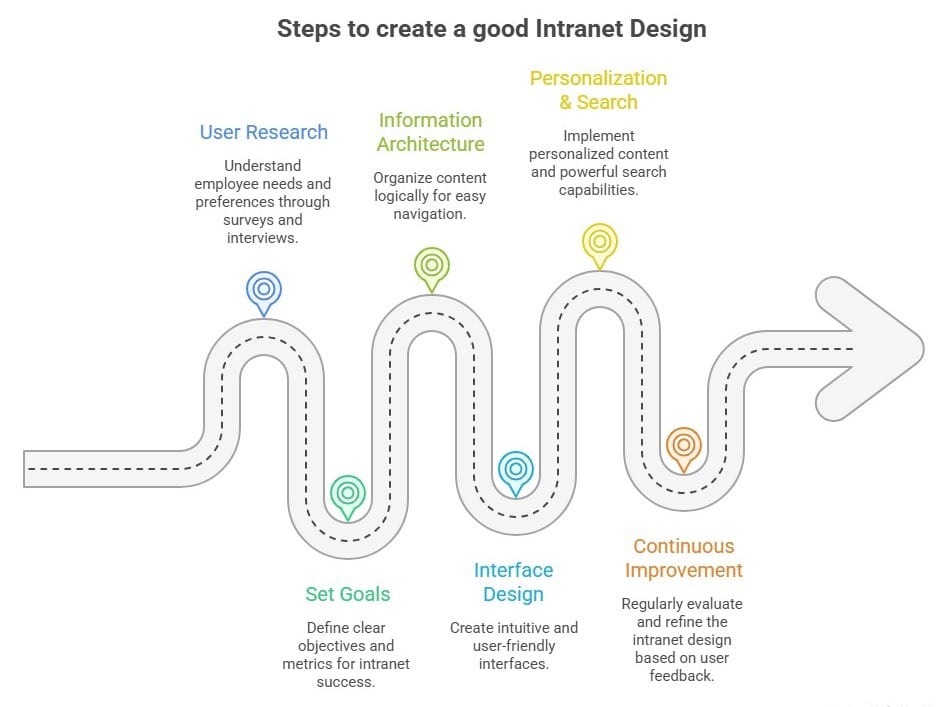
Making a good intranet design strategy is about having a structured, and user-focused way that gets along with the goals of the company. The following steps give practical steps for making a good intranet design and give a better human-centered intranet experience.
- Do user research and find out what employee wants
- Set clear goals and success measures
- Create a scalable information architecture
- Make easy and good interfaces
- Use personalization and powerful search options
- Continuously measure and improve the design
Organizations can also compare their progress with tools like a benchmark intranet to see how good their design is.
HubEngage: A Human-Centered Intranet Platform
HubEngage gives you a modern intranet design based on employee needs which brings communication, recognition, and teamwork into a single employee experience suite. Check out its features below that makes it a powerful intranet app for the modern workforce.
| Feature | Role |
| Easy navigation and layout | Helps employees quickly find information which helps with better productivity |
| Personalized employee dashboards | Gives relevant, role-based content that increases engagement and daily use |
| Search-first content discovery | Fast access to information, decreasing the time taken to search and getting better efficiency |
| Mobile-first intranet design | Easy access for remote and ground staff over different devices |
| Modular design | Makes the page design easy to use with good user experience |
| Interactive content and collaboration tools | Better communication, and makes more people use the platform giving strong employee engagement |
Learn more about how HubEngage can make your intranet experience better with our modern intranet platform
Conclusion
User friendly intranet design is the base of a good digital workplace that helps businesses to improve user experience as well as increasing employee engagement. By giving more focus on what an employee wants, companies can make their intranet into a strong engagement hub.
Ready to make your employee experience better? Explore HubEngage’s modern intranet software and get a demo to see how human-centered design can improve your workplace.
Intranet Design FAQs
Why is intranet design important for employee engagement?
Intranet design has a very important role in how employees communicate with workplace tools and content. A well-designed intranet is easy to use, better access which makes it easy for employees to stay updated, connected, and engaged in their work.
What are the key features of modern intranet design?
Modern intranet design has great features such as personalized dashboards, mobile-first use, easy to use, and powerful search function. These elements work together to improve user experience, better communication, and make sure employees can quickly get the right information and tools.
How does intranet page design influence adoption?
Having a good intranet page design will make the platform easy to use and engaging. Clear layouts, structured content, and easy navigation helps employees to depend more on the intranet for information and teamwork.
What makes the best intranet designs effective?
The best intranet designs are easy to use as well as have good access. They focus on giving personalized content while keeping a uniform layout which makes sure employees can easily use the platform and complete their tasks easily.
How can companies improve their intranet website design?
Companies can make better intranet design by keeping focus on what employees want, simple navigation, adding personalization and good search function. Regularly updating content, improving user experience, and using modern intranet tools also helps with better user experience.
Why is mobile intranet design important for organizations?
Mobile intranet design makes sure employees can get the right information anytime, and anywhere. This is very important for remote and frontline workers, as it helps with better communication, higher engagement, and gives good productivity over different devices as well as work environments.
How do you measure intranet adoption and engagement?
With the help of metrics such as login frequency, time spent on the intranet platform, engagement with content, and studying data can help organizations check the effectiveness and keep improving their intranet strategy.