
As organizations continue investing in digital workplace tools, intranets are becoming strategic business platforms rather than static information portals. According to Cognizant, having a digital workplace allows companies to get better productivity with streamlined operations.
If you are evaluating solutions or planning an upgrade, exploring modern Intranet Software can help establish a strong foundation for your platform. In this guide, we will tell you 20 intranet best practices that organizations should follow to build a scalable, engaging, and secure intranet platform.
Intranet Best Practices for a High-Performing Digital Workplace
Modern organizations rely on intranet platforms to centralize communication, streamline workflows, and enable knowledge sharing. However, launching a platform is only the first step. Long‑term success depends on implementing the right intranet best practices that support governance, usability, and continuous adoption.
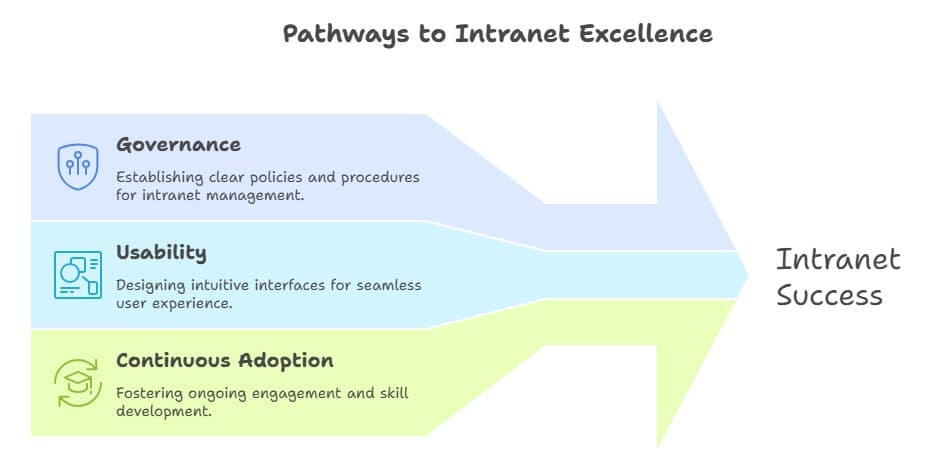
Below are some of the best practices you can use to create a high performing digital workplace.
1. Define Clear Business Objectives Before Launch
One of the most important company intranet best practices is defining the purpose of the platform before implementation. Companies often launch intranets without aligning them to measurable goals such as:
- Improving internal communication
- Increasing employee engagement
- Streamlining HR and IT processes
- Centralizing company knowledge
When objectives are clearly defined, it becomes easier to measure adoption and track success metrics.
2. Secure Executive Sponsorship and Leadership Buy-In
Executive support plays a critical role in driving intranet adoption. Leadership endorsement encourages employees to use the platform as a trusted source of information. Executives should actively participate by:
- Sharing updates and announcements
- Engaging in discussions
- Reinforcing the intranet as the primary communication channel
This leadership visibility strengthens credibility and increases platform engagement.
3. Establish Strong Governance and Content Ownership
Governance is the backbone of sustainable intranet management. Without clear ownership, intranet content quickly becomes outdated and difficult to maintain. A strong governance model should define:
- Content owners
- Publishing workflows
- Review schedules
- Editorial guidelines
Clear accountability ensures the platform remains accurate and relevant.
4. Design Role-Based User Experiences
Modern intranet platforms should deliver personalized experiences for employees based on their role, department, or location. Role-based design allows organizations to:
- Deliver relevant content to employees
- Reduce information overload
- Improve navigation efficiency
Personalized experiences are a key component of best practices for intranet design, especially in large enterprises.
5. Build a Scalable Information Architecture
A well-structured intranet helps employees quickly find information, resources, and tools they need for work. A strong intranet structure best practice includes:
- Clear navigation hierarchy
- Consistent naming conventions
- Logical page categorization
Information architecture should evolve alongside organizational growth to support future expansion.
6. Implement Advanced Search with Smart Filters
Employees expect intranet search experiences that match fast, intuitive, consumer‑grade platforms like Google or Amazon. Advanced search capabilities should include:
- Keyword search
- Smart filters
- Content tagging
- AI-powered recommendations
According to McKinsey research, employees spend nearly 20% of their workweek searching for information. Effective search functionality significantly reduces this productivity loss.
7. Standardize Content Creation and Publishing Workflows
Standardized workflows ensure consistent, accurate, and well‑governed content quality across the intranet. Organizations should establish:
- Content templates
- Approval processes
- Publishing schedules
These frameworks simplify content management and improve overall governance.
8. Maintain Regular Content Audits and Cleanup Cycles
Regular content audits ensure intranet information remains accurate, reliable, and consistently updated. Regular reviews help organizations:
- Remove outdated information
- Update policies and procedures
- Improve search relevance
Many organizations schedule quarterly or biannual intranet audits to maintain content quality.
9. Enable Cross-Department Collaboration Spaces
Collaboration spaces allow teams to share knowledge, coordinate projects, and maintain transparency across departments. These spaces often include:
- Project workspaces
- Team discussion forums
- Document collaboration tools
This capability transforms the intranet from a communication hub into a collaboration platform.
10. Automate Repetitive Internal Processes
Workflow automation improves operational efficiency, reduces manual tasks, and accelerates internal processes. Common intranet automation examples include:
- Leave requests
- IT service requests
- Policy approvals
- Employee onboarding workflows
Automation reduces administrative workload while improving process transparency.
11. Integrate Core Business Systems and Data Sources
Modern intranets should integrate seamlessly with core enterprise systems and workplace platforms:
- HR platforms
- CRM tools
- Project management systems
- Knowledge management platforms
Seamless integrations reduce context switching and provide employees with a unified digital workplace experience. Organizations using a modern Employee Intranet platform can centralize multiple workplace tools within a single interface.
12. Prioritize Security with Role-Based Access Controls
Security must be embedded within intranet architecture to protect organizational data and access.
- Implement role-based access controls
- Enable secure authentication and single sign-on
- Protect sensitive data with encryption and permissions
Role-based access controls ensure that employees only access information relevant to their responsibilities while protecting sensitive company data.
13. Optimize Performance and Page Load Speed
Intranet performance significantly influences user adoption, engagement, and overall employee platform experience.
- Browser caching
- Image compression
- CDN delivery
- Optimized images, scripts, and hosting infrastructure All these improvements help maintain a fast and user-friendly intranet platform.
Slow loading pages reduce engagement and frustrate employees.
14. Design for Accessibility and Inclusivity Standards
Inclusive design ensures every employee can access intranet resources regardless of ability.
Following WCAG accessibility standards improves usability for employees who rely on assistive technologies.
- Provide alternative text for images and multimedia content
- Ensure proper color contrast for better readability
- Enable keyboard navigation for users who cannot use a mouse
Accessibility is increasingly recognized as a critical component of intranet best practices 2026.
15. Provide Structured Onboarding and Training Resources
Employees should understand how to navigate and use the intranet effectively. Training resources may include:
- Guided tutorials
- Knowledge base documentation
- Video walkthroughs
Structured onboarding accelerates adoption and improves long-term usage.
16. Encourage Two-Way Communication and Feedback Loops
Two-way communication and feedback loops encourage transparency, dialogue, and stronger employee engagement. Features such as:
- Comment sections
- Employee surveys
- Discussion forums
These activities help organizations gather insights and strengthen engagement.
17. Use Analytics to Drive Continuous Improvement
Analytics provide insights into intranet usage patterns, engagement trends, and content performance. Organizations should monitor metrics such as:
- Page views
- Search queries
- User engagement
- Content performance
These insights help teams refine the platform and prioritize improvements.
18. Create Department-Specific Knowledge Hubs
Department knowledge hubs centralize resources and documentation for HR, IT, finance teams. These hubs can include:
- Policies
- Training materials
- Process documentation
This structure improves knowledge sharing and reduces repetitive questions.
19. Develop a Long-Term Adoption and Engagement Plan
Long term intranet success depends on consistent employee engagement and active participation. Organizations should promote the platform through:
- Launch campaigns
- Internal marketing
- Gamification initiatives
Consistent engagement initiatives ensure the intranet remains relevant and widely used.
20. Plan for Future Expansion and Platform Evolution
Technology and workplace needs evolve rapidly requiring intranets to adapt and scale.
- Support new integrations and emerging workplace tools
- Scale features as organizational needs grow
- Continuously improve user experience and functionality
Successful organizations treat the intranet as an evolving platform that adapts to new business requirements, integrations, and digital workplace strategies.
Why Organizations Choose HubEngage?
Organizations seeking to implement these intranet best practices often require a flexible and scalable platform.
HubEngage modern intranet comes with great features like unified employee communication, social engagement features, employee recognition programs, workflow automation, smooth connectivity and advanced analytics system.
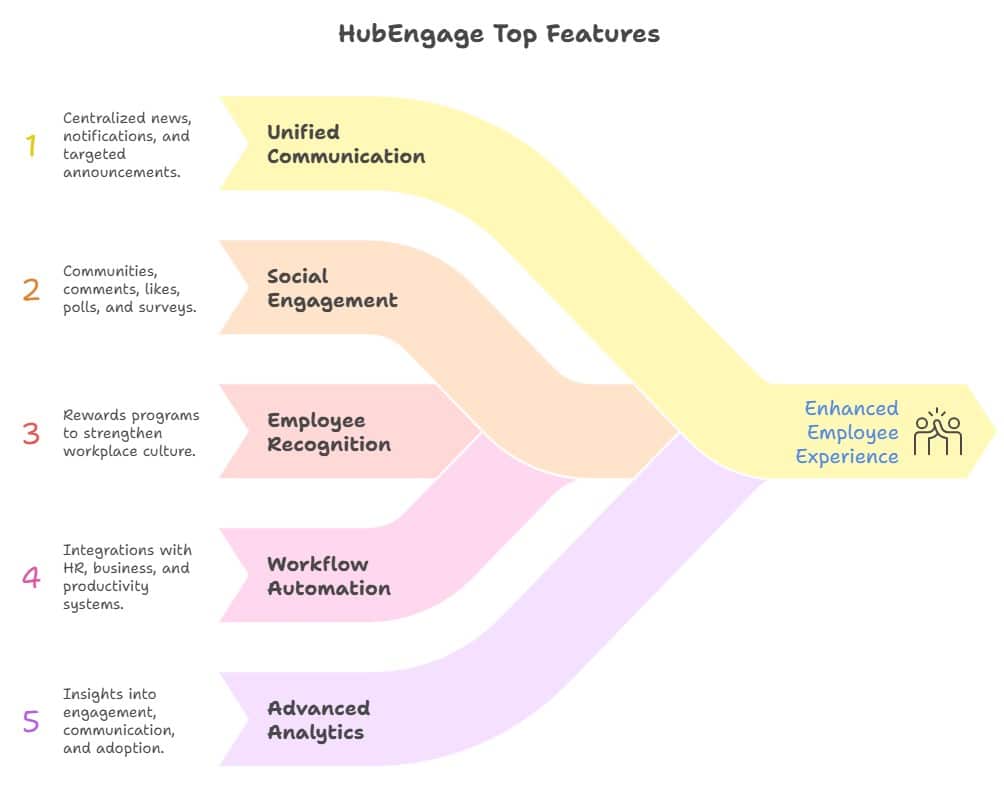
These capabilities enable organizations to build connected and collaborative workplaces while supporting long-term intranet adoption.
Conclusion
Building a successful intranet requires more than launching a platform as it demands clear strategy, governance, user-centric design, and continuous improvement.
By following these intranet best practices, organizations can create a digital workplace that improves communication, strengthens collaboration, and supports long-term employee engagement.
If you want to explore how a modern intranet can support these goals, consider taking a demo to see how HubEngage helps organizations build connected, high-performing workplaces.
FAQs
What are the most important intranet best practices?
The most important intranet best practices include establishing strong governance, designing role-based user experiences, implementing advanced search functionality, and maintaining regular content audits.
How do you improve employee adoption of an intranet?
Improving intranet adoption requires leadership participation, effective onboarding, engaging content, and continuous communication about platform benefits.
How often should intranet content be reviewed?
Most organizations review intranet content quarterly or biannually to ensure information remains accurate and relevant.
What governance model works best for intranets?
A distributed governance model works well for many organizations, where departments manage their own content while following centralized editorial guidelines.
How do you structure intranet information architecture?
An effective intranet structure includes a clear navigation hierarchy, logical page categorization, and consistent naming conventions.
What metrics define intranet success?
Common intranet success metrics include user adoption rates, engagement metrics, search success rates, and improvements in internal communication efficiency.