Effective employee communication is very important for engagement, productivity, and organizational success. As businesses seek more innovative ways to reach employees, digital signage for internal communications has emerged as a powerful solution.
As per Harvard Business Review, nearly 80% of employees want more frequent communication from their employers. Digital signage helps address this need by making information more visible, accessible, and engaging.
Employee Digital Signage enables organizations to deliver important messages through visually engaging displays, helping employees stay informed, connected, and aligned with company goals.
Unlike traditional communication methods such as emails or printed notices, these digital displays capture attention and deliver information in real time. Our guide will cover the benefits, use cases, and strategies for implementing them effectively in the workplace.
Key Takeaways
- Digital signage is a modern tool that helps companies share important updates with employees using screens, videos, and visuals.
- You can improve employee engagement using digital signage as it makes communication more visible, interactive, and easy to understand.
- Real-time updates ensure employees always have access to the latest company news, alerts, and announcements.
- Digital signage reduces reliance on emails and printed materials, making communication faster and more cost-effective.
- Digital Signage for employee communications can be used in offices, break rooms, lobbies, and workspaces.
What is Digital Signage For Employee Communications?
Digital signage refers to electronically controlled displays that communicate information using text, images, videos, animations, and interactive content.
They are strategically placed throughout workplaces to broadcast company news, announcements, employee recognition, safety alerts, and other important updates.
As organizations continue to evolve their communication strategies, digital signage has become an essential component of modern internal communications.
Platforms that can combine digital signage with employee apps, social communication tools, recognition programs, surveys, and messaging solutions to create a unified employee experience will stand out from the rest.
The Role of Digital Signage for Employee Communications?
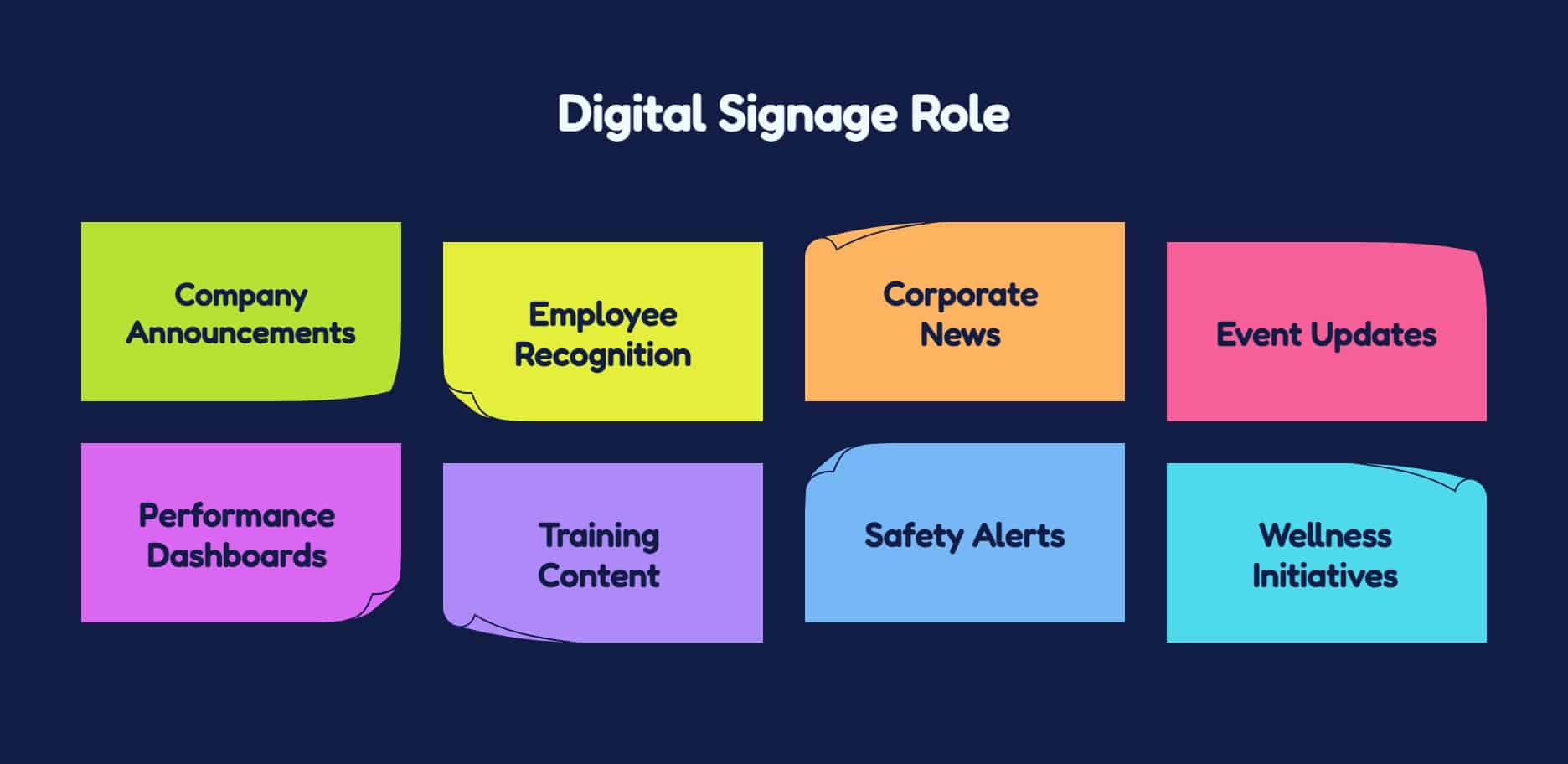
The primary goal of digital signage is to ensure important information reaches the largest possible audience within an organization. Digital displays can showcase:
Why should organizations consider Digital Signage for Employee Communications?
Unlike emails that may be overlooked, digital signage is displayed in high-traffic areas where employees naturally spend time throughout the day.
Increased Visibility
Employees are significantly more likely to notice information displayed on large, vibrant digital screens than messages buried in crowded inboxes.
Real-Time Communication
Digital signage allows organizations to instantly update content across multiple locations. Whether communicating schedule changes, emergency notifications, or company-wide announcements, information can be distributed immediately.
Enhanced Employee Engagement
Interactive digital signage encourages employees to participate in polls, surveys, quizzes, and feedback initiatives. This level of interaction helps create a more connected and engaged workforce.
Consistent Messaging
Digital signage ensures that employees receive consistent information regardless of their location, department, or work schedule.
How and where to use Digital Signage For Employee Communications?
Digital signage can be implemented throughout the workplace to maximize visibility and engagement. Let us see the best use cases of digital signage.
| Location | Purpose | Content Examples |
| Break Rooms and Cafeterias | Engage employees during downtime | Company news, employee recognition, events, wellness tips, social content |
| Office Floors and Common Areas | Communicate key updates in high-traffic areas | Announcements, performance metrics, organizational updates |
| Reception Areas and Lobbies | Inform visitors and showcase brand | Wayfinding info, company achievements, corporate news |
| Manufacturing Facilities and Warehouses | Deliver real-time operational updates | Safety alerts, shift schedules, production metrics |
| Meeting Rooms | Support scheduling and communication | Room availability, meeting agendas, company announcements |
Effective Content Strategies for Digital Signage
Creating effective content for digital signage is crucial. Organizations should focus on a few key strategies.
- Concise Messaging: Keep messages short and clear so employees quickly understand key information without distractions.
- Use Visual Content: Use high-quality images (use HD photo converter if they are low resolution) or videos to boost engagement and improve message retention effectively.
- Update Content Regularly: Refresh content frequently to maintain interest and ensure employees stay informed consistently.
- Highlight Employee Achievements: Showcase milestones and recognition to build community, boost morale, and increase engagement.
- Promote Wellness and Training: Share health tips, workshops, and learning opportunities to support employee growth and development.
Benefits of using Digital Signage for Employee Communications
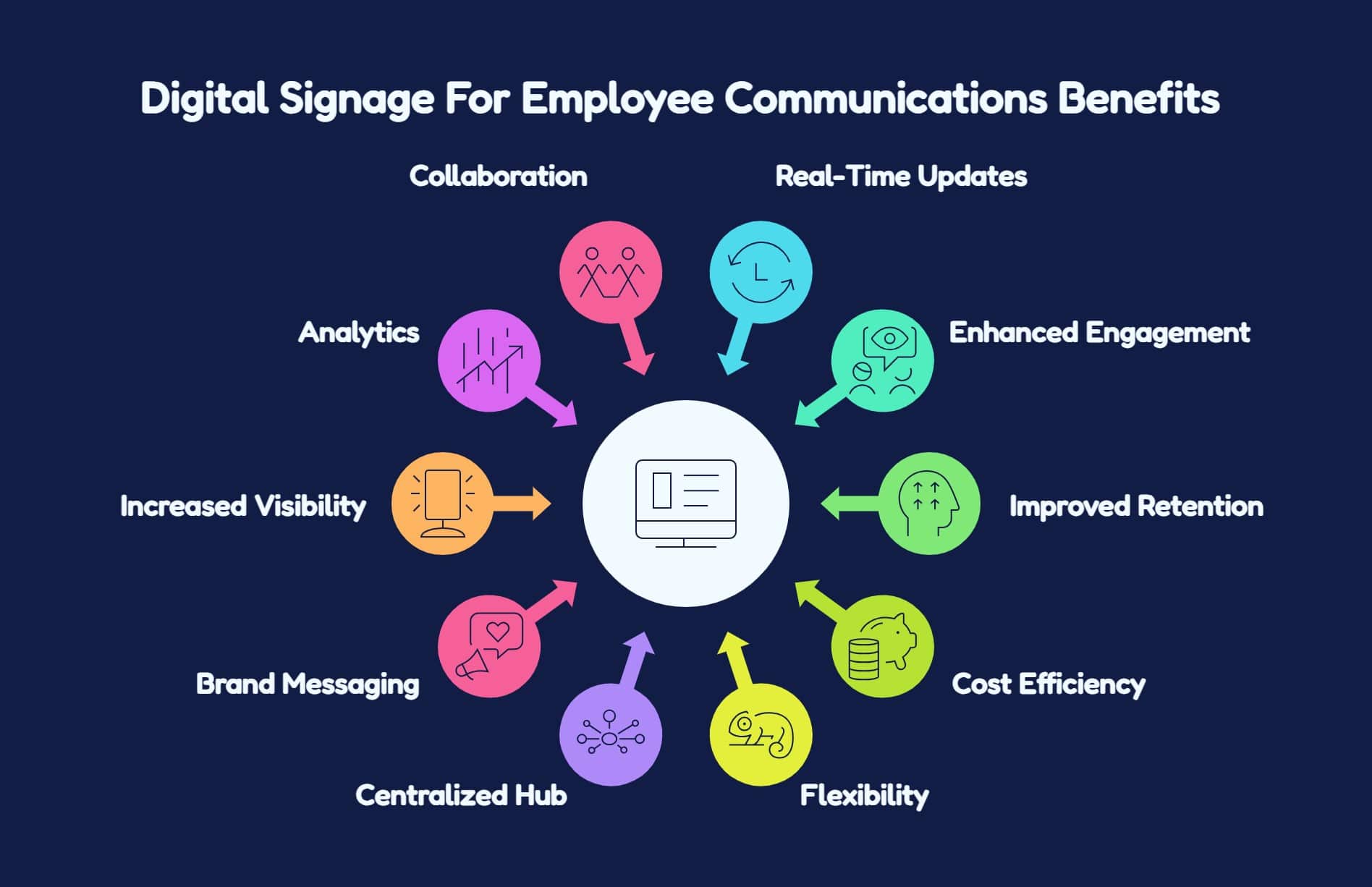
Digital signage for your communication with employees is a beneficial tool that increases engagement and provides a platform for more employee interaction. Here are its common benefits:
Steps to implement Digital Signage in the workplace
While benefits are clear, organizations must also understand the best practices for implementing digital signage. Below are some steps you can take for successful implementation.
1. Identify your goals
Define clear objectives to guide your digital signage strategy and ensure meaningful communication outcomes.
2. Choose the right tools
Select reliable software and hardware that support easy content management and seamless communication delivery.
3. Set up your displays
Install screens in high-traffic areas to maximize visibility and ensure messages reach more employees.
4. Create engaging content
Design simple, visually appealing content that captures attention and communicates messages quickly and clearly.
5. Monitor and optimize
Track performance regularly and adjust content based on feedback to improve effectiveness and engagement.
Digital Signage For Employee Communications: Evaluating Success and ROI
To measure digital signage success and ROI, organizations should track simple, actionable metrics that align with their communication goals.
Monitoring performance helps ensure that digital signage delivers real value and improves employee engagement. Below is a quick and easy table of key digital signage success metrics:
| Metric | What It Measures | Why It Matters |
| Content Engagement Rate | How often employees interact with or notice content | Shows how engaging and relevant your content is |
| Content Views | Number of times content is displayed or viewed | Helps track visibility and reach |
| Update Frequency | How often content is refreshed | Keeps messaging timely and prevents content fatigue |
| Employee Participation | Interaction with polls, surveys, or feedback tools | Indicates employee involvement and engagement |
| Feedback & Responses | Employee opinions and reactions | Helps improve content strategy and communication effectiveness |
| Employee Satisfaction | Overall sentiment toward communication | Reflects impact on workplace experience |
| Communication Reach | Percentage of employees exposed to messages | Ensures important information reaches everyone |
By regularly reviewing these metrics, organizations can identify what works best, improve content strategies, and maximize the return on investment (ROI) from digital signage.
Extending Digital Signage to craft a Unified Communication Strategy
To fully leverage digital signage, companies should integrate it into their overall communication strategy. HubEngage makes this possible by offering Digital Signage as a part of its Employee Experience Platform designed to enhance internal communication.
Our Digital Signage solution enables organizations to deliver engaging, visually rich messages across strategically placed screens throughout the workplace.
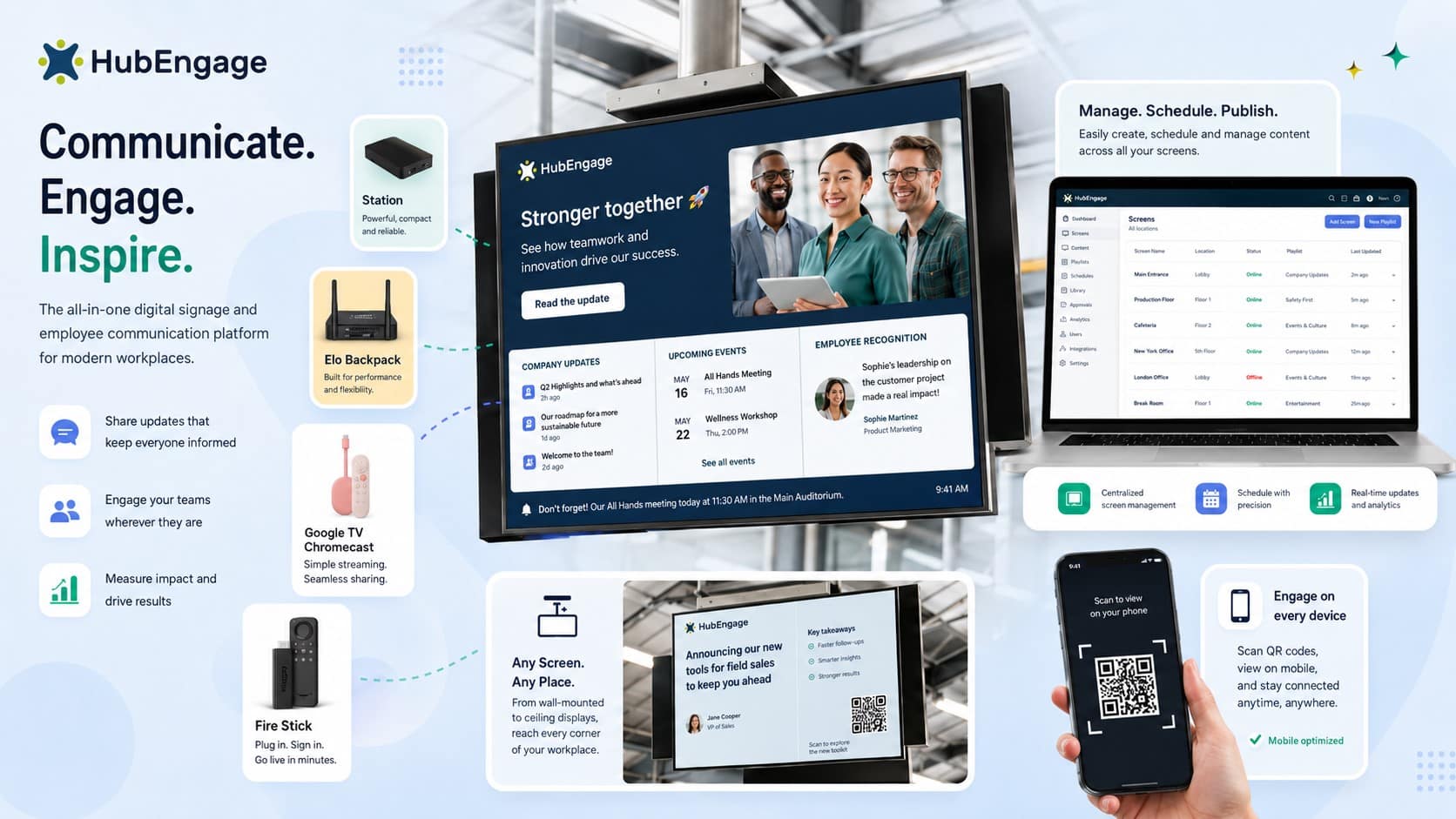
It supports a wide range of content formats, including videos, images, announcements, dashboards, and social feeds, ensuring information is both dynamic and easy to understand.
Administrators can centrally manage and schedule content, allowing real-time updates across multiple locations. This ensures consistent messaging, improves visibility in high-traffic areas, enhances employee awareness, engagement, and overall communication effectiveness.
Key Features:
- Real-time content updates across all screens
- Easy content scheduling and management
- Supports images, videos, and announcements
- Centralized control for multiple locations
- Improves employee engagement and awareness
Conclusion
Digital signage for employee communications empowers organizations to deliver timely, engaging, and consistent messaging that enhances employee experience and drives productivity.
By using HubEngage’s cloud software for digital signage, your business can foster stronger connections, improve information flow, and reinforce company culture across all levels.
To see how this can transform your workplace, explore the HubEngage Employee Experience Platform by scheduling a personalized demo today.
Digital Signage For Employee Communications FAQs
What is digital signage?
Digital signage is a system of electronic displays that show real-time content like news, announcements, videos, and alerts. It helps businesses communicate quickly with employees using engaging visuals placed in high-traffic workplace areas.
What are the benefits of using digital signage for employee communications?
Digital signage improves employee communication by increasing visibility, engagement, and message retention. It allows real-time updates, reduces printing costs, supports eco-friendly practices, and helps organizations deliver consistent, visually engaging information across all workplace locations.
How can digital signage be used for employee communications?
Digital signage can share company news, employee recognition, safety alerts, training content, and event updates. It replaces emails and posters with engaging visuals, ensuring employees receive timely information through screens placed in common workplace areas.
What are some tips for using digital signage for employee communications?
Use short messages, clear visuals, and regular updates to keep content engaging. Display employee achievements, company news, and important alerts. Place screens in high-traffic areas and tailor content to different teams for better communication impact.
How does digital signage improve real-time communication with employees?
Digital signage improves real-time communication by instantly displaying updates, alerts, and announcements across multiple locations. Employees receive timely information without delays, helping them stay informed, respond quickly, and remain aligned with company operations and priorities.
Can digital signage integrate with internal communication and HR platforms?
Yes, digital signage can integrate with HR systems, intranets, and communication platforms. This allows automatic content updates, employee recognition feeds, announcements, and data sharing, creating a seamless and centralized communication experience across the organization.
What type of content performs best on internal digital signage screens?
Content that is short, visual, and relevant performs best on digital signage. This includes videos, infographics, employee recognition, announcements, safety alerts, and real-time data. Engaging visuals help capture attention and improve message retention among employees.
How often should digital signage content be updated in the workplace?
Digital signage content should be updated regularly, ideally daily or weekly, depending on the message type. Frequent updates keep content fresh, relevant, and engaging, ensuring employees continue to pay attention and receive the latest information.
Is digital signage effective for frontline and deskless employees?
Yes, digital signage is highly effective for frontline and deskless employees. It delivers important updates, safety alerts, and schedules in real time, ensuring employees without email access stay informed and connected to company communications.
How can digital signage support company culture and values?
Digital signage supports company culture by showcasing employee achievements, company values, success stories, and events. It reinforces a positive work environment, boosts morale, and helps employees feel connected to the organization’s mission and goals.
Related Links:
employee digital signage | cloud software for digital signage