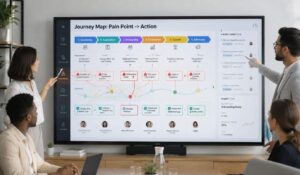
HR 2030 is becoming an important conversation for business leaders because the role of HR is changing. Artificial intelligence is moving into everyday work, employees expect more from their organizations, and leaders need better ways to connect people, decisions, and operations. Preparing for HR 2030 means looking beyond new technology and asking whether the organization is ready to use it responsibly.
The discussion around HR 2030 also raises a practical question. Can companies adopt smarter systems without losing the human connection that makes employees feel valued, supported, and motivated? Technology may improve how work gets done, but its impact depends on the policies, leadership decisions, communication, and employee experiences surrounding it.
For CHROs, the next few years present an opportunity to rethink how people operations contribute to business performance. HR 2030 is not simply about introducing AI tools or automating administrative work. It is about building a workplace where employees can access information, complete tasks, develop their skills, receive recognition, and understand how their work contributes to wider goals.
HR Is Changing, but the Human Element Still Matters
Artificial intelligence is already influencing how HR teams handle routine responsibilities. From drafting communications to supporting recruitment and policy-related work, these tools are becoming part of normal workflows rather than remaining experimental projects.
However, adopting AI and preparing an organization to use it well are two different things.
The Human Resources Director report, AI use moves to daily HR work as governance plays catch-up, highlights this gap. Its reporting on Traliant research describes widespread AI use in HR alongside uneven governance practices. The central concern is straightforward: organizations may be adopting tools faster than they are establishing appropriate oversight.
For HR leaders, this creates several responsibilities. They must understand where employees are using AI, determine which decisions require human review, and establish clear expectations for responsible use. They also need to communicate those expectations in language employees can understand.
Consider a recruitment team using AI to screen applications. The technology might save time, but someone must still check whether the process is appropriate, accurate, and fair. Similar questions arise when AI supports performance reviews, employee queries, scheduling, or decisions that affect people’s careers.
A sensible starting point is to establish a clear framework covering:
- Approved uses: Which activities can employees use AI for, and which require additional approval?
- Human oversight: Who reviews outputs before they influence important employment decisions?
- Data protection: What employee information can be entered into AI tools?
- Accountability: Who is responsible when an AI-assisted decision produces an incorrect or inappropriate result?
- Ongoing review: How will the organization evaluate whether its AI practices remain suitable?
These questions should not sit exclusively with IT. HR understands employee relationships, workplace policies, organizational culture, and the potential consequences of decisions affecting people. Working closely with technology, legal, and compliance teams allows HR to contribute that perspective.
The objective is not to slow down every useful application of AI. Instead, organizations need enough structure to adopt it confidently while protecting employees and maintaining trust.
What HR 2030 Could Look Like in Practice
Josh Bersin’s vision for agentic human resources and HR 2030 takes the discussion further. Rather than treating AI as a collection of separate assistants, the article considers a future in which connected AI agents support activities across HR, including hiring, development, workforce planning, employee support, and operational decisions.
This is a forward-looking vision, not a description of capabilities every organization already has. Nevertheless, it offers a useful way to think about where HR technology may be heading.
Imagine a manager who needs to fill an open shift, find an employee with a particular skill, and ensure the team has completed its required training. In a disconnected environment, these activities might involve several systems, multiple conversations, and repeated manual checks.
A more connected approach could bring relevant information together, suggest available options, and help the manager complete the required actions. The manager would still need to exercise judgment, particularly when decisions affect employee wellbeing, fairness, or business priorities.
That distinction matters. The value of intelligent systems is not simply that they can answer questions faster. Their potential lies in connecting information and helping people act on it.
From isolated tools to connected workflows
Many organizations have invested in HRIS platforms, payroll systems, scheduling applications, learning management systems, and employee communication tools. Each may serve a specific purpose, yet employees and managers can still struggle to move between them.
Bersin’s vision raises important questions about integration, data quality, governance, and the division of responsibility between humans and AI agents. These are practical concerns for any company considering its next technology investment.
Before purchasing another platform, HR leaders should assess whether existing systems communicate effectively, whether employees can find the information they need, and whether managers can complete everyday work without unnecessary administrative effort.
For smaller organizations, reducing the number of disconnected tools may be a priority. Larger businesses may prefer to retain established systems while creating a simpler employee-facing experience that connects them.
Either way, the goal should be to make work easier to manage, not to introduce technology simply because it is available.
Employee Engagement Needs to Become Part of Everyday Work
Technology can improve processes, but employees still need to feel connected to their colleagues, managers, and organization. That is why engagement remains central to the HR 2030 conversation.
An employee engagement program should not depend entirely on annual events, occasional surveys, or recognition campaigns that disappear after a few weeks. Engagement is influenced by everyday experiences, including whether people receive useful information, whether their contributions are acknowledged, and whether they have opportunities to share feedback.
HubEngage’s guide to building an employee engagement program discusses the importance of consistent communication, recognition, feedback, and activities that support workplace connection.
For HR leaders, the challenge is making these practices part of normal operations rather than treating them as separate initiatives.
For example, a manager could recognize an employee for helping a colleague solve a difficult problem. Another team might run a short knowledge-sharing activity or invite employees to suggest improvements to an existing process. Leaders could also explain what changed after employees shared feedback, helping people see that speaking up can lead to action.
These activities do not need to be complicated. Their effectiveness depends on whether they are relevant, consistent, and connected to employees’ actual experiences.
Engagement should reflect how people work
A desk-based employee may receive company updates through email, while a frontline employee may rely more heavily on a mobile device or workplace signage. Someone working across multiple locations may need a different communication approach from a person who works at a single office.
Consequently, a single communication method may not reach everyone equally well.
HR teams should consider employees’ roles, working environments, language preferences, access to devices, and shift patterns when designing engagement initiatives. They should also make it easy for employees to participate without creating unnecessary work.
A connected employee experience can bring communication, surveys, recognition, and everyday information into accessible channels. However, technology alone will not create engagement. Managers must still listen, respond, and follow through.
That combination of accessible tools and meaningful human interaction is what makes engagement sustainable.
Better Task Management Can Improve the Employee Experience
Employee experience is shaped by more than culture initiatives. It is also influenced by how easily people can complete their work.
Unclear responsibilities, missed updates, scattered instructions, and repeated follow-ups create friction. Even when employees are motivated, these problems can make ordinary tasks more difficult than they need to be.
HubEngage’s article on choosing a task management app explores how centralized task management can help teams organize responsibilities, priorities, deadlines, and collaboration.
For HR and operations leaders, the relevance extends beyond project tracking. Daily execution often depends on several teams completing related activities at the right time.
A store manager, for instance, may need to confirm that a shift handover is complete, a safety check has been performed, and a new employee has received the required instructions. If these activities are managed through scattered messages or informal reminders, it becomes harder to see what has been completed and what still needs attention.
A structured task management process can make responsibilities clearer and give managers a better view of progress.
What leaders should look for
When evaluating task management technology, organizations should consider whether it supports:
- Clear task ownership, deadlines, and priorities.
- Updates that reach the right people at the right time.
- Visibility into pending and completed work.
- Simple access for frontline and distributed employees.
- Consistent processes across teams and locations.
- Connections with relevant communication and workforce systems.
The aim is not to track every employee activity unnecessarily. It is to remove ambiguity and help people understand what needs to happen next.
This is particularly important when employees work across shifts or locations. A task should not depend on one manager remembering to send a message or another employee knowing where an instruction was stored.
When work is easier to coordinate, managers can spend less time chasing updates and more time supporting their teams.

Retention Starts Before Employees Decide to Leave
Organizations often focus on retention after signs of disengagement appear. By then, employees may already be considering other opportunities.
The challenge is becoming more complex because employees assess several aspects of their working experience, including compensation, career prospects, leadership, culture, and confidence in the organization.
A July 2026 report from HR Dive, Employers may soon find it harder to retain workers, discussed a decline in Eagle Hill Consulting’s Employee Retention Index during the second quarter. The report highlighted employee frustration with compensation and optimism about opportunities elsewhere, even as some measures of organizational confidence and workplace culture improved.
The implication is not that every organization will experience a sudden wave of resignations. Rather, employers should avoid assuming that a slower hiring market or reasonably positive engagement feedback guarantees that employees intend to stay.
Pay attention to the signals employees give
Retention requires more than a single survey or an annual conversation. HR leaders need ways to understand employee concerns and respond before manageable issues become reasons to leave.
Useful practices include:
- Reviewing feedback across teams, locations, and employee groups.
- Helping managers conduct regular, meaningful career conversations.
- Making development opportunities and internal career paths visible.
- Recognizing contributions consistently and fairly.
- Checking whether workload, schedules, and expectations are reasonable.
- Explaining how employee feedback has influenced workplace decisions.
Compensation remains an important part of the equation, so organizations should examine whether their pay practices are competitive and fair. At the same time, employees may also want clearer opportunities to grow, supportive managers, and a better understanding of how their work fits into the company’s plans.
These factors should not be treated as interchangeable. Recognition cannot compensate for unfair pay, and a career development program cannot resolve every management problem. Leaders need to understand the specific reasons people stay or leave rather than relying on one broad retention initiative.
Employee feedback becomes more useful when it leads to action. If several employees report difficulty accessing information or managing unpredictable schedules, the response should address those problems rather than simply launch another engagement campaign.
Executive Onboarding Deserves More Attention
Retention and employee experience are relevant at every level, including the executive team. Senior leaders may arrive with considerable experience, yet they still need context, relationships, and a clear understanding of how the organization operates.
Hunt Scanlon Media’s article, What a Great Executive Onboarding Plan Actually Looks Like, emphasizes that effective onboarding begins before the executive’s first day. It discusses preparation, stakeholder relationships, structured 30-60-90-day plans, and continued support beyond the initial months.
This is a useful reminder that onboarding should not be reduced to introductions, system access, and a calendar of meetings.
A new CHRO, for example, needs to understand the organization’s business priorities, workforce challenges, leadership expectations, and existing people practices. They also need opportunities to hear directly from employees and managers rather than forming an early view based only on presentations from senior colleagues.
A structured transition can help establish those connections.
Make the first 90 days purposeful
A practical executive onboarding plan might include three stages.
First 30 days: Focus on listening, understanding the business, meeting key stakeholders, reviewing workforce information, and identifying immediate questions.
Days 31 to 60: Develop a clearer view of priorities, discuss findings with relevant leaders, and agree on areas requiring further attention.
Days 61 to 90: Confirm priorities, establish measurable objectives, and communicate the initial direction of work.
The plan should reflect the executive’s role and the organization’s circumstances. It should also include regular check-ins so that expectations can be clarified before misunderstandings become more difficult to resolve.
Importantly, support should not end automatically after 90 days. Relationships, strategic decisions, and organizational understanding continue to develop well beyond the initial transition.
The same principle applies to other employees. People need timely information, clear expectations, access to resources, and opportunities to ask questions as they settle into a new role.
What These Trends Mean for HR Leaders
Taken together, the six featured reads point toward a common challenge. Organizations need to connect technology, employee experience, and operational execution rather than manage each as an isolated responsibility.
AI governance determines whether new capabilities are used responsibly. Engagement influences how employees connect with the organization. Task management helps teams coordinate work, while retention practices address the reasons people may consider leaving. Thoughtful executive onboarding, meanwhile, helps leaders understand the organization and contribute effectively.
These priorities are connected in practice.
A manager cannot support employee engagement effectively if important information is difficult to access. An AI-enabled HR team may struggle to improve productivity if its underlying workforce data is unreliable. Similarly, a company cannot expect a new executive to make sound decisions without giving them the context and relationships needed to understand the business.
For CHROs, this means evaluating the entire employee journey, from onboarding and daily work to development, feedback, recognition, and retention.
A useful review should address five questions:
- Can employees find what they need? Check whether people can access policies, updates, schedules, task instructions, and support without navigating unnecessary obstacles.
- Are managers equipped to lead? Examine whether they have clear information, practical tools, and the time needed to support employees.
- Is AI being used responsibly? Review policies, data quality, employee training, oversight, and accountability for AI-assisted decisions.
- Do employees see a future here? Assess whether career development, recognition, compensation, and feedback practices reflect their needs.
- Can leaders see whether changes are working? Establish measures that connect technology adoption and HR initiatives to meaningful workforce outcomes.
These questions create a useful starting point for conversations between HR, operations, IT, and business leadership.
Turning the Workforce Experience Tip Into Action
The Workforce Experience Tip of the Week offers a simple reminder: meaningful employee experiences are built through everyday actions.
Instead of relying only on large initiatives, leaders can introduce small, repeatable practices that encourage participation, communication, recognition, and shared responsibility.
For example, organizations can ask employees to vote on one workplace improvement each month and then act on the winning idea. Teams can recognize colleagues who have helped others, run short knowledge-sharing activities, or create opportunities for employees to explain how their work contributes to business results.
A regular “You Asked, We Acted” update is another practical option. It allows leaders to show what they heard, what action they took, and which issues still require attention.
These activities connect directly to the larger HR 2030 discussion. Even as technology becomes more capable, employees need to see that their opinions matter and that leaders are paying attention to their experiences.
The important part is follow-through. Asking for suggestions without responding can weaken trust, while recognizing contributions only during formal events can make appreciation feel disconnected from everyday work.
HR teams should choose a few practices that fit their culture, assign clear ownership, and review whether employees find them useful. Consistency is more valuable than introducing too many initiatives at once.
Where a Connected Workforce Experience Platform Fits
Organizations do not necessarily need another standalone application for every new requirement. In many cases, the greater opportunity lies in making existing tools easier to use and connecting the activities employees and managers perform each day.
HubEngage’s vision is to bring workforce experience and operations together through an AI-powered platform designed for frontline and distributed teams. Its capabilities cover employee communication, engagement, recognition, task management, scheduling, time tracking, microlearning, and employee support.
For smaller and mid-sized organizations, a connected platform can reduce dependence on multiple disconnected point solutions. Larger businesses can integrate with established systems, helping employees access relevant information and complete everyday actions without replacing every underlying system.
The value depends on the organization’s actual needs. A company struggling to coordinate frontline work may prioritize task management and communication, while another may focus on employee engagement, recognition, or access to workforce information.
For example, an employee could receive an important update, access a relevant procedure, complete an assigned task, and provide feedback through connected channels. A manager could communicate priorities, review progress, and recognize contributions without relying on several unrelated processes.
AI can add value where it genuinely reduces effort, such as answering routine employee questions, helping prepare communications, supporting knowledge access, or surfacing useful workforce insights. However, organizations should evaluate these capabilities against their data requirements, governance policies, integration needs, and employees’ real working conditions.
A connected platform is not a substitute for good leadership or sound HR practices. It provides a practical foundation for making those practices easier to deliver consistently.
Preparing for HR 2030 Starts With the Decisions Leaders Make Today
The future of HR will involve new technology, but technology is only one part of the preparation required. Organizations also need clear governance, thoughtful employee engagement, reliable workflows, stronger retention practices, and structured support for leaders joining the business.
The six articles in this edition highlight different parts of that responsibility. Together, they show why HR strategy should connect the way people work, the systems they use, and the experiences that influence their decisions to stay and contribute.
Rather than trying to implement every emerging capability, leaders can start by identifying the problems that matter most to their workforce. They can then establish clear priorities, involve employees in decisions, review existing systems, and measure whether changes are improving everyday work.
Preparing for HR 2030 does not require having every answer now. It requires asking better questions, making deliberate choices, and keeping employees at the center of those decisions.
Ultimately, the strongest organizations will be those that use technology thoughtfully while continuing to invest in trust, communication, development, and meaningful work.
As organizations prepare for HR 2030, having the right technology in place can help connect employee experience with everyday workforce operations. HubEngage brings employee communication, engagement, recognition, task management, scheduling, time tracking, leave management, and other workforce tools together in one platform designed for frontline and distributed teams. By connecting people, processes, and information, HubEngage helps organizations create more coordinated workplaces where employees feel informed, supported, and connected to their work. The future of HR will depend not only on adopting new technology, but on using it thoughtfully to make work better for people and businesses alike.
Frequently Asked Questions
1. What does HR 2030 mean for HR leaders?
HR 2030 describes a future in which HR becomes more connected to business operations and increasingly supported by AI, automation, and integrated workforce systems. HR leaders will need to balance efficiency with responsible governance, employee experience, and human judgment.
2. How can organizations prepare for AI in HR?
Organizations should establish clear AI usage policies, review processes, data protection requirements, employee training, and accountability for important decisions. They should also identify suitable use cases and monitor whether AI-assisted workflows remain accurate and appropriate.
3. How can employee engagement support retention?
Consistent communication, meaningful recognition, opportunities for feedback, supportive management, and visible career development can help employees feel connected to their organization. Leaders should also address practical concerns such as compensation, workload, and scheduling rather than relying on engagement activities alone.
4. Why is executive onboarding important?
Executive onboarding helps new leaders understand business priorities, build stakeholder relationships, and establish clear objectives. A structured plan that begins before the first day and continues beyond the initial 90 days can provide better support during the transition.