Motivating a sales team can be challenging, especially when employees face missed targets, frequent rejection, performance pressure, and burnout. While commissions and bonuses can encourage sales representatives, financial incentives alone may not sustain long-term motivation. Sales managers also need to focus on employee recognition, employee development training, communication, and set realistic goals to keep their teams engaged. A motivated sales team is more likely to stay focused, improve customer relationships, and work toward business goals. In this blog, we will help you with how to motivate a sales team by telling key strategies along with a 30-day action plan to get the best output.
Key Takeaways
- Sales motivation improves when employees receive recognition, fair incentives, coaching, and achievable goals.
- Understanding individual motivation helps managers provide relevant support and development opportunities.
- Gamification and friendly competitions can encourage participation, teamwork, and consistent performance.
- Regular employee surveys help identify motivation challenges, workplace concerns, and improvement opportunities.
- Tracking employee feedback alongside sales metrics helps managers evaluate and improve motivation strategies.

Why do Sales Teams lose motivation?
Sales teams often lose motivation when workplace expectations, leadership practices, or available support do not match their needs. Even experienced sales representatives can struggle to stay engaged under constant pressure. Common reasons include:
- Unrealistic sales targets: Constant pressure to meet difficult quotas can create frustration and burnout.
- Lack of recognition: Employees may feel undervalued when their efforts and small achievements go unnoticed.
- Limited career development: Without coaching, training, or advancement opportunities, employees may lose interest in improving.
- Poor team communication: Unclear expectations, limited feedback, and weak collaboration can affect employee confidence.
- Repeated rejection: Frequent unsuccessful sales conversations can reduce confidence, especially without managerial support.
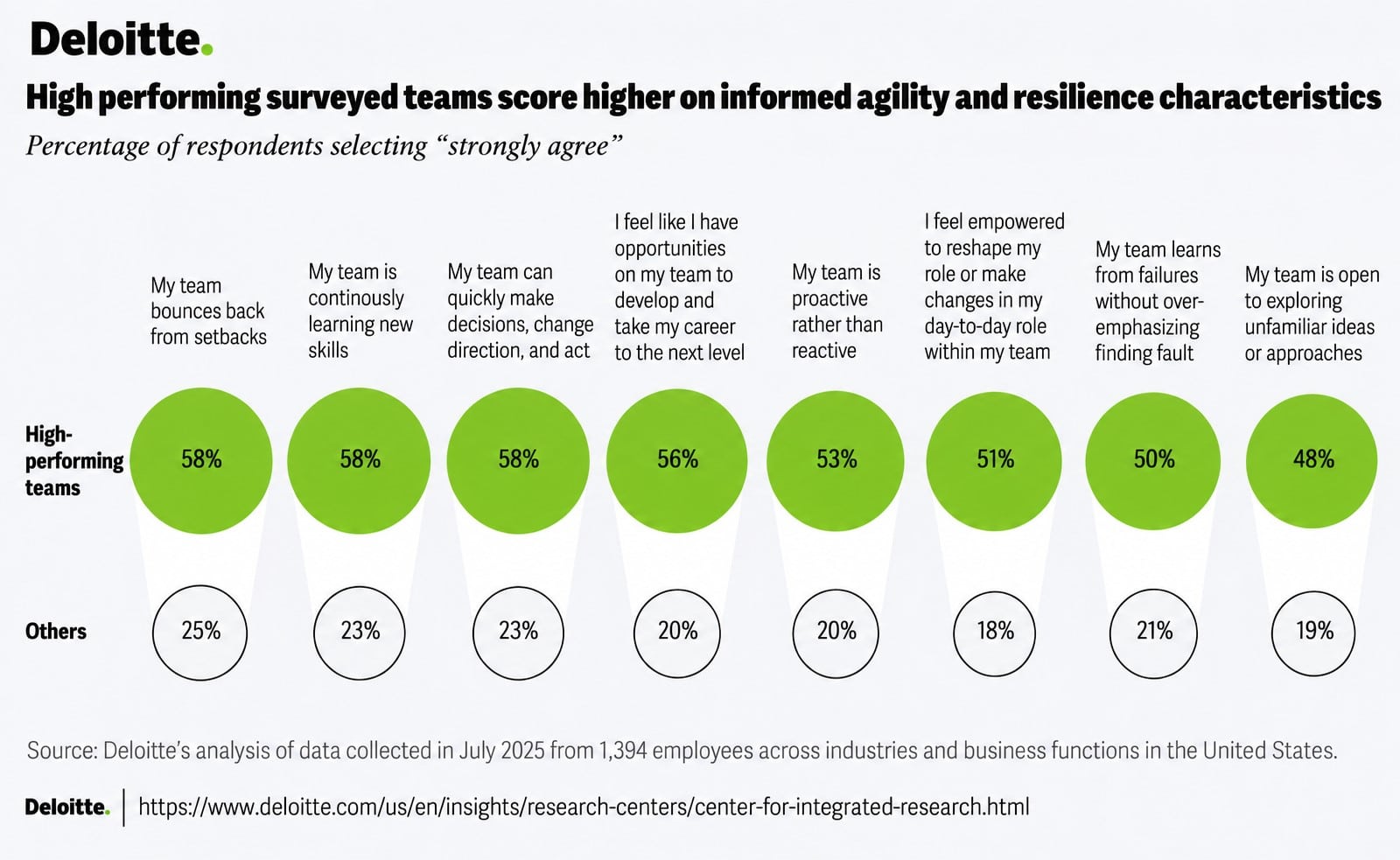
According to Deloitte’s research on high-performing teams, surveyed members of high-performing teams were 2.5 times as likely to report that their teams could adapt quickly, support one another during change, and embrace learning. This highlights the importance of building a supportive and adaptable sales culture.
What motivates sales people the most?
Salespeople are motivated by a combination of financial rewards, personal achievement, career growth, recognition, supportive leadership, and opportunities to succeed professionally. However, different employees respond to different incentives. Some value higher commissions, while others prefer flexibility, appreciation, or career advancement.
Intrinsic vs. Extrinsic Motivation in Sales
Understanding intrinsic and extrinsic motivation can help managers choose the right approach. Intrinsic motivation comes from personal satisfaction, professional growth, purpose, and the desire to improve. For example, a sales representative may work harder because they enjoy developing relationships with customers. Extrinsic motivation comes from external rewards such as commissions, bonuses, recognition, promotions, or other incentives.
| Intrinsic Motivation | Extrinsic Motivation |
| Personal growth and development | Commissions and bonuses |
| Improving sales skills | Employee recognition |
| Sense of purpose | Rewards and incentives |
| Achieving personal goals | Promotions and awards |
| Job satisfaction | Sales competitions |
Effective sales motivation combines both approaches to support continuous performance and employee engagement.
5 ways to motivate a Sales Team
Understanding how to motivate a sales team requires more than offering rewards for completed deals. The following five strategies provide a strong foundation for building a motivated sales workforce.
1. Use Gamification and Friendly Sales Competitions
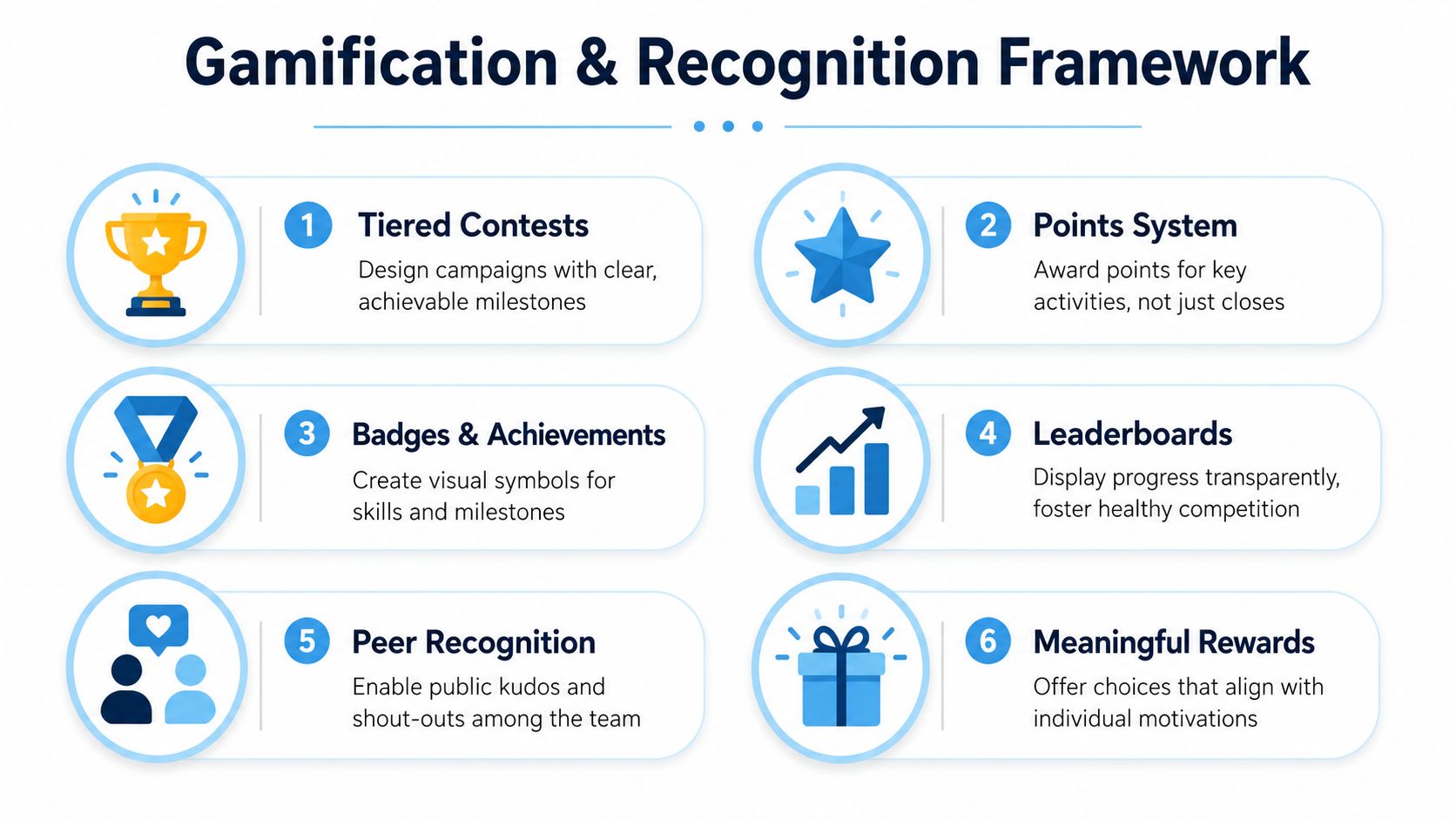
Using points, badges, leaderboards, and challenges employee engagement gamification can make sales activities more engaging. Managers should reward qualified leads, improved skills, and teamwork, not just closed deals. Friendly competition encourages wider participation, strengthens collaboration, and helps representatives maintain productive habits at every stage of the sales cycle.
2. Understand What Motivates a Sales Team
Sales representatives value different motivators, including commissions, recognition, flexibility, and career growth. Managers can use one-on-one meetings and pulse surveys to understand individual needs. Tailoring support to those preferences improves engagement, builds trust, and helps representatives stay focused on achieving sales targets throughout the year.
3. Set Clear and Achievable Sales Goals
Unrealistic targets can lower confidence and distract representatives from effective selling. Managers should set SMART goals and divide larger quotas into weekly milestones. Clear targets help teams prioritize valuable activities, monitor progress, and maintain momentum, improving their chances of meeting sales quotas consistently and reliably.
4. Prevent Burnout and Support Work-Life Balance
Constant targets, demanding customers, and repeated follow-ups can exhaust sales representatives. Managers should monitor workloads, encourage breaks, address concerns, and offer flexibility when possible. Supporting work-life balance helps employees maintain focus, deliver better customer experiences, and remain committed to the team over the long term.
5. Recognize and Celebrate Small Sales Wins
Recognizing only closed deals can overlook valuable progress across the sales process. Managers should celebrate qualified leads, better customer conversations, improved skills, and teamwork. Consistent workplace recognition builds confidence, reinforces productive behaviors, and encourages follow-through that supports a stronger pipeline and improved conversion rates over time.
| Motivation Idea | Practical Example |
| Employee recognition | Celebrate achievements during weekly meetings. |
| Flexible scheduling | Offer flexibility after demanding sales periods. |
| Career development | Provide mentoring or leadership opportunities. |
| Friendly competitions | Run team challenges with symbolic rewards. |
| Employee involvement | Invite the sales team for better ideas and decisions. |
Build a Sales Team Motivation Plan
Having a sales motivation plan helps managers introduce practical improvements without overwhelming employees. The following timetable provides a simple implementation roadmap.
| Timeline | Recommended Actions | Intended Outcome |
| 1st Week: Understand Your Team | Conduct employee surveys, schedule one-on-one meetings, and identify motivation challenges. | Understand individual needs and workplace concerns. |
| 2nd Week: Establish Clear Goals | Set realistic sales targets, introduce smaller milestones, and launch employee recognition activities. | Improve engagement, clarity, and confidence. |
| 3rd Week: Encourage Development | Introduce coaching sessions, practical training, mentoring, and friendly team challenges. | Strengthen skills, collaboration, and participation. |
| 4th Week: Measure and Improve |
Review sales metrics, gather employee feedback, and evaluate motivation activities. | Identify improvements and adjust the ongoing plan. |
Sales motivation should remain an ongoing management practice rather than a one-time initiative.
How to measure Sales Team Motivation and Performance?
Measuring sales team motivation requires combining employee engagement surveys with relevant performance data. Sales results alone cannot explain employee engagement, and so one must evaluate the following key performance indicators:
| Metric | What It Helps Measure |
| Employee engagement score | Motivation and workplace satisfaction |
| Sales quota attainment | Progress toward sales targets |
| Lead-to-customer conversion rate | Effectiveness of sales activities |
| Training participation rate | Involvement in skill development |
| Employee retention rate | Long-term workforce stability |
| Recognition participation | Engagement in recognition initiatives |
Managers should also conduct regular employee surveys to understand motivation levels and identify concerns.
Motivate your sales team with HubEngage
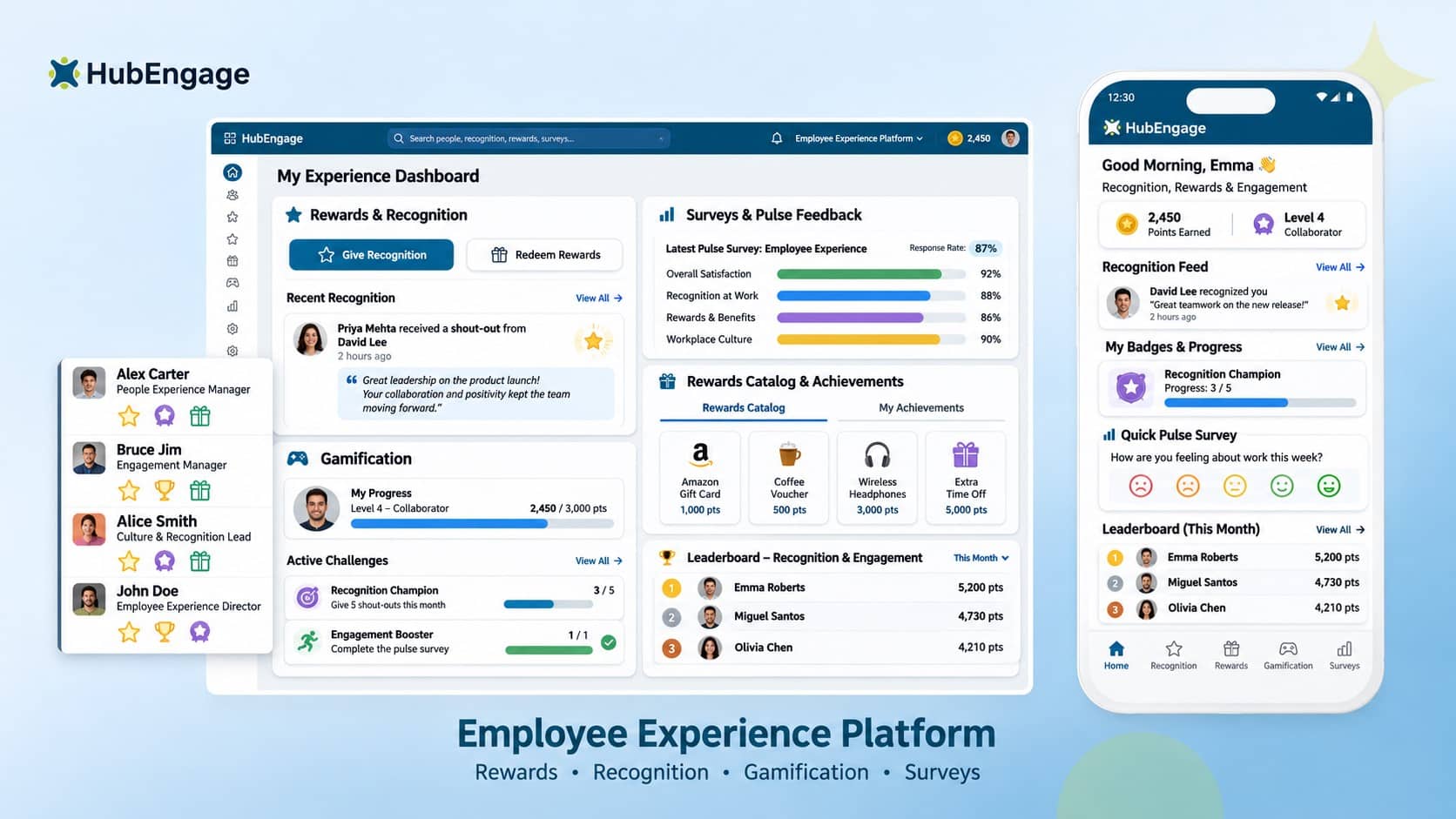
Our digital employee experience platform helps organizations improve employee communication, recognition, and engagement. Its employee surveys enable managers to understand team motivation, collect feedback, and identify workplace challenges. Recognition and rewards features help celebrate sales achievements and everyday contributions. With gamification tools such as points, badges, and leaderboards, organizations can encourage participation in engagement activities and friendly challenges. The platform also supports internal communication, helping sales teams stay connected, informed, and appreciated across different locations.
Conclusion
Learning how to motivate a sales team starts with understanding employee needs and building a supportive workplace. Clear goals, fair incentives, regular coaching, and recognition, help sales teams stay motivated. Sales managers should also listen to feedback, celebrate progress, and adjust their strategies to encourage long-term performance.
Consistent motivation comes from making employees feel valued, confident, and connected. Explore how our employee experience platform helps you recognize sales achievements, run gamified challenges, and collect employee feedback. Request a demo to see it in action.
FAQs On How To Motivate A Sales Team
1. What can a sales manager do to improve team morale?
Sales managers can improve team morale by recognizing everyday efforts, listening to concerns, setting realistic expectations, and celebrating progress. Regular check-ins help employees feel valued and supported.
2. How to motivate a sales team when sales are down?
When sales are down, focus on achievable short-term goals, coach representatives, review lead quality, and recognize small wins. Clear communication and practical support help rebuild confidence.
3. What to say to motivate a sales team?
Tell your sales team, “Every conversation is an opportunity to learn, and every small win moves us forward.” Follow with specific praise and realistic next steps.
4. How to motivate a sales team without stressing them out?
Motivate sales representatives without adding pressure by setting realistic targets, offering regular coaching, recognizing progress, and encouraging breaks. Avoid constant comparisons and allow employees room to improve.
5. What is the best leadership style for motivating salespeople?
A supportive, coaching-focused leadership style helps motivate salespeople by combining clear expectations with constructive feedback, recognition, and autonomy. Managers should adapt their approach to individual needs and experience.
Related Links
digital employee experience platform | employee engagement surveys | workplace recognition | employee engagement gamification | employee development training