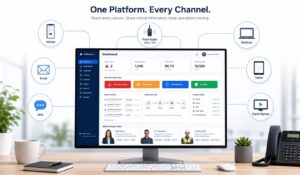
Hospitals run on decisions made in seconds. Nurses relay critical vitals, administrators coordinate multi-department workflows, and HR teams try to keep a distributed workforce aligned, all simultaneously. When healthcare communications break down, the consequences are not just operational friction.
As per, National Library of Medicine, poor communication is the main cause of patient safety and contributes to over 70 percent of sentinel events in U.S. hospitals and the resulting errors cost the system an estimated $17 billion annually. This is not a soft issue but more like an operational cost driver.
For HR leaders, internal communications professionals, and C-suite executives, this makes building a robust internal communication strategy less of a nice-to-have and more of a clinical and operational imperative. And yet, most organizations still treat it as an afterthought. This blog covers key healthcare communication types, benefits, tools, and best practices to improve efficiency, engagement, and patient outcomes. And yet, most organizations still treat it as an afterthought.
Key Takeaways
- Healthcare communications ensures the right information reaches the right person at the right time, improving patient safety and operational efficiency across hospitals and care teams.
- Poor communication is a major cause of medical errors, delays, and compliance risks, making it a critical operational and financial concern for healthcare organizations.
- Effective communication connects clinical staff, administrative teams, leadership, and patients through secure, real-time, and structured information flow.
- Investing in modern healthcare communication tools improves decision-making, reduces staff turnover, and strengthens employee engagement and patient experience.
- A strong strategy includes mobile-first tools, role-based messaging, clear workflows, and continuous training to ensure adoption across frontline and desk-based staff.
- Internal communication tools provide real-time updates, and offer analytics to help healthcare organizations operate more efficiently and stay compliant.

What is Healthcare Communications?
Healthcare communications refers to the structured, real-time exchange of clinical, operational, and administrative information across all levels of a healthcare organization, between clinical staff, administrative teams, leadership, patients, and external stakeholders.
In simple terms, healthcare communications ensures accurate, timely, and secure information flow across clinical and administrative teams. It covers everything from a charge nurse briefing her team at shift change to a system-wide policy update issued by the CHRO.
Unlike most industries, healthcare operates under unique pressures such as high-acuity decisions, strict regulatory requirements, and a workforce that is often deskless, rotating, and under significant stress.
Effective medical communications is not just about sending messages. It is about ensuring the right information reaches the right person at the right time, with zero room for misinterpretation. In practice, gaps appear not because people fail, but because systems are not designed for speed and clarity.
The importance of Communication in Healthcare
The importance of communication in healthcare extends far beyond clinical handoffs. It shapes how employees experience their workplace, how leaders build organizational trust, and how quickly critical decisions get made.
On the workforce side, the same pattern holds. High turnover, burnout, and disengagement, all endemic in healthcare, are frequently tied to breakdowns in organizational communication. Staff who do not feel heard, informed, or connected to leadership direction are more likely to disengage or leave.
Medical Economics 2025 study found that nearly 70 percent of patients would switch providers if communication expectations are not met. The same logic applies to employees. Organizations that get communication right retain their best people.
Understanding the importance of communication in healthcare means recognizing it as a direct lever on both patient outcomes and workforce stability, not a peripheral concern.
Types of Healthcare Communication
Internal Communication in Healthcare
Internal communication includes staff-to-staff and leadership updates like shift handoffs, department coordination, HR policies, and emergency alerts. It keeps daily operations running smoothly. When communication is unclear or delayed, it can lead to mistakes, slower care, and employee frustration, eventually impacting patient outcomes and staff retention.
Patient Communication
Patient communication covers doctor conversations, discharge instructions, reminders, consent forms, and follow-ups. Clear communication helps patients understand their care and follow instructions correctly. Poor communication can lead to confusion, negative experiences, and legal risks, making it a critical area for improving patient satisfaction, safety, and trust.
Organizational and Administrative Communication
This includes compliance updates, policy changes, leadership announcements, and coordination between departments. It ensures everyone is aligned with goals and regulations. Poor communication here can cause delays, duplicated work, and compliance risks. Strong systems help organizations stay organized, reduce confusion, and improve overall operational efficiency.
| Communication Type | Key Focus | Examples | Business Impact |
| Internal Communication in Healthcare | Staff coordination and daily operations | Shift handoffs, HR updates, emergency alerts | Reduces errors, improves efficiency, boosts staff retention |
| Patient Communication | Patient understanding and care delivery | Doctor discussions, discharge instructions, reminders | Improves patient satisfaction, safety, and trust |
| Organizational & Administrative Communication | Alignment, compliance, and governance | Policy updates, compliance notices, leadership communication | Reduces risk, avoids duplication, ensures regulatory compliance |
Benefits of Effective Healthcare Communications
When healthcare organizations invest in structured communication, the returns show up across every KPI thereby providing great benefits like:
- Reduced medical errors. Standardized protocols cut errors significantally. Most failures stem from inconsistent systems, not negligence, and structured communication improves clarity and patient safety.
- Lower staff turnover. Employees who feel informed and connected to goals are less likely to leave. Hence, communication is a cost-effective retention investment.
- Faster decision-making. Real-time communication removes delays between clinical events and leadership response. In high-acuity environments, even small delays increase risk, while timely updates support faster, safer decisions.
- Higher compliance adherence. Clear communication reduces HIPAA and regulatory violations. Standardized processes, secure channels, consistent updates help teams maintain compliance across operations.
- Stronger employee engagement. Recognition, feedback channels, and leadership visibility improve engagement. Engaged employees perform better, communicate effectively, and support overall workforce stability.
Organizations that invest in the right healthcare communication tools do not just improve messaging. They build a more resilient operational system.
How to build an Effective Healthcare Communication Strategy?
Audit Current Communication Processes
Start with an honest assessment of how information flows across your organization. Most health systems rely on fragmented tools such as emails, phone calls, and outdated intranets. That fragmentation is often more widespread than leadership expects and is the first issue any internal communication strategy must address.
Identify Communication Gaps
Once communication processes are mapped, the gaps become easier to identify. It is important to assess whether frontline workers receive real-time updates, departments collaborate effectively, and employees have structured feedback channels. These gaps create operational risks that can negatively affect both patient care delivery and overall workforce experience.
Choose the Right Healthcare Communication Tools
The tools you select should support both desk-based and frontline staff. Look for internal communication tools that offer mobile-first access, secure messaging, and role-based targeting. The best healthcare communication tools reduce complexity instead of adding to it, while modern medical communication services ensure scalability without fragmentation.
Create Communication Policies and Workflows
Define who communicates what, through which channels, and at what frequency. Crisis protocols are especially important. During emergencies, lack of structure leads to confusion. Predefined workflows allow teams to respond quickly and effectively.
Train Teams and Monitor Adoption
Technology alone does not solve communication challenges. Adoption requires training, onboarding, and continuous monitoring. Track engagement metrics such as open rates and response times to evaluate effectiveness and refine your approach.
7 ways to connect with Healthcare Workers through Internal Communications
Use Mobile-First Communication
Most clinical staff are not desk-based, so mobile-first communication ensures they receive timely updates, alerts, and messages, improving responsiveness, coordination, and overall care delivery.
Targeted or Role-Based Communication
Sending role-based, targeted messages ensures employees receive only relevant information, reducing noise, improving clarity, and increasing engagement across clinical, administrative, and leadership teams.
Enable Real-Time Updates
Real-time updates help teams respond quickly to critical situations, reduce communication delays, and ensure accurate information reaches the right people during time-sensitive healthcare operations.
Encourage Two-Way Communication and Feedback
Two-way communication allows employees to share feedback, raise concerns, and stay engaged, helping organizations identify issues early and continuously improve communication effectiveness.
Share Organizational Updates and Announcements
Regular updates and announcements keep employees informed about policies, changes, and goals, building transparency, trust, and alignment across departments and leadership levels.
Recognize and Celebrate Milestones
Recognizing employee achievements and milestones boosts morale, strengthens engagement, and encourages a positive work culture, which directly supports retention and overall workforce satisfaction.
Provide Training and Knowledge Resources
Providing easy access to training materials and knowledge resources ensures employees stay informed, improve skills, and access important information whenever needed during daily operations.
How HubEngage optimizes Healthcare Communication?
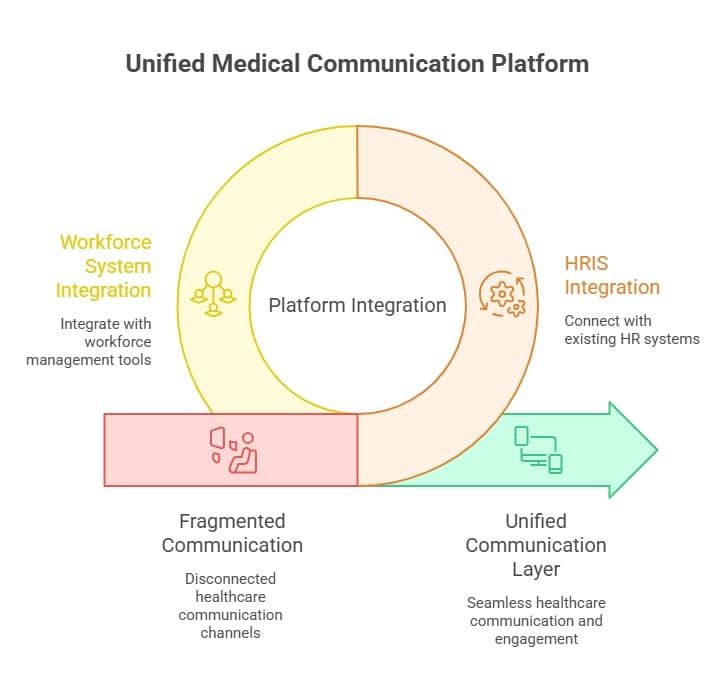
Most healthcare organizations struggle with fragmented communication systems. Messages are distributed across multiple tools, and leadership often lacks visibility into engagement and adoption.
As a part of its employee experience suite, HubEngage offers an employee communication platform to solve these challenges so that different sectors within the healthcare industry can execute their operations easily.
Our platform integrates with HRIS and workforce systems, reducing tool overload and supporting scalable medical communication services. This creates a unified communication layer where healthcare communications, coordination, and engagement align seamlessly.
Key Features:
- Scheduling solution for planning shifts across teams and locations
- Time tracking for attendance, work hours, and productivity insights
- Learning platform for training, upskilling, and knowledge sharing
- Task management to assign, track, and complete work efficiently
- Multi-channel access across mobile, web, email, SMS, and signage
- Real-time collaboration, messaging, and task workflows improve team productivity
- AI-powered chatbot delivers support, answers, and knowledge across modules
- Scalable modules expand capabilities as organization and workforce needs grow
When nurses miss critical updates, mobile-first alerts ensure frontline staff receive real-time information, reducing missed instructions and improving compliance. For HR managing distributed teams, targeted communication ensures messages reach the right employees without unnecessary noise.
Meanwhile, when leadership needs visibility, analytics provide actionable insights into engagement and communication performance, enabling faster, data-driven decisions across the organization.
Conclusion
Effective healthcare communication is no longer an option. It is a core operational capability that determines how healthcare organizations perform, retain talent, stay compliant, and deliver good care.
Organizations that invest in the right systems today are building the resilience required for the future of healthcare.
To see how this can work in practice, explore the HubEngage Employee Experience Platform by scheduling a demo.
Healthcare Communications FAQs
How does poor communication affect patient safety in healthcare?
Poor communication leads to misdiagnosis, medication errors, delayed treatments, and care coordination failures, significantly increasing preventable harm, patient safety incidents, and overall healthcare system risks.
What communication standards must healthcare organizations follow?
Healthcare organizations must comply with HIPAA, Joint Commission standards, and other regulatory frameworks, ensuring patient data privacy, secure communication practices, and adherence to established clinical communication protocols.
What technologies are used for secure communication in healthcare?
Secure healthcare communication technologies include encrypted messaging platforms, integrated communication systems, mobile-first applications, and role-based access solutions that ensure data security, compliance, and controlled information sharing.
How can healthcare organizations ensure compliance when sharing sensitive information?
Healthcare organizations ensure compliance by using secure technologies, establishing clear policies, conducting regular staff training, and implementing audit mechanisms to monitor data handling and regulatory adherence.
How can communication platforms integrate with existing healthcare systems?
Communication platforms integrate with healthcare systems through APIs that connect HR, scheduling, and clinical software, enabling seamless data exchange, improved workflows, and reduced system fragmentation.
What metrics should organizations track?
Organizations should track engagement levels, response times, platform adoption rates, and communication-related incidents to measure effectiveness, identify gaps, and continuously improve internal communication strategies.
How can hospitals maintain communication during emergencies?
Hospitals maintain communication during emergencies by using centralized platforms with real-time alerts, predefined crisis workflows, and reliable messaging systems to ensure rapid coordination and clear information dissemination.
Related Links:
employee communication platform | internal communication tools | internal communication strategy