Walk onto any active production floor and one thing becomes clear fast, the speed of information determines the speed of output. When communication breaks down between a line supervisor and a machine operator, an HR team and a shift worker, or a safety officer and a production crew the ripple effect impacts the whole manufacturing unit.
As we work with manufacturing leaders, HR teams, and internal communication professionals, we consistently see one pattern where organizations that invest in a centralized employee communication platform significantly outperform those relying on fragmented tools.
In this guide, we will break down manufacturing communication systems, tools, and strategies that drive measurable results.
Key Takeaways:
- Manufacturing communications drive productivity, safety, and alignment across shop floor and leadership teams.
- Modern manufacturing communication systems enable real-time updates, faster decisions, and reduced downtime.
- Common gaps include limited digital access, language barriers, and delayed production issue alerts.
- Best results come from standardized processes, mobile-first tools, and two-way communication channels.
- Manufacturing communication tools improve engagement, efficiency, and compliance in daily operations.

What is Manufacturing Communication?
Manufacturing communication refers to the structured flow of information across all levels of a manufacturing organization. It includes real-time updates, safety alerts, production data, and employee feedback shared between frontline workers, supervisors, and leadership.
Effective manufacturing communications ensure that everyone from the shop floor to the top management level has access to the right information at the right time.
When done right, communication in the manufacturing industry becomes a backbone for productivity, safety, and employee engagement.
Why Effective Communication is critical in the Manufacturing Industry?
The manufacturing environment is fast-paced, high-risk, and highly dependent on coordination. Even small communication breakdowns can result in costly delays or safety incidents.
According to the Weavix Survey, 53% of manufacturing workers lose at least 24 minutes per shift simply waiting for important information or approvals. This gap is estimated to cost the industry $15.4 billion annually. That number should stop any operations or HR leader in their tracks.
In manufacturing specifically, delayed or unclear communication can lead to:
- Production downtime – Causes delays in output, impacting delivery timelines and overall productivity
- Increased defect rates – Leads to quality issues, rework, and higher operational costs
- Workplace accidents – Results from miscommunication, increasing safety risks and compliance concerns
- Reduced employee morale – Poor communication lowers engagement, trust, and workforce motivation levels
| Issue | Impact |
| Production downtime | Slows output, disrupts schedules, and increases operational costs |
| Increased defect rates | Reduces product quality and leads to rework and waste |
| Workplace accidents | Raises safety risks, compliance issues, and potential liabilities |
| Reduced employee morale | Lowers engagement, productivity, and overall workforce satisfaction |
We have seen that organizations with strong manufacturing communication systems can improve operational efficiency, reduce incidents, and create a more connected workforce. For executive leadership, this translates directly into better business outcomes.
Key components of Manufacturing Communication Systems
Shop Floor Communication
Shop floor communication is the foundation of manufacturing communications. It involves real-time updates about production schedules, machine status, and workflow changes.
Modern manufacturing communication tools enable instant notifications, digital dashboards, and mobile access, ensuring frontline workers stay informed without relying on outdated methods like bulletin boards.
Management-to-Worker Communication
Clear communication from leadership to employees ensures alignment on goals, expectations, and company updates. This includes policy changes, performance metrics, and strategic direction.
An effective system bridges the gap between management and frontline workers, ensuring transparency and trust across the organization.
Cross-Department Coordination
Manufacturing operations depend on collaboration between departments such as production, maintenance, logistics, and quality control.
Manufacturing communication solutions help break down silos by enabling centralized communication channels and shared visibility across teams.
Safety and Compliance Communication
Safety is a top priority in manufacturing environments. Communication systems must deliver timely alerts, training updates, and compliance-related information.
In high-risk scenarios, having a structured crisis communication plan can prevent incidents and ensure quick response times.
Common Manufacturing Communication Challenges
Communication Gaps Between Shop Floor and Management
One of the most common challenges is the disconnect between frontline workers and leadership. Without proper channels, critical information often fails to reach the right audience.
Limited Access to Digital Communication Tools
Many manufacturing employees do not have regular access to desktops or corporate email, making traditional communication methods ineffective.
Language and Workforce Diversity Barriers
Manufacturing workforces are often diverse, with multiple languages spoken across teams. Without inclusive communication systems, messages can be misunderstood or ignored.
Delayed Communication During Production Issues
Production delays often occur due to slow communication. Without real-time updates, teams cannot respond quickly to issues, leading to inefficiencies.
Best Practices for improving Manufacturing Communication
Deciding on Your Objectives
Before implementing new manufacturing communication systems, we recommend defining clear goals. Whether it’s improving safety, increasing productivity, or boosting engagement, objectives should guide your strategy.
Standardizing Communication Processes
Consistency is key. Standardizing how information is shared ensures clarity and reduces confusion across teams.
Providing Real-Time Production Updates
Real-time communication is critical for modern manufacturing. Digital tools enable instant updates, reducing downtime and improving responsiveness.
Consider Workforce Challenges
It’s important to design communication strategies that account for shift workers, remote locations, and limited device access.
Encouraging Two-Way Communication
Communication should not be one-sided. Employees need channels to share feedback, report issues, and contribute ideas.
Engaging with Employee Feedback
Collecting and acting on employee feedback improves engagement and helps identify communication gaps.
Training Employees on Communication Tools
Even the best manufacturing communication tools are ineffective without proper training. Ensuring employees understand how to use these tools is essential.
For organizations building a long-term approach, integrating these practices into a broader internal communication strategy is key.
How technology is changing communications in the Manufacturing Industry?
Technology is transforming communication in the manufacturing industry by enabling real-time, mobile-first, and data-driven interactions. Modern manufacturing communication systems now include:
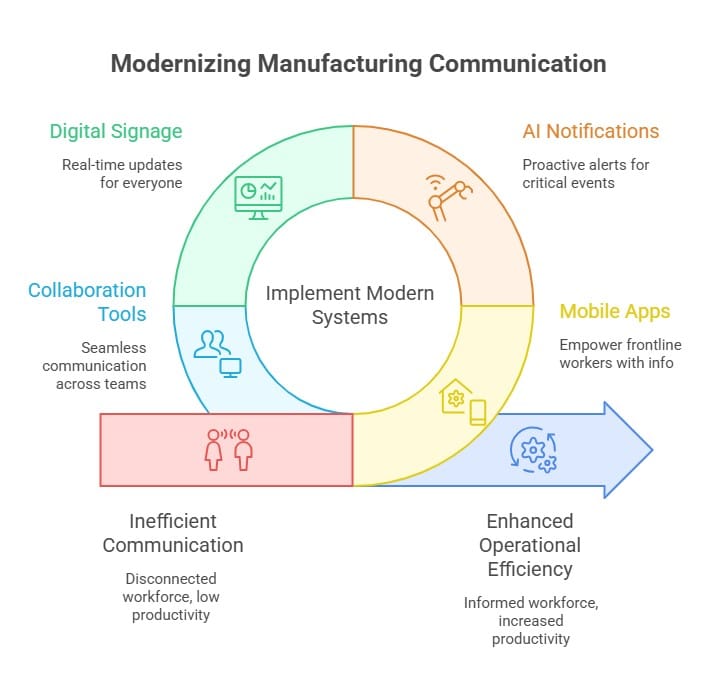
These advancements allow organizations to move away from manual processes and adopt scalable manufacturing communication solutions.
We have observed that companies using advanced internal communication tools experience higher engagement, faster decision-making, and improved operational efficiency.
How to know your communication framework is delivering impact?
Measuring the effectiveness of manufacturing communications is essential for continuous improvement. Key metrics to track include:
| Metric | Significance |
| Employee engagement rates | Indicates workforce alignment, morale, and effectiveness of manufacturing communications across teams |
| Message open and response rates | Measures reach and responsiveness of manufacturing communication systems and tools |
| Production efficiency metrics | Reflects how well communication in the manufacturing industry supports output, uptime, and coordination |
| Safety incident reductions | Demonstrates effectiveness of timely alerts and compliance communication in reducing workplace risks |
When communication systems are working effectively, organizations see improved alignment, faster issue resolution, and stronger employee satisfaction.
How HubEngage enables seamless communication in Manufacturing Environments?
At HubEngage, we understand the unique challenges of manufacturing environments. Our employee experience platform is designed to support seamless communication across all levels of the organization.
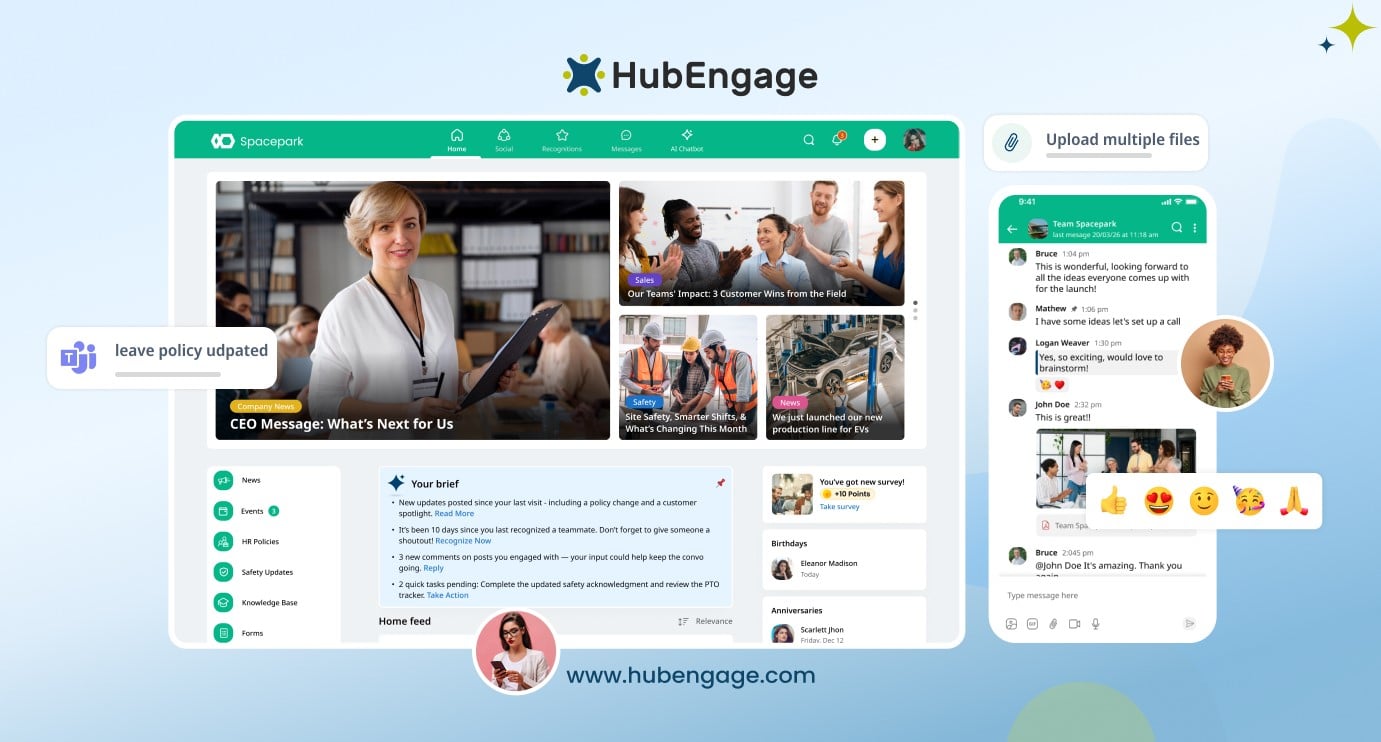
With HubEngage, manufacturing organizations can:
- Enable real-time messaging and updates
- Share critical announcements instantly
- Provide mobile access for frontline workers
- Facilitate two-way communication and feedback
- Integrate scheduling and time tracking features
By implementing HubEngage, organizations can modernize their manufacturing communications and build a more connected workforce.
Watch this review from Morten Bechlund, Senior Vice President of People & Performance at Norican Group reflects the improvement in good communication and the organizational impact of using HubEngage internal communication platform.
“Earlier we had real issues with communication across shifts and locations. After using HubEngage, updates became faster and clearer. Our team started responding quickly, and coordination improved a lot. We also saw better engagement and fewer delays in production. Overall, it helped us work more efficiently and stay connected as one team.”
Explore more such real-world impact and success stories, you can hear from our customers describing how they improved employee experience using HubEngage.
Conclusion
Strong manufacturing communications are the backbone of safe, efficient, and connected operations. By aligning shop floor teams with leadership through modern manufacturing communication systems and tools, organizations can reduce downtime, improve safety, and boost engagement.
The next step is choosing scalable manufacturing communication solutions that fit your workforce needs. Explore the HubEngage Employee Experience Platform and see how it can transform your communication strategy.
Schedule a demo to experience it in action for your teams and get measurable results.
Manufacturing Communication FAQs
What are the biggest communication challenges in manufacturing?
The biggest challenges include communication gaps between management and frontline workers, lack of access to digital tools, language barriers, and delayed information sharing during production issues.
How can manufacturing companies improve communication with frontline workers?
Companies can improve communication by adopting mobile-first platforms, enabling real-time updates, and creating channels for two-way communication.
What tools help improve communication in manufacturing plants?
Manufacturing communication tools such as mobile apps, digital dashboards, and centralized communication platforms help improve efficiency and engagement.
How do digital workplace platforms support manufacturing communication?
Digital platforms provide centralized communication, real-time updates, and analytics, helping organizations streamline communication processes.
How can real-time communication improve manufacturing efficiency?
Real-time communication reduces delays, improves coordination, and enables faster decision-making, leading to increased productivity.
What role does employee communication software play in manufacturing organizations?
Employee communication software acts as a central hub for information sharing, enabling seamless communication across teams and improving overall operational performance.
Related Links:
employee communication platform | internal communication tools | crisis communication | internal communication strategy