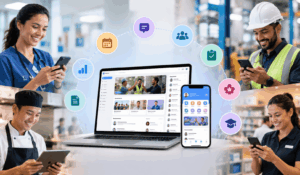
Frontline employees keep businesses running, serving customers, caring for patients, operating equipment, delivering products, and solving problems. However, engaging them can be challenging because they often work different shifts, move between locations, and have limited access to email, meetings, or desks. Traditional employee engagement program may not meet their needs. Organizations need accessible communication, simple feedback channels, regular recognition, mobile-friendly training, and quick access to schedules, information, and support. Improving frontline employee experience helps employees feel valued and connected while strengthening productivity, retention, workplace culture, and customer service. Our blog will help you discover practical strategies to improve frontline employee engagement and experience.
Key Takeaways
- Frontline employee engagement improves when workers have easy access to communication, information, schedules, and workplace resources.
- Mobile-first communication helps frontline employees stay connected across different shifts, locations, stores, facilities, and job sites.
- Regular surveys and feedback channels give frontline workers a voice and help organizations identify engagement problems early.
- Employee recognition, rewards, and ongoing engagement programs can improve motivation, belonging, workplace culture, and employee retention.
- Mobile training, microlearning, and centralized knowledge resources make employee learning and career development easier for frontline teams.
- AI chatbots, real-time messaging, and engagement analytics help employees get faster support while helping you measure and improve frontline employee experience.

Understanding the unique needs of Frontline Employees
Frontline employees face communication gaps, limited technology access, changing schedules, operational pressure, and fewer development opportunities, creating distinct employee engagement needs.
| Challenges | What do employees want? |
| Work across stores, facilities, sites, or field locations | Mobile-first communication and consistent access to company information |
| Depend on supervisors or informal updates for information | A centralized communication hub with timely, reliable updates |
| Work fixed, rotating, overnight, or unpredictable shifts | Flexible communication, on-demand training, and schedule-access tools |
| Make quick decisions during daily operations | Fast access to procedures, knowledge resources, messaging, and AI-powered support |
10 Practical Strategies To Improve Frontline Employee Engagement and Experience
We suggest you explore these effective ways added below to strengthen communication, recognition, feedback, training, and connection in your frontline workforce.
1. Get Frontline Employee Communication Resources
Provide frontline employees with accessible resources through a centralized communication hub. Share announcements, schedules, policies, updates, FAQs, training, and leadership messages using mobile apps, email, SMS, digital signage, and employee portals across shifts and locations.
- Improves access to workplace information
- Reduces communication gaps
- Helps employees work more efficiently
2. Establish Employee Engagement Surveys
An open feedback allows frontline employees to share concerns, ideas, and observations through employee engagement surveys , suggestion forms, and manager conversations. While leaders can use ai-powered thematic and sentiment analysis to better understand what employees want..
- Encourages employee participation
- Identifies workplace issues
- Builds trust in leadership
3. Conduct Employee Recognition Programs
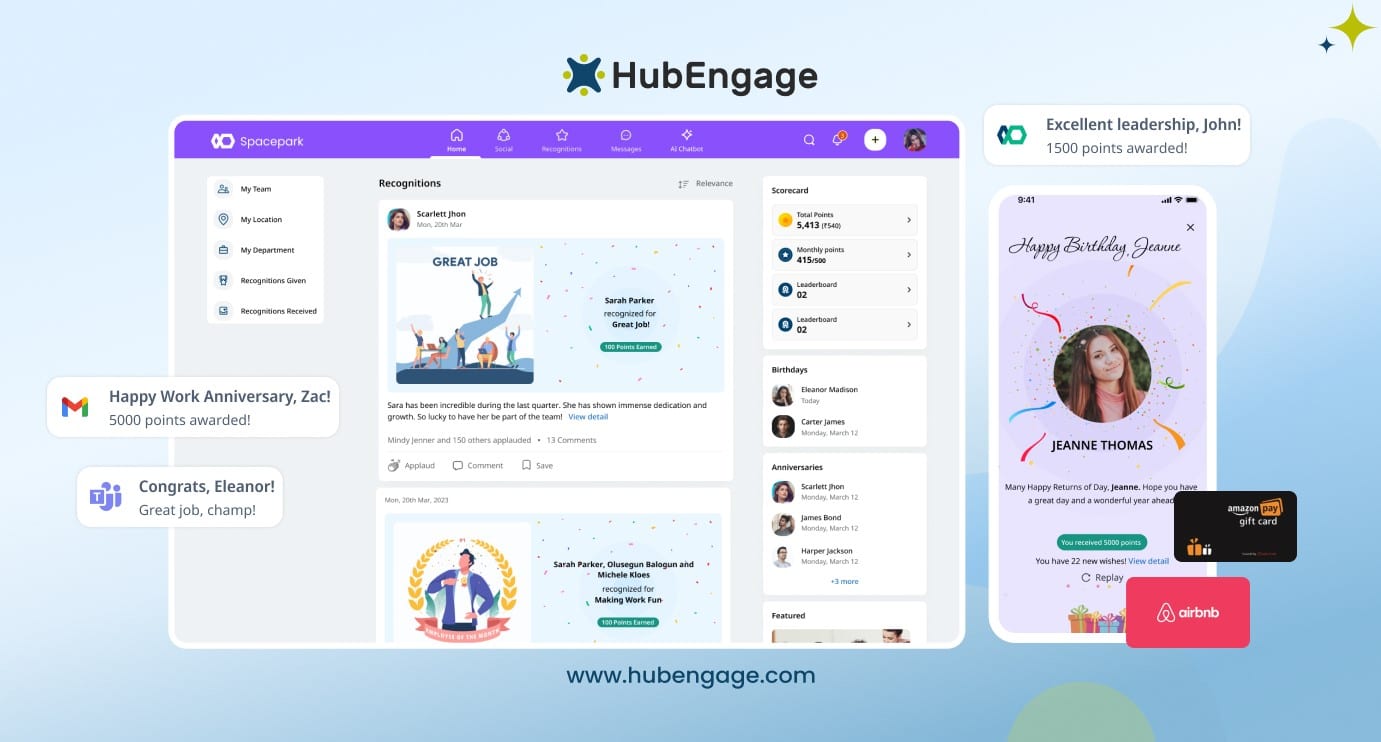
Recognition programs acknowledge frontline employees for their contributions, achievements, teamwork, customer service, and alignment with company values through peer, manager, and leadership appreciation.
- Increases motivation
- Reinforces positive behaviors
- Builds workplace community
4. Create Training Programs For Employees
Mobile-friendly training, microlearning, knowledge resources, and clear career pathways help frontline employees develop skills, access information, and prepare for future responsibilities without disrupting daily work.
- Improves employee capabilities
- Supports career growth
- Increases retention potential
5. Run Employee Engagement Programs
Conducting popular employee engagement programs such as recognition campaigns, pulse surveys, wellness activities, microlearning for employees, safety initiatives, and leadership sessions keep frontline employees informed, involved, and connected throughout the year.
- Maintains employee participation
- Reinforces company culture
- Encourages continuous involvement
6. Measure and Monitor Engagement
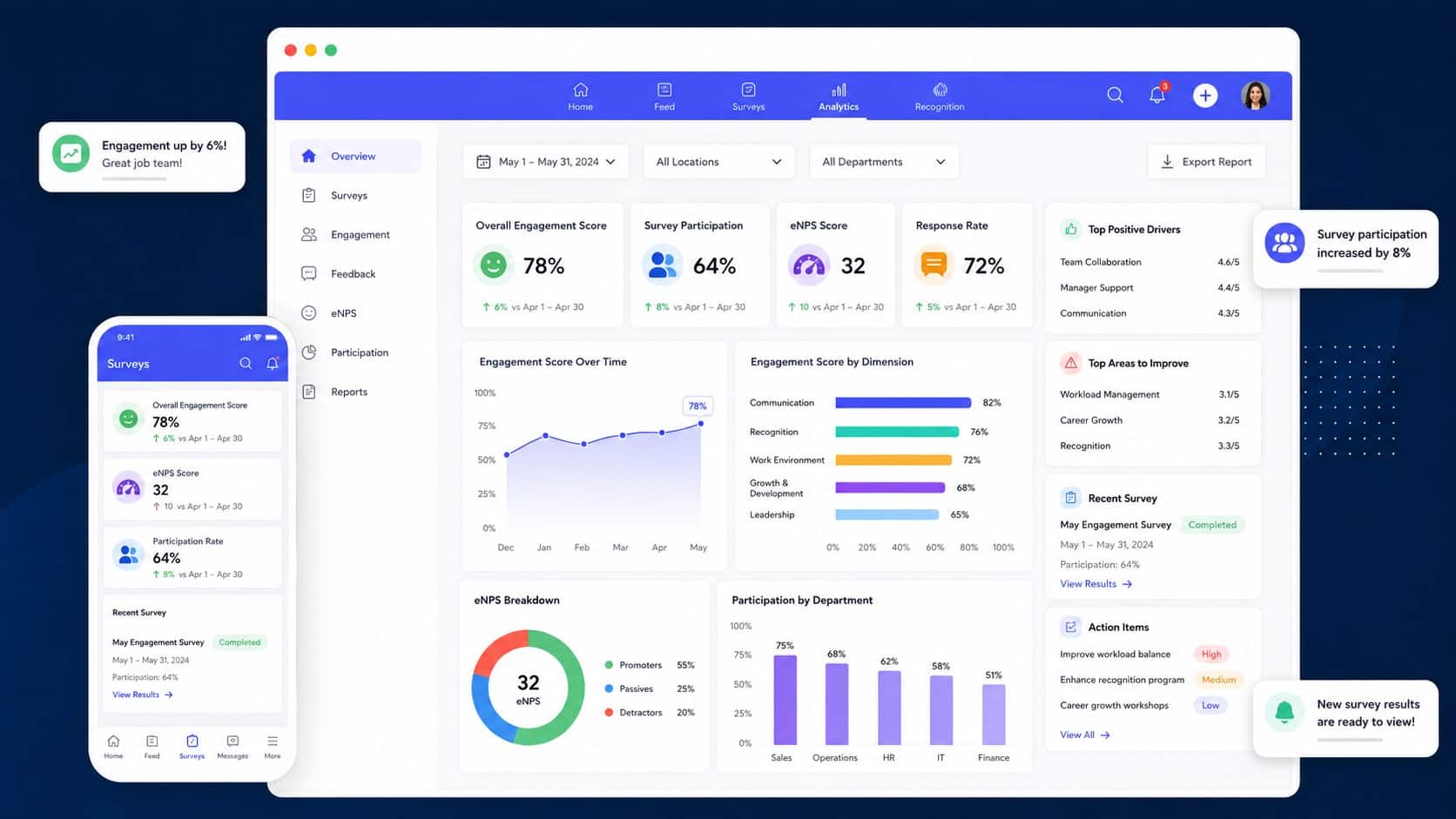
Measuring frontline engagement through satisfaction, retention, absenteeism, survey participation, training completion, recognition activity, and platform usage helps organizations understand employee needs and improve workplace programs.
- Reveals engagement trends
- Identifies improvement areas
- Supports informed decision-making
7. Give Mobile-First Access
Mobile-first employee tools give frontline workers convenient access to company news, schedules, training, surveys, recognition, policies, messaging, documents, and HR resources without requiring desktop access.
- Removes access barriers
- Supports distributed employees
- Creates a consistent experience
8. Real-Time Employee Engagement System
Having Two way text messaging helps frontline employees and managers quickly coordinate shifts, ask questions, share updates, respond to operational changes, and communicate with relevant teams or locations.
- Speeds up decision-making
- Improves team coordination
- Reduces communication delays
9. Use Employee Social Network
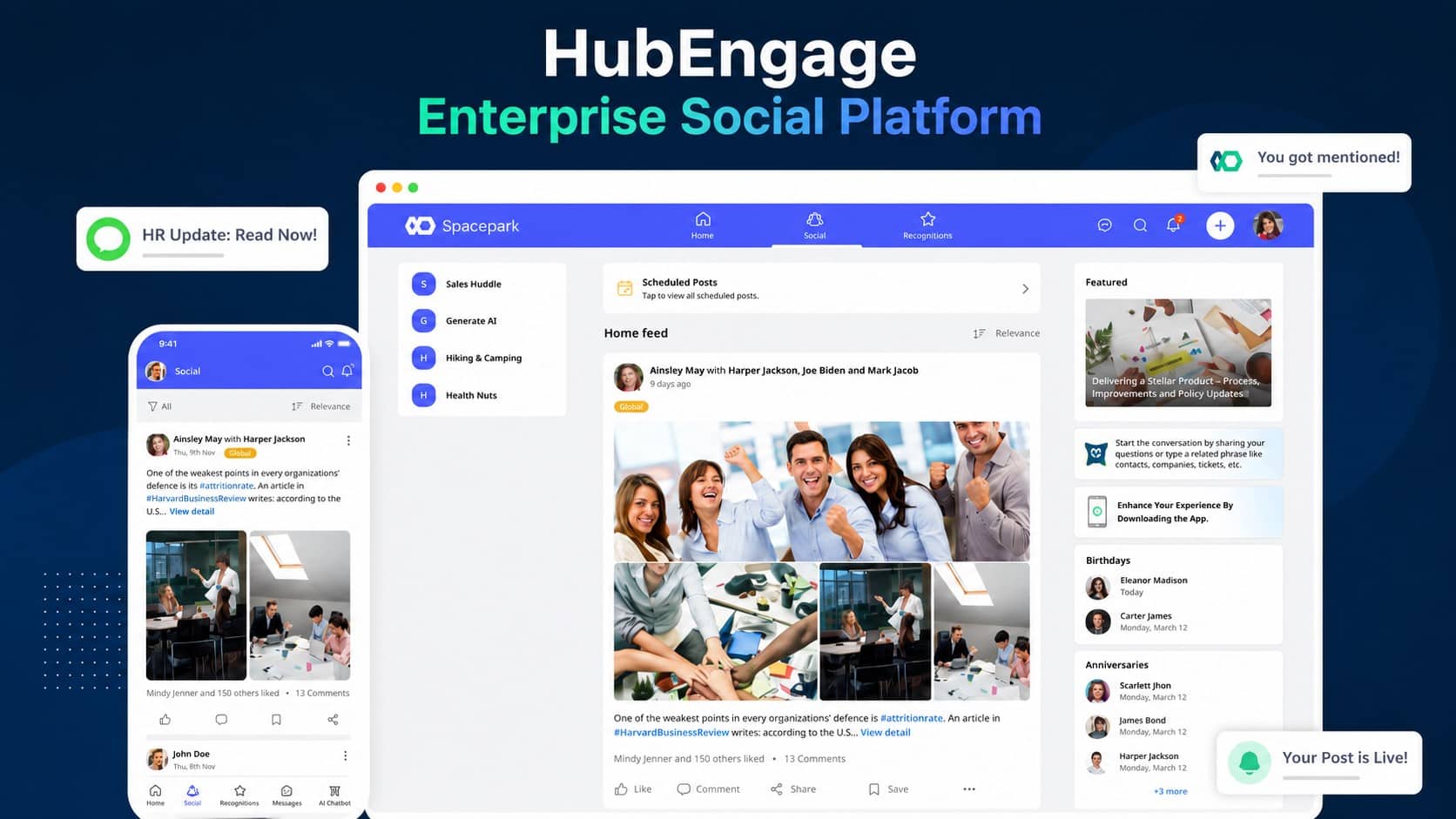
An employee social network connects frontline employees with colleagues and leaders, enabling them to share updates, achievements, ideas, questions, celebrations, and recognition across locations and work groups.
- Strengthens organizational belonging
- Connects distributed teams
- Improves leadership visibility
10. Give Quick Support using AI Chatbot
An AI chatbot gives frontline employees fast, natural-language answers about policies, benefits, procedures, training, and workplace processes using approved organizational information.
- Reduces time spent searching
- Decreases repetitive HR questions
- Improves employee self-service
Frontline Employee Engagement Checklist
Here is a simple selection checklist to help you choose and build the right employee engagement plan for your frontline team.
| Parameter | Why It Is Important |
| Company size and workforce distribution | Helps determine whether the strategy should focus on a small team, multiple locations, regional operations, or a large distributed workforce. |
| Budget and available resources | Determines which engagement tools, communication channels, training programs, recognition initiatives, and analytics capabilities are realistic and sustainable. |
| Industry type and work environment | Ensures the strategy reflects industry-specific needs such as safety, compliance, customer service, patient care, manufacturing, retail, hospitality, or field operations. |
| Workforce structure and organization design | Helps tailor engagement programs to employees working across departments, locations, shifts, job levels, contractors, remote teams, or franchise operations. |
| Existing communication channels and technology | Shows which tools are already available, such as email, intranet, SMS, digital signage, HR systems, or employee apps, and where communication gaps exist. |
| Employee digital literacy and technology comfort | Helps determine how simple the platform and engagement activities need to be, as well as the level of onboarding and support employees may require. |
| Language, cultural, and accessibility requirements | Ensures communication and engagement activities are inclusive, understandable, and accessible to employees with different languages, abilities, and backgrounds. |
| Training and career development needs | Determines whether employees need onboarding, compliance training, product education, leadership development, cross-training, or clear career pathways. |
| Knowledge and information access | Helps identify whether employees need a centralized hub for policies, FAQs, procedures, schedules, benefits, safety information, and operational guidance. |
| Engagement goals and business priorities | Connects the strategy to measurable outcomes such as retention, productivity, safety, customer satisfaction, employee satisfaction, or reduced absenteeism. |
The Future of Frontline Employee Experience
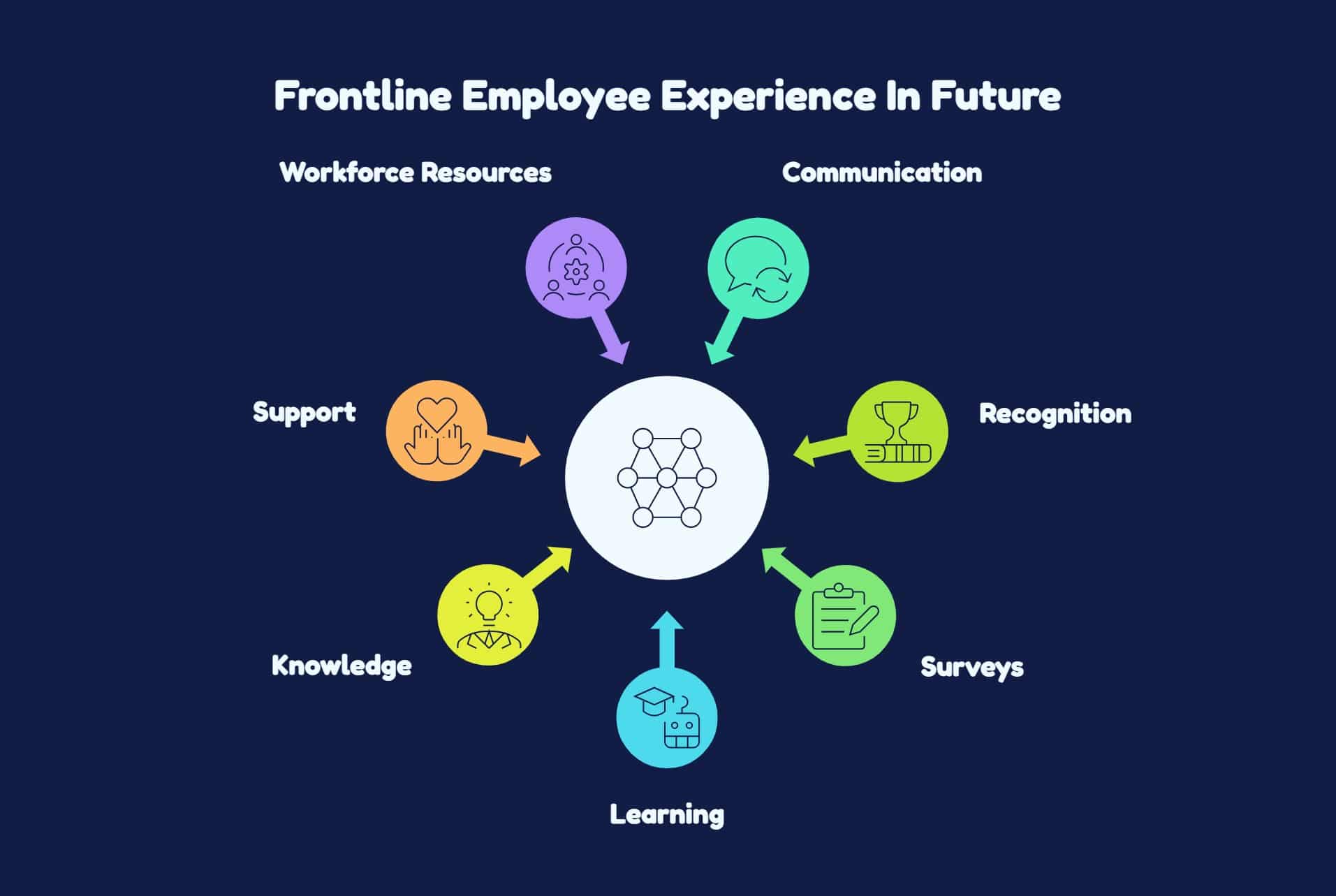
Frontline employees expect fast, accessible, and connected workplace experiences. Organizations must move beyond disconnected tools and outdated communication methods by unifying communication, recognition, surveys, learning, knowledge, support, and workforce resources in one central hub. Connected technology helps distributed teams reduce communication gaps, improve engagement, and create a more consistent employee experience.
Introducing HubEngage: The Best Frontline Employee Engagement App
Our employee experience platform helps organizations connect, inform, and engage frontline teams through one unified digital system. It brings communication, intranet resources, employee recognition, surveys, messaging, digital signage, learning, knowledge management, and ai powered chatbot everything in one mobile-first platform.
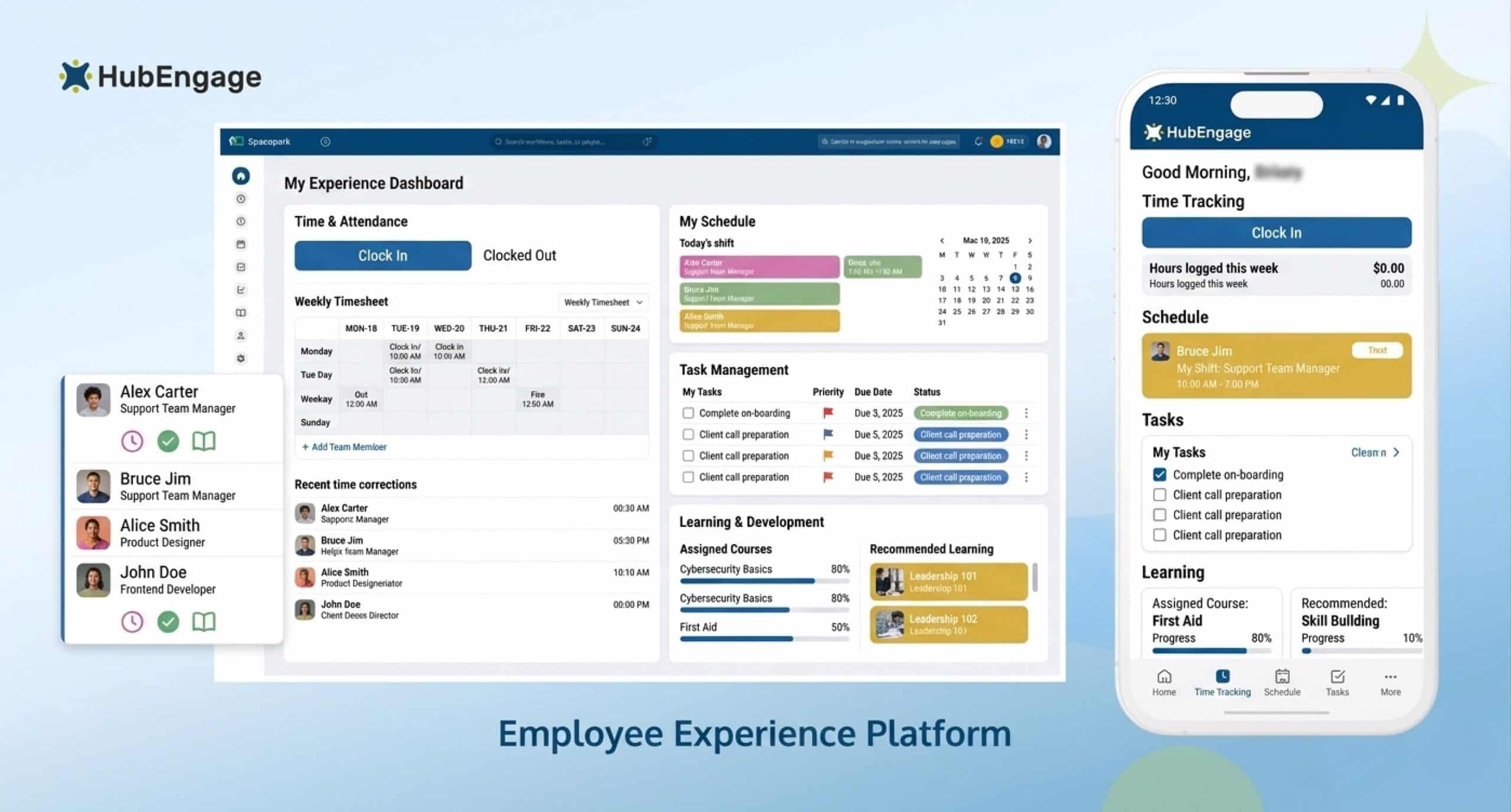
Employees can access updates, recognize colleagues, complete surveys, find training, and stay connected wherever they work without switching between disconnected tools. With a centralized analytics dashboard, HR and internal communication teams can measure reach, participation, and engagement across locations, enabling smarter decisions as better as better employee experiences.
Conclusion
Improving frontline employee engagement starts with understanding how frontline employees work and what they need to feel informed, supported, and valued. Accessible communication, regular recognition, responsive managers, easy feedback, mobile-friendly training, and quick access to information can create stronger connections across frontline teams.
With the right strategy and technology, organizations can build more engaged frontline workforces and improve workplace culture. Explore our employee experience platform by taking up a demo to discover how it can connect and engage your employees.
FAQs on Frontline Employee Engagement
How can organizations improve frontline employee engagement?
As per Gallup Report, organizations can improve frontline employee engagement by using mobile-first communication, recognizing employee contributions, collecting regular feedback, offering accessible training, supporting managers, enabling instant messaging, and providing fast access to workplace resources.
Why is mobile accessibility important for successful frontline employee engagement?
Mobile accessibility helps frontline employees receive updates, complete training, share feedback, access schedules, and find workplace information without using a desktop computer, improving connection, productivity, and engagement across locations.
How should frontline employee engagement be measured?
Measure frontline employee engagement through satisfaction scores, eNPS, retention, absenteeism, survey participation, recognition activity, training completion, communication reach, feedback trends, and employee platform adoption.
What are the possible frontline employee engagement challenges?
Common frontline employee engagement challenges include limited communication access, inconsistent schedules, insufficient recognition, weak manager support, inadequate training, technology barriers, burnout, staffing shortages, and limited career development opportunities.
How long does it take to see results from a frontline engagement program?
Participation and sentiment metrics typically show movement within 60–90 days of launching a structured program with consistent manager involvement. Turnover and absenteeism improvements usually appear within 6–12 months, as engagement gains translate into retention decisions.
Related Links:
employee engagement program | employee engagement plan | employee engagement surveys | microlearning for employees | Two way text messaging | employee recognition