Keeping employees engaged across locations, shifts, and time zones can be challenging. Frontline workers may lack regular email access, while remote and hybrid employees can miss informal connection, recognition, training, and communication. Employee engagement gamification uses points, badges, challenges, milestones, quizzes, rewards, leaderboards, and peer recognition to encourage participation. It makes progress visible, reinforces positive behaviors, and strengthens connections across distributed teams without turning work into a game. For distributed teams, an employee engagement program supports onboarding, training, communication, recognition, feedback, wellness, compliance, and team building. Our blog explains how employee engagement gamification works and how organizations can create a more connected, motivated, and productive workplace.
Key Takeaways:
- Employee engagement gamification uses points, badges, challenges, rewards, and recognition to encourage workplace participation.
- Gamification helps distributed workforce like frontline, remote, hybrid, stay connected, as well as motivated.
- Organizations can gamify employee training, recognition, feedback, wellness, knowledge sharing, and team collaboration.
- Tracking participation, training completion, recognition activity, feedback, and retention helps measure gamification ROI.
- Effective gamification programs combine clear goals, personalization, employee feedback, and meaningful recognition.
- Mobile-first gamification makes engagement activities easier to access for frontline teams who rarely use desktops or company email.

Why Employee Engagement Gamification is an effective strategy?
Many employee engagement programs struggle when activities feel disconnected from daily work. Gamification adds incentives, visible progress, and immediate feedback, encouraging learning, recognition, participation, and collaboration.
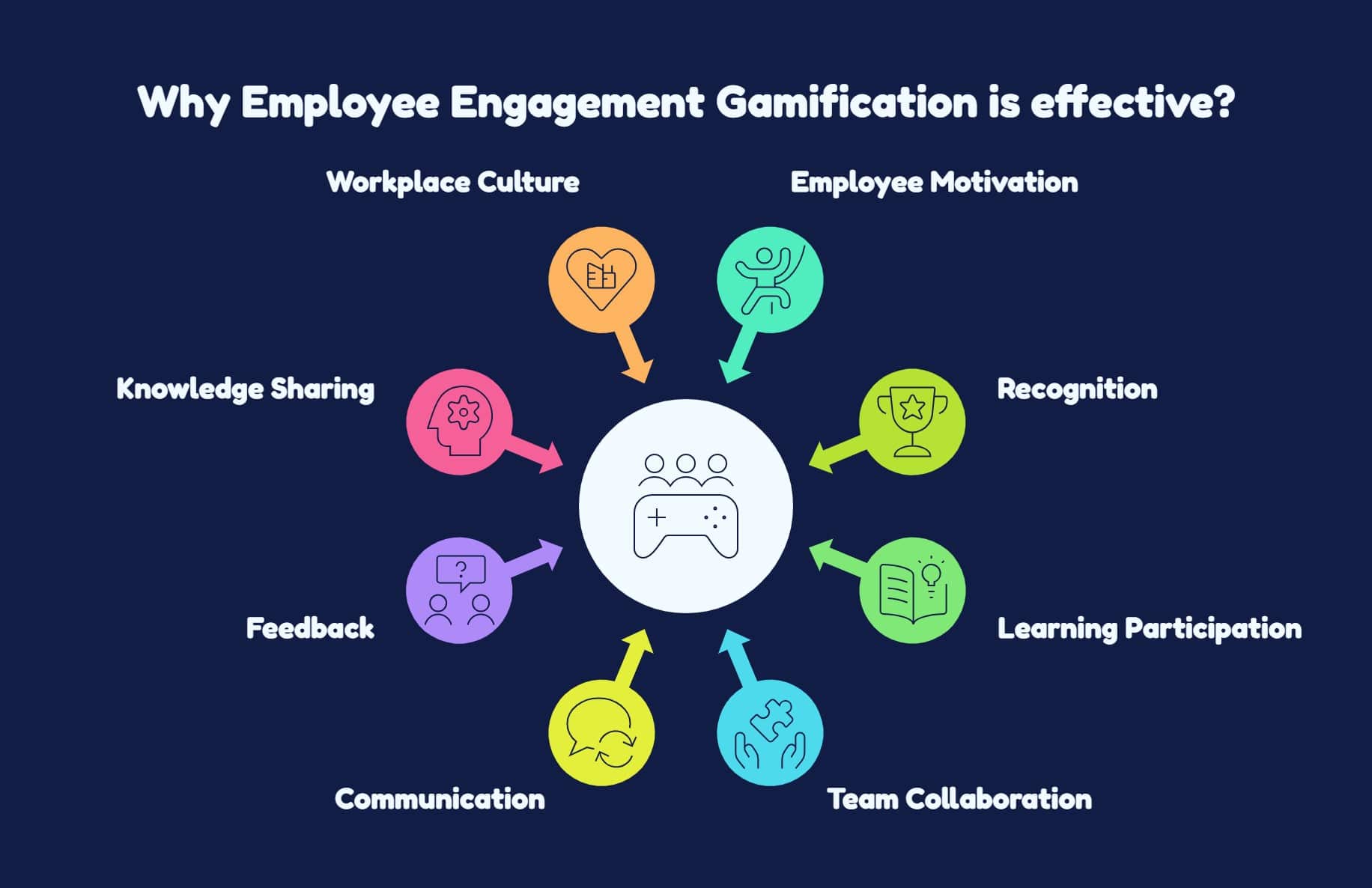
For distributed, frontline, deskless, and remote teams, mobile-first gamification creates accessible opportunities to stay connected and engaged across locations, shifts, and schedules. It can help with:
1. Employee motivation
Encourages employees to participate and achieve meaningful workplace goals.
2. Recognition
Celebrates employee contributions, achievements, and positive workplace behaviors.
3. Learning participation
Makes training more interactive, engaging, and rewarding for employees.
4. Team collaboration
Encourages employees to work together toward shared objectives.
5. Communication
Increases participation in workplace conversations, updates, and activities.
6. Feedback
Motivates employees to share opinions, suggestions, and workplace experiences.
7. Knowledge sharing
Encourages employees to exchange expertise, ideas, and useful information.
8. Workplace culture
Strengthens connection, belonging, positivity, and shared organizational values.
How does Gamification boost employee engagement?
Here are five common ways employee engagement gamification improves employee engagement.
1. Makes Progress Visible
Points, levels, milestones, and progress bars help employees understand what they have completed and what comes next. Visible progress can make long activities such as onboarding or training feel easier to manage.
2. Encourages Employee Recognition
Employees can earn badges, awards, or public recognition for teamwork, performance, learning, or positive workplace behaviors. Recognition becomes more frequent instead of happening only during annual reviews.
3. Makes Learning More Interactive
Quizzes, challenges, scenarios, and competitions can turn routine training into a more active learning experience. This can be useful for safety, compliance, product knowledge, onboarding, and skill development.
4. Builds Connections Across Distributed Teams
Team challenges create shared experiences between employees who may work in different stores, facilities, offices, or remote locations. Employees can participate without needing everyone to be in the same place.
5. Encourages Continuous Participation
Small achievements provide regular reasons for employees to return to communication, learning, recognition, survey, and workplace platforms. This can help organizations create more consistent engagement than occasional campaigns.
Benefits of an Employee Gamification Platform
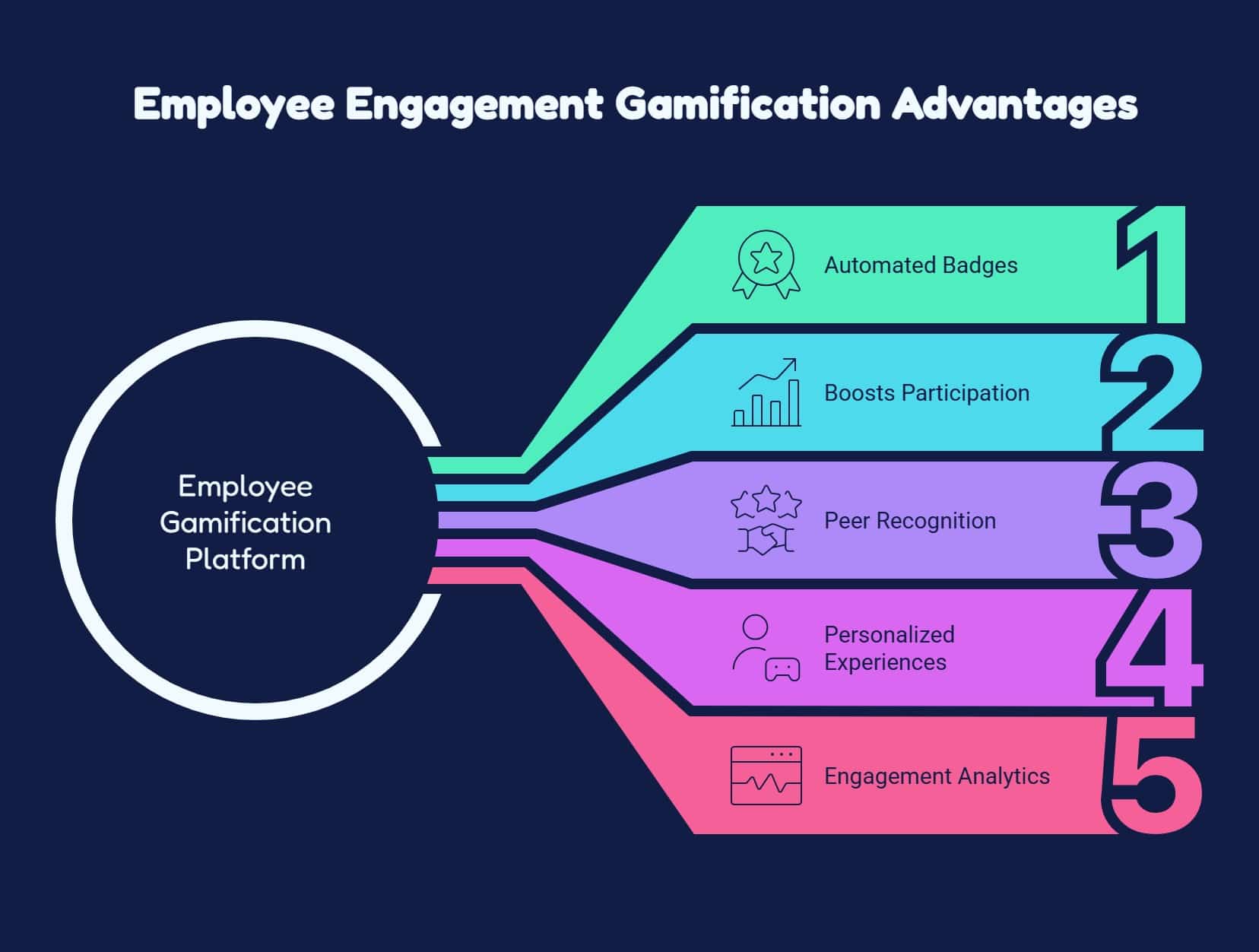
With the help of such platforms, organizations can manage engagement programs consistently instead of relying on spreadsheets or disconnected tools. A modern employee gamification platform can provide:
1. Automated badges
Recognize employees automatically when they complete goals or demonstrate achievements.
2. Employee challenges
Encourage participation through fun activities, competitions, and shared workplace goals.
3. Peer recognition
Let employees appreciate coworkers for helpful actions, teamwork, and achievements.
4. Personalized experiences
Deliver relevant content, rewards, and challenges based on employee interests.
5. Engagement analytics
Track participation, progress, and results to improve engagement programs.
Employee Engagement Gamification Examples
Explore practical gamification ideas that motivate employees, strengthen teamwork, and improve participation across distributed workplaces.
1. Skill Development Challenges
Turn employee learning into short challenges based on specific skills. Employees can compete individually or in teams by completing microlearning modules, quizzes, role-play exercises, or practical assignments. These challenges support technical skills, communication, leadership, customer service, and product knowledge.
2. Health and Wellness Challenges
Voluntary wellness challenges encourage employees to build healthy routines together through walking goals, mindfulness activities, hydration reminders, or team wellness events. Participation should remain optional, and organizations should never use sensitive personal information to create unhealthy competition.
3. Peer Recognition Programs
Peer recognition enables employees to acknowledge colleagues for teamwork, creativity, customer service, leadership, or helpful behavior. Digital kudos, recognition points, and achievement badges are some common employee rewards that make positive contributions visible across departments, locations, shifts, and distributed teams.
4. Trivia and Knowledge Quizzes
Short quizzes make workplace learning more interactive and memorable. Organizations can create trivia about company information, products, safety requirements, customer service, policies, and industry knowledge. Mobile-friendly quizzes work especially well for microlearning and frontline employee participation.
5. Customer Experience Simulations
Gamified simulations allow employees to practice realistic customer situations without affecting actual customers. Hospitality, retail, and support teams can solve difficult scenarios while earning badges for effective decisions. These exercises strengthen communication, problem-solving, empathy, and decision-making skills.
6. Storytelling and Creative Challenges
Employees can submit stories, ideas, photos, videos, or examples connected to company values and workplace achievements. Teams can vote for favorites, encouraging creativity, recognition, and meaningful connections among employees working across different locations, departments, shifts, and time zones.
7. Gamified Employee Feedback
Organizations can encourage participation in pulse surveys, polls, suggestion programs, and feedback activities through points, badges, or recognition. Rewards should recognize participation and constructive contribution. Learn more to create an employee listening strategy delivering best results.
Measuring Employee Engagement Gamification ROI
Employee engagement gamification should connect with measurable outcomes. To find out the roi, keep a track on following metrics such as:
| Metric | What to Measure | Importance |
| Participation Rate | Employee participation in challenges, recognition, learning, and gamified activities | Shows how engaging the program is |
| Training Completion | Training starts and completions before and after gamification | Measures learning engagement and progress |
| Employee Retention | Voluntary turnover over time | Indicates whether engagement may support employee loyalty |
| Recognition Activity | Peer recognition, badges, awards, and positive interactions | Shows how often employees recognize each other |
| Employee Feedback | Survey responses about usefulness, motivation, and fairness | Helps improve the gamification program |
| Business Outcomes | Safety, customer satisfaction, productivity, knowledge scores, and onboarding completion | Connects gamification to measurable business results |
Employee Engagement Gamification Best Practices
To create effective gamification programs, you can follow some good practices added below:
1. Start With a Clear Goal
Define the specific employee behavior or outcome your gamification program should improve.
2. Personalize the Experience
Design challenges around employee roles, teams, locations, skills, and individual experience levels.
3. Keep Gamification Simple
Use clear rules and manageable challenges so employees understand participation without unnecessary complexity.
4. Design for Mobile Employees
Frontline and deskless workers may rarely use desktops. Make challenges, quizzes, recognition, and progress information easy to access from smartphones.
5. Ask Employees for Feedback
Regularly ask employees which elements they enjoy and which feel unnecessary. Use their feedback to improve the program.
Future Trends in Employee Engagement Gamification
Employee engagement gamification is becoming more personalized, social, and connected with following future trends:
| Trend | Summary | Key Benefits |
| AI-Powered Personalization | Recommends challenges, learning activities, and content based on each employee’s role, interests, and progress. | More relevant learning and higher participation |
| Immersive Training | Uses AR and VR simulations for safety, technical skills, customer service, and leadership training. | More engaging and practical employee learning |
| Gamification for Distributed Teams | Uses mobile challenges and virtual activities to connect remote, frontline, and deskless employees. | Stronger teamwork across locations and time zones |
| Social and Peer-Driven Experiences | Encourages peer recognition, team missions, knowledge sharing, and collaborative challenges. | Better workplace connections and employee engagement |
How HubEngage helps with Employee Engagement Gamification?
Our employee experience platform comes with gamification tools such as points, badges, leaderboards, engagement challenges, and gift cards to keep distributed teams connected. Its mobile-first design supports deskless, frontline, and modern employees who rely on mobile devices more than desktops.
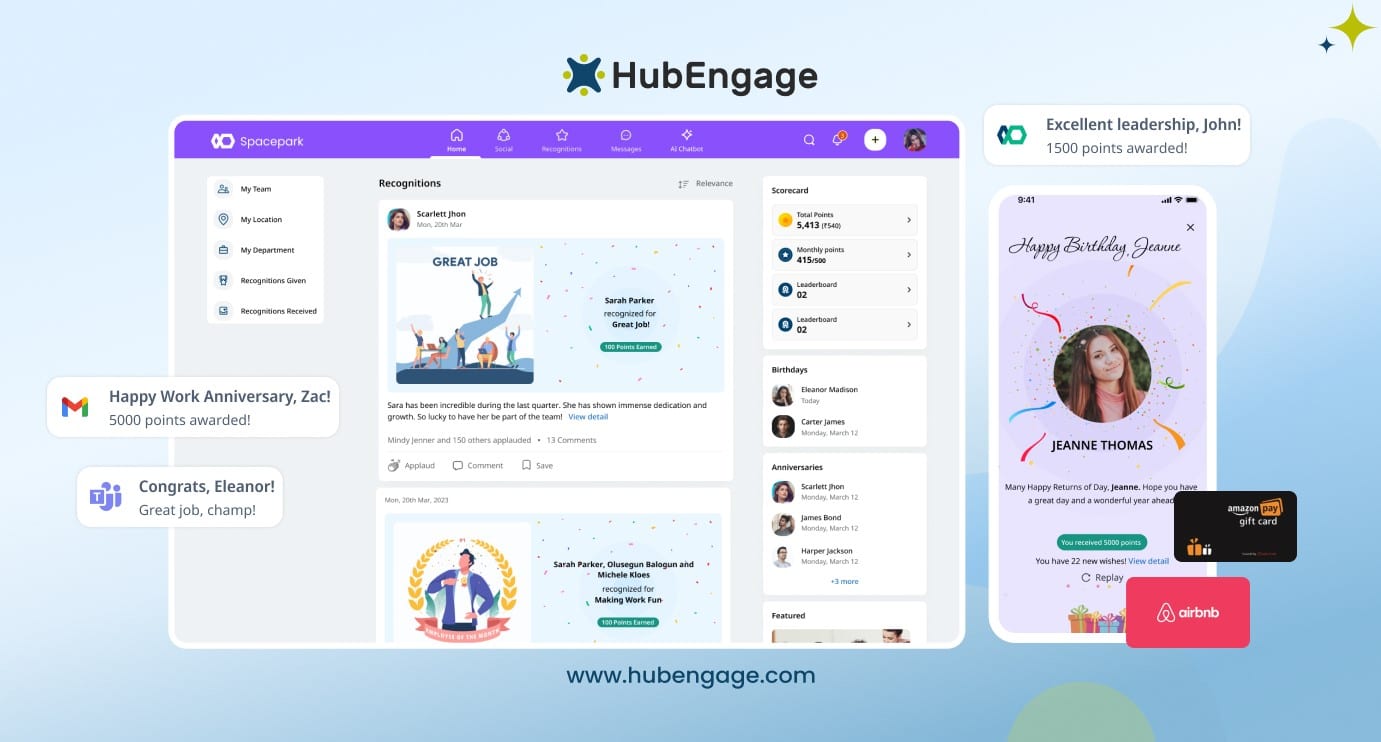
Employees can earn points and rewards for liking, commenting, posting, and participating in activities, then redeem them for monetary discount coupons. The platform also includes an employee recognition module that helps companies celebrate individual and team contributions.
Granular analytics provide insights into participation, engagement trends, and program effectiveness. While the gamification improves engagement and participation, the recognition strengthens employee motivation to create a better work culture.
Conclusion
Employee engagement gamification helps organizations make recognition, learning, communication, feedback, and teamwork more interactive and inclusive. It is especially valuable for distributed teams, ensuring frontline, remote, hybrid, and deskless employees have meaningful opportunities to participate and connect.
The most effective programs go beyond points and badges by combining clear goals, mobile accessibility, fair recognition, employee feedback, and measurable outcomes. To bring these experiences together, explore our employee experience platform by taking up a demo.
FAQs On Employee Engagement Gamification
1. Does gamification works well for frontline and deskless workers?
Employee engagement gamification helps frontline and deskless workers participate in recognition, training, communication, and challenges through mobile-first platforms, even without regular desktop or email access. Also, Zippia research shows that companies which use gamification strategies are seven times more profitable than those that don’t implement gamification.
2. How long does employee engagement gamification take to show results?
Organizations may see improved participation, recognition, and training completion within months. Retention, productivity, culture, and broader business outcomes typically require longer-term tracking and comparison.
3. Can employee gamification feel manipulative?
Gamification can feel manipulative when rewards seem meaningless, competition becomes excessive, or employees feel monitored. Transparent, fair programs should encourage valuable behaviors without creating pressure.
4. Which industries benefit from employee engagement gamification?
Manufacturing, healthcare, hospitality, retail, logistics, professional services, and distributed workplaces benefit from gamification, particularly when improving training, recognition, communication, participation, and cross-location employee engagement.
5. How does gamification integrate with HR systems?
Employee engagement gamification platforms integrate with HRIS, learning, communication, and workforce systems through APIs or native integrations, connecting employee activity with existing workflows, data, and reporting.
Related Links:
employee engagement program | mobile-first gamification | gamification improves employee engagement | modern employee gamification platform | common employee rewards | employee listening strategy | employee recognition module