
Organizations today manage large volumes of information, distributed teams, and complex workflows. Without a central platform, communication gaps and information silos can quickly reduce productivity.
An intranet solves this challenge by creating a secure, centralized digital workplace where employees can communicate, collaborate, and access critical resources. Modern platforms like an Intranet Software solution provide organizations with a unified hub for communication, knowledge sharing, and operational efficiency.
In this guide, we explore the top benefits of intranet, including improved collaboration, stronger data security, and measurable productivity gains. We also review the key advantages of intranet in an organization and how companies can maximize its value.
Top Benefits of Intranet
An intranet provides a centralized environment where employees can communicate, share knowledge, and manage workflows more efficiently. Below are some of the most important advantages organizations experience after implementing an intranet.
1. Centralized Internal Communication
One of the most significant benefits of intranet platforms is centralized communication. Instead of scattered emails, chat threads, and documents, an intranet creates a single place for announcements, updates, and discussions.
Teams can share company news, leadership updates, and department announcements through one platform, ensuring employees receive consistent information.
Research from McKinsey shows that improved communication and collaboration through digital platforms can increase productivity by up to 25%.
2. Improved Employee Collaboration
Another major advantage of intranet platforms is enhanced collaboration. Employees can work together through shared workspaces, discussion boards, and collaborative documents.
Departments can easily coordinate projects, share updates, and resolve issues faster. These collaborative tools eliminate communication bottlenecks and allow teams to stay aligned.
These collaboration capabilities highlight several advantages of intranet over internet-based tools, since internal platforms are tailored specifically for organizational workflows.
3. Faster Access to Information
Employees often spend significant time searching for documents, policies, and resources across multiple systems.
An intranet provides centralized knowledge hubs where employees can quickly locate the information they need. Advanced search functionality makes it easy to find files, training materials, or company policies.
This faster access to information is one of the most practical advantages of intranet in an organization, helping teams work more efficiently.
4. Enhanced Document Management
Document management becomes much simpler with an intranet. Teams can store, organize, and access documents within structured repositories.
Version control ensures employees always work with the latest document version. Permissions also allow organizations to control who can view or edit sensitive files.
These features reduce duplication, prevent errors, and maintain better information governance.
5. Streamlined HR Processes
HR teams benefit significantly from intranet platforms. HR policies, benefits information, onboarding materials, and company guidelines can all be stored in one centralized location.
Employees can access HR forms, submit requests, and review policies without needing constant HR assistance.
This automation reduces administrative workload while improving the employee experience.
6. Better Employee Engagement
Employee engagement is another key reason organizations implement intranet solutions.
Modern intranets include social features such as activity feeds, recognition tools, and employee communities. These features encourage participation and strengthen company culture.
Platforms like an Employee Intranet solution allow organizations to recognize achievements, celebrate milestones, and foster stronger connections across teams.
7. Increased Productivity
Improved communication, faster access to information, and streamlined workflows all contribute to higher productivity.
Employees spend less time searching for resources and more time focusing on meaningful work. Project collaboration also becomes faster and more efficient.
These improvements demonstrate some of the most impactful benefits of intranet adoption.
8. Stronger Data Security
Security is a critical priority for organizations handling sensitive data.
Unlike public internet platforms, intranets operate within secure internal environments. Access controls, user authentication, and encryption protect sensitive information from unauthorized access.
These security capabilities represent important advantages of intranet over internet-based systems, especially for organizations with strict compliance requirements.
9. Improved Onboarding Experience
New employee onboarding becomes more effective with an intranet.
Companies can create onboarding portals containing training resources, documentation, and welcome materials. New hires can easily access everything they need during their first weeks.
This structured onboarding improves learning outcomes and accelerates time to productivity.
10. Knowledge Retention and Sharing
Organizations often lose valuable knowledge when experienced employees leave.
An intranet allows companies to build knowledge bases, documentation libraries, and internal wikis where employees can capture institutional knowledge.
These systems help ensure knowledge remains accessible to future teams.
11. Support for Remote and Hybrid Work
Remote and hybrid work models require digital tools that connect employees regardless of location.
An intranet provides a central workspace where remote teams can communicate, collaborate, and access resources just as easily as office-based employees.
This flexibility is one of the modern advantages of intranet in an organization as workplaces become increasingly distributed.
12. Better Compliance Management
Many industries require strict regulatory compliance and documentation management.
An intranet helps organizations maintain compliance by storing policies, training materials, and documentation in a centralized location.
Employees can easily access updated policies and compliance guidelines, reducing risk across the organization.
13. Reduced Operational Costs
By consolidating communication tools, document repositories, and internal resources, an intranet can significantly reduce operational costs.
Organizations spend less on multiple disconnected systems while improving workflow efficiency.
These cost savings represent another practical example of the 10 advantages of intranet organizations often realize after implementation.
14. Real-Time Performance Insights
Modern intranet platforms often include analytics dashboards that provide insights into employee engagement, content usage, and communication effectiveness.
These insights help leadership understand which resources employees use most and where improvements are needed.
Data-driven insights support better decision-making and operational improvements.
15. Scalable Growth Infrastructure
As organizations grow, their communication and collaboration needs become more complex.
A scalable intranet infrastructure can expand with the organization, supporting additional users, departments, and integrations.
This scalability ensures the platform continues delivering long-term value.
How to Maximize the Benefits of Your Intranet?
To maximize the benefits of intranet, organizations should follow several best practices like engagement monitoring, employee contribution, Tool Integration, Content Organization and Leadership Promotion.
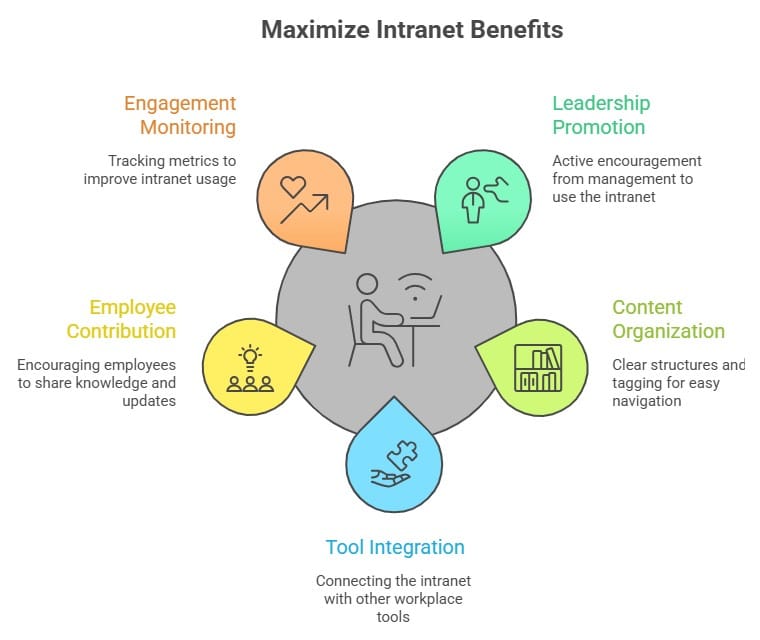
A well-managed intranet evolves with the needs of the organization.
Five limitations of intranets
Despite their advantages, intranets can present some challenges if not implemented properly.
1. Expensive and time-consuming to get running
Setting up a traditional intranet often requires large budgets, technical expertise, and long implementation timelines, making adoption slow for organizations.
2. Hard to find information
Poorly organized intranets make it difficult for employees to find documents, policies or updates which wastes time and reduces productivity.
3. Maintenance and Upkeep
Keeping an intranet useful requires regular updates, content reviews, technical support and management to ensure information stays accurate and accessible.
4. Potential for Siloing
When departments manage their own intranet sections without coordination information becomes separated reducing visibility, collaboration, knowledge sharing across teams departments.
5. Causes disengagement
If the intranet is difficult to use or rarely updated employees stop visiting it which lowers engagement participation and communication.
How HubEngage’s Modern Intranet Platform Helps Solve Common Intranet Challenges?
While traditional intranets can create challenges such as poor usability, content silos, and low adoption, modern intranet platforms are designed to address these limitations.
HubEngage’s modern intranet platform focuses on creating a more connected and engaging digital workplace. Instead of complex systems that are difficult to maintain, the platform provides an easy‑to‑use interface where employees can quickly access information, collaborate with colleagues, and stay informed about company updates.
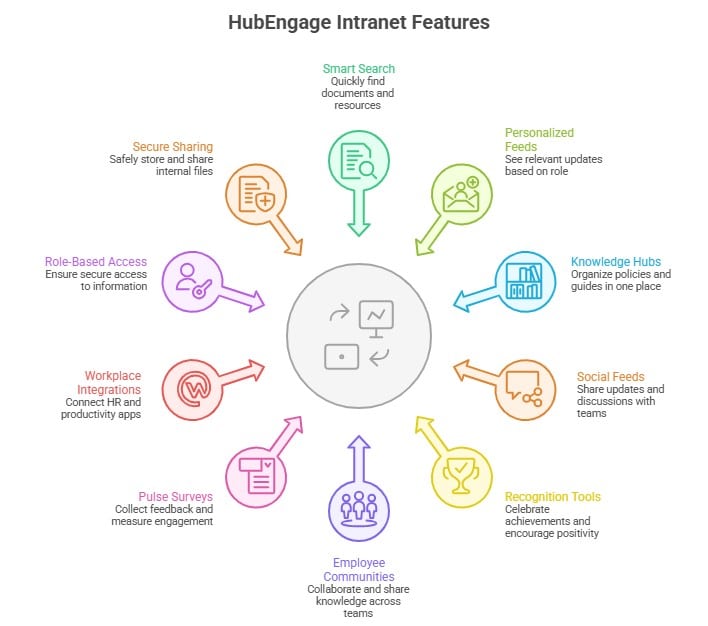
By combining communication, knowledge management, and engagement capabilities in one place, a modern solution like HubEngage helps organizations overcome many traditional intranet challenges while still delivering the full benefits of intranet technology.
Conclusion
The benefits of intranet platforms extend far beyond basic communication tools. A well-designed intranet improves collaboration, strengthens security, enhances knowledge sharing, and increases organizational productivity.
From improved onboarding to stronger compliance management, the advantages of intranet solutions help organizations build more connected and efficient workplaces.
As companies continue adopting digital workplace strategies, investing in the right intranet platform can deliver long-term operational and cultural benefits. If you’re exploring solutions, you can also explore HubEngage’s modern intranet platform to see how it supports connected digital workplaces.
FAQs
What measurable business outcomes can an intranet deliver?
An intranet can improve productivity, reduce communication delays, increase employee engagement, and streamline internal workflows.
How does an intranet reduce operational inefficiencies?
By centralizing communication, documentation, and collaboration tools, intranets eliminate redundant processes and reduce time spent searching for information.
What departments benefit the most from an intranet?
Human resources, internal communications, IT, operations, and leadership teams often benefit the most from intranet platforms.
How does an intranet improve decision-making across teams?
An intranet provides access to shared data, documentation, and insights, allowing teams to make faster and more informed decisions.
What security controls should a modern intranet include?
Modern intranets should include role-based access controls, encryption, authentication protocols, and activity monitoring.
How can leadership drive higher intranet adoption?
Leadership can encourage adoption by regularly sharing updates through the intranet and promoting its value as the central workplace hub.
What integrations increase the value of an intranet platform?
Integrations with HR systems, project management tools, document storage platforms, and communication tools increase the value of intranet platforms.
How do you calculate ROI from an intranet investment?
Organizations can measure ROI by evaluating productivity improvements, reduced operational costs, and increased employee engagement.
What challenges do companies face after intranet implementation?
Common challenges include low adoption, poor content governance, and lack of regular updates.
When should an organization upgrade or replace its intranet?
Organizations should upgrade or replace their intranet when the platform no longer supports modern collaboration needs, integrations, or scalability requirements.