Effective communication sits at the core of every successful organization. As teams become more distributed and digital-first, understanding synchronous vs asynchronous communication has become very essential.
Organizations today face growing communication challenges right from meeting overload to delayed decision-making. According to a Business Of Story study, miscommunication is costing American Businesses around $1.2 Trillion every year which shows how important effective communication is.
Overuse of synchronous communication often leads to meeting fatigue and constant interruptions, while excessive reliance on asynchronous communication can result in delays, misalignment, and lack of clarity.
However, with the right mix of communication channels supported by a modern employee communication platform can significantly improve productivity, engagement, and decision-making across organizations.
In this blog, we will break down what is the difference between asynchronous and synchronous communication, explore real-world examples, and help you decide when to use each approach.
Key Takeaways:
- Synchronous communication is real-time in which there is a need of an immediate response.
- Asynchronous communication is useful for documentation, and tasks that are not urgent.
- Having a balanced mix of these works best as it gives flexibility, alignment and collaboration.
- Meetings, calls, and live chats come under Synchronous communication.
- Using emails, project tools, and recorded videos are means of Asynchronous communication.
- Too much sync causes meeting fatigue while too much async leads to delays and miscommunication.
- With clear guidelines, defined response times, and good use of tools can support both communication styles.

What is Synchronous Communication?
Synchronous communication refers to real-time communication where participants interact simultaneously. Everyone involved is present at the same time, enabling instant feedback and immediate clarification.
This type of communication is often used when speed, collaboration, or emotional nuance is critical.
Key characteristics:
- Real-time interaction
- Immediate responses
- High engagement and collaboration
What is Asynchronous Communication?
Asynchronous communication happens when participants do not need to be present at the same time. Messages are sent and responded to at different times, offering flexibility and time for thoughtful responses.
If you’re looking for a deeper breakdown, we recommend exploring this guide on what is asynchronous communication.
Key characteristics:
- Time-independent communication
- Delayed responses
- Supports deep work and flexibility
Key differences between Synchronous and Asynchronous Communication
Understanding sync vs async communication comes down to timing, response expectations, and use cases.
| Factor | Synchronous Communication | Asynchronous Communication |
| Timing | Happens in real time. Participants are present together and interact instantly. | Happens over time. Participants respond at different times based on availability. |
| Response Speed | Immediate replies are expected. Conversations move quickly with little delay. | Responses can take time. Allows flexibility based on workload and priorities. |
| Collaboration | Highly interactive. Enables quick discussions, brainstorming, and instant decision-making. | More structured collaboration. Focuses on clarity, documentation, and thoughtful input. |
| Best For | Urgent issues, live discussions, and situations needing quick alignment. | Updates, documentation, and tasks that don’t require immediate back-and-forth. |
| Flexibility | Limited flexibility. Requires participants to be available at the same time. | Highly flexible. Supports different time zones and individual work schedules. |
In simple terms, synchronous communication prioritizes speed, while asynchronous communication prioritizes flexibility and clarity.
Benefits of Synchronous Communication
Synchronous communication offers several advantages, particularly in fast-paced environments:
- Instant feedback: Teams can resolve issues quickly.
- Improved collaboration: Real-time discussions enhance brainstorming and decision-making.
- Stronger relationships: Face-to-face or live interactions build trust and rapport.
Benefits of Asynchronous Communication
Asynchronous communication has become increasingly important in remote and hybrid workplaces.
- Flexibility across time zones: Teams can collaborate without scheduling conflicts.
- Better documentation: Conversations are recorded and easily referenced.
- Supports deep work: Employees can focus without constant interruptions.
Research shows that knowledge workers spend a significant portion of their day switching between tasks, and reducing interruptions through async communication can improve productivity and focus.
Synchronous Communication examples in the workplace
Let’s explore practical synchronous vs asynchronous communication examples, starting with real-time interactions.
Face-to-Face Meetings
In-person meetings remain one of the most effective ways to discuss complex topics, especially for leadership alignment or sensitive conversations.
Video Conferencing
Tools like Zoom and Microsoft Teams enable remote teams to collaborate in real time, making them essential for distributed organizations.
Phone Calls
Phone calls are ideal for quick clarifications or urgent matters that require immediate attention.
Live Chats and Instant Messaging
Platforms like HubEngage, Slack and Microsoft Teams allow teams to exchange messages instantly, bridging the gap between formal meetings and informal communication.
Asynchronous Communication examples in the workplace
Now let’s look at async communication in action.
Emails
Emails are one of the most common forms of asynchronous communication, allowing teams to communicate without time constraints.
Recorded Video Messages
Tools like Loom enable employees to share updates or explanations without requiring real-time meetings.
Project Management Platforms
Platforms like HubEngage, Asana, Trello, and Jira allow teams to track progress, assign tasks, and communicate asynchronously.
Internal Knowledge Bases
A centralized knowledge base ensures employees can access information anytime, reducing dependency on real-time communication. These often complement broader internal communication tools.
When to use Synchronous Communication
Synchronous communication is best suited for:
- Urgent issues that require immediate resolution
- Brainstorming sessions
- Performance reviews or sensitive discussions
- Crisis management situations
When to use Asynchronous Communication
Asynchronous communication works best for:
- Status updates and reports
- Documentation and knowledge sharing
- Cross-time-zone collaboration
- Non-urgent discussions
Challenges of Synchronous Communication
While effective, synchronous communication has its drawbacks.
Scheduling Conflicts
Coordinating meetings across time zones can be difficult and time-consuming.
Interruptions to Deep Work
Frequent meetings and real-time messages can disrupt productivity.
Meeting Fatigue
Over-reliance on meetings can lead to burnout, especially in remote environments.
Challenges of Asynchronous Communication
This type of communication is not without its limitations either.
Delayed Responses
Waiting for replies can slow down decision-making.
Lack of Immediate Clarification
Misunderstandings may take longer to resolve.
Misinterpretation of Messages
Without tone or context, messages can sometimes be misunderstood.
How to balance Synchronous and Asynchronous Communication in the workplace?
The most effective organizations don’t choose between synchronous vs asynchronous communication as they can balance both. We suggest you to do following practices:
- Defining clear communication guidelines. Clearly outline when to use meetings, emails, or chats to avoid confusion.
- Using async by default, sync when necessary. Encourage written updates first and use meetings only for urgent or complex topics.
- Setting expectations for response times. Let teams know how quickly they should reply to messages across different channels.
- Leveraging technology to support both. Use tools that enable real-time chats as well as scheduled, on-demand communication.
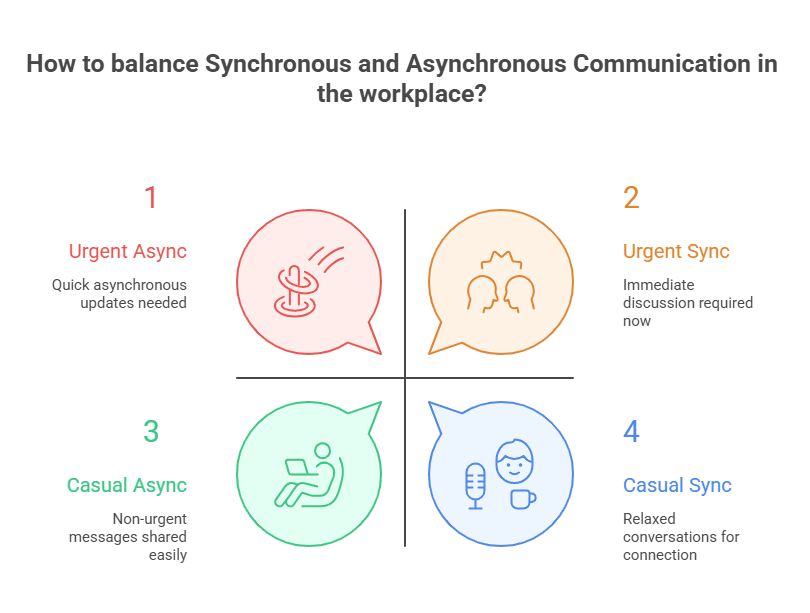
This balanced approach ensures teams stay productive without sacrificing collaboration.
Tools that support Synchronous and Asynchronous Communication
Modern workplaces rely on a combination of tools to enable both communication styles.
| Synchronous Communication Tools | Asynchronous Communication Tools |
| Video conferencing like Zoom, Microsoft Teams for real-time meetings | Email platforms like HubEngage, Outlook, Gmail for delayed communication |
| Instant messaging tools like HubEngage, Slack for live conversations | Project management tools Asana, Trello, Jira for task updates |
| Phone calls and VoIP tools for quick discussions | Recorded video tools Loom for on-demand explanations |
| Live chat systems for immediate support | Internal knowledge bases and intranet platforms for self-serve information |
| Real-time collaboration tools like Miro, Google Meet | Employee experience platform like HubEngage for announcements and engagement |
Organizations should also align these tools with broader communication strategies, including external communication where relevant.
How HubEngage supports Synchronous and Asynchronous workplace communication?
At HubEngage, we provide a unified employee experience platform that supports both synchronous and asynchronous communication seamlessly.
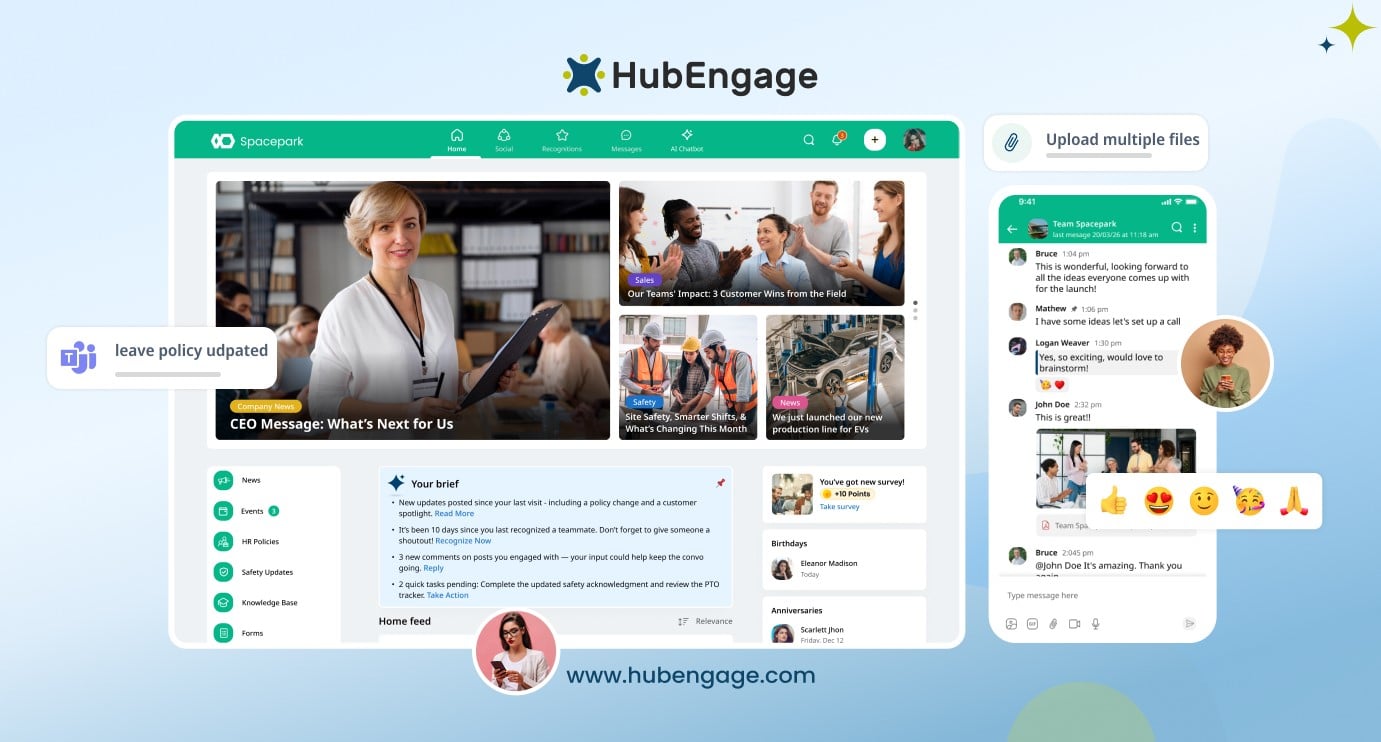
With HubEngage, organizations can:
- Enable real-time messaging and alerts
- Share announcements and updates
- Create centralized knowledge hubs
- Improve employee engagement across channels
This ensures that employees receive the right message, at the right time, in the right format without overwhelming them.
Conclusion
We believe balancing synchronous and asynchronous communication is very important for modern, distributed workplaces to drive clarity, speed, and engagement. Organizations that adopt an async-first mindset while using sync moments strategically can reduce overload, improve focus, and make better decisions at scale.
To see how this works in practice, explore the HubEngage Employee Experience Platform and schedule a demo to unify communications, boost engagement, and empower your workforce across channels with measurable impact and actionable insights for sustained growth.
Synchronous vs Asynchronous Communication FAQs
Which type of communication works best for remote teams?
A mix of both works best. Asynchronous communication enables flexibility, while synchronous communication ensures alignment and collaboration when needed.
How can organizations decide when to use synchronous or asynchronous communication?
It depends on urgency, complexity, and collaboration needs. Urgent and complex issues often require synchronous communication, while routine updates can be handled asynchronously.
What factors influence the choice between synchronous and asynchronous communication?
Key factors include time zones, urgency, team size, task complexity, and the need for collaboration or immediate feedback.
How can companies create a balanced communication strategy?
By setting clear guidelines, using async-first approaches, and leveraging platforms that support both communication styles.
How do digital workplace platforms support both communication styles?
They integrate messaging, content sharing, and collaboration tools into a single ecosystem, enabling employees to switch between synchronous and asynchronous communication as needed.
Related Links:
Employee communication platform | Internal communication tools | What is asynchronous communication | External communication