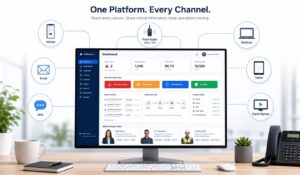
The basics of internal communication remain the same. Employees still need clear information, context, and trust. What has changed is the workplace itself. Today’s workforce is spread across offices, remote places, retail stores, hospitals, warehouses, and field sites.
Some employees rely on email daily, while others rarely use it, making it harder for teams to reach everyone in a consistent way. At the same time, expectations are rising. AI is speeding up content creation, but employees are also questioning message authenticity.

Leaders are under pressure to build trust, managers must explain changes clearly, and communication teams are expected to show real business impact. These shifts are shaping key internal communication trends every business must know. Our blog will help you understand along with the right internal communications software to implement it effectively.
Key Takeaways
- Internal communication is becoming more two-way, personalized, and employee-focused.
- Mobile-first platforms help reach frontline and deskless workers more effectively.
- Pulse surveys and AI insights enable faster employee feedback and sentiment tracking.
- Targeted messages improve relevance, read rates, and engagement.
- Modern platforms combine messaging, recognition, surveys, and analytics in one place.
- Tracking metrics like read rates, eNPS, and engagement scores helps improve communication.
Why Internal Communication is important for every business?
For any team, strong internal communication keeps employees connected to company decisions, changes, goals, and priorities. Remote and frontline employees may work across different locations, shifts, and time zones.
Report from Gallup research shows that highly engaged companies achieve 23% higher profitability than less engaged organizations, driven by stronger productivity and performance. Engaged employees also help build supportive workplaces which helps businesses to recover faster from challenges while supporting long-term growth.
10 Latest Internal Communication Trends and Examples
Here are the popular trends of internal communication every company should know as communication becomes more personalized, mobile, interactive, and AI-powered.
1. Personalized Employee Communication
Employees expect information that is relevant to their role, location, shift, and interests. Modern intranets can support this by delivering targeted content instead of sending the same message to everyone. Better personalization helps reduce information overload and makes important updates easier for employees to notice and act on.
2. Leadership Communication Builds Trust
Employees want leaders to explain decisions clearly, share context, and communicate openly during change. Regular updates, videos, town halls, and Q&A sessions can make leadership more visible and approachable. Consistent communication also helps employees understand company direction and can strengthen trust between leaders and the workforce.
3. Gamification Increases Employee Participation
It is becoming a useful way to encourage employees to take part in internal communication. Points, rewards, challenges, and recognition can motivate people to read updates, complete surveys, share ideas, or interact with content. Used carefully, these features can make communication more engaging without making participation feel forced.
4. AI-Assisted Internal Communication
AI is becoming a practical part of internal communication. Teams can use it to draft updates, summarize long messages, create FAQs, and adapt content for different employee groups. The key is keeping people involved, especially when communication covers sensitive topics that need empathy, judgment, and a human voice. Explore how ai internal communications are making workplaces better.
5. Communication Becomes Mobile-First
Frontline employees may not have regular access to a desk, company email, or desktop intranet. Mobile apps, SMS, push notifications, and digital displays can help organizations reach them more effectively. A mobile-first approach gives frontline teams faster access to updates, policies, resources, and important company information wherever they work.
6. Asynchronous Communication Supports Distributed Teams
Remote and distributed teams cannot depend on meetings for every company update. Asynchronous communication gives employees access to information when they need it, regardless of location or time zone. Searchable updates, shared documents, message archives, and clear summaries help teams stay informed without adding more meetings to the workday.
7. Two-Way Communication Becomes Essential
Internal communication is becoming more two-way. Employees want opportunities to ask questions, comment on updates, share ideas, join discussions, and provide feedback. Social feeds, polls, surveys, and employee communities can support this exchange. The most important step is showing employees how their feedback leads to action or change.
8. Recognition Supports Employee Well-Being
Employee well-being is not only about reducing stress. It is also about helping people feel valued. Employee recognition programs like peer appreciation, milestone celebrations, and rewards can make employees feel noticed for their work. When recognition becomes part of everyday communication, it can support a more positive and connected workplace culture.
9. Communication Measurement Goes Beyond Clicks
Internal communication teams are moving beyond open rates and clicks. Surveys, polls, acknowledgements, engagement analytics, ai-powered sentiment analysis and thematic analysis, can show whether employees understood a message, how they feel about it, and whether they took action. Connecting communication data with outcomes such as participation, policy awareness, training completion, and employee sentiment helps teams demonstrate greater business value.
10. AI Chatbots Provide Quick Employee Support
Employees often need quick answers about policies, benefits, processes, or company resources. AI chatbots can make support faster by helping employees search information and get answers without waiting for HR or internal communication teams. This can reduce repeated questions while giving employees easier access to useful workplace information.
| Trend | Importance |
| 1. AI-Assisted Internal Communication | AI helps teams draft announcements, summarize updates, create FAQs, and personalize messages while keeping human review for sensitive communication. |
| 2. Personalized Employee Communication | Targeted communication delivers relevant updates based on an employee’s role, location, shift, department, or interests. |
| 3. Leadership Communication Builds Trust | Regular CEO updates, town halls, videos, and Q&A sessions help leaders explain decisions and build employee trust. |
| 4. Gamification Increases Participation | Points, rewards, challenges, and recognition encourage employees to read updates, complete surveys, and participate in workplace activities. |
| 5. Mobile-First Frontline Communication | Mobile apps, SMS, push notifications, and digital signage help frontline employees receive important company updates wherever they work. |
| 6. Asynchronous Communication for Distributed Teams | Searchable updates, shared documents, and recorded messages keep remote teams informed across different locations and time zones. |
| 7. Employee Recognition Supports Well-Being | Peer recognition, rewards, and milestone celebrations help employees feel valued and strengthen workplace connection. |
| 8. Two-Way Employee Communication | Surveys, polls, comments, social feeds, and employee communities allow employees to share feedback and communicate with leadership. |
| 9. Data-Driven Communication Measurement | Surveys, engagement analytics, sentiment analysis, and other metrics help teams measure understanding, participation, and communication impact. |
| 10. AI Chatbots for Employee Support | AI chatbots provide quick answers about policies, benefits, company resources, and common workplace questions. |
Latest trend of internal communication and what’s next?
While we talked about common internal communication trends, we have seen a new trend i.e. companies looking for unified solutions. A company might have email, Microsoft Teams, Slack, an intranet, employee apps, HR software, survey platforms, recognition software, project management tools, and separate mobile communication channels.
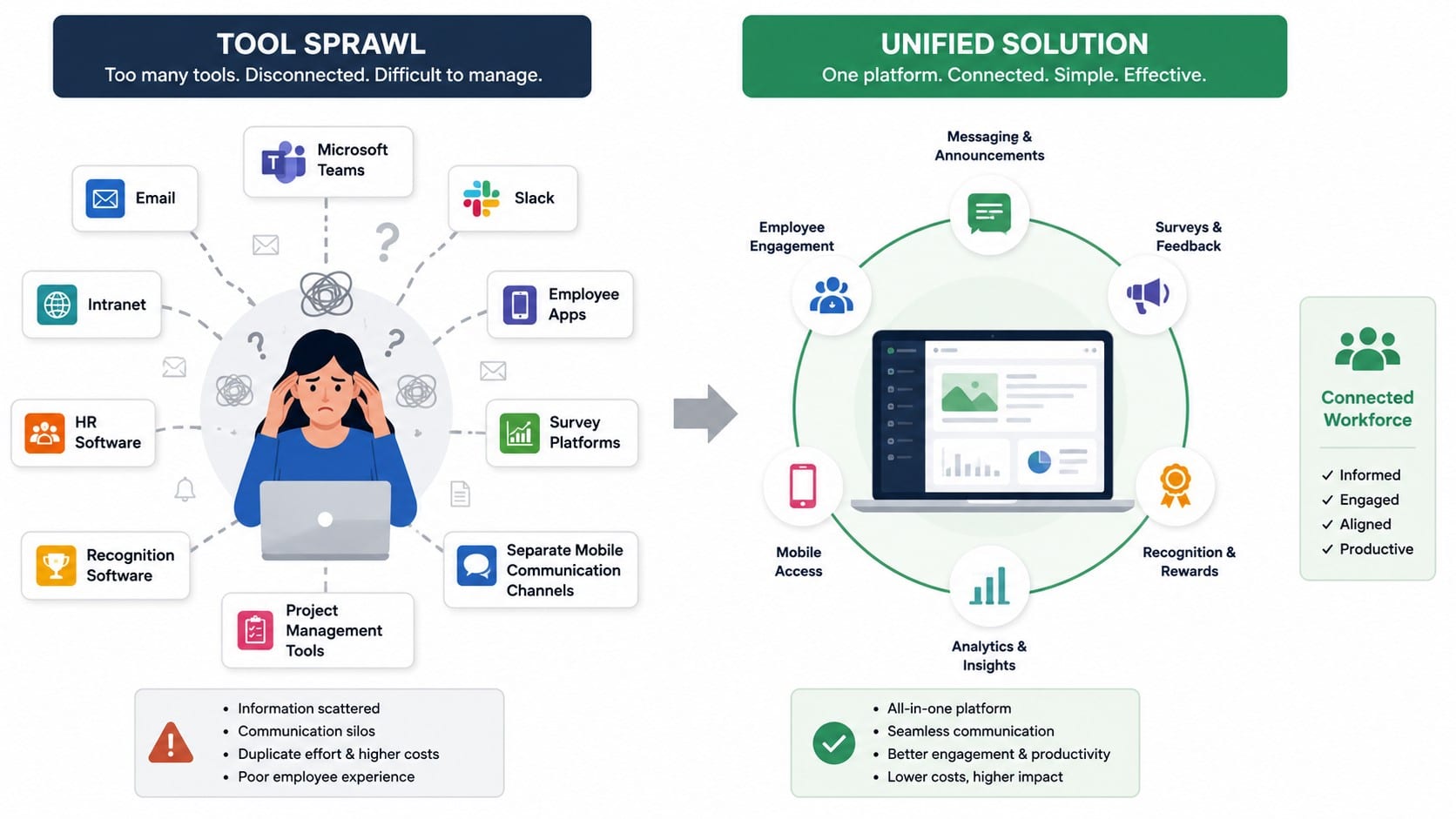
Each tool may solve a problem, but together they can create “tool sprawl”. The next challenge may not be a shortage of tools but using too many tools. Companies are moving away from multiple disconnected tools and looking for unified communication platforms that are easy to use. Tool sprawl is becoming an emerging challenge, especially for distributed teams. HubEngage solves this gap by providing a unified digital platform.
Reduce Tool Sprawl With HubEngage
Our employee experience platform helps you reduce tool sprawl by bringing employee communication, engagement, and operations into one connected system.
The employee communication hub is an important partof our platform that supports targeted announcements, personalized content, social feeds, instant messaging, group chats, and gamification creating a connected workspace.
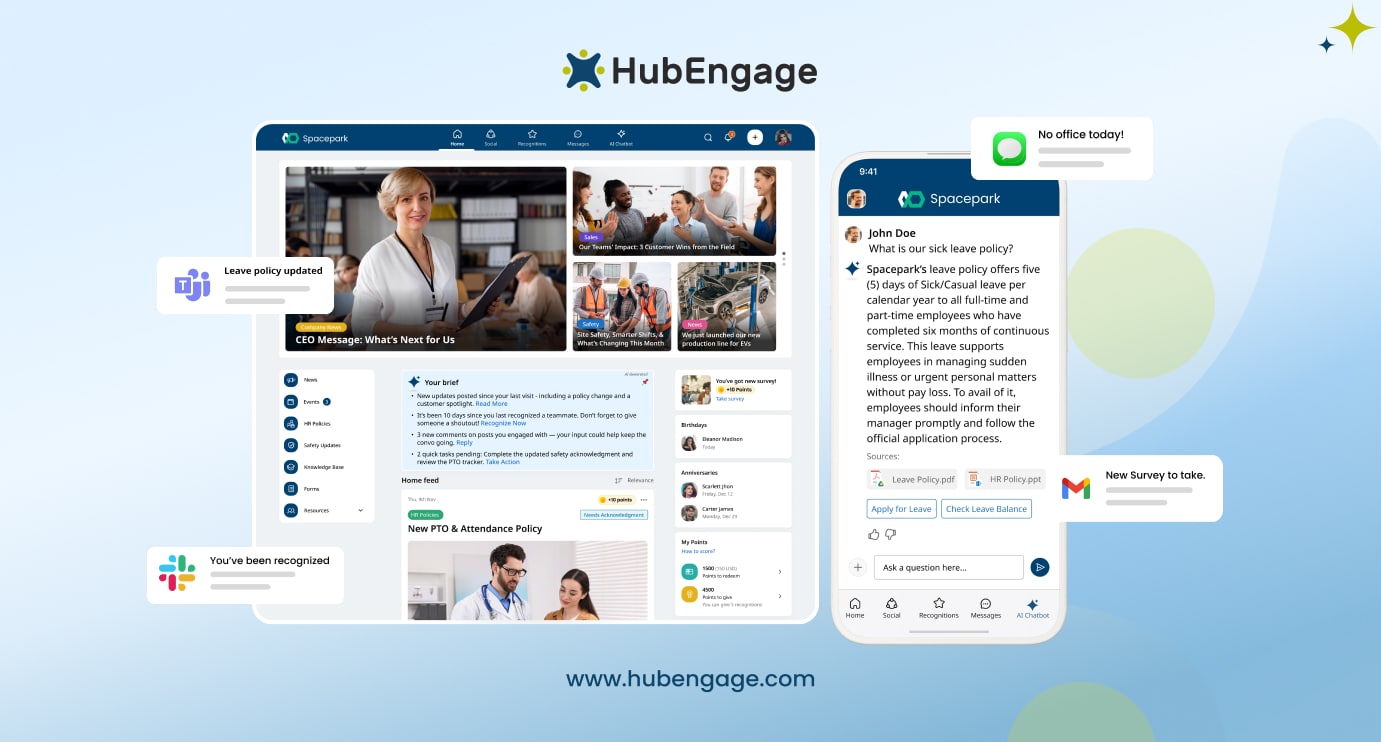
With multi-channel delivery across mobile, web, email, SMS, digital signage, Teams, and Slack, every team be it remote or frontline will get all updates. It also integrates with HRIS systems and SSO for easier user management.
Organizations can add up more modules like recognition, surveys, intranet, social engagement, and an AI-powered chatbot for complete employee support across the modern workforce.
Conclusion
Internal communication is about creating clearer, more relevant, and better human employee experiences. As workplaces become increasingly distributed, organizations need communication strategies that connect remote teams, frontline employees, managers, and office-based staff without adding more noise.
The right mix of technology, personalization, leadership transparency, and employee listening can help build trust and improve engagement. To see how one platform can support these goals, explore the HubEngage Employee Experience Platform by taking a brief personalized demo today.
FAQs on Internal Communication Trends
How AI is changing internal communications?
AI can help internal communication teams create drafts, summarize information, generate FAQs, personalize content, and repurpose messages for different channels. Human review remains important, especially for sensitive employee communications.
How can companies improve communication with frontline employees?
Using mobile-friendly channels such as employee apps, push notifications, SMS, and digital signage makes communication better for frontline teams. Companies should not just depend only on corporate emails anymore.
What are the biggest internal communication trends?
AI-assisted communication, personalized messaging, leadership transparency, manager enablement, mobile-first frontline communication, asynchronous communication, employee listening, communication measurement, and integrated employee experience platforms are the biggest trends.
Why is internal communication important for remote teams?
Remote employees have fewer informal opportunities to hear company information. Clear, searchable, asynchronous communication helps remote teams understand decisions, stay connected to company priorities, and access information regardless of location or time zone.
How can small businesses improve internal communications?
Small businesses can start by creating a consistent communication rhythm, defining where important information should be shared, reducing unnecessary messages, encouraging employee feedback, and choosing communication tools that can grow with the organization.
Related Links
employee communication hub | unified communication platforms | asynchronous communication | ai internal communications | employee recognition programs | internal communications software