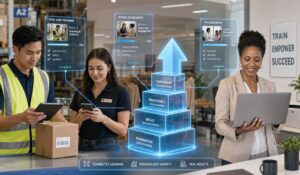
Training your employees is more important than ever, especially for distributed teams, frontline workers, remote employees, and small business owners. As technology evolves and competition increases, continuous learning along with the right employee training resources has become essential for success.
Today’s workforce is spread across warehouses, hospitals, retail stores, hotels, job sites, and home offices. Small business owners also need to upskill quickly to manage operations, customers, and growth. Because of this shift, companies can no longer rely only on skills employees had at hiring.
Effective employee development training should be a long-term strategy for all workers. It improves performance, engagement, retention, and helps businesses stay competitive and adaptable in fast-changing industries.
Our blog will help small businesses and distributed teams understand how to build simple, practical, and scalable employee development training programs that improve skills, boost productivity, and support long-term growth.
Key Takeaways
- Employee development training improves skills, productivity, retention, and prepares employees for future roles.
- Key programs include technical training, leadership development, mentoring, eLearning, compliance, and cross-functional learning.
- Investing in training builds stronger talent pipelines, higher engagement, and better employee retention.
- Successful programs start with skill gap analysis, clear goals, reinforcement, and measurable outcomes.
- Modern tools like eLearning and microlearning make training easier for frontline, deskless, and distributed teams.
- Tracking metrics like performance, retention, and compliance helps measure training ROI and business impact.
Why Employee Development Training is important?
Employee development training builds skills, knowledge, and behaviors needed for job success and growth. As workplaces evolve with new technology, regulations, and expectations, continuous learning is essential. It decreases dependency on external hiring, especially in manufacturing, healthcare, and hospitality industries.
Benefits of Employee Development Training
Employee development can create measurable advantages for both employees and organizations.
| Benefit | Outcome |
| Reduced employee turnover | Employee development training helps retain employees by reducing costly turnover and increasing loyalty. |
| Higher productivity | Trained employees work more efficiently, make fewer mistakes, and understand their roles better. |
| Stronger internal talent pipelines | Companies can grow future leaders internally instead of relying on external hiring. |
| Better employee engagement | Learning opportunities make employees feel valued, improving motivation and engagement. |
| Lower compliance and safety risks | Proper training reduces errors, improves compliance, and strengthens workplace safety. |
| Competitive differentiation | Organizations that invest in training attract better talent and build a stronger employer brand. |
Types of Employee Development Programs
Effective employee training programs do not follow one format. The right approach depends on your workforce, industry, business goals, and specific skill gaps. Here are some of the most common types of employee development programs.
Technical and Skills-Based Training
Technical training focuses on job-specific knowledge and practical abilities needed to perform daily tasks effectively. It helps employees learn tools, systems, and processes required in their roles, improving accuracy, efficiency, and overall job performance across different industries and work environments.
- Improves job accuracy and reduces errors
- Increases productivity and task efficiency
- Strengthens role-specific expertise and confidence
Leadership and Management Development
Leadership and management development prepares employees to transition into supervisory roles by building essential people management skills. It focuses on communication, employee listening strategy, decision-making, and team handling abilities so new managers can lead effectively and support employee growth within the organization.
- Builds stronger and more confident managers
- Improves team communication and coordination
- Increases employee engagement and retention
Cross-Functional and Rotational Programs
Cross-functional and rotational programs expose employees to different departments and job roles within the organization. This helps them understand broader business operations, improve collaboration, and develop a more flexible skill set that supports long-term organizational adaptability and workforce resilience.
- Enhances understanding of business operations
- Improves collaboration across departments
- Builds adaptable and versatile employees
Mentoring and Coaching
Programs like mentoring connects employees with experienced professionals who guide their development through advice, feedback, and structured support. Mentoring focuses on long-term career growth, while coaching targets specific performance improvements and skill enhancement in real work situations.
- Accelerates employee learning and development
- Improves performance through guided feedback
- Strengthens career growth and confidence
Compliance and Regulatory Training
Compliance and regulatory training ensures employees understand and follow industry laws, safety standards, and organizational policies. It is critical in regulated sectors like healthcare, manufacturing, and hospitality, where adherence to rules helps maintain safety, quality, and legal compliance across operations.
- Reduces legal and safety risks
- Ensures industry regulation compliance
- Improves workplace safety and accountability
eLearning and Self-Directed Learning
eLearning and self-directed learning allow employees to access training content anytime through learning management system experience platform which offers videos, and online modules. This flexible approach supports continuous learning, especially for employees with varying schedules, enabling them to learn at their own pace and convenience.
- Increases learning flexibility and accessibility
- Supports continuous skill development
- Reduces training time and costs
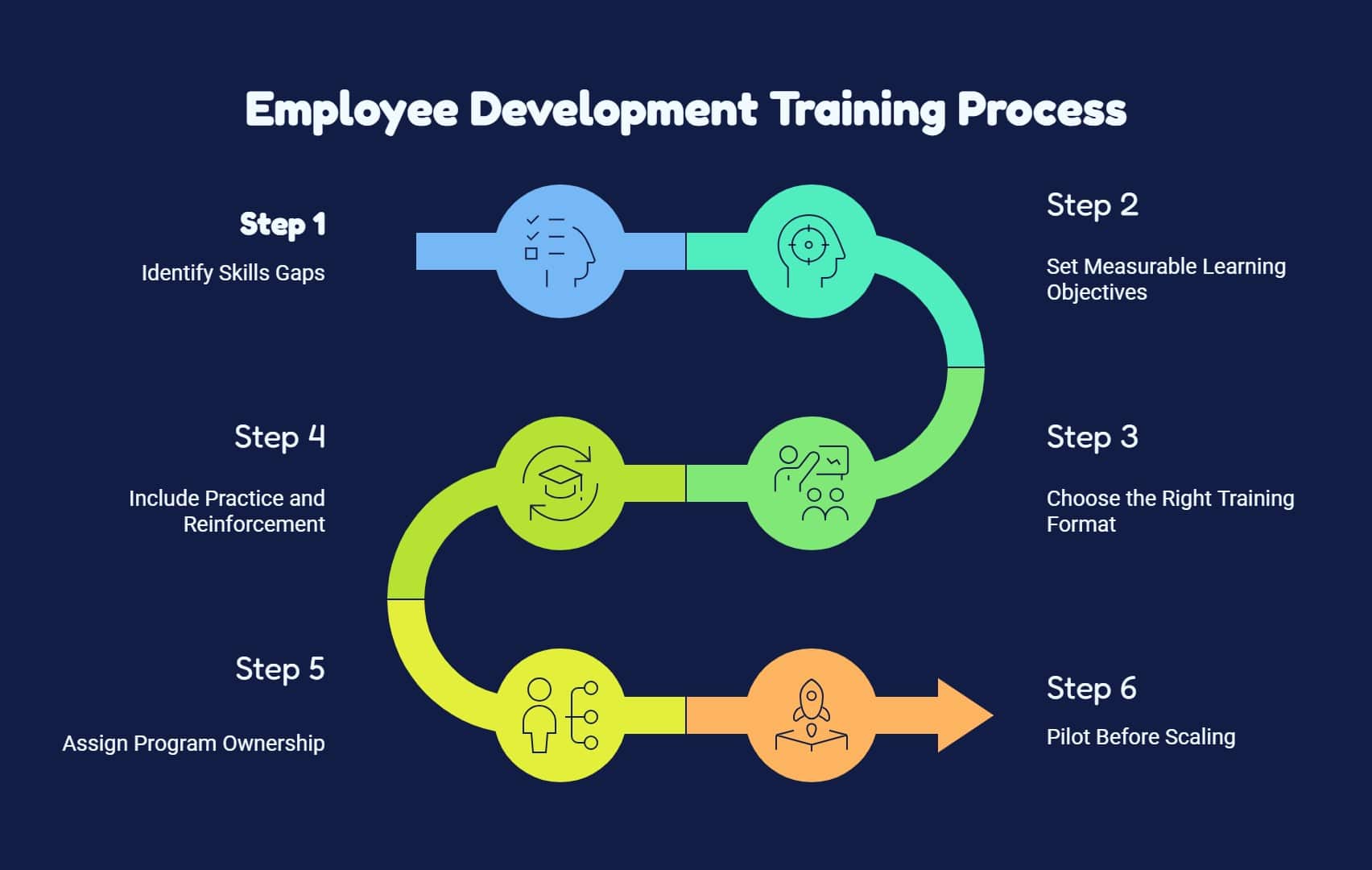
How to conduct Employee Development Training?
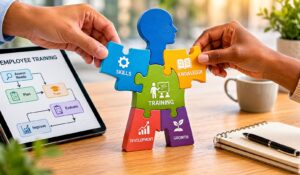
Successful employee development training requires more than purchasing courses and asking employees to complete them. Below is a simple process you can follow:
Common pitfalls in Employee Development Training
Many organizations struggle with training that is too generic which leads to low engagement and poor long-term results. Here are some mistakes you need to avoid:
1. One-size-fits-all training
Avoid using the same training for every role. Different teams like frontline, remote, and office workers need different learning approaches.
2. Not setting clear learning goals
Do not run training without defined outcomes. Without clear goals, it becomes hard to measure success or improvement.
3. Lack of follow-up
Avoid treating training as a one-time event as employees may forget what they learned.
How to measure Employee Development Training ROI?
Measuring training ROI helps you demonstrate the business value of their programs. One useful approach is the Kirkpatrick Model.

Employee Development Training Best Practices
Organizations also need strong execution to make employee training programs successful. Below are some of the best practices you can do:
Make learning accessible to deskless employees
Provide mobile-friendly employee app , short training modules so deskless workers can learn anytime without disrupting shifts.
Secure leadership commitment
Senior leaders must communicate importance, and ensure managers prioritize employee development daily.
Connect training to career development
Show employees how skills lead to promotions, certifications, and long-term career growth opportunities clearly.
Train managers to support development
Managers should set goals, reinforce learning, and discuss career growth regularly with employees.
Use data to improve programs
Analyze completion rates, feedback, and performance metrics to continuously refine and improve training effectiveness.
Recognize development achievements
Celebrate certifications and milestones to motivate employees and strengthen a positive learning culture.
How HubEngage supports Employee Development Training?
Our employee experience platform helps organizations bring employee communication, engagement, recognition, and learning into one simple digital space. It includes internal knowledge base for learning, rewards and gamification to motivate participation, and an AI chatbot for instant support.
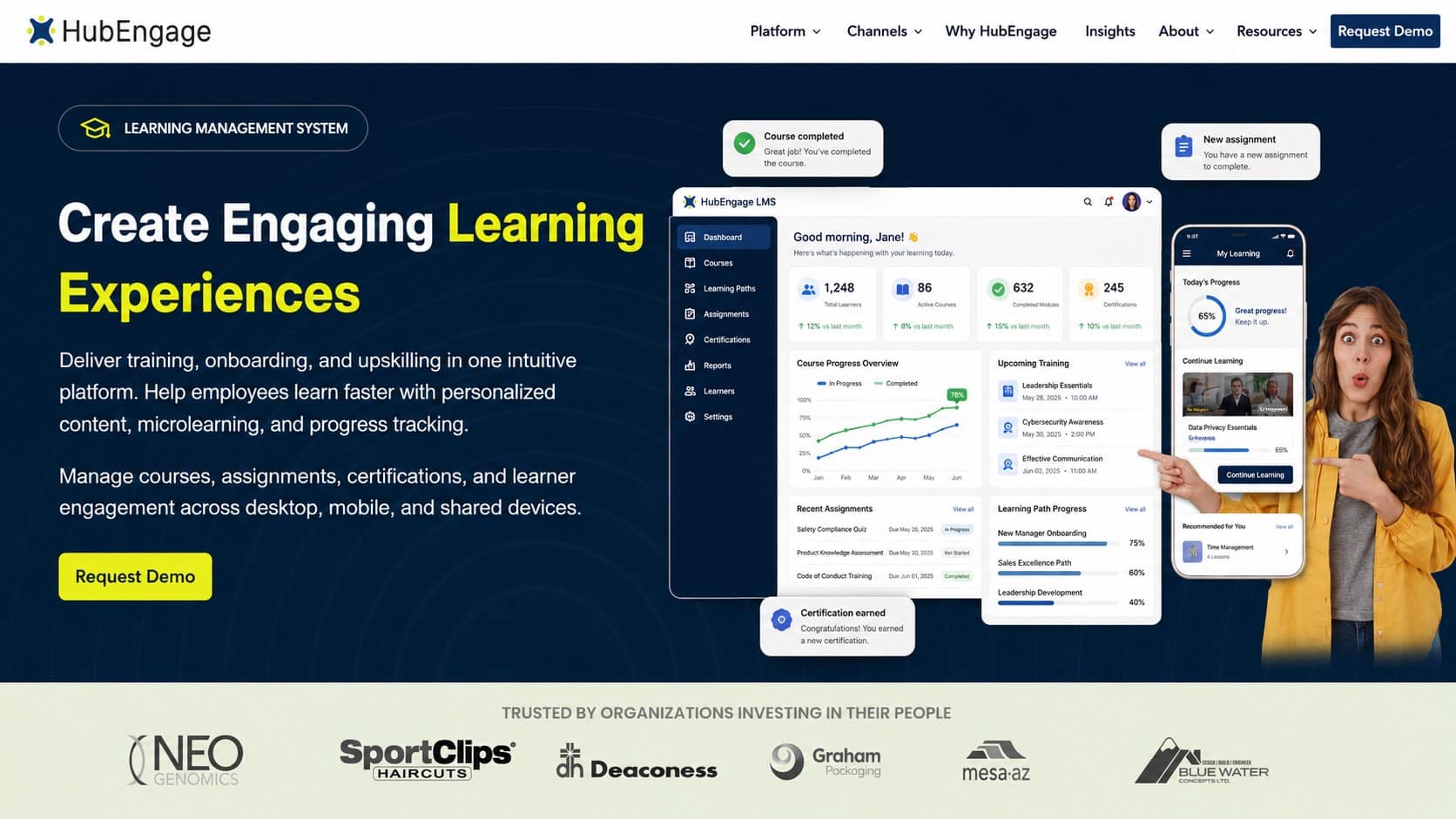
Instead of treating training as a separate task, companies can share learning opportunities, boost participation, and recognize achievements. This is especially helpful for distributed and deskless teams across different locations and shifts.
Conclusion
Employee development training is one of the most valuable investments organizations can make. It improves skills, productivity, engagement, retention, compliance, and leadership readiness while building strong internal talent pipelines.
The most successful companies treat development as an ongoing process with clear goals, manager support, and continuous learning. To take your strategy further, explore our employee experience platform and request a demo to see it in action.
FAQs on Employee Development Training
Who is responsible for conducting Employee Development Training?
Employee development is shared between HR, managers, and employees. HR designs programs, managers guide skill growth, and employees actively participate, set goals, and apply learning to improve performance and career progression.
What Is the role of AI in Employee Development Training?
AI personalizes learning, recommends courses, identifies skill gaps, and tracks progress. It improves training efficiency, supports HR decisions, and allows managers to focus more on coaching, feedback, and strategic employee development.
How is Employee Development Training helpful for HR Leaders?
Companies can reduce turnover, close skill gaps, improve succession planning, boost engagement, and build future-ready teams. It also provides data-driven insights for better workforce planning and decision-making.
How often should Employee Development Training happen?
Employee development should be continuous, not annual. Organizations should combine regular formal training with ongoing microlearning, coaching, mentoring, and on-the-job learning, especially in fast-changing industries requiring frequent skill updates.
Related Links
employee training resources | employee app | internal knowledge base | learning management system experience | employee listening strategy