Welcome to TOE with HubEngage, your Week 19, 2026 edition of inspiration to Turn On Engagement for Employees. If your internal communications strategy is still an afterthought, this edition is your wake-up call. Honestly, it is long overdue.
The way we work is changing faster than most organizations expected. And while technology, flexibility, and AI continue to evolve, one thing is becoming very clear — employee expectations in the workplace are rewriting the rules completely.
This week, we bring to you stories that show exactly where workplaces are heading, what leaders are struggling with, and why engagement can no longer be treated as a side conversation. More importantly, we believe organizations that listen, adapt, and act early will stay ahead.
Here is everything worth your attention from the world of work this week
👉 Click on the title of each story below to read the news in detail.
📋 Smarter Task Management That Actually Gets Work Done
Work does not slow down because teams lack effort. Instead, things often fall apart because ownership is unclear, priorities shift constantly, and updates get lost somewhere in endless follow-ups.
That is exactly why smarter task management matters now more than ever. Teams need visibility, accountability, and structure without adding unnecessary complexity. When people clearly know what needs to be done, who owns it, and when it is expected, execution becomes smoother.
At the same time, clarity reduces confusion, improves collaboration, and helps managers focus on outcomes rather than chasing updates. We think this is one of the simplest workplace fixes that can create immediate impact.
What we think: Better task visibility does not just improve productivity — it builds trust within teams.
Continue Reading.
🌟 Employee Experience Trends Leaders Can’t Ignore Now
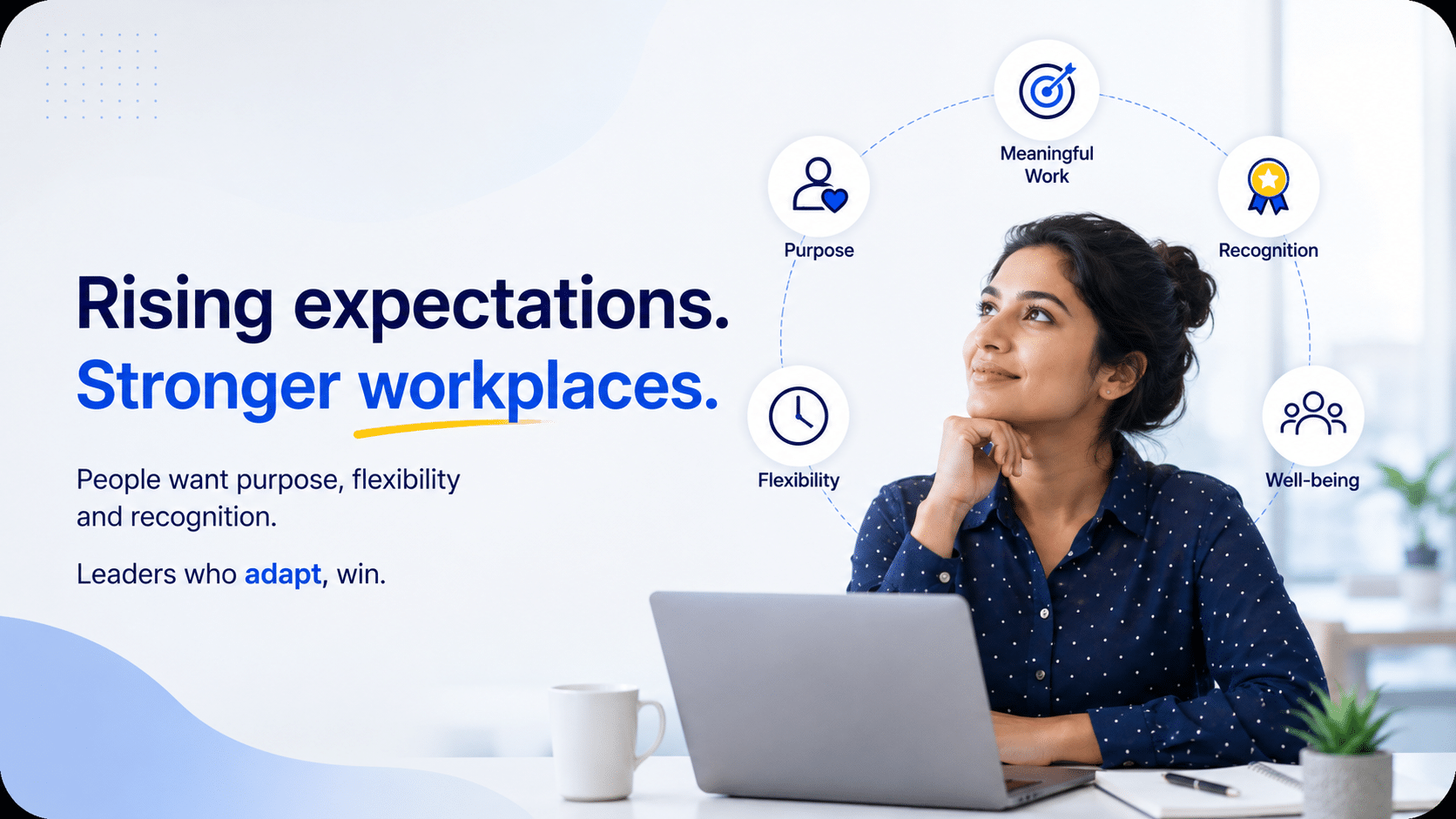
Over the last few years, priorities at work have changed dramatically. Employees are no longer only looking at salaries or job titles. Instead, they are asking deeper questions around flexibility, purpose, recognition, and overall experience.
And honestly, this shift is impossible to ignore.
Today, employee expectations in the workplace are pushing organizations to rethink culture, communication, and leadership styles. Employees want workplaces where they feel valued, heard, and supported — not just managed.
As a result, leaders who continue using old workplace approaches may struggle to retain engagement. However, those who adapt faster are already building stronger connections with their people.
What we think: Employee experience is no longer an HR initiative. It is a workplace priority.
Continue Reading.
⚖️ Managers Face Growing Gap Between Expectations And Reality
Managers today are expected to do more than ever before. They are asked to drive performance, support wellbeing, improve engagement, lead change, and still deliver business outcomes.
However, reality looks very different.
Many leaders are facing growing pressure because employee expectations are rising while workplace systems often remain outdated. This disconnect is creating frustration on both sides.
Consequently, employees expect empathy and flexibility, while managers are still measured mainly through targets and output. Unless organizations close this gap, engagement risks becoming harder to sustain.
We believe leadership support cannot stop at expectations. It also requires practical systems, training, and clear alignment.
What we think: Better manager effectiveness starts with realistic expectations and stronger support.
Continue Reading.
🏥 Better Communication Systems For Frontline Healthcare Teams
For frontline teams, communication is not just important — it directly impacts outcomes.
Whether it is hospitals, healthcare staff, or distributed teams, delays in information can create operational challenges. Therefore, fast, reliable, and real-time communication systems have become essential.
More importantly, frontline workers often miss updates because traditional communication methods are not designed for their work environments. As workplaces evolve, organizations must rethink how information actually reaches employees.
We strongly believe communication should feel accessible, timely, and actionable for everyone — especially employees who are constantly on the move.
What we think: Better communication systems create faster responses, stronger collaboration, and better employee confidence.
Continue Reading.
🏆 HubEngage Recognised As A Spring 2026 Category Leader By SourceForge
We are excited to share an important milestone — HubEngage has been recognised as a Spring 2026 Category Leader by SourceForge.
Recognition like this matters because it reflects trust, product value, and the experiences shared by customers. More importantly, it reinforces our focus on helping organizations create better workplace experiences through communication, engagement, recognition, and collaboration.
And honestly, achievements like these motivate us to keep improving what we offer.
What we think: Great workplace experiences happen when technology actually solves everyday challenges.
Continue Reading.
🔄 Building Change Ready Teams That Stay Engaged
Change has become constant. Yet, engagement often becomes the first thing affected during transitions.
Whether it is restructuring, new systems, shifting priorities, or leadership changes, employees need clarity and reassurance to stay focused. Without communication, uncertainty grows quickly.
That said, organizations that actively prepare teams for change often see stronger adoption and better engagement outcomes. The difference usually comes down to transparency, support, and involvement.
Because ultimately, change works better when people feel included in the journey.
What we think: Engagement during change depends on how informed and supported employees feel.
Continue Reading.
🤖 HR Leaders Push For Unified AI Driven Solutions
AI conversations are everywhere right now. However, one challenge continues to slow organizations down — fragmented systems.
Many workplaces still rely on disconnected tools for communication, recognition, feedback, surveys, and workforce management. As a result, teams spend more time switching platforms than creating meaningful experiences.
This is exactly where unified systems are gaining attention.
More organizations now want connected, intelligent solutions that simplify work instead of adding layers of complexity. And because employee expectations in the workplace continue to rise, seamless experiences are becoming increasingly important.
We believe technology should make work feel easier, not heavier.
What we think: Connected systems often lead to better decisions, better experiences, and stronger engagement.
Continue Reading.
🚀 HR 2030 Vision Signals A New Leadership Shift
The future of HR is moving faster than many expected.
The conversation is no longer only about automation. Instead, it is shifting toward intelligent systems, predictive insights, and more adaptive decision-making. Agentic HR, in particular, is opening discussions around smarter workflows and proactive support.
However, technology alone will never be enough.
The organizations that succeed will be the ones balancing innovation with empathy, people-first thinking, and strong workplace culture. Because at the center of every workplace transformation, people still matter most.
And as employee expectations in the workplace continue evolving, leadership styles will also need to adapt.
What we think: Future-ready organizations will balance human connection with intelligent systems.
Continue Reading.
🎮 Keeping Employees Engaged Through Gamification
Engagement works best when participation feels meaningful, rewarding, and consistent.
That is where gamification can make a real difference. Small rewards, recognition moments, challenges, points, badges, and friendly competition can encourage stronger participation without making engagement feel forced.
At HubEngage, we continue to explore smarter ways organizations can create engaging employee experiences that people genuinely enjoy being part of.
Because when engagement feels natural, participation follows.

Key Takeaway From This Week
If one thing stands out from this edition, it is this — workplaces are changing because people are changing.
From leadership gaps and communication systems to AI-driven experiences and engagement strategies, organizations are being challenged to rethink old approaches. More importantly, employee expectations in the workplace are no longer optional signals to watch — they are actively shaping the future of work.
The real question is no longer if workplaces should evolve.
It is how quickly they are willing to adapt.