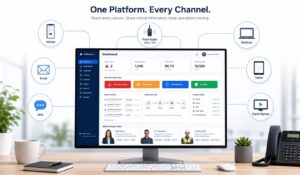
Distributed teams give organizations access to talent across cities, countries, and time zones, but they also make communication harder. Keeping everyone informed, connected, and aligned becomes a real challenge.
Important updates often get lost in emails, chats, meetings, and multiple tools, while remote employees may feel disconnected from company culture or miss key information shared in offices.
To improve internal communications across distributed teams, organizations need more than extra meetings or messages. They need a clear communication strategy supported by the internal communications software, along-with employee engagement practices. Our blog shares practical ways to build stronger communication as well as connection across your team.
Key Takeaways
- Create one reliable place where employees can find company information.
- Use multiple communication channels to reach different employee groups.
- Make communication accessible on desktop and mobile devices.
- Encourage two-way communication instead of relying only on top-down announcements.
- Use recognition, surveys, social features, and AI to increase employee engagement.
- Measure employee feedback and communication performance regularly.
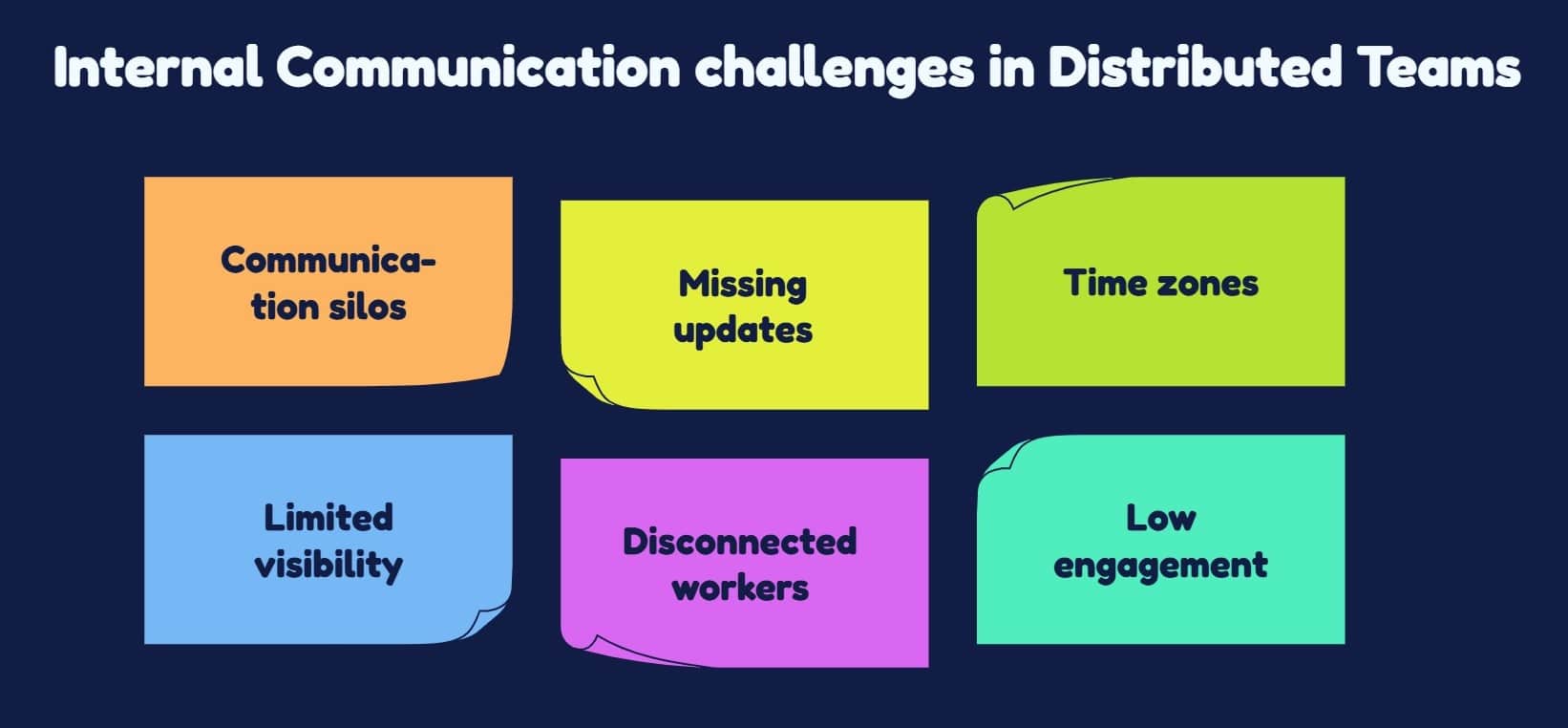
Internal Communication challenges in Distributed Teams
In hybrid and remote work internal communication is harder Teams are spread across locations and time zones and information is scattered across many apps. Employees receive messages through email chat and documents making it difficult to identify what is important Distributed organizations also face challenges such as:
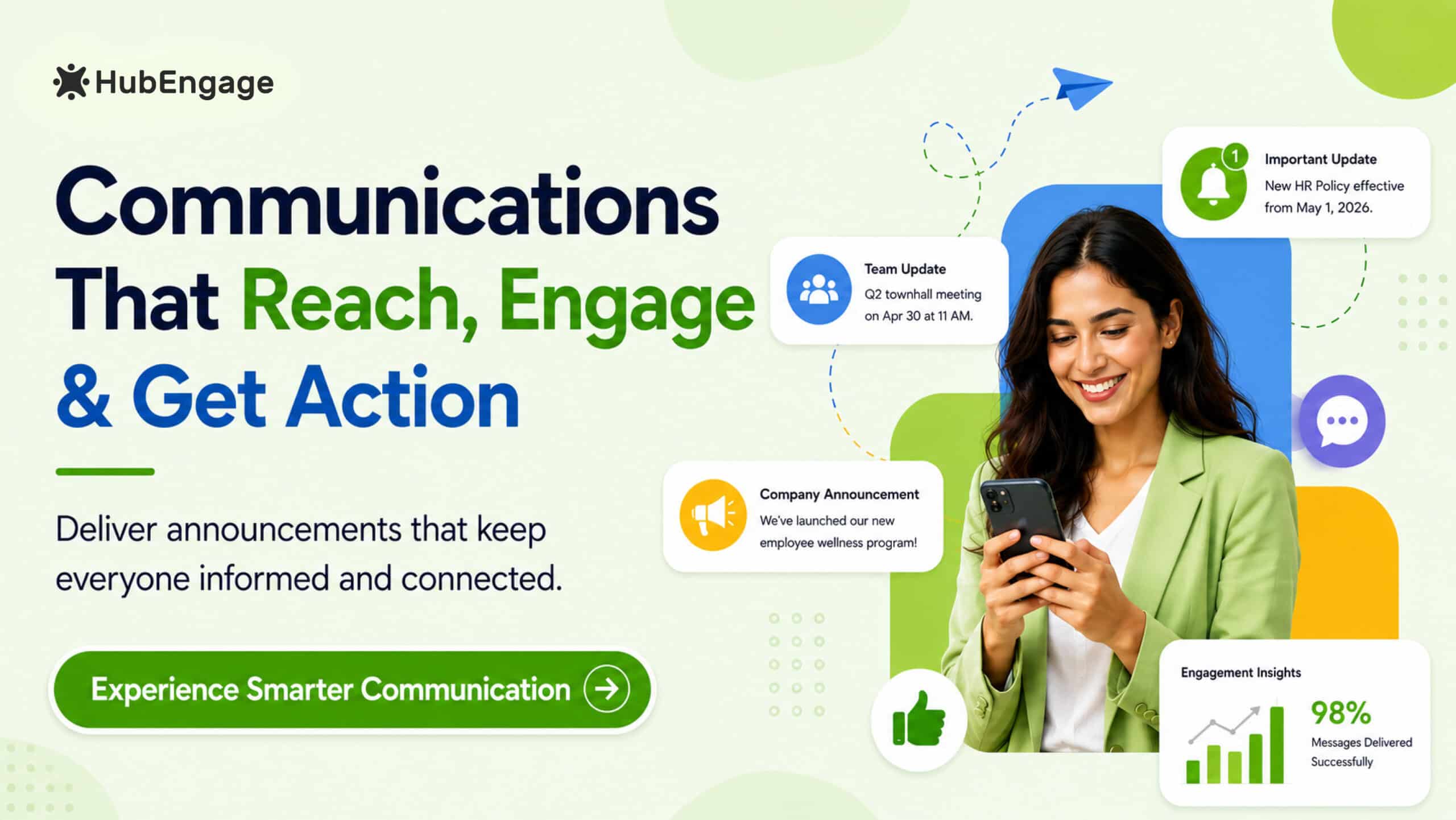
Effective communication requires a cohesive, engaging, and efficient flow of information that keeps employees informed, aligned, and empowered to collaborate. Understanding internal communication helps organizations drive engagement, productivity, and long-term success.
How to Improve Internal Communication?
Here are some practical strategies organizations can use to improve internal communications within your team:
1. Use a Unified Employee Experience Platform
A unified employee experience platform brings communication, intranet, surveys, recognition, rewards, and social engagement into one place. It helps distributed teams reduce tool overload and stay connected through a single, easy-to-use platform.
- Combines communication, intranet, surveys, and recognition
- Improves employee engagement and productivity
- Centralizes updates for distributed teams
2. Build a Multichannel Communication Strategy
A strong multichannel communication strategy uses different channels like mobile apps, email, push notifications, intranet, and SMS. This ensures employees across locations and roles receive important updates in the way they prefer.
- Delivers messages via multiple channels
- Reaches deskless and remote employees easily
- Improves message visibility and engagement
3. Strengthen Communication By Employee Recognition
Employee recognition and rewards programs help organizations celebrate achievements and reinforce company values. Peer-to-peer recognition, points, badges, and gamification boosts employee engagement
- Peer-to-peer and manager recognition tools
- Rewards, points, and gamification features
- Builds stronger company culture and morale
4. Create a Social Hub for Employees
A social engagement hub allows employees to share updates, comment, and interact with coworkers. This helps distributed teams stay connected and reduces isolation in remote work environments.
- Employee social feed and interactions
- Encourages collaboration and engagement
- Strengthens company culture digitally
5. Use AI-Powered Employee Surveys
AI-powered surveys and pulse polls help organizations understand employee sentiment in real time. By analyzing feedback, companies can identify trends and improve internal communication strategies.
- AI-driven survey insights and analytics
- Real-time employee feedback collection
- Helps improve communication effectiveness
6. Implement an Employee Intranet Platform
A modern employee intranet acts as a central hub for company news, documents, policies, and updates. It ensures employees can quickly find the information they need without searching across multiple tools.
- Centralized company information hub
- Easy search and content access
- Mobile-friendly intranet experience
7. Use an Employee Mobile App
An employee mobile app helps distributed, remote, and frontline teams stay connected from anywhere. It gives employees one place to access company updates, real-time notifications, documents, surveys, recognition, social features, and team messaging from their mobile devices.
- Provides anytime, anywhere access to company communication
- Delivers real-time updates as well as push notifications
- Improves engagement and connectivity across distributed teams
8. Improve Engagement With Internal Newsletter Software
Internal newsletters are a great way to share company updates, stories, and announcements in a structured format. They also help communication teams track engagement and improve content over time.
- Centralized newsletter creation and delivery
- Employee engagement tracking and insights
- Improves content consistency and reach
9. Introduce an AI Chatbot
An AI-powered chatbot helps employees quickly find answers to common questions. By connecting with internal knowledge sources, it provides instant and accurate responses.
- Instant answers to employee queries
- Reduces repetitive HR and support questions
- Improves access to company knowledge
10. Use Instant Messaging Tools Wisely
Instant messaging tools help distributed teams communicate quickly and collaborate in real time. However, without clear usage rules, they can also create noise and distraction.
- Use instant messaging for quick questions and fast collaboration
- Avoid overloading employees with unnecessary chat messages
- Set clear guidelines on when to use chat vs. email or intranet updates
Summary Table: 10 Ways to Improve Internal Communications Across Distributed Teams
| Tip | What It Means? | Key Benefits |
|---|---|---|
| 1. Unified Employee Experience Platform | A single platform that combines communication, intranet, surveys, recognition, rewards, and social tools for employees. | Reduces tool overload, improves engagement, centralizes updates |
| 2. Multichannel Communication Strategy | Using email, mobile apps, SMS, intranet, and push notifications to reach all employees effectively. | Better message reach, supports remote and deskless workers, higher engagement |
| 3. Employee Recognition Programs | Systems for peer-to-peer recognition, rewards, badges, and gamification to celebrate employee success. | Boosts morale, strengthens culture, increases engagement |
| 4. Social Hub for Employees | A digital space where employees can post updates, comment, and interact like a social network. | Improves connection, reduces isolation, builds company culture |
| 5. AI-Powered Employee Surveys | Smart surveys and pulse polls that analyze employee feedback using AI insights. | Real-time sentiment tracking, better decision-making, improved communication |
| 6. Employee Intranet Platform | A centralized hub for company news, policies, documents, and internal updates. | Easy access to information, better searchability, mobile-friendly experience |
| 7. Employee Mobile App | Gives access to company communication, updates, surveys, recognition, and resources anytime, anywhere. | Improves accessibility for deskless and remote workers, enables real-time communication, increases engagement and employee connectivity |
| 8. Internal Newsletter Software | Tools to create and distribute structured company updates, stories, and announcements. | Consistent communication, better engagement tracking, improved reach |
| 9. AI Chatbot for Employees | AI assistant that answers employee questions using internal knowledge sources. | Instant answers, reduced HR workload, improved knowledge access |
| 10. Instant Messaging Tools | Using chat tools wisely with clear rules to avoid overload and improve focus. | Better communication flow, reduced distractions, improved productivity |
How HubEngage helps you Improve Internal Communications?
Our employee experience platform helps organizations improve internal communications in distributed teams. It includes modules such as employee communication hub, social engagement features, instant messaging, surveys, and recognition by rewards and gamification boosting internal communication.
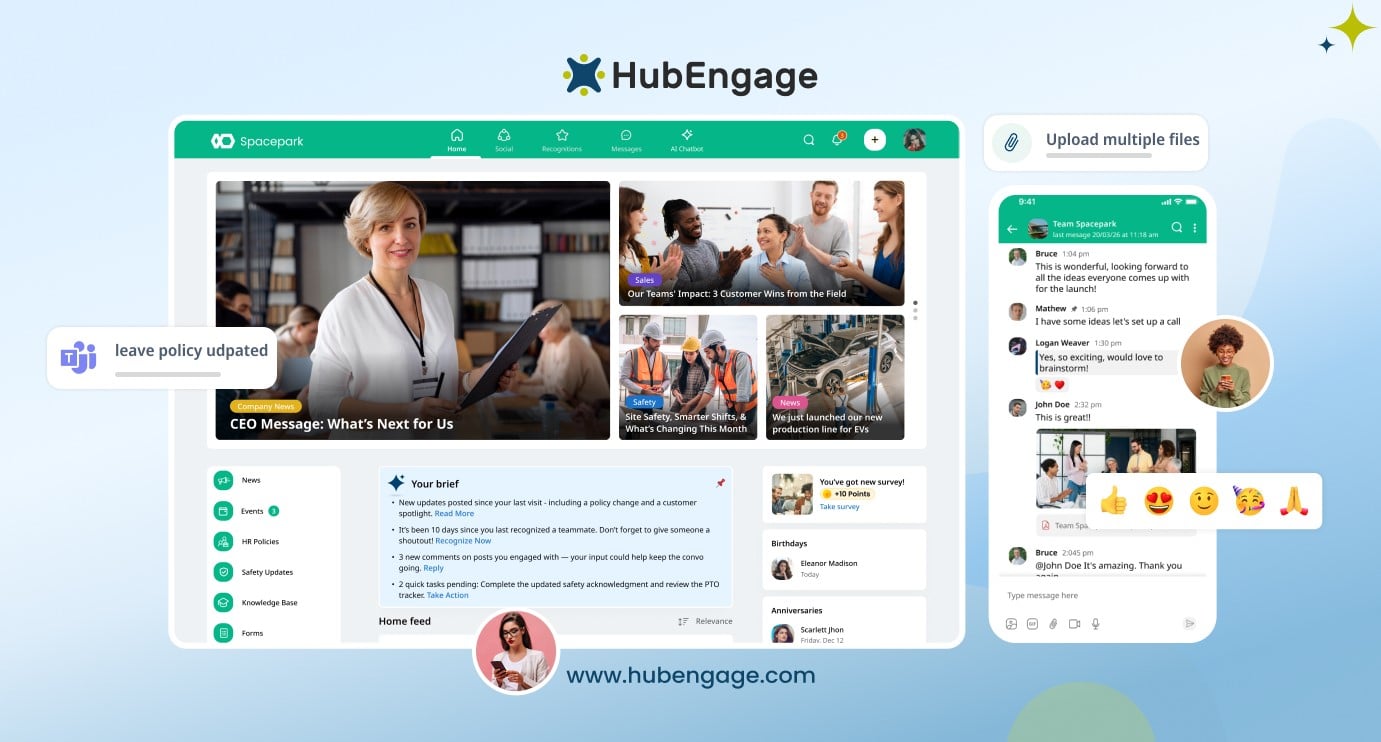
With HubEngage, companies can share updates, connect employees, and encourage two-way communication in a simple way. With a mobile-first employee app, the team can stay informed, participate in conversations, and give feedback from any location.
The platform replaces scattered tools with a unified experience, making communication easier and more consistent. It helps organizations build stronger engagement, improve alignment, and keep employees connected wherever they work.
Conclusion
Improving internal communication across distributed teams is essential for engagement, productivity, and alignment. With the right mix of tools, channels, and employee focused strategies, organizations can reduce silos and keep everyone connected regardless of location.
A unified approach helps employees stay informed, engaged, and empowered to collaborate effectively. Explore our employee experience platform by taking a demo to see how it can simplify communication and enhance employee experience across your organization.
FAQs on ways to Improve Internal Communication
How can companies improve internal communication with remote teams?
Companies improve internal communication by centralizing information, using multiple channels, enabling mobile access, encouraging feedback, and setting clear communication guidelines for tools and platforms.
Why is internal communication important for distributed teams?
Internal communication keeps remote employees aligned with goals, updates, and policies while strengthening connection, engagement, and company culture across different locations and time zones.
What is the best tool to improve internal communication?
The best tool depends on needs, but employee experience platforms combining intranet, messaging, surveys, employee recognition programs, social features, and analytics work best for distributed teams.
How can an intranet improve internal communication?
An intranet centralizes announcements, documents, policies, and updates, making it easier for employees to find information quickly without switching between multiple apps or systems.
How can organizations measure internal communication effectiveness?
Organizations measure effectiveness using engagement metrics like open rates, views, survey responses, feedback quality, intranet usage, and communication channel adoption trends over time.
How does AI helps improve internal communications?
AI improves communication by analyzing feedback, identifying internal communication trends, personalizing content, enhancing search, and powering chatbots that provide instant answers to employee questions across systems.
Related Links
employee communication hub | internal communications software | employee mobile app | gamification boosts employee engagement | employee recognition programs | internal communication trends