AI and employee engagement are closely connected as organizations seek better ways to communicate, understand, and support employees, especially in distributed workforces across locations and time zones.
Traditional employee engagement program like annual surveys and manager observations still help. But they often miss early signs of disengagement, so employees may leave before issues are noticed.
AI in employee engagement gives HR and leaders real-time insights by analyzing feedback, spotting trends, personalizing experiences, automating tasks, and improving response speed. Our blog explores AI’s role, benefits, risks, and practical use across distributed teams.
Key Takeaways
- AI in employee engagement helps organizations measure employee sentiment, predict disengagement, and improve retention using real-time workforce data and analytics.
- AI-powered engagement platforms use machine learning, sentiment analysis, and predictive analytics to identify burnout, turnover risks, and communication gaps before they become major problems.
- Manufacturing, healthcare, and hospitality organizations benefit most from AI employee engagement tools because they help connect and support large frontline and deskless workforces.
- AI-driven employee engagement improves communication, personalizes employee experiences, reduces survey fatigue, and gives managers actionable insights to improve team performance.
- The best AI employee engagement platforms combine pulse surveys, recognition, communication, analytics, and mobile accessibility in one unified employee experience platform.

Key Applications of AI in Employee Engagement
AI can support almost every stage of the employee lifecycle. Explore its various uses:
1. HR Task Automation
AI automates routine HR work like answering policy questions, processing leave requests, and handling onboarding tasks. This helps HR teams save time and focus on improving employee experience and workplace culture.
2. Predictive Analytics for Engagement Metrics
AI analyzes employee data such as feedback, attendance, and performance trends to identify early signs of disengagement. This allows managers to take action before employees decide to leave.
3. Personalized Learning and Career Paths
AI creates customized learning journeys based on employee skills, goals, and role requirements. It recommends training programs and career opportunities that support long-term growth and engagement.
4. AI-Powered Communication
Chatbots provide instant support to employees by answering HR-related questions anytime. This improves communication speed and ensures employees in distributed teams get quick help without delays.
5. Workforce Analytics
AI analyzes employee feedback, surveys, and communication patterns to understand overall sentiment. It helps HR teams track engagement levels across teams and make data-driven decisions quickly.
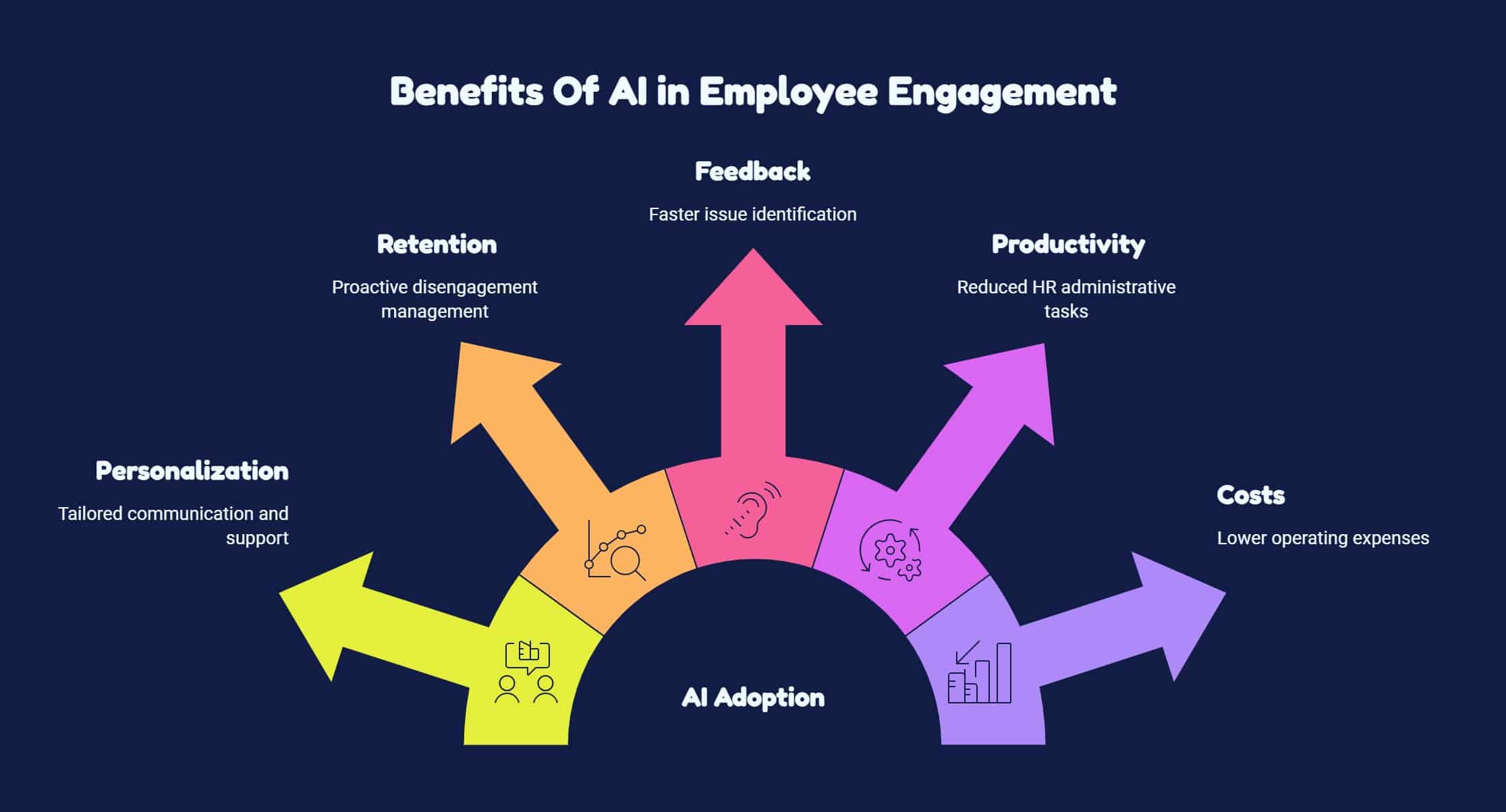
Benefits of using AI In Employee Engagement
With a proper employee engagement plan , AI can help organizations improve both employee experiences and HR productivity. Some of the most important benefits include:
7 Practical Use Cases of AI in Employee Engagement
Below are some of the ways to use ai in employee engagement:
1. Diagnosing Disengagement Through Predictive Analytics
Organizations can detect disengagement early by analyzing patterns like reduced participation, absenteeism, and feedback changes. It flags risks before performance drops, allowing HR teams to investigate issues quickly and take timely action while managers apply human judgment for resolution.
2. Enhancing Communication With AI-Powered Chatbots
Provide instant answers to employee questions about HR policies, payroll, benefits, and leave requests. They operate 24/7, improving access for distributed teams while reducing HR workload. This ensures faster communication, better support, and a more connected employee experience.
3. Personalizing Learning and Development Programs
AI recommends personalized learning paths based on employee skills, goals, and job roles. It helps organizations deliver relevant training instead of generic programs. This increases engagement, supports career growth, and makes employees feel valued through continuous development opportunities at scale.
4. Recognizing Employee Achievements
AI helps recognize employee achievements by tracking milestones, rewarding with employee gamification, and tracking performance in real time. It enables timely appreciation through personalized messages or alerts. This strengthens motivation, builds engagement, and creates a sense of belonging, especially for distributed employees consistently effectively.
4. Streamlining Recruitment With AI-Driven Tools
By analyzing candidate data, and matching skills to roles, AI can improve hiring efficiency. It supports scheduling, communication, and onboarding processes. However, human oversight remains essential to ensure fairness, reduce bias, and make accurate hiring decisions consistently and responsibly.
5. Monitoring Employee Well-Being Through Analytics
Analysis of employee feedback using AI can identify stress, workload issues, and satisfaction trends. It helps HR teams understand well-being in distributed workplaces where direct observation is limited. Insights should be aggregated to protect privacy and avoid intrusive monitoring practices ethically always.
6. Automating Routine Tasks to Improve Productivity
Repetitive tasks like data entry, scheduling, reporting, and meeting summaries can be automated using AI. This reduces employee workload and frustration, allowing more focus on meaningful work. Employees can spend time on strategy, creativity, and customer engagement, improving overall productivity and satisfaction significantly.
7. Streamlining Recruitment With AI-Driven Tools
By analyzing candidate data, and matching skills to roles, AI can improve hiring efficiency. It supports scheduling, communication, and onboarding processes. However, human oversight remains essential to ensure fairness, reduce bias, and make accurate hiring decisions consistently and responsibly.
Risks and Ethical Considerations for AI in Employee Engagement
| Area | How AI can help? |
| Data Privacy and Surveillance | Analysis of employee data like surveys, activity, and communication. Companies must clearly explain what data is collected, why it is used, and who can access it. If employees feel watched too closely, engagement can drop. |
| Over-Reliance on AI Systems | Finding patterns but cannot replace human understanding or empathy. Managers still need to talk to employees and understand real issues. Important HR decisions like performance or health concerns should always involve humans. |
| Unintended Bias | Repeating old biases from past data, affecting hiring, promotions, or evaluations. Companies should regularly check AI systems for bias and ensure humans review important decisions. |
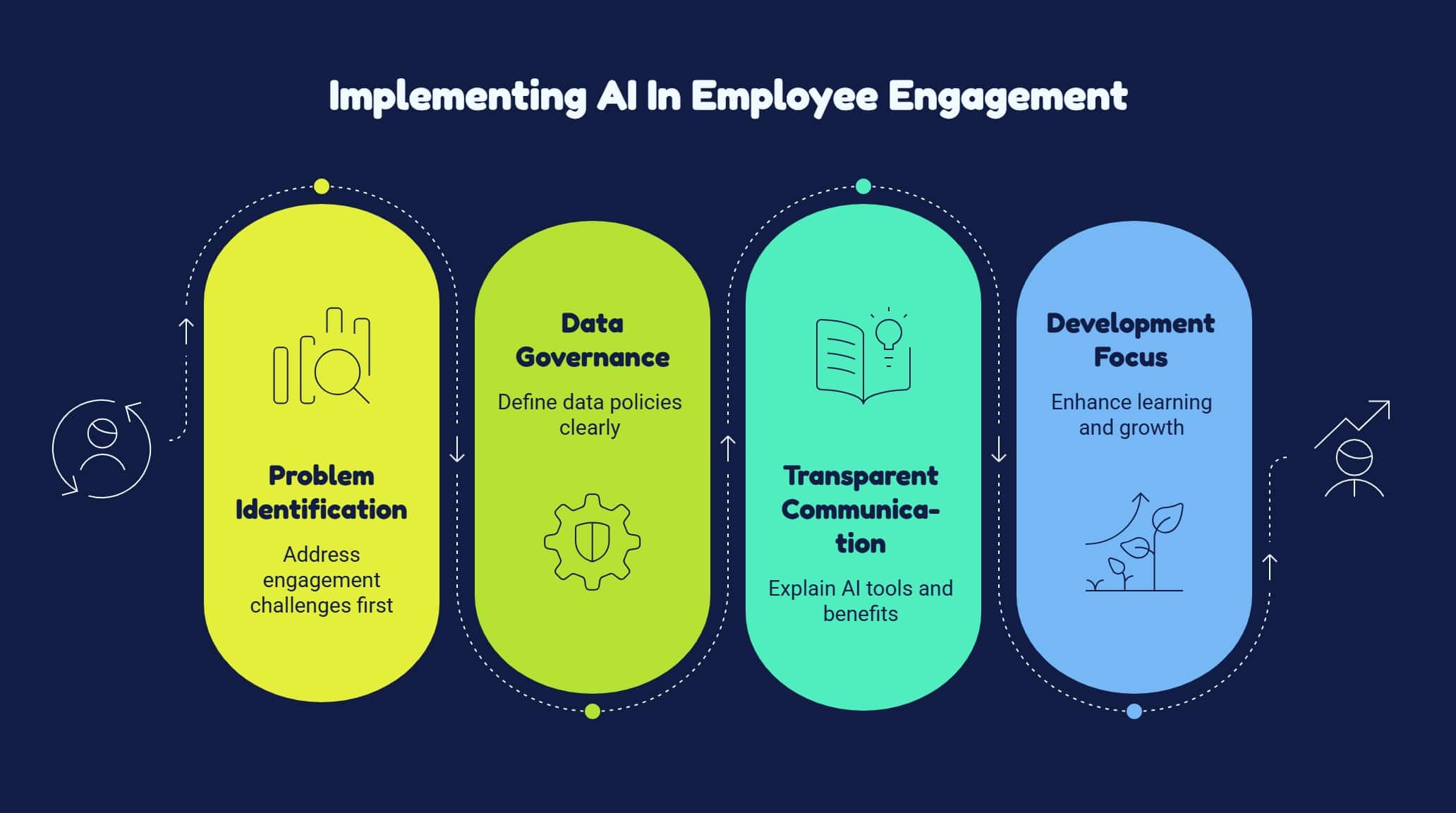
Strategies for Implementing AI In Employee Engagement
Every strategy should focus on solving real employee problems, protecting employee data, and keeping human judgment at the center. Here are the key | employee engagement ideas:
Factors to consider before investing AI In Employee Engagement
A clear evaluation framework helps HR and business leaders make better, faster decisions. Here is a simple summary of key factors to consider:
| Factor | Function |
| ROI and scalability | Ensures the tool saves time, reduces costs, and grows with your workforce needs |
| Ease of use | Makes sure employees and managers can easily adopt and use the platform daily |
| Analytics capabilities | Provides actionable insights instead of just raw data or complex dashboards |
| Ownership and stakeholders | Clarifies who manages the tool and ensures alignment across HR, IT, and leadership |
| Ethical implications and bias | Helps prevent unfair outcomes and ensures responsible use of employee data |
| Employee trust | Builds confidence by clearly explaining how and why the tool is used |
| Maintenance and support | Ensures the system stays updated, secure, and effective over time |
How HubEngage helps in Employee Engagement?
Our employee experience platform brings everything together in one place. It includes multi-channel communication to reach all employees, recognition and rewards to boost engagement, and enterprise social hub for sharing, commenting, and teamwork.
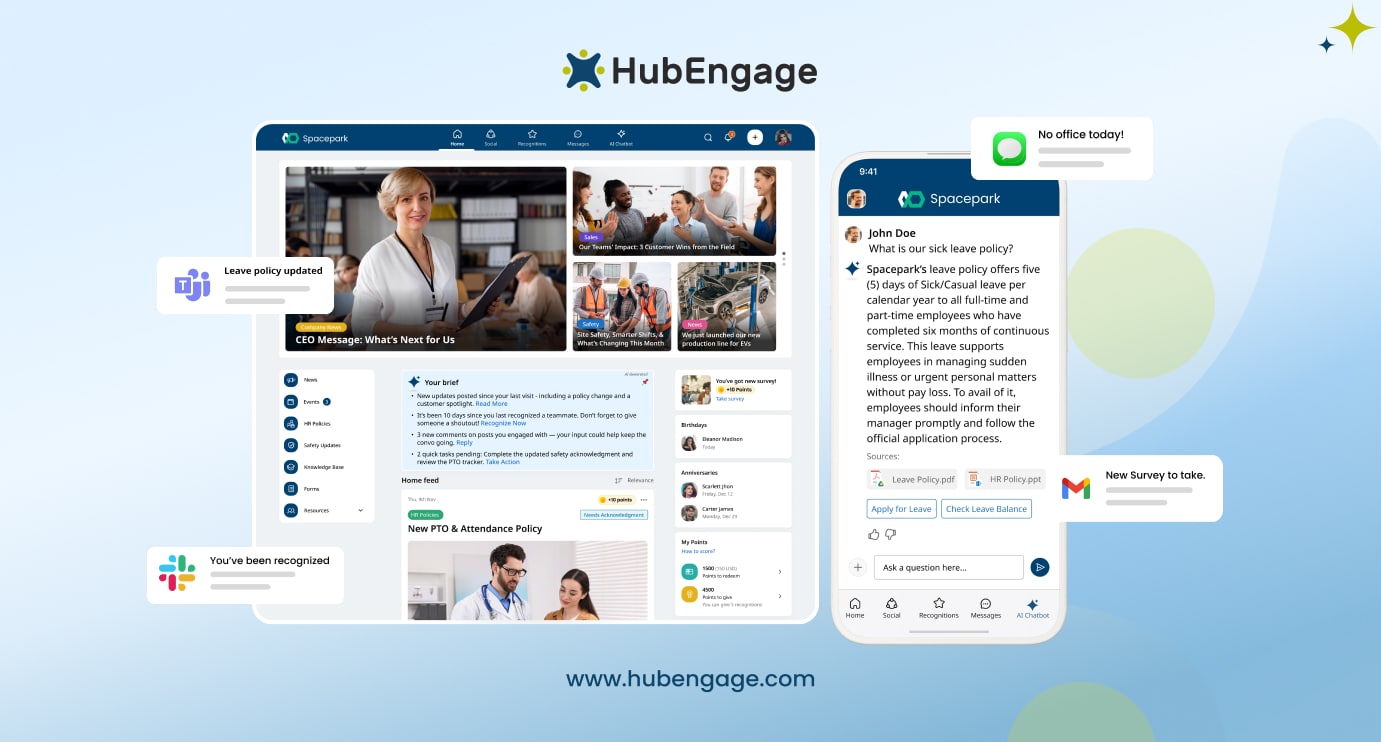
It also uses AI-powered sentiment and theme analysis to understand how employees feel. This helps organizations improve communication, collect feedback, recognize achievements, and support both remote and in-office teams. AI makes insights faster and more useful, helping leaders act quickly while still keeping the human connection strong.
Conclusion
AI will play a growing role in shaping employee engagement as workplaces become more distributed and dynamic. While AI helps improve insights, automation, and personalization, real engagement still depends on trust, leadership, and meaningful human connection.
Our AI-powered employee experience platform is designed to help organizations engage employees across a distributed workforce. Take a demo to see how you can improve engagement and transform employee experience in your organization.
FAQs on AI In Employee Engagement
What risks should an HR leader be aware of when using AI in engagement?
HR leaders should be aware of privacy concerns, data security risks, algorithmic bias, inaccurate predictions, and lack of transparency. Over-monitoring employees is also a risk, so human oversight and clear communication are essential.
How can AI be used in employee engagement and retention analytics?
AI analyzes employee surveys, feedback, turnover data, and workforce trends to identify engagement patterns. HR teams use these insights to detect risks early and take actions like improving communication, recognition, and development opportunities.
Can AI predict employee turnover?
Yes by analyzing engagement scores, attendance, performance trends, and sentiment data. It identifies at-risk employees early, allowing HR teams to intervene with support, development, or retention strategies.
How can AI improve employee engagement in frontline teams?
AI improves frontline engagement by delivering real-time updates, shift notifications, and safety alerts through mobile first accessibility. It also gathers feedback, tracks sentiment, and helps managers recognize performance and address issues quickly.
What is the best ai tool for employee engagement?
HubEngage is the best AI-powered employee experience platform for employee engagement, offering communication, feedback, recognition, analytics, and personalized engagement solutions for distributed and hybrid workforce teams at scale globally today
Related Links
enterprise social hub | employee engagement program | employee engagement ideas | how gamification boosts employee engagement | employee engagement plan