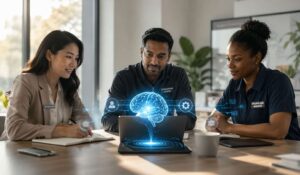
The workplace has changed. Employees may work from an office, a hospital floor, a warehouse, a retail location, their home, or several locations during the same week. At the same time, younger employees entering the workforce expect fast communication, easy access to information, flexibility, recognition, and consumer-like digital experiences.
This makes employee experience management an important part of how organizations attract, engage, support, and retain people. Employee experience management helps organizations attract, engage, support, and retain their workforce by improving every stage of the employee journey.
It also creates consistency for frontline, remote, hybrid, and office-based employees, regardless of where they work. Our blog will help you discover practical employee experience strategy to create a more connected, productive, and satisfying workplace.
Key Takeaways
- Employee experience management improves how employees communicate, access information, learn, receive recognition, and stay connected throughout the employee journey.
- Distributed workforces need mobile-first employee experience solutions that support frontline, remote, hybrid, and office employees from any location.
- Strong employee experience strategies include employee journey mapping, two-way communication, recognition, accessible learning, and simplified workplace processes.
- AI improves employee experience management through sentiment analysis, personalized content, intelligent search, employee chatbots, and faster access to workplace information.
- Organizations should measure employee experience using retention, engagement, eNPS, training completion, recognition activity, platform adoption, and employee feedback.
- A digital employee experience platform can reduce tool sprawl and bring communication, recognition, learning, surveys, and knowledge resources into one experience.
Why Employee Experience Management is needed for Distributed and Modern Workforce?
Managing employee experience becomes more complex across locations, schedules, roles, and devices. As per IDC Surveys across EMEA region, 63.6% of employees are not satisfied with their jobs that may lead to low employee retention rate. Frontline workers may lack email access, remote employees can feel disconnected, and office staff may receive information faster. These differences create communication gaps, inconsistent access, isolation, and other common employee experience challenges.
| S.No. | Challenge | Impact |
| 1 | Information is spread across many tools | Employees miss important updates |
| 2 | Frontline workers lack easy access to resources | Policies, schedules, and training are harder to find |
| 3 | Remote employees feel disconnected | Team connection and culture may weaken |
| 4 | Recognition favors visible employees | Remote and frontline workers may feel overlooked |
| 5 | Younger employees expect modern experiences | Outdated tools can reduce engagement |
Employee Experience Management Benefits
A good employee experience program can help organizations:
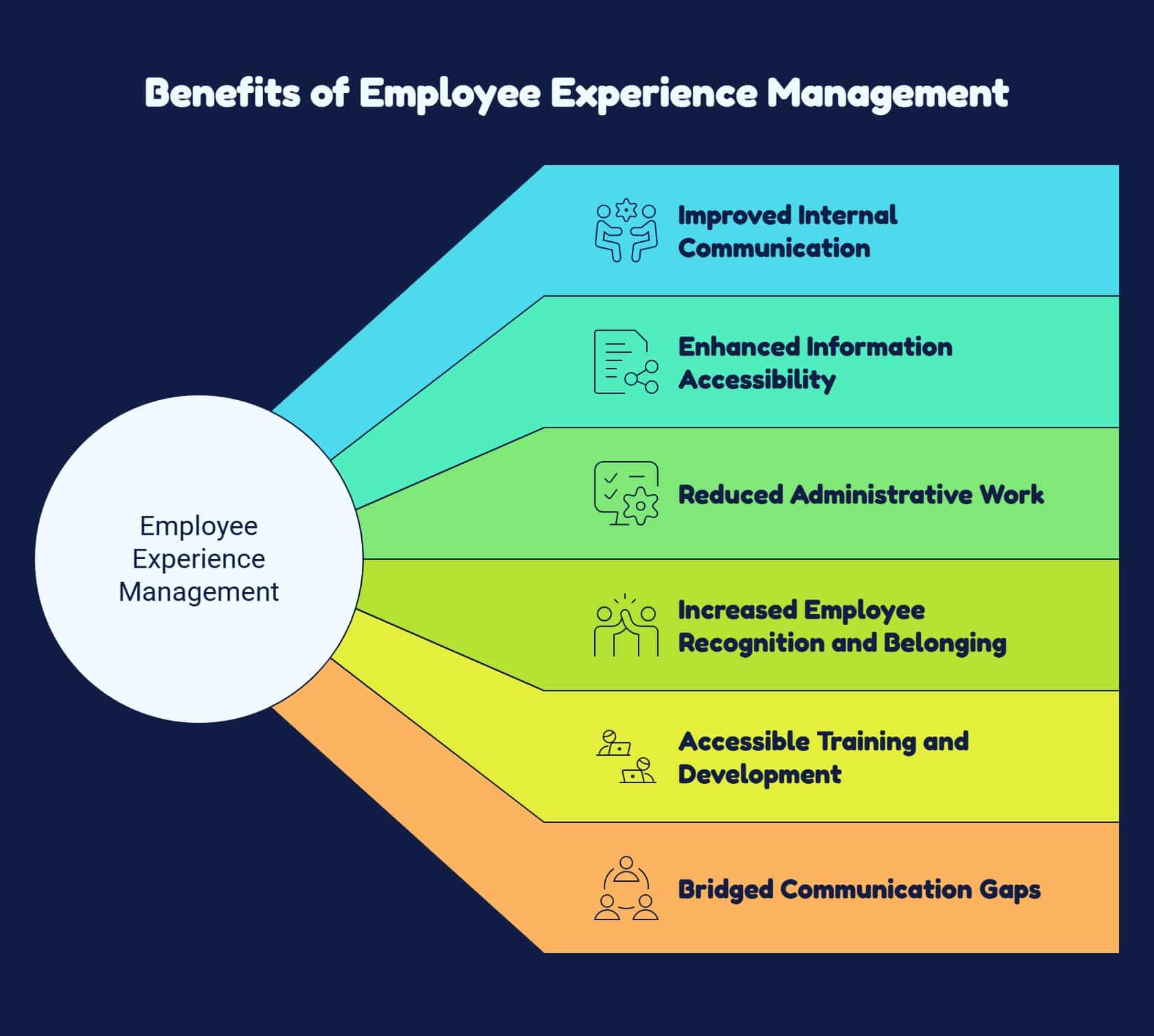
With a good employee experience solution, companies can create a more connected as well as supportive workplace where employees can perform, grow, and stay engaged.
1. Stronger Internal Communication
Keep frontline, remote, and office employees informed with timely, consistent communication across locations.
2. Easy Access to Company Information
Help employees quickly find policies, documents, updates, and workplace resources whenever they need them.
3. Reduced Administrative Friction
Simplify repetitive processes and workflows so employees spend less time managing routine administrative tasks.
4. Better Recognition and Belonging
Recognize employee contributions regularly to strengthen motivation, appreciation, connection, and workplace belonging.
5. Accessible Learning and Development
Give employees flexible access to training, learning resources, and development opportunities from any location.
6. Stronger Employee-Leadership Connection
Create open communication channels that improve transparency, trust, and dialogue between employees and leadership.
Employee Experience Management Strategies
There is no single strategy for effective employee experience management that works for every company. However, several approaches are especially useful for distributed workforces.
1. Use Employee Journey Mapping
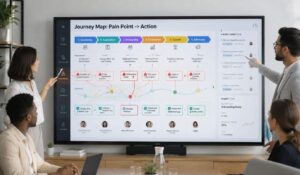
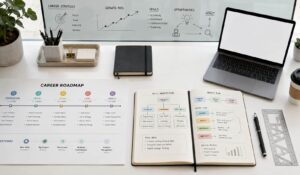
With the help of employee journey mapping companies can understand experiences across different employment stages, including recruitment, onboarding, daily work, development, retention, and exit. At each stage, organizations can identify employee needs, tools, delays, information gaps, communication opportunities, and feedback requirements. This creates a practical improvement process instead of disconnected HR initiatives.
2. Use Mobile-First Access
Communication should reach employees where they already work. Mobile-first tools deliver announcements, schedules, alerts, recognition, and company updates directly to smartphones. This approach supports modern, frontline and deskless employees who may not use corporate email or office computers regularly. It improves accessibility, strengthens connection, and ensures important information reaches employees quickly.
3. Make Recognition Visible
Recognition becomes more meaningful when employees can see and celebrate achievements across the organization. Peer-to-peer recognition, digital awards like gamification, milestones, and company-wide recognition feeds strengthen belonging and motivation. Distributed employees benefit especially because their contributions become visible to colleagues and leaders, even when teams rarely meet in person.
4. Create Two-Way Communication
Employee communication should not flow only from leadership to employees. Pulse surveys, polls, digital suggestion boxes, enterprise social network, and feedback forms provide convenient ways to share ideas and concerns without requiring desktop access. Regular feedback helps managers understand employee sentiment, identify recurring issues, and address problems before they become more serious.
5. Use AI in Employee Experience Management
AI helps organizations manage employee experience at scale by analyzing employee surveys along with feedback using ai-driven sentiment and thematic analysis. Also, AI chatbots can quickly locate policies, benefits, training, and documents. With ai-powered intranets, companies can deliver personalized feeds and content as per the department or user segmentation.
How to build an Employee Experience Management Strategy that works?
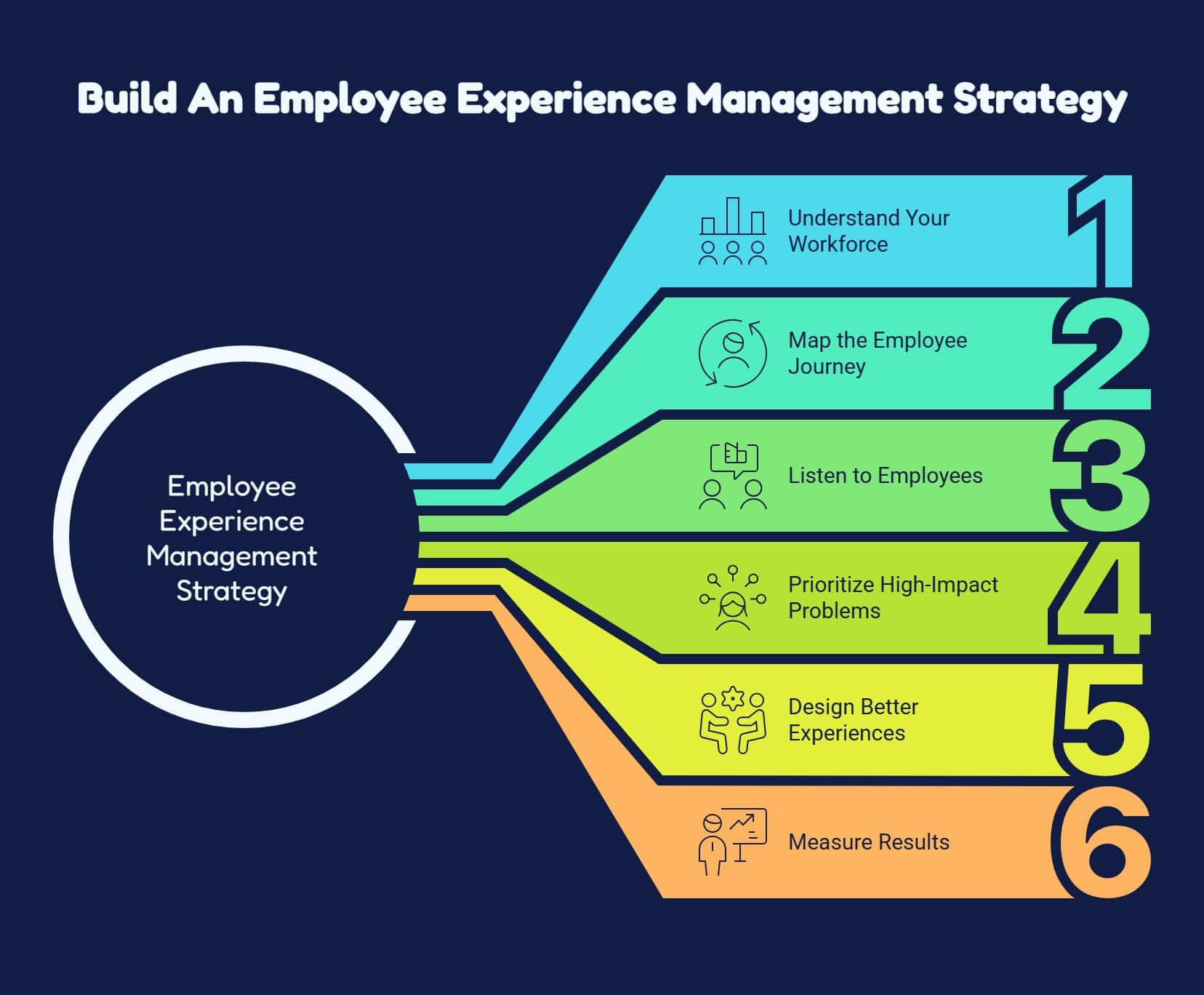
A practical employee experience strategy for distributed teams can be built around a simple process as follows:
1. Understand Your Workforce
Identify employee groups, locations, schedules, devices, communication preferences, and challenges; tailor experiences to each workforce segment.
2. Map the Employee Journey
Review each employee journey stage, from onboarding through exit, and identify friction points.
3. Listen to Employees
Use pulse surveys, interviews, manager conversations, communication analytics, and feedback channels.
4. Prioritize High-Impact Problems
Start with areas causing the most employee frustration, such as communication gaps, information access, scheduling, onboarding, or recognition.
5. Design Better Experiences
Improve processes, communication channels, technology, and manager practices around the problems identified.
6. Measure Results
Track metrics like retention, engagement, adoption, training, absenteeism, onboarding, recognition, and support requests. Continue improving the experience based on what employees actually do and say.
7 Best Practices For Employee Experience Management
Organizations looking to improve employee experience across distributed teams should follow a few basic principles:
1. Design for Every Employee
Do not build workplace experiences only around office-based employees.
2. Keep Experiences Simple
Employees should not need five platforms to complete basic workplace tasks.
3. Make Mobile Accessibility a Priority
Frontline and shift workers need the same access to resources as desk-based employees.
4. Listen Continuously
Smaller, frequent feedback programs often provide more useful information than relying entirely on annual surveys.
5. Act on Feedback
Employees are more likely to participate when they can see that their feedback produces changes.
6. Personalize Where Possible
Different roles, locations, and generations may need different communication and learning experiences.
7. Connect Your Systems
Communication, recognition, learning, surveys, and workplace resources work better when employees can access them through one connected experience.
HubEngage: Your Employee Experience Manager
Our employee experience platform is designed to help organizations connect office, remote, frontline, and deskless employees giving a centralized employee experience.
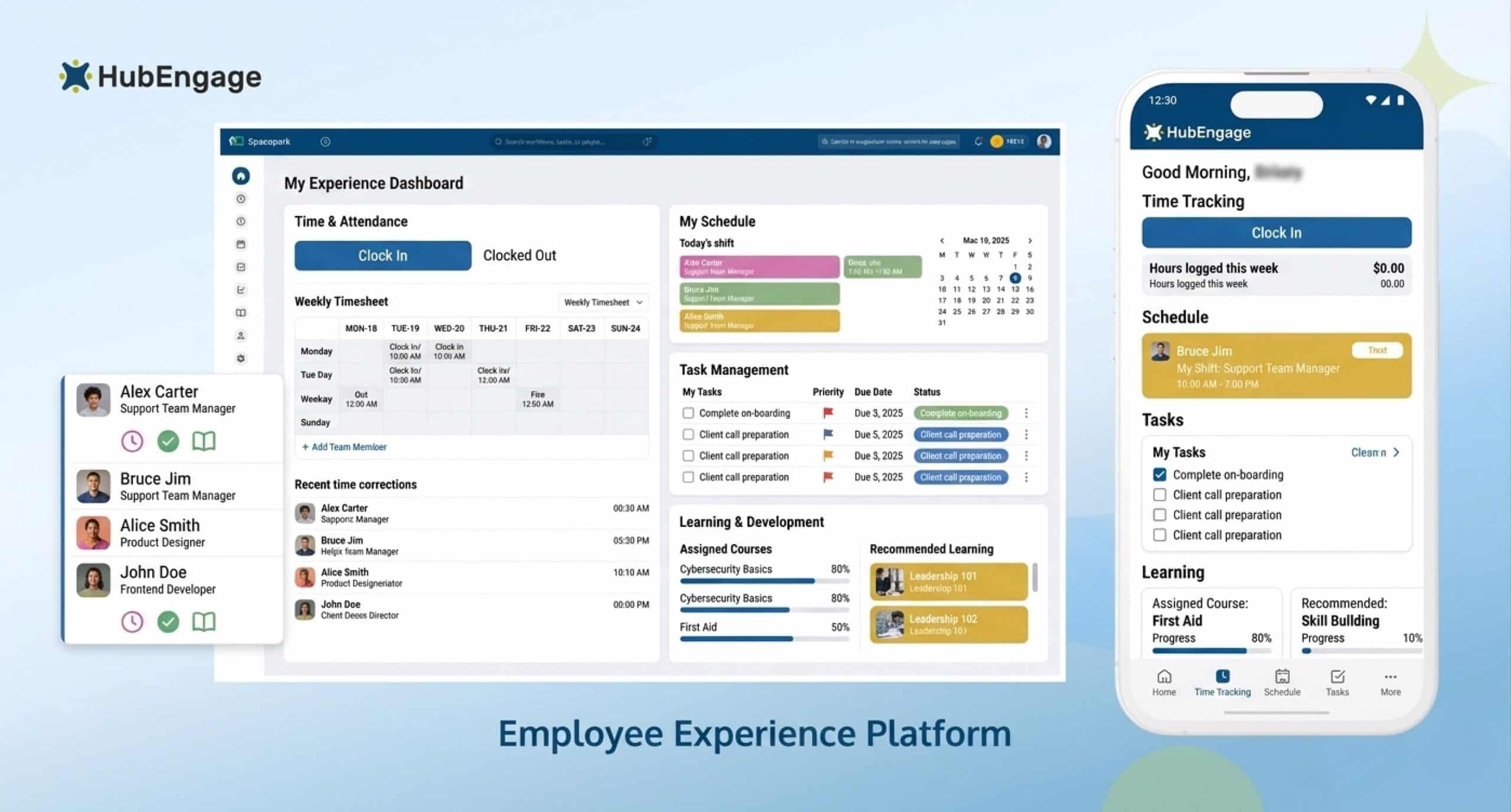
Employee experience management across a distributed workforce becomes easier when employees do not have to move between disconnected systems. Hence, we provide our software with mobile first access which decreases tool sprawl as well as improves accessibility.
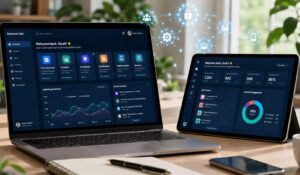
Organizations can use this digital employee experience platform for employee communication, recognition, gamification, surveys, microlearning, access to knowledge resources, instant messaging, and other daily employee interactions. With this, employees have an easy way to stay informed, connected, recognized, and productive wherever they work.
What Does Our Employee Experience Manager Do?
Our platform is like an employee experience manager that helps you manage important parts of the employee journey from one digital environment. Teams can use it to:
| Capability | Benefit |
| Multi-channel communication | Reach every employee |
| Mobile-first access | Connect from anywhere |
| Rewards and gamification | Improve recognition |
| AI-powered surveys | Collect employee feedback |
| Microlearning | Simplify employee training |
| Knowledge access | Find information faster |
| Unified platform | Reduce tool sprawl |
| AI chatbot | Get quick answers |
For organizations managing multiple locations or employee groups, a unified platform can help create a better employee experience.
Conclusion
Employee experience management is no longer limited to HR programs or annual engagement surveys. It shapes how employees communicate, access information, learn, receive recognition, share feedback, and complete everyday tasks.
For distributed workforces, accessible, mobile-first, personalized, and connected experiences are essential. Having the right strategies for employee experience management organizations can build stronger connections, improve engagement, and support every employee of every location. Explore our employee experience platform by taking up a demo today.
FAQs about Employee Experience Management
1. What is Employee Experience Management?
Employee experience management improves every stage of the employee journey, including recruitment, onboarding, communication, development, recognition, retention, and exit, helping employees feel informed, supported, productive, and connected.
2. What does an Employee Experience Manager do?
An employee experience manager improves workplace interactions through research, journey mapping, engagement programs, communication, recognition, technology, feedback analysis, and measurement of employee experience outcomes across the organization.
3. How does AI affects Employee Experience Management?
AI enhances employee experience management through sentiment analysis, personalized learning, automated onboarding, intelligent search, employee assistants, and feedback analysis, helping teams identify patterns and deliver personalized support efficiently.
4. How to measure Employee Experience Management effectiveness?
Organizations measure effectiveness using eNPS, retention, absenteeism, survey participation, recognition, training completion, communication engagement, onboarding success, app adoption, workforce metrics, employee feedback, and business outcomes.
5. What is the role of technology in Employee Experience Management?
Technology connects employees with communication, information, learning, recognition, feedback, and workplace services while reducing tool fragmentation, improving accessibility, automating processes, and supporting continuous experience improvement.
Related Links:
digital employee experience platform | employee experience strategy | employee experience solution | employee journey mapping | improve employee experience | enterprise social network