Most organizations have invested heavily in HR software, payroll systems, and project management tools yet, employees still feel disconnected, uninformed, and disengaged. The problem is the lack of the right technology, designed around the employee rather than the administrator.
According to Gallup, only 23% of employees worldwide are engaged, while 59% are “quiet quitting,” meaning they are disengaged and less productive at work. This shows how lack of proper communication, recognition, and engagement tools directly affects performance, retention, and overall business outcomes.
A digital employee experience platform is one of the primary levers organizations use to move those engagement numbers. In this article we will explain what these platforms are, how they work, what separates them from traditional HR systems, and what to look for when evaluating one for your organization.

Key Takeaways
- A digital employee experience platform connects communication, engagement, and operations in one place.
- It is made for employees, especially frontline and deskless workers, not just HR teams.
- Digital employee experience platforms integrate with HRIS and other systems to deliver real-time updates and personalized content.
- Key features of these platforms include communication tools, surveys, recognition, training, and analytics.
- Digital employee experience platform helps increasing engagement, improve productivity, and strengthen employee connection.
- Businesses use it to improve retention, onboarding speed, and overall workforce experience.
What is a Digital Employee Experience Platform?
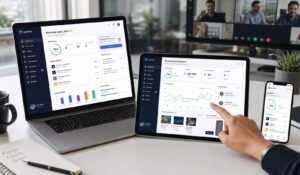
A digital employee experience platform is a unified software solution that centralizes employee communications, engagement tools, and workforce operations into a single, accessible environment. Unlike standalone apps for surveys, messaging, or scheduling, a digital employee experience platform brings these capabilities together.
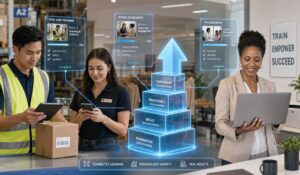
For example, a hospital nurse, a hotel housekeeper, and a factory floor technician can all access shift schedules, company announcements, training materials, and peer recognition from one platform.
How does a Digital Employee Experience Platform works?
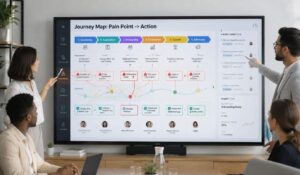
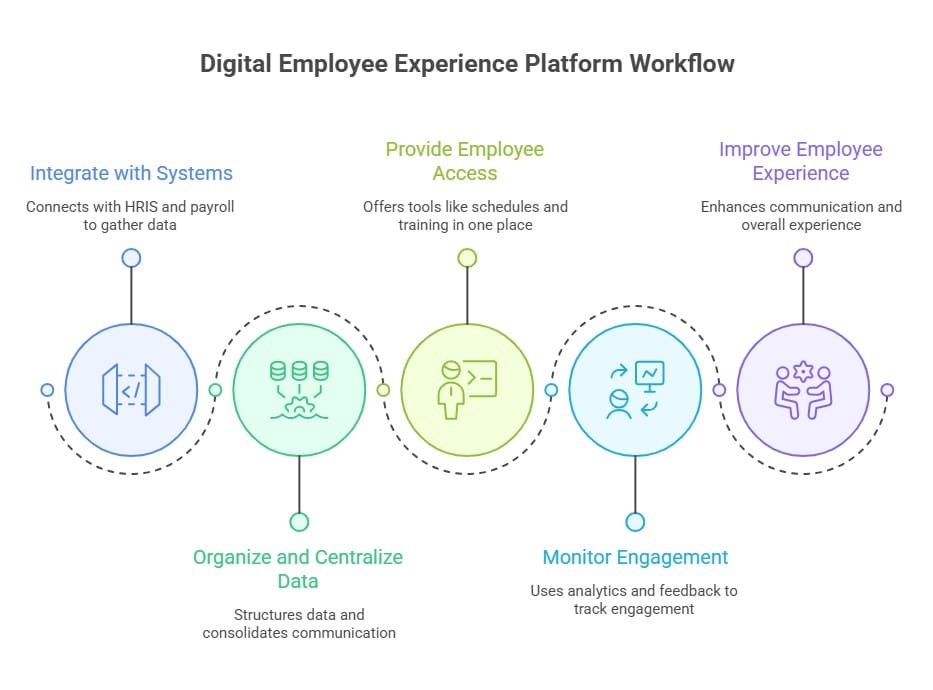
A digital employee experience platform works as a simple workflow. First, it integrates with systems like HRIS and payroll to collect employee data. Next, it organizes this data and centralizes communication in one mobile-first platform. Then, employees access tools like schedules, training, surveys, and recognition in one place. Finally, managers use analytics and feedback to monitor engagement and continuously improve communication and the overall employee experience.
The concept is closely related to what analysts call the employee experience which is the sum of every interaction an employee has with their employer across the entire employment lifecycle. A digital employee experience platform is the technology layer that shapes those interactions at scale. To understand this better, explore our guide on major components of an employee experience platform.
Top Digital Employee Experience Platforms
Explore leading digital employee experience platforms that help organizations improve communication, engagement, and workforce connectivity across deskless and distributed teams.
1. HubEngage
A unified digital employee experience platform that combines communication, engagement, recognition, learning, and productivity into one system. It helps organizations build a connected and informed workforce.
The platform brings together internal communications, social engagement, surveys, recognition, and AI-driven tools to boost participation and satisfaction. With multi-channel access, employees can stay informed and engaged from any location.
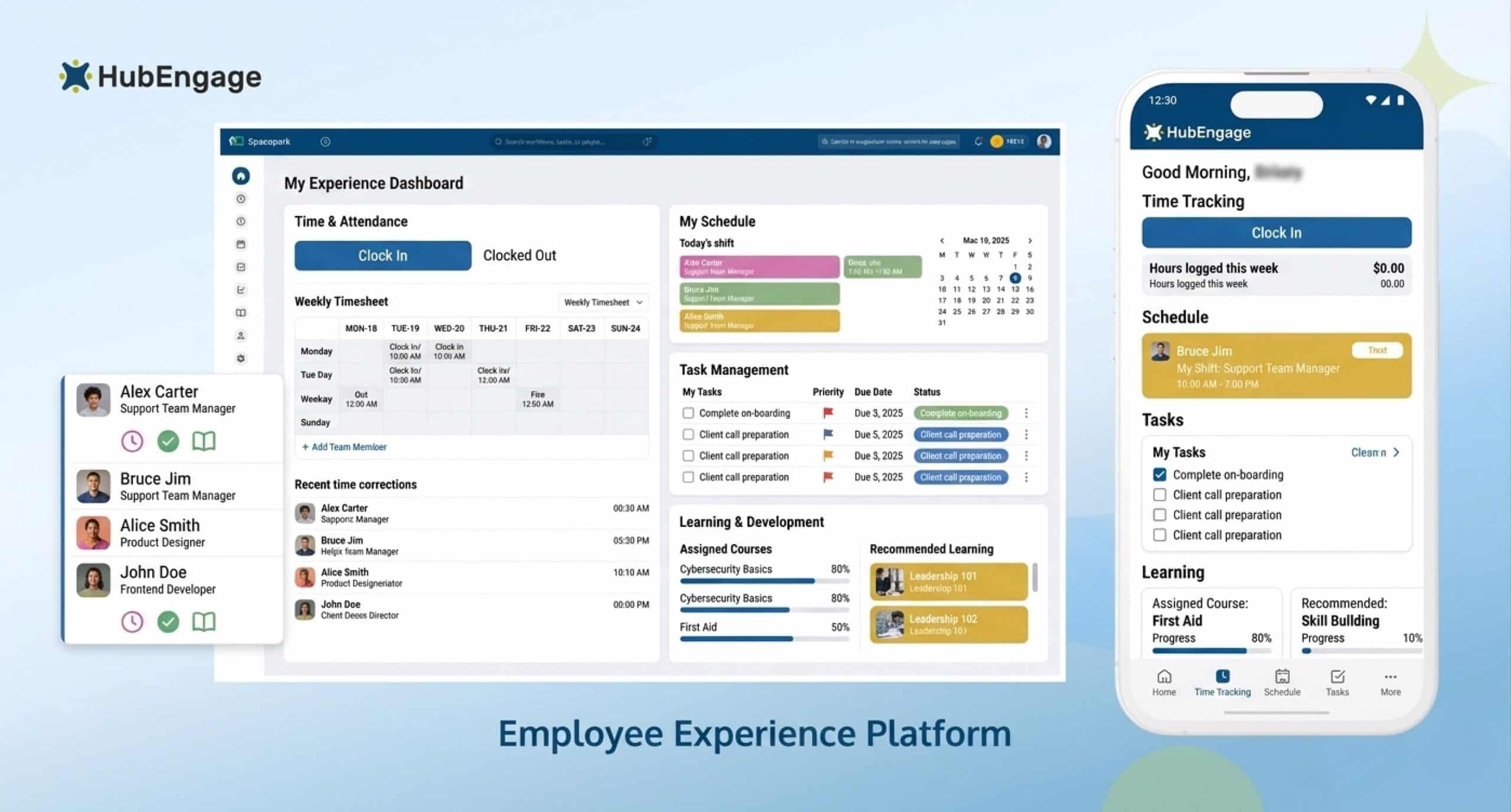
By consolidating multiple tools into one platform, HubEngage minimizes fragmentation and enhances the overall employee experience. It also scales easily with modular capabilities as business needs evolve.
Key Features:
- Scheduling solution for planning shifts across teams and locations
- Time tracking for attendance, work hours, and productivity insights
- Learning platform for training, upskilling, and knowledge sharing
- Task management to assign, track, and complete work efficiently
- Multi-channel access across mobile, web, email, SMS, and signage
- Real-time collaboration, messaging, and task workflows improve team productivity
- AI-powered chatbot delivers support, answers, and knowledge across modules
- Scalable modules expand capabilities as organization and workforce needs grow
Best for: Organizations looking to improve employee engagement, communication, and overall experience through a unified digital workplace.
Watch this review from Gareth Young, Director of Health, Safety, Environment, and Quality at EnerCorp, sharing his perspective on why he selected HubEngage instead of other solutions
“We were struggling to keep our frontline teams informed and engaged, especially across different locations. After using HubEngage, everything became simpler. Communication improved instantly, and employees started participating more in surveys and recognition programs. It gave us one place to connect, share updates, and listen to our people. Overall, it helped us build a more connected and engaged workforce.”
Explore more such real-world impact and success stories, you can hear from our customers describing how they improved employee experience using HubEngage.
2. Beekeeper
A mobile-first employee experience platform built for frontline teams, enabling seamless communication and task coordination in operational settings.
Key Features:
- Real-time messaging and updates
- Shift coordination tools
- Mobile-first interface
- Task and workflow management
- Safety and compliance communication
Best For: Retail, hospitality, and manufacturing teams.
3. Microsoft Viva
An enterprise-level employee experience platform tightly integrated with Microsoft 365, enabling communication, insights, and learning within tools like Teams.
Key Features:
- Microsoft Teams integration
- Employee insights and analytics
- Learning hub and knowledge sharing
- Wellbeing and productivity tools
- Content and topic management
Best For: Large enterprises already using Microsoft 365.
4. Workday Employee Experience
A platform that connects HR operations with employee interactions, using AI-based personalization to improve the overall employee journey.
Key Features:
- AI-driven personalization
- HR and talent management integration
- Employee journey tracking
- Advanced analytics dashboards
- Workforce planning tools
Best For: Enterprises with complex HR and workforce management needs.
5. Workvivo
A platform that blends social networking with employee experience tools to strengthen engagement, communication, and workplace culture.
Key Features:
- Social activity feed
- Recognition and rewards tools
- Communication hub
- Engagement analytics
- Integration capabilities
Best For: Organizations focused on culture and employee engagement.
6. Simpplr
An AI-powered intranet platform designed to improve internal communication and streamline knowledge sharing across organizations.
Key Features:
- AI-powered intranet
- Content and knowledge management
- Employee directory
- Smart search functionality
- Engagement analytics
Best For: Mid-to-large enterprises with desk-based employees.
7. Staffbase
A communication-focused platform that connects distributed teams through mobile apps, intranet solutions, and email campaigns.
Key Features:
- Employee communication app
- Email campaign management
- Mobile intranet
- Analytics dashboard
- Content publishing tools
Best For: Large distributed organizations.
8. Culture Amp
A data-focused platform that specializes in employee feedback, engagement surveys, and workplace culture insights.
Key Features:
- Engagement surveys
- Feedback and sentiment analytics
- Benchmarking tools
- Performance management
- Action planning tools
Best For: Enterprises focused on culture, feedback, and employee insights.
9. Qualtrics EmployeeXM
An advanced experience management platform that helps organizations measure and improve employee sentiment using data-driven insights.
Key Features:
- Experience analytics platform
- Sentiment analysis tools
- Advanced survey capabilities
- AI-driven insights
- Custom dashboards
Best For: Large enterprises focused on experience analytics and research-driven decision-making.
10. 15Five
A performance and engagement platform that emphasizes continuous feedback, goal tracking, and employee development.
Key Features:
- Continuous feedback system
- OKR and goal tracking
- Performance reviews
- Engagement surveys
- Manager effectiveness tools
Best For: Small to mid-sized businesses focused on performance and development.
Digital Employee Experience Platforms Key Features
Not every workplace experience platform is built the same. The strongest platforms in this category share a consistent set of capabilities that distinguish them from point solutions.
- Unified communications hub: Push notifications, announcements, chat, and newsletters delivered to every employee through a single channel.
- Employee satisfaction survey software: Pulse surveys, engagement polls, and sentiment tracking built directly into the platform, so feedback loops are continuous.
- Recognition and rewards: Peer-to-peer recognition, milestone celebrations, and incentive programs that improves company culture without requiring a separate tool.
- Training and onboarding: Microlearning modules, compliance training, and onboarding workflows accessible on mobile, reducing reliance on in-person sessions.
- Scheduling and task management: Shift visibility, task assignments, and operational updates very relevant for manufacturing, healthcare, and hospitality environments.
- Analytics and reporting: Real-time dashboards showing engagement scores, survey completion rates, communication reach, and workforce sentiment trends.
| Feature | Role | Impact |
| Unified communications hub | Sends updates, alerts, and messages in one place | Ensures all employees stay informed in real time |
| Employee survey tools | Collects feedback through polls and surveys | Helps measure engagement and improve decisions |
| Recognition and rewards | Enables peer recognition and incentives | Boosts morale and strengthens company culture |
| Training and onboarding | Delivers learning and onboarding content on mobile | Speeds up employee readiness and skill development |
| Scheduling and task management | Manages shifts, tasks, and daily operations | Improves productivity, especially for frontline teams |
| Analytics and reporting | Tracks engagement and communication metrics | Provides insights to improve employee experience |
The best digital employee experience platforms do not require employees to toggle between five different apps. Everything lives in one place, accessible from any device.
Implementation and Integration
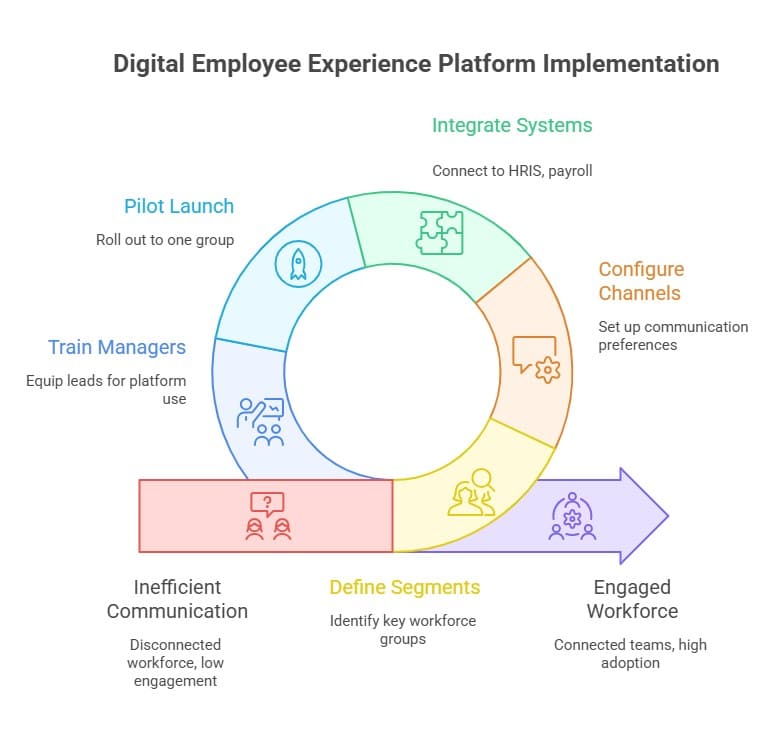
Deploying a digital employee experience platform does not require a multi-year IT project. Most modern platforms are designed for rapid deployment, with implementation timelines ranging from a few weeks to a few months depending on organizational size and complexity. Here is how a typical implementation unfolds:
- Define your employee segments: Identify which workforce groups need the platform most whether it is deskless workers, shift-based teams, multilingual staff, or distributed departments.
- Configure communication channels: Set up announcement feeds, push notification rules, and content permissions based on role, location, or department.
- Integrate with existing systems: Connect the platform to your HRIS, payroll system, and scheduling tools via API. Most platforms offer pre-built connectors for common systems.
- Launch with a pilot group: Roll out to one department or location first. Gather feedback, measure adoption, and adjust before the full launch.
- Train managers and content owners: Equip team leads with the ability to post updates, run surveys, and view engagement data for their teams.
Understanding the Benefits of a Company Intranet is important as a digital employee experience platform often replaces or supersedes traditional intranet tools by making content mobile-first and interactive rather than static.
Pricing and Deployment Options
Pricing for a digital employee experience platform varies based on the number of employees, the features required, and the deployment model. Let us understand this with a simple table added below
| Deployment Model | Description | Best For | Key Benefit |
| Cloud-hosted (SaaS) | Vendor manages hosting, updates, and security | Most organizations | Fast deployment and low IT effort |
| Private Cloud | Dedicated environment with strict data control | Healthcare, regulated industries | Better data security and compliance |
| Hybrid | Mix of on-premise and cloud systems | Large enterprises | Flexible control with scalability |
While evaluating a digital employee experience platform is the most important pricing consideration is the total cost compared to the turnover and disengagement costs the platform is designed to reduce.
Conclusion
A digital employee experience platform is the infrastructure that connects your people to your organization, especially the frontline workers who are very difficult to reach. With the right platform like HubEngage, you can reduce turnover, improve communication, and give your HR team the data they need to act.
Check out how HubEngage unifies employee communications, engagement, and workforce operations to connect your entire workforce in one platform, from the plant floor to the executive team. Ready to get started? Get a demo to explore this tool.
Digital Employee Experience Platforms FAQs
What is the difference between a digital employee experience platform and an intranet?
A traditional intranet is a static, desktop-based content repository. A digital employee experience platform is dynamic, mobile-first, and interactive. It delivers personalized content, collects real-time feedback through employee satisfaction survey software, supports two-way communication, and provides analytics. Most intranets do not serve well for deskless or frontline workers.
Do digital employee experience platforms work for frontline and deskless workers?
Yes and this is precisely where they deliver the most value. Frontline workers in manufacturing, healthcare, and hospitality do not connect well with company communications. A digital employee experience platform with a mobile app ensures these employees receive the same information, recognition, and operational updates as office-based staff.
How long does implementation typically take?
Most organizations can deploy a digital employee experience platform within four to eight weeks for a full rollout, with pilot groups going live sooner. The timeline depends on the number of integrations required and the complexity of the employee population structure.
Is a digital employee experience platform the same as employee engagement software?
Employee engagement software is one component of a digital employee experience platform. A full platform also includes communications, operations, training, and analytics thereby making it broader than engagement tools alone. Think of employee engagement software as one module within the larger ecosystem.
How do you measure success after deploying a digital employee experience platform?
Key metrics include platform adoption rates, survey participation rates, engagement scores over time, internal communication open rates, and most importantly downstream business outcomes like turnover reduction and productivity improvements. Most platforms provide built-in dashboards that surface these metrics automatically.
Related Links:
employee experience platforms | employee experience platform | employee experience tool | employee experience solution | employee experience software | employee engagement vs employee experience | employee experience after covid-19 | employee experience