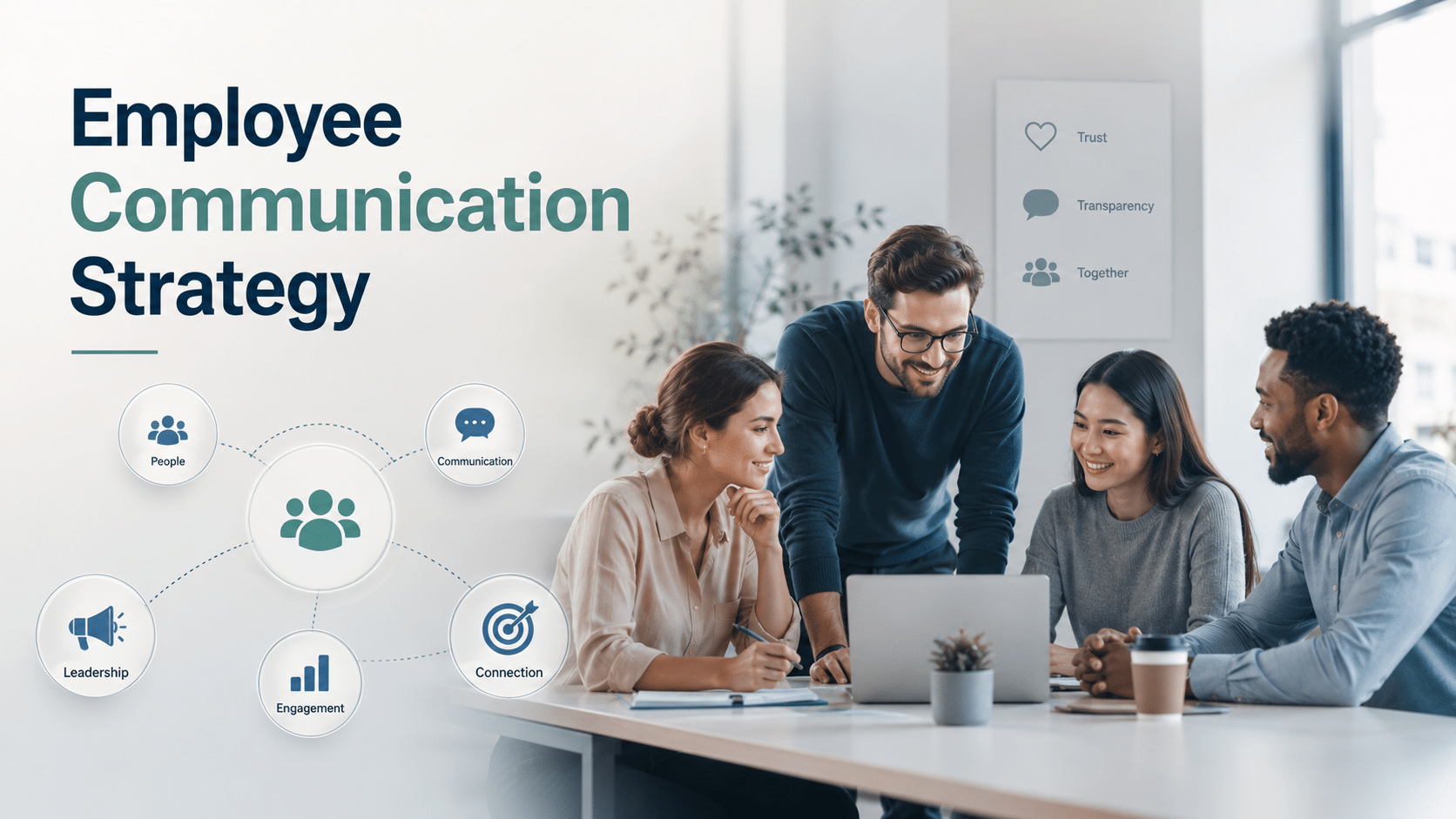
Organizations today have more communication tools, more workplace technologies, and more ways to reach employees than ever before. However, despite these advances, many leaders are asking the same question: Why do employees still feel disconnected?
As we move further into 2026, communication challenges are evolving rapidly. AI is changing how employees work, digital channels are multiplying, and employee expectations continue to rise. At the same time, organizations are trying to strengthen culture, improve engagement, and create meaningful employee experiences.
This week, we bring to you some of the most important industry trends shaping employee communication strategy in 2026. From leadership conversations and AI adoption to communication fragmentation and strategic internal communications, these insights highlight what organizations should focus on to create a more connected workforce.
Key Takeaways
- Employee communication in 2026 is shifting from information sharing to meaningful connection, with employees expecting greater transparency, accessibility, and engagement from leaders.
- Leadership visibility is becoming a key driver of employee trust and alignment, making CEO town halls, AMAs, and direct communication channels more important than ever.
- Successful internal communication strategies focus on personalization, relevance, and mobile-first experiences, rather than simply increasing message volume.
- AI is improving workplace productivity and communication efficiency, but organizations must balance automation with authentic human interactions to maintain employee engagement.
- Unified employee communication platforms are replacing fragmented tools, helping organizations improve communication reach, increase active users, and create a more connected workforce.
- Internal communications is now a strategic business function, directly influencing employee experience, engagement, culture, retention, and overall business performance.
Trend #1: Employees Want More Meaningful Conversations With Leadership
One of the strongest trends we continue to see is the growing demand for leadership accessibility.
Employees no longer want communication to be limited to company-wide announcements or quarterly updates. Instead, they want opportunities to hear directly from leaders, ask questions, and understand the reasoning behind key business decisions.
CEO town halls, Ask-Me-Anything sessions, leadership videos, and open forums are becoming essential communication channels because they help bridge the gap between leadership vision and employee understanding.
When employees are encouraged to ask thoughtful questions, they gain greater clarity around organizational priorities, business direction, and their role in driving success.
Moreover, organizations that promote transparent leadership communication often experience stronger employee trust and alignment. From a measurement perspective, leaders should closely track:
- Engagement participation rate
- Communication reach
- Employee satisfaction scores
These metrics often reveal how effectively leadership communication is resonating across the organization.
Trend #2: Internal Communications Is Evolving Faster Than Ever
The internal communications landscape is changing significantly. Communication teams are now managing AI-generated content, multi-channel communication, personalized messaging, and increasing expectations from employees. Meanwhile, inboxes continue to become more crowded.
As a result, organizations are realizing that simply sending more messages does not improve communication effectiveness. Instead, employees expect relevant, timely, and personalized information delivered through the right channels.
What we are seeing across organizations is a shift from volume-based communication to value-based communication. Successful communicators are focusing on:
- Audience segmentation
- Personalized content experiences
- Manager enablement
- Communication analytics
- Mobile-first communication
Consequently, active users and communication reach have become critical indicators of communication success. Organizations that focus on relevance rather than frequency are seeing stronger employee engagement and content consumption.
Trend #3: AI Is Improving Productivity, But Human Connection Still Matters
Artificial intelligence is undoubtedly transforming the workplace. From content creation and workflow automation to employee support and knowledge management, AI is helping organizations improve efficiency at scale.
However, there is growing discussion around whether increased AI usage could unintentionally weaken human connection at work.
Employees still value authentic conversations, peer relationships, leadership visibility, and meaningful workplace interactions. Technology can streamline processes, but it cannot replace trust.
Therefore, organizations must ensure that AI enhances communication rather than becoming a substitute for genuine employee engagement.
We believe the most successful organizations will be those that combine technological innovation with human-centered communication practices. To monitor this balance effectively, organizations should regularly review:
- Employee satisfaction scores
- Engagement participation rates
- Employee feedback results
- Survey completion rates
These indicators provide valuable insight into how connected employees truly feel.
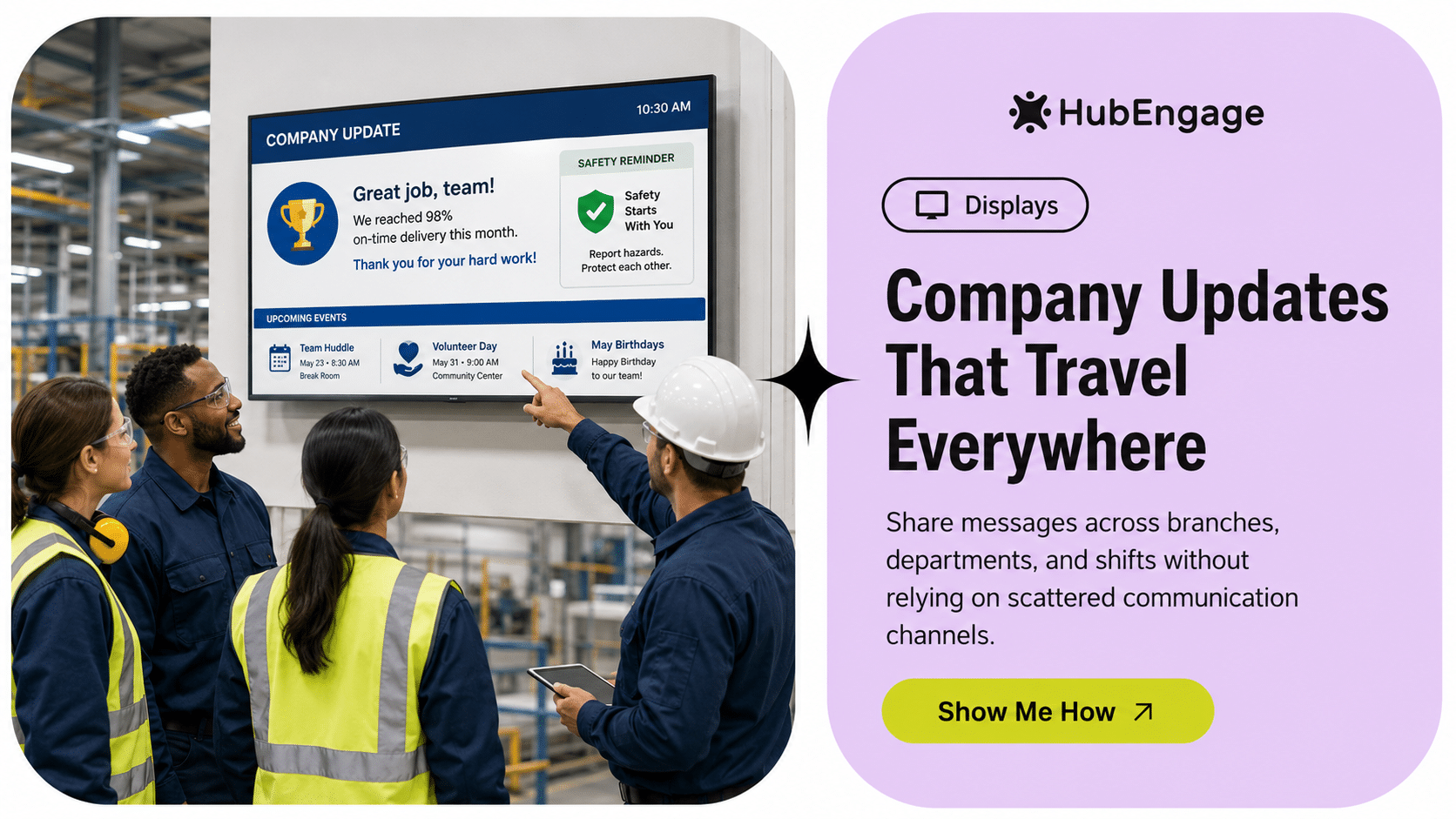
Trend #4: Team Communication Platforms Are Becoming Essential Employee Hubs
As communication channels continue to expand, employees increasingly need a central destination for workplace information.
Many organizations are moving away from disconnected communication systems and toward unified employee platforms. A modern communication platform allows organizations to bring together:
- Company news
- Leadership updates
- Recognition programs
- Employee surveys
- Resources and documents
- Team collaboration
- Employee communities
When employees can access information from a single location, communication becomes simpler and more effective.
Furthermore, centralized communication improves visibility, accessibility, and engagement. Organizations that adopt integrated communication experiences often report improvements in:
- Active users
- Communication reach
- Survey completion rates
- Employee participation
As workplaces become increasingly digital, centralized communication experiences will continue to play a critical role in employee engagement strategies.
Trend #5: Communication Fragmentation Is Becoming a Serious Business Challenge
Ironically, many organizations are struggling with communication because they have too many communication tools.
Employees often receive updates through email, chat applications, collaboration platforms, project management systems, intranets, and mobile apps.
Consequently, important messages are frequently missed. This growing communication fragmentation creates several challenges:
- Information silos
- Notification fatigue
- Reduced message visibility
- Employee frustration
- Lower productivity
What we think is simple: more tools do not automatically create better communication. In fact, when communication becomes fragmented, employees spend more time searching for information and less time acting on it.
This is why organizations should regularly evaluate communication reach, employee satisfaction scores, and platform adoption metrics to identify communication gaps before they impact business outcomes.
Trend #6: Internal Communications Is Becoming a Strategic Business Function
Perhaps the most important trend emerging in 2026 is the growing recognition that internal communications directly influences business performance.
Forward-thinking organizations are no longer viewing communication as an administrative function. Instead, they are treating communication as a strategic driver of:
- Employee engagement
- Employee experience
- Organizational culture
- Brand advocacy
- Business alignment
- Change management
Effective communication helps employees understand company goals, align with organizational priorities, and contribute more effectively to business success.
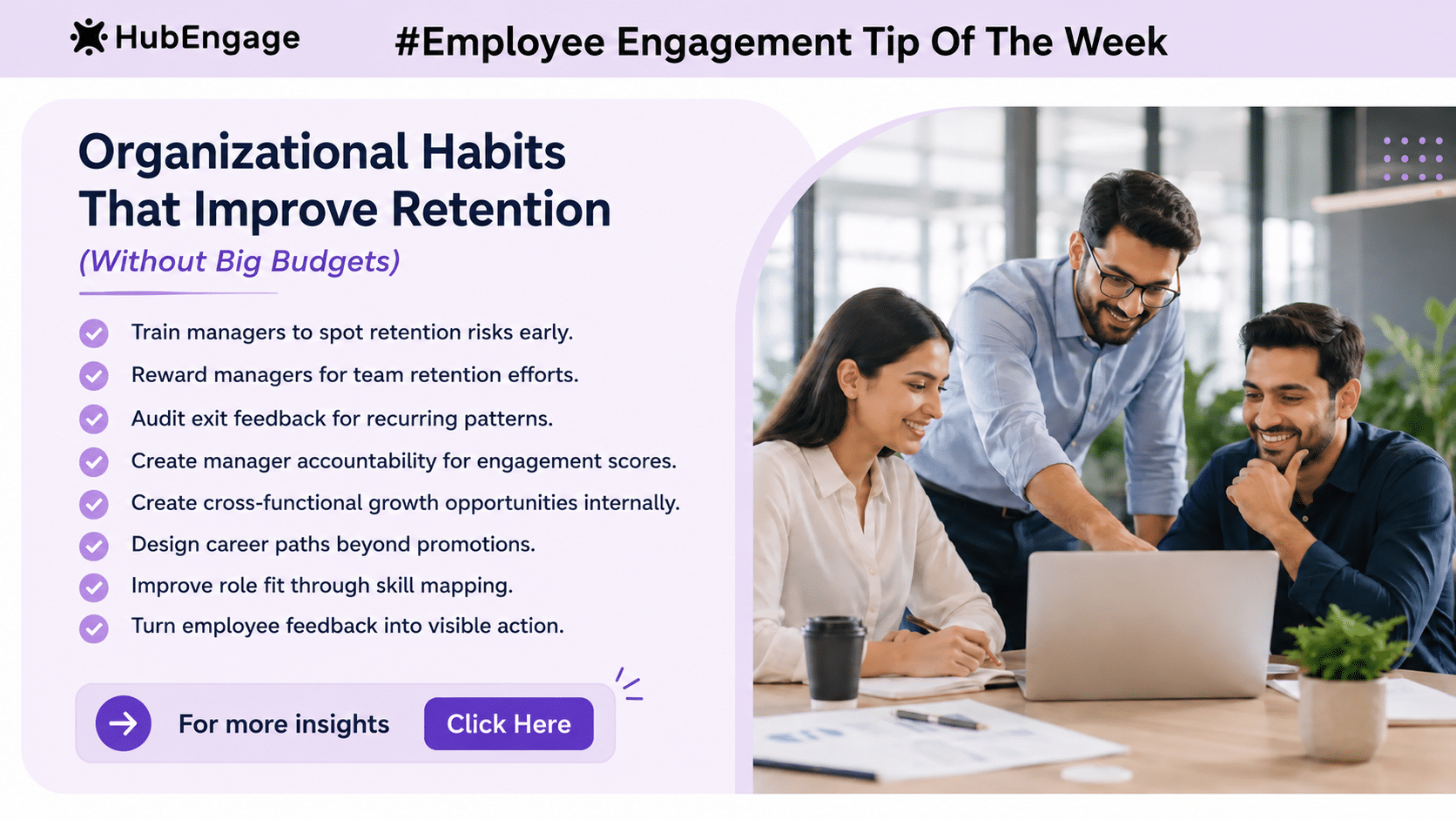
Moreover, strong communication experiences often lead to higher employee satisfaction, stronger engagement, and improved retention.
As a result, communication leaders are increasingly partnering with HR leaders, executives, and business stakeholders to create measurable business impact. Key metrics include:
- Engagement participation rate
- Active users
- Employee satisfaction scores
- Communication reach
- Survey completion rates
These indicators help demonstrate the true value of internal communication investments.
What we are seeing at HubEngage?
At HubEngage, we work with organizations that are actively trying to improve employee engagement, communication effectiveness, and employee experience.
What we are seeing is that successful organizations are focusing on simplicity, accessibility, and connection.
Rather than adding more communication channels, they are creating unified employee experiences that bring communication, engagement, recognition, feedback, and leadership visibility together.
We believe the future belongs to organizations that can create communication experiences that are both digital and human.
Employees want easy access to information. They want visible leadership. They want recognition. They want opportunities to provide feedback. Most importantly, they want to feel connected to the organization they work for.
Organizations that deliver these experiences will be better positioned to improve engagement participation rates, increase active users, strengthen employee satisfaction scores, improve survey completion rates, and maximize communication reach.
Final Thoughts
The trends shaping employee communication in 2026 all point toward one common theme: connection matters more than ever.
Whether it is leadership visibility, AI adoption, communication technology, employee feedback, or internal communication strategy, organizations must focus on creating experiences that help employees feel informed, involved, and valued.
While communication channels will continue to evolve, the goal remains the same. Employees want clear communication. Employees want transparency. Employees want connection.
Organizations that prioritize a strong employee communication strategy today will be far better equipped to build engaged, aligned, and high-performing workforces tomorrow.
Ready to strengthen employee communication across your organization?
Discover how HubEngage helps organizations improve communication reach, boost engagement participation, increase active users, and create meaningful employee experiences through one unified platform.