Improving employee productivity is not about simply working faster. Employees perform best when they have clear goals, reliable internal communications tools, accessible information, supportive managers, and flexibility. These needs are especially important for distributed workforces like remote teams as well as frontline employees in stores, factories, hospitals, warehouses, and field locations. When communication, schedules, training, tasks, and workplace resources are scattered across systems, employees waste time searching instead of completing meaningful work. To improve employee productivity, organizations should reduce these everyday barriers. Our blog explores common productivity challenges and shares practical strategies to improve performance across frontline, remote, and distributed teams.
Key Takeaways:
- Employee productivity improves when organizations remove workplace friction, not just when employees work harder.
- Disconnected tools, scattered information, and communication silos are some of the biggest barriers to productivity.
- A unified employee experience platform helps employees find information, complete tasks, and stay aligned from one central hub.
- AI-powered search and chatbots reduce time spent looking for answers and support faster decision-making.
- Social collaboration tools help employees share knowledge, solve problems quickly, and promote best practices across teams.
- Continuous feedback through search analytics and pulse surveys helps organizations identify productivity blockers and improve employee productivity over time.

Why high employee productivity is important?
Employees are one of the most important parts of any organization. Their ability to complete tasks, solve problems, serve customers, and collaborate directly affects business performance. A research by Deloitte shows that employees satisfied with their experience at work are almost 2 times more productive. The increase in productivity is due to less communication friction using modern technological solutions.
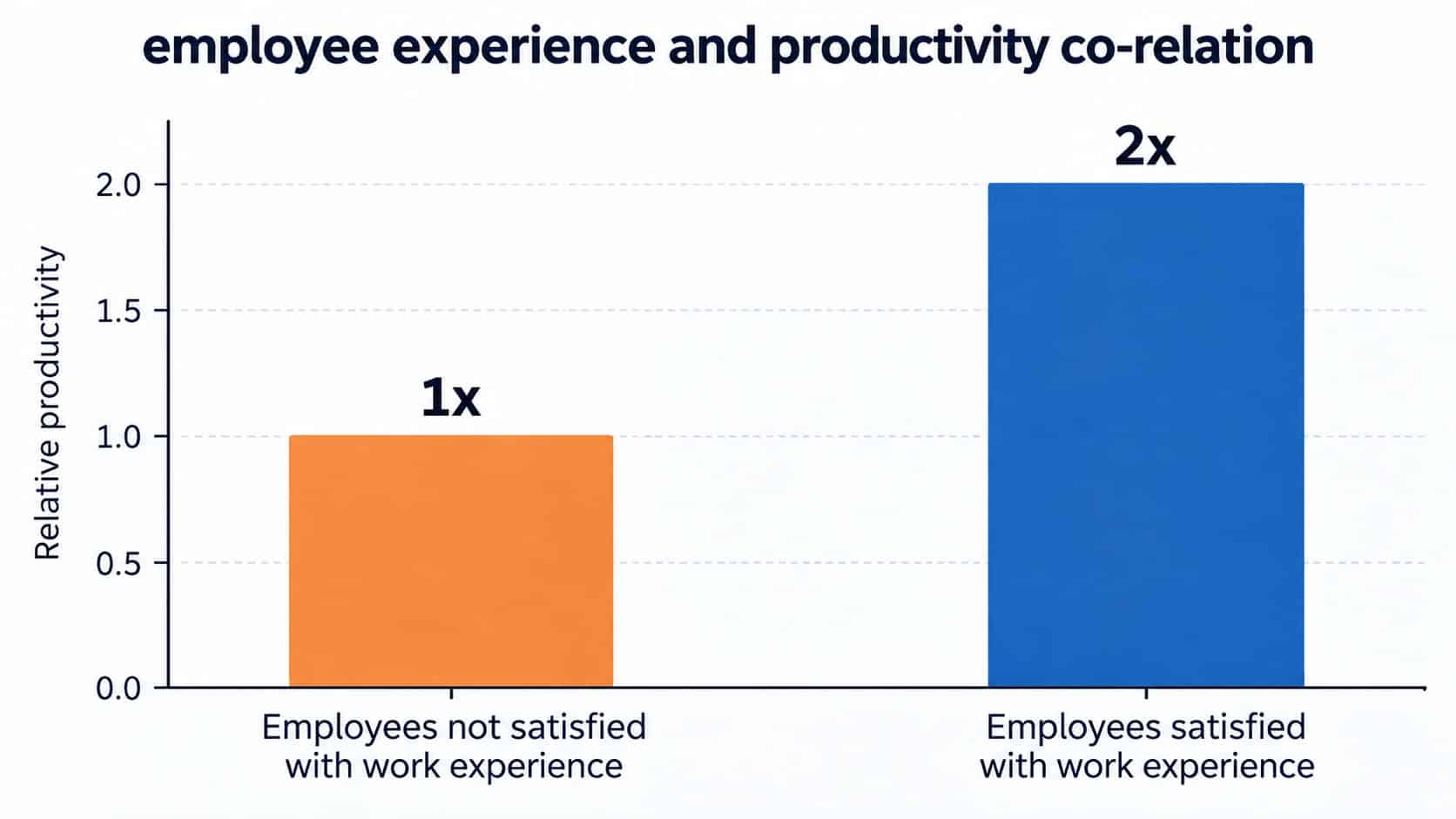
Fig. 2: A satisfying work experience is linked to roughly double the productivity. Source: Deloitte.
Employee productivity measures how effectively employees use their time and resources to create useful business outcomes. High productivity can help organizations:
- Complete work faster.
- Improve customer service.
- Reduce unnecessary labor costs.
- Meet operational goals.
- Better employee experiences.
- Support business growth.
What causes Low Employee Productivity?
Before trying to improve employee productivity, organizations need to understand what is causing productivity problems. Here are three common causes:
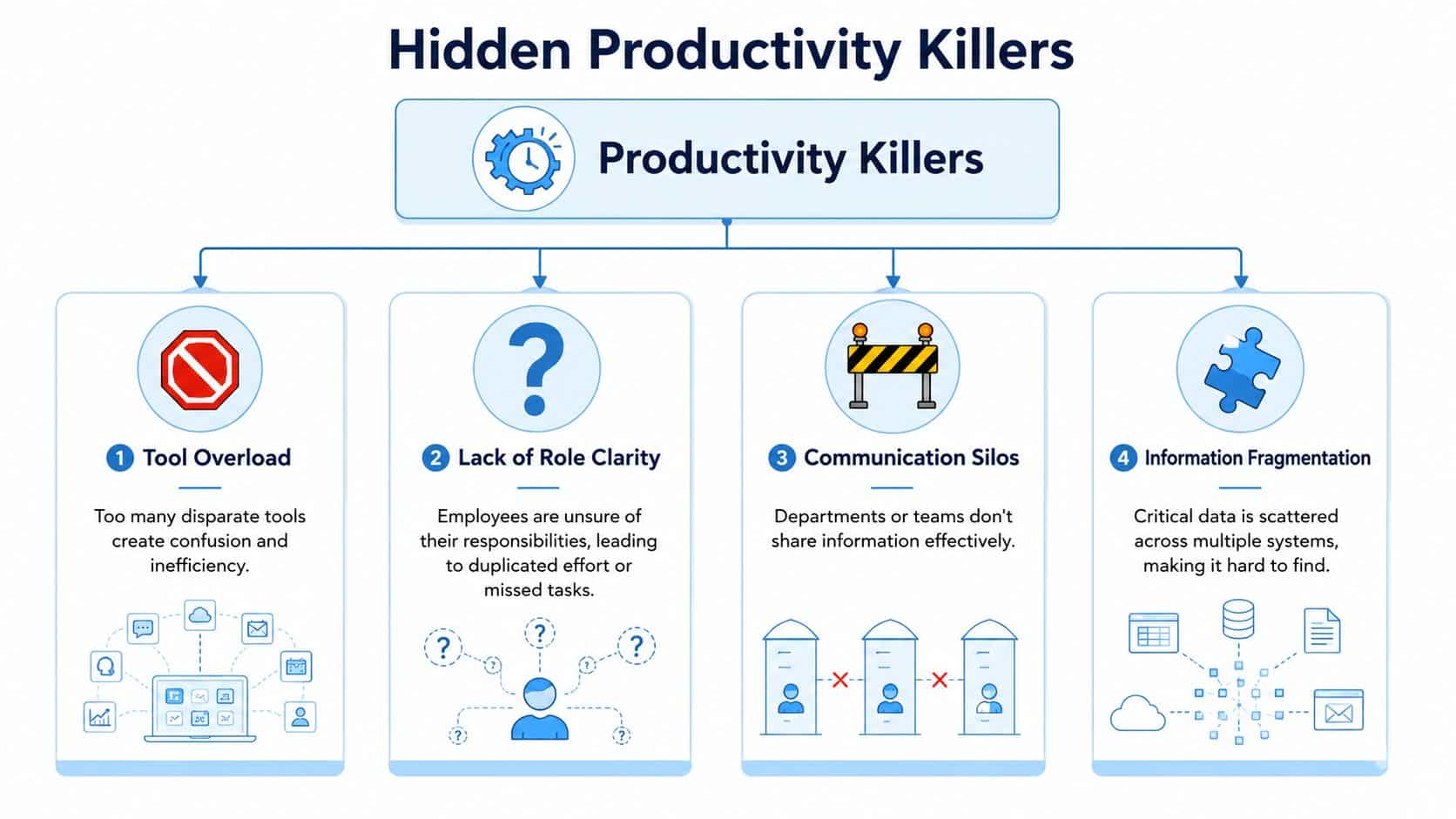
- Tool overload: Employees jump between chat, email, file systems, HR tools, learning systems, scheduling apps, and team workspaces.
- Information fragmentation: Policies, procedures, forms, and updates live in different places with inconsistent naming and permissions.
- Communication silos: Teams publish updates in their own channels, which shows a lack of communication at work outside their immediate group.
- Role confusion: When ownership is vague, work gets duplicated, delayed, or pushed into unnecessary meetings.
What factors impact employee productivity?
Many workplace conditions can affect productivity. Here are four major factors that have a big impact on the productivity of the team.
| Productivity factor | What organizations should provide |
| Work environment | Easy access to tools, information, and support |
| Defined goals | Clear responsibilities, priorities, and expectations |
| Employee wellness | Manageable workloads, flexibility, and time to recover |
| Training | Relevant learning that helps employees perform their jobs |
Improving these areas can create a stronger foundation for productivity across office, frontline, remote, and deskless teams.
10 Ways to Improve Employee Productivity
Once you understand the causes of low productivity, you can begin removing the gaps that prevent employees from performing their best. Below are the best strategies to improve productivity:
1. Set Clear Goals and Increase Transparency
Clear goals, ownership, deadlines, success measures, and transparent communication help employees prioritize effectively and connect daily responsibilities with broader organizational objectives.
- Improves focus and accountability.
- Reduces uncertainty.
- Aligns employees with business goals
2. Improve Employee Onboarding
A structured onboarding process gives new hires the knowledge, tools, relationships, and confidence needed to understand their roles and become productive faster.
- Reduces confusion and delays.
- Builds early employee confidence.
- Accelerates time to productivity.
3. Improve Team Communication
Delivering relevant information through a multi-channel communication platform ensures employees understand priorities, avoid duplicated work, respond faster, and stay connected wherever they work.
- Reduces communication delays.
- Prevents avoidable mistakes.
- Keeps distributed teams aligned.
4. Encourage Flexible Working and Time Off
Flexible schedules and adequate time off help employees recover, manage responsibilities, prevent burnout, and maintain consistent performance across remote and frontline work environments.
- Supports employee wellbeing.
- Reduces burnout risk.
- Sustains long-term productivity.
5. Unified Employee Experience Platforms
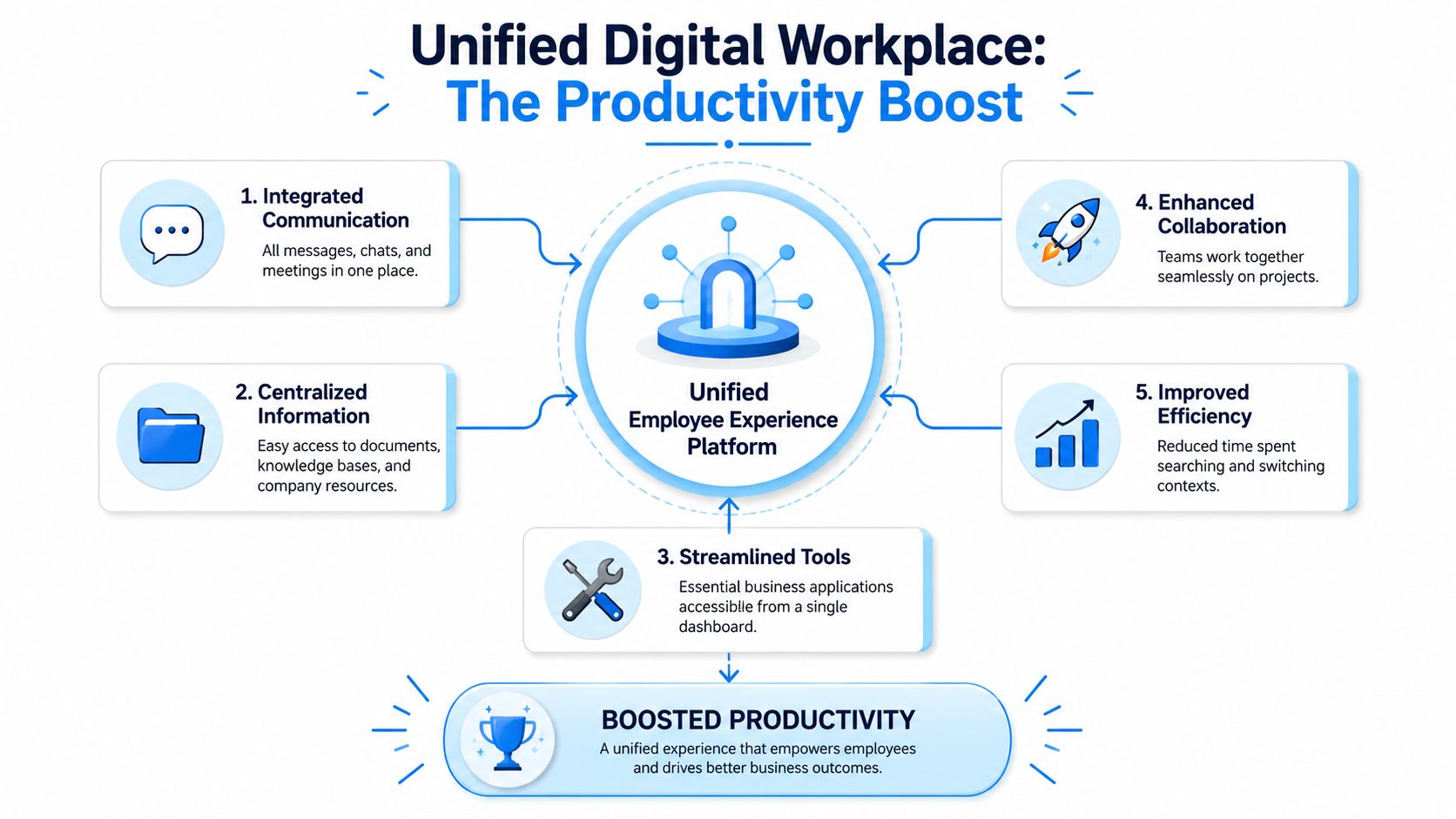
With such platforms around, you can connect communication, training, recognition, surveys, scheduling, tasks, and workplace resources in one accessible environment, helping distributed teams work efficiently and stay connected.
- Reduces time spent searching for information.
- Improves communication across locations and roles.
- Increases productivity, engagement, and alignment.
6. Encourage Team Collaboration
Accessible collaboration spaces help employees exchange knowledge, solve problems, share best practices, support coworkers, and strengthen connections across departments and locations.
- Speeds up problem-solving.
- Improves knowledge sharing.
- Strengthens team relationships.
7. Chatbots for fast employee support
Using a chatbot for internal employees provide instant answers to common employee questions, reducing delays and helping frontline, remote, and distributed teams access workplace information whenever they need it.
- Faster answers and fewer support delays.
- Reduced workload for HR and managers.
- Improved employee productivity and satisfaction.
8. Focus on Employee Training
Continuous, accessible training helps employees build skills, understand processes, use technology confidently, and complete responsibilities accurately without disrupting daily operations.
- Improves employee capability.
- Reduces process errors.
- Supports consistent performance.
9. Ask Employees for Feedback
Regular employee feedback reveals inefficient processes, communication gaps, technology challenges, and workplace barriers, helping leaders make targeted improvements that support productivity.
- Identifies hidden productivity barriers.
- Improves workplace processes.
- Strengthens employee engagement.
10. Recognize Employee Contributions
Timely recognition shows employees their work matters, reinforces valuable behaviors, boosts morale, and makes achievements visible across remote, frontline, and distributed teams.
- Increases employee motivation.
- Reinforces positive performance.
- Strengthens workplace culture.
Improve Team Productivity With HubEngage
Our employee experience platform brings communication, engagement, knowledge, training, recognition, surveys, task management, time tracking, and employee scheduling software in one connected digital environment.
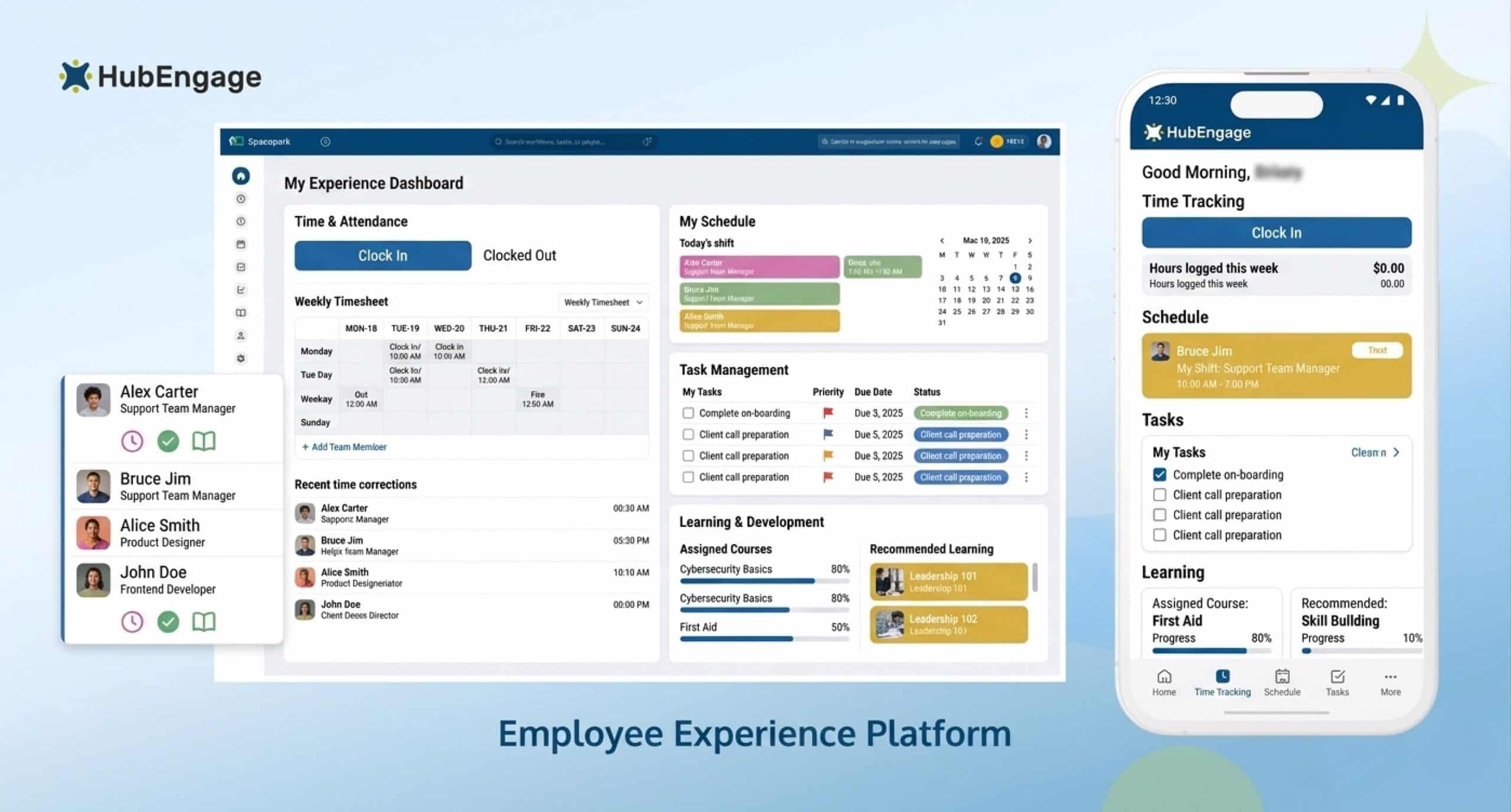
Employees can access workplace resources, AI-powered assistance, training content, surveys, communities, recognition programs, schedules, and tasks from mobile devices. This helps frontline and remote teams stay connected through channels that match how they work, without relying solely on email or traditional intranets.
By bringing essential employee experiences together, this tool streamlines workflows, reduces tool sprawl, and improves accessibility. With this employees can focus on productive work while enabling organizations to manage operations more efficiently.
Conclusion
Organizations looking to improve employee productivity should focus on making work easier rather than simply expecting employees to do more. Clear goals, balanced workloads, better communication, useful training, collaboration, recognition, and employee feedback all help remove everyday productivity barriers.
For distributed workforces, connecting these experiences in one accessible digital workplace like HubEngage can make an even bigger difference. Explore how the our employee experience platform can support a more connected and productive workforce by taking a personalized demo.
FAQs on Improve Employee Productivity
1. What factors affect your team’s productivity?
Work environment, workload, clear goals, communication, employee wellness, motivation, training, technology, and manager support all influence productivity, especially for distributed teams needing reliable workplace information access.
2. How does AI improve employee productivity?
AI improves employee productivity by finding information, summarizing content, answering workplace questions, automating repetitive tasks, and delivering relevant resources quickly across distributed teams and locations.
3. What is the 3-3-3 rule for productivity?
The 3-3-3 productivity rule recommends three hours of focused work, three shorter urgent tasks, and three maintenance activities, helping employees prioritize meaningful work efficiently.
4. What are the four pillars of productivity?
A supportive work environment, clearly defined goals, employee wellness, and effective training, are the four pillars of productivity. These enable employees to perform consistently and efficiently.
5. Does employee experience impact employee productivity?
Employee experience impacts productivity by improving access to information, communication, learning, task completion, and support, reducing workplace friction for frontline and remote employees.
Related Links
internal communications tools | lack of communication at work | multi-channel communication platform | chatbot for internal employees | employee scheduling software