
Having a transparent work environment means giving employees clear, timely, and useful information. It can be company decisions, policies, expectations, changes, and direction. However, this does not mean sharing every confidential detail with everyone. Workplace Transparency is especially important for distributed teams because remote employees may miss informal office conversations. While frontline and deskless workers may have limited access to email or meetings. These gaps can lead to confusion between what leaders communicated and things employees understand. In this blog, we will tell you its importance, key benefits, practical examples, and useful strategies of employee experience management to help organizations build a more open and connected workplace.
Key Takeaways
- Workplace transparency gives employees the information and context needed to understand decisions and do their jobs.
- Frontline and remote employees need equal access to company news, policies, feedback channels, and leadership updates.
- Four areas of workplace transparency is communication, information access, accountability, and leadership.
- Employee surveys, communication data, turnover, recurring questions, and feedback can help measure transparency.
- Transparency should be balanced with privacy, security, confidentiality, and business requirements.

Importance of Workplace Transparency in the Workplace
Workplace transparency builds a shared understanding between employees, managers, and leadership. This is important when employees work across different locations, shifts, departments, or time zones.
A Trust Survey by PWC in 2024 found that 86% of business executives thought employee trust was high, while only 67% of employees said they highly trusted their employer. A 19-point gap shows a gap between the leaders and employees. Leaders think they are being clear whereas, some employees feel they are being managed at a distance. In practice, workplace transparency is a disciplined system for sharing what people need to know, in a way they can access and question.
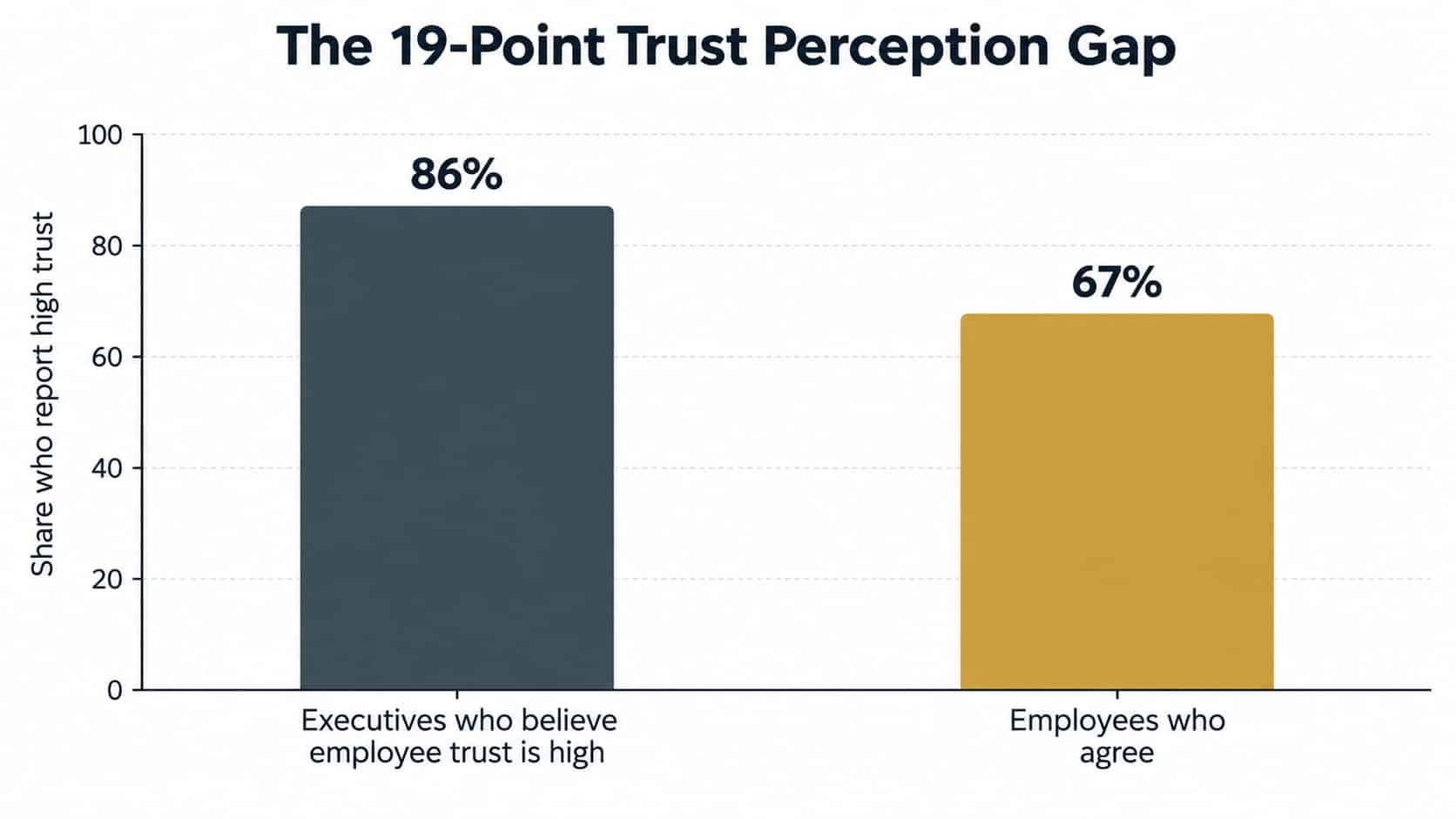
Fig. 1: Leaders and employees see workplace trust very differently. Source: Glassdoor 2024 Trust Survey.
What happens due to lack of workplace transparency?
Look for the below warning signs to spot transparency gaps early and take the right action step.
1. Communication breakdowns:
Spot conflicting messages early to reduce confusion, repeated questions, errors, and unnecessary manager dependence quickly.
2. Lower employee engagement:
Watch for employees feeling excluded, as poor transparency can weaken participation, motivation, and workplace connection.
3. Reduced innovation and creativity:
Address unclear priorities so employees feel confident sharing ideas, improvements, concerns, and creative solutions openly.
4. Lower trust:
Communicate important changes directly before rumors spread and employees begin questioning official information or leadership.
5. Ethical and reputational risks:
Identify hidden issues sooner by encouraging openness, accountability, and timely reporting of questionable workplace practices.
Components of Workplace Transparency
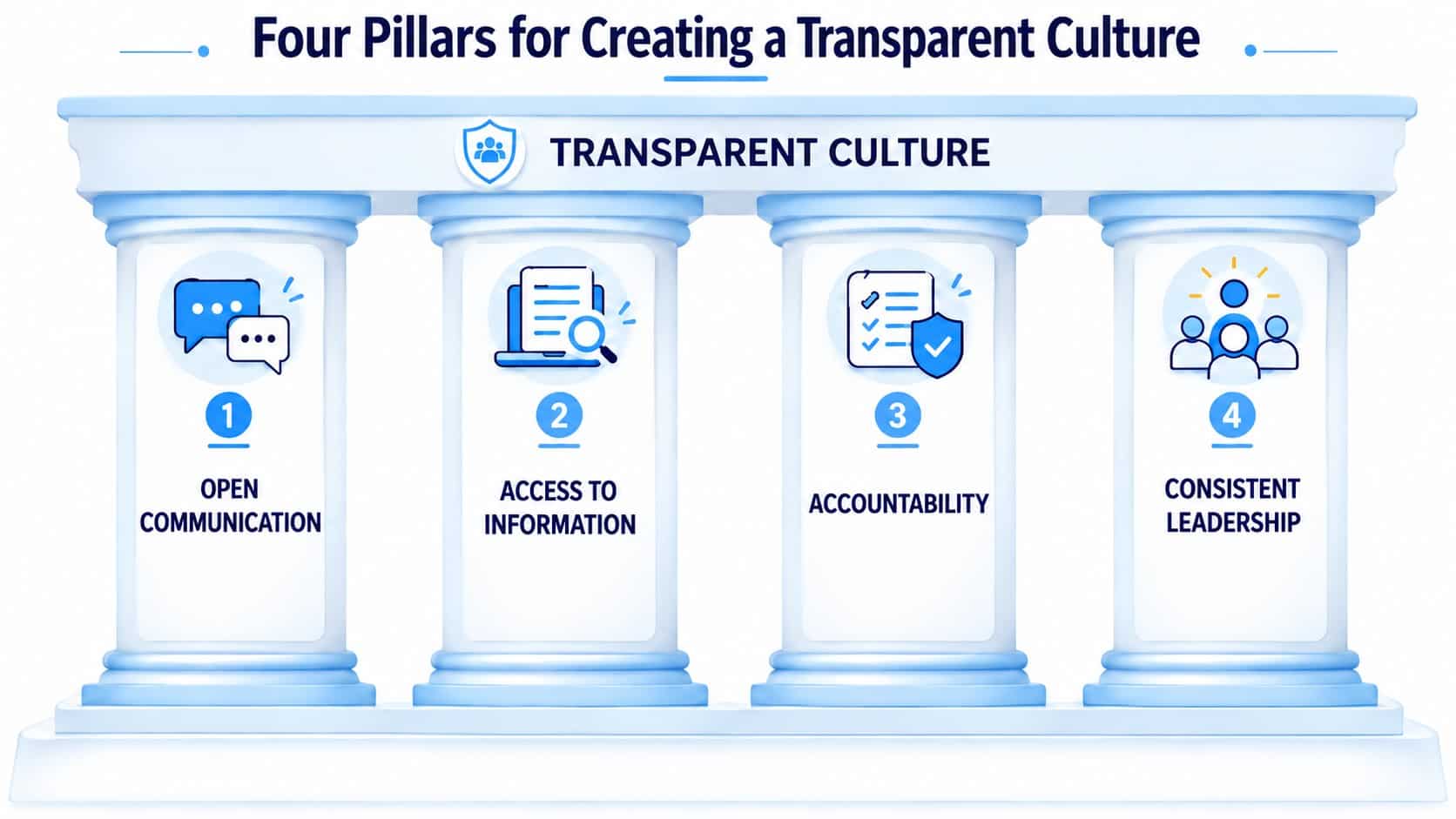
Below are the four pillars which are needed to create a transparent work culture which every organization must check out:
1. Communication
Share clear updates through channels employees use, explaining what is changing and why it matters.
2. Information Access
Make policies, schedules, training, and company information easy to find across devices and work locations.
3. Accountability
Follow through on employee feedback, explain actions taken, and communicate clearly when changes cannot happen.
4. Leadership
Leaders should communicate regularly, explain decisions, acknowledge uncertainty, and create space for employee questions openly.
Workplace Transparency Examples
Below are practical workplace transparency examples for distributed teams:
| Workplace situation | Correct Approach |
| Company policy changes | Explain what changed, why, when it starts, and where employees can ask questions. |
| Employee scheduling | Make schedules, shift changes, open shifts, and scheduling rules easy for workers to access. |
| Organizational changes | Explain the business reason, employee impact, timeline, and next steps. |
| Employee feedback | Share survey findings and communicate which actions will follow. |
| Performance management | Give employees clear goals, expectations, KPIs, and regular feedback. |
| Remote work policies | Document eligibility, expectations, communication rules, and performance standards. |
| Safety procedures | Give frontline teams immediate mobile access to current procedures and alerts. |
| Business performance | Regularly communicate important wins, challenges, priorities, and progress. |
Benefits of Workplace Transparency
Explore the key benefits of workplace transparency and see how it supports distributed teams.
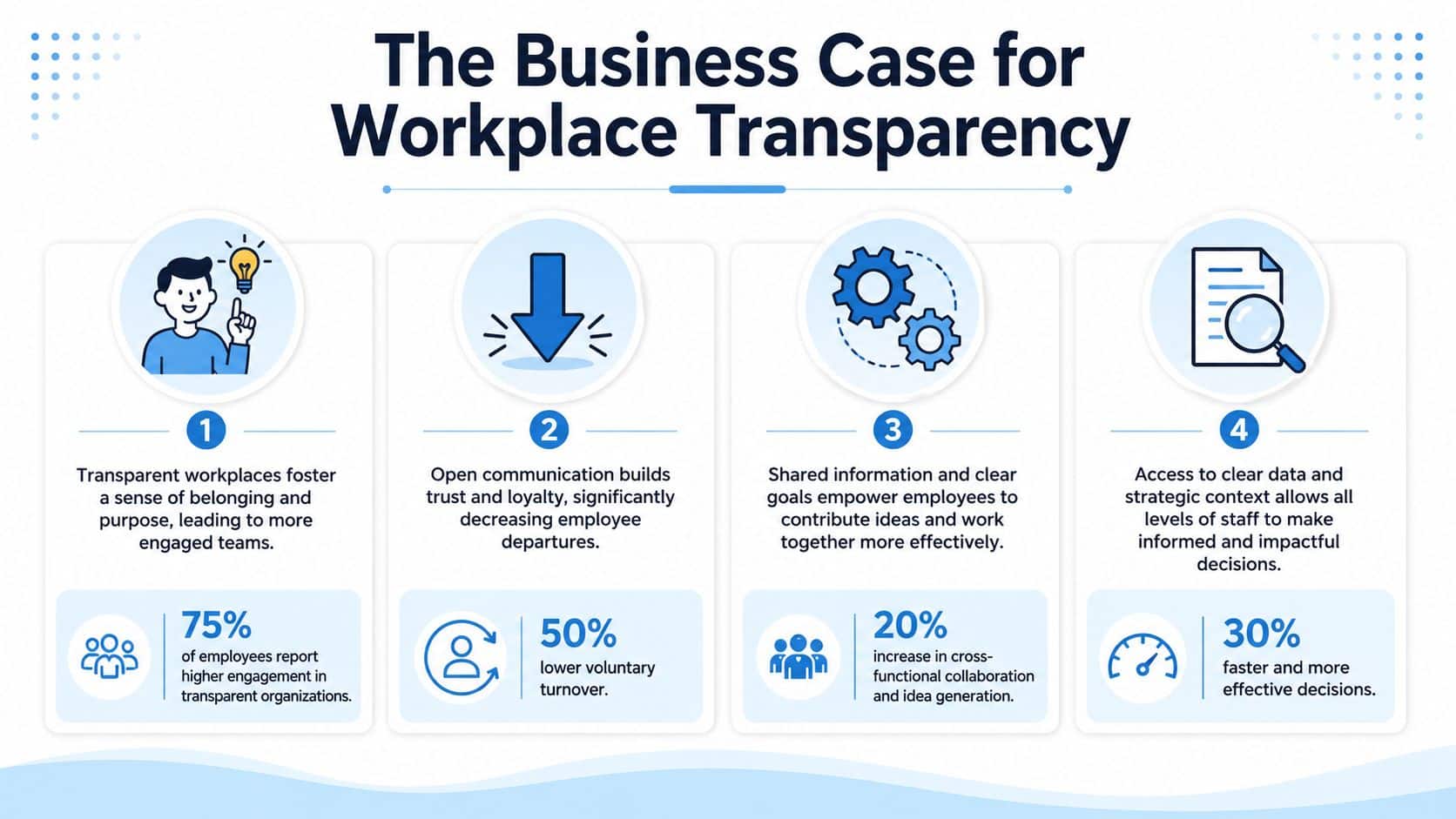
1. Builds Employee Trust
Employees are more likely to trust leadership when communication is consistent and decisions are explained rather than simply announced.
2. Improves Communication
Clear information reduces rumors, duplicated questions, misunderstandings, and unnecessary communication between employees and managers.
3. Creates Better Alignment
Employees understand organizational priorities and how their work contributes to larger business objectives.
4. Encourages Employee Feedback
People are more likely to raise questions, ideas, and concerns when they believe leadership will listen and respond.
5. Supports Distributed Teams
Remote and frontline workers cannot depend on office conversations for information. Structured transparency gives different workforce groups more equal access to context.
10 Key Strategies to improve Workplace Transparency
Creating better workplace transparency requires consistent practices across communication, feedback, employee support, decision-making, and performance management. Here are ten practical strategies organizations can use:
1. Set Realistic, and Fact-Based Expectations
Clearly explain job responsibilities, performance standards, workplace policies, schedules, growth opportunities, and organizational expectations. Setting realistic expectations early helps employees understand what is required and reduces confusion or disappointment later.
2. Use Recognition and Gamification
Recognize employee contributions openly through appreciation, rewards, badges, or team achievements. Gamification can encourage participation, make accomplishments more visible, and motivate employees to stay involved in workplace activities and communication.
3. Enable Two-Way Communication
Create opportunities for employees to ask questions, share concerns, and respond to company updates. Having a two way communication helps leaders understand workforce needs while showing employees that their opinions and feedback are valued.
4. Define Different Levels of Transparency
Not every piece of information should be shared with everyone. Classify information based on relevance, privacy, confidentiality, and employee impact so teams receive useful context without exposing sensitive business information.
5. Open Multiple Communication Channels
Use mobile apps, email, SMS, intranets, digital signage, messaging tools, and manager updates to reach employees. Using multiple channels help ensure remote, frontline, deskless, and office teams receive important information.
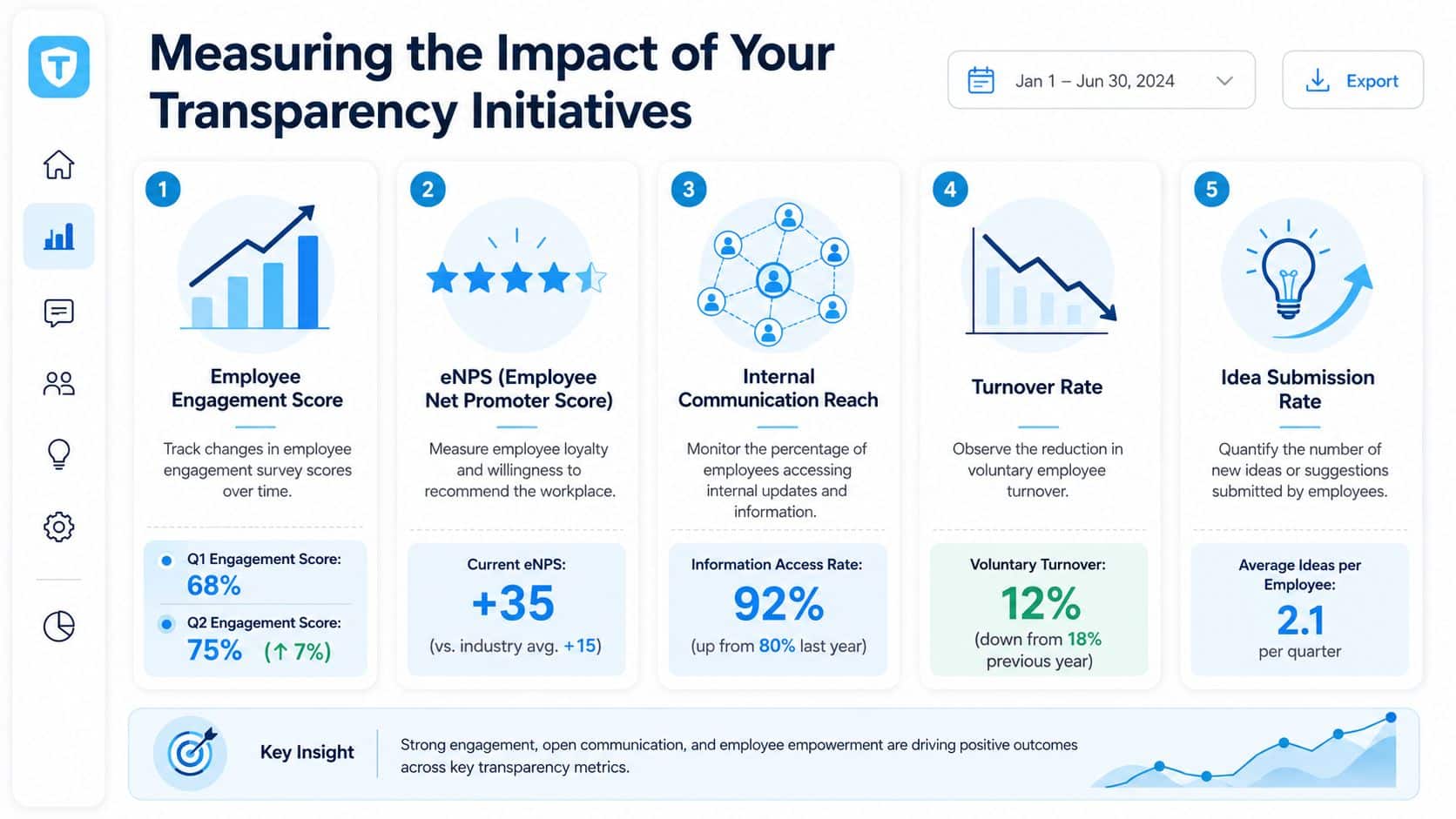
6. Measure Your Transparency Initiatives
Track communication reach, employee feedback, survey participation, recurring questions, trust scores, turnover, and engagement. These workforce analytics metrics help leaders identify transparency gaps, understand employee needs, and improve communication strategies over time.
7. Involve Employees in Decisions
Invite employees to contribute ideas through surveys, focus groups, brainstorming sessions, and team discussions. Involving workers in relevant decisions provides useful frontline insights while helping employees understand how and why changes happen.
8. Provide Quick Employee Support With AI Chatbots
Use AI chatbots to help employees quickly find policies, benefits, training, schedules, and workplace information. Instant answers reduce waiting time, improve information access, and provide consistent support across different workforce locations.
9. Build a Feedback Culture
Encourage employees and managers to exchange feedback regularly with employee engagement surveys. Explain what feedback was received, what actions will follow, and why certain suggestions may not be implemented.
10. Provide Regular Company Updates
Share consistent updates about company performance, priorities, changes, challenges, and achievements. Regular communication keeps employees informed, reduces speculation, and helps distributed teams understand what is happening across the wider organization.
Improve Workplace Transparency With HubEngage
Our centralized employee experience platform helps frontline and remote teams get company updates, surveys results, training resources, policies, schedules, and other work information.
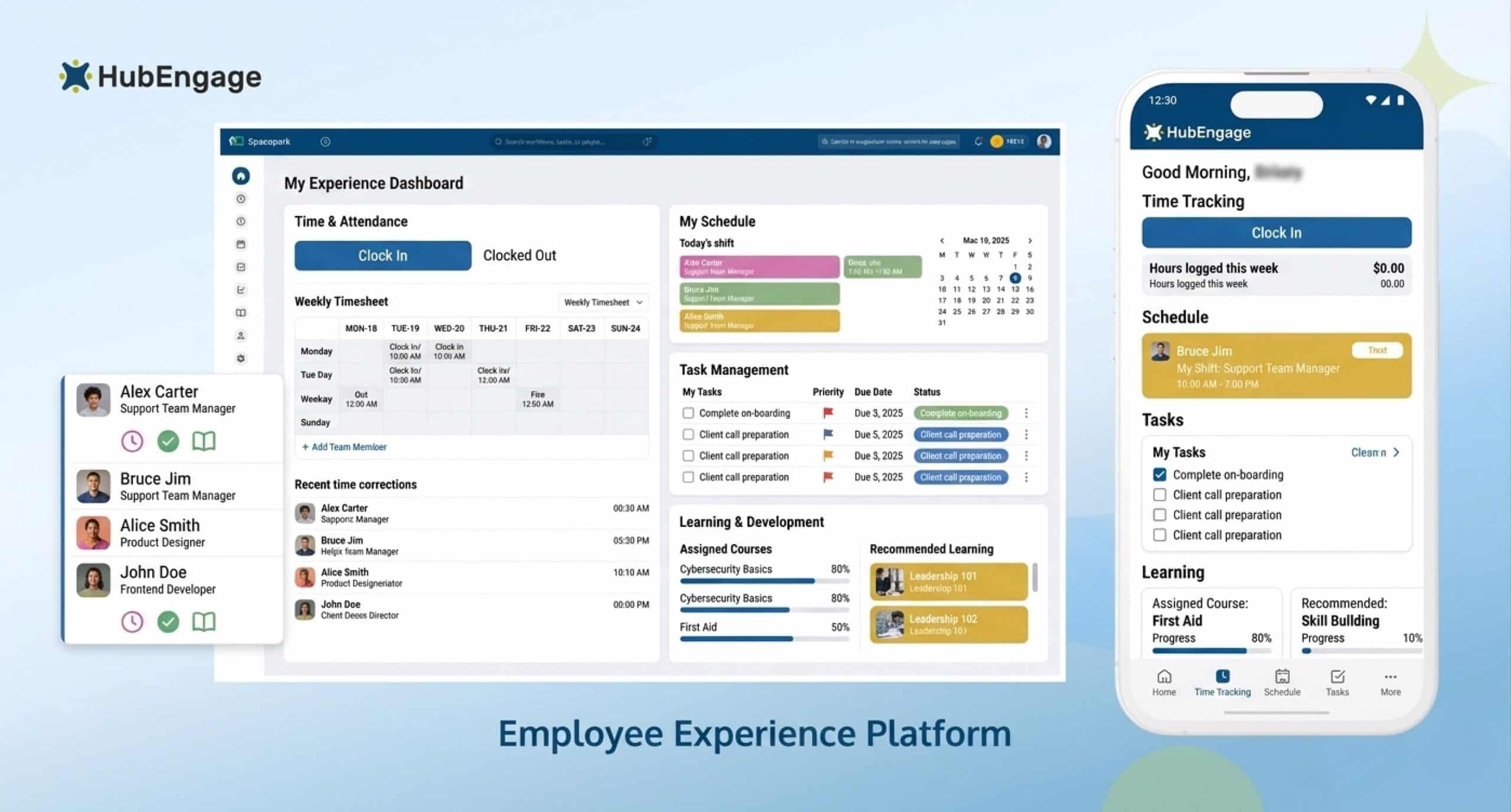
The platform comes with an ai chatbot which helps with instant search and quick answers to employee questions. While the mobile first access, makes the platform easily accessible for frontline and field teams who have less use of desktops. Also, ai-powered employee surveys support sentiment and thematic analysis, helping leaders better understand employee needs and take action.
Recognition and gamification features can also increase employee participation as well as motivation. Organizations can use multiple communication channels to easily reach office, remote, frontline, and deskless employees avoiding communication gaps. With these the workforce becomes more connected and engaged.
HubEngage Workplace Transparency Example
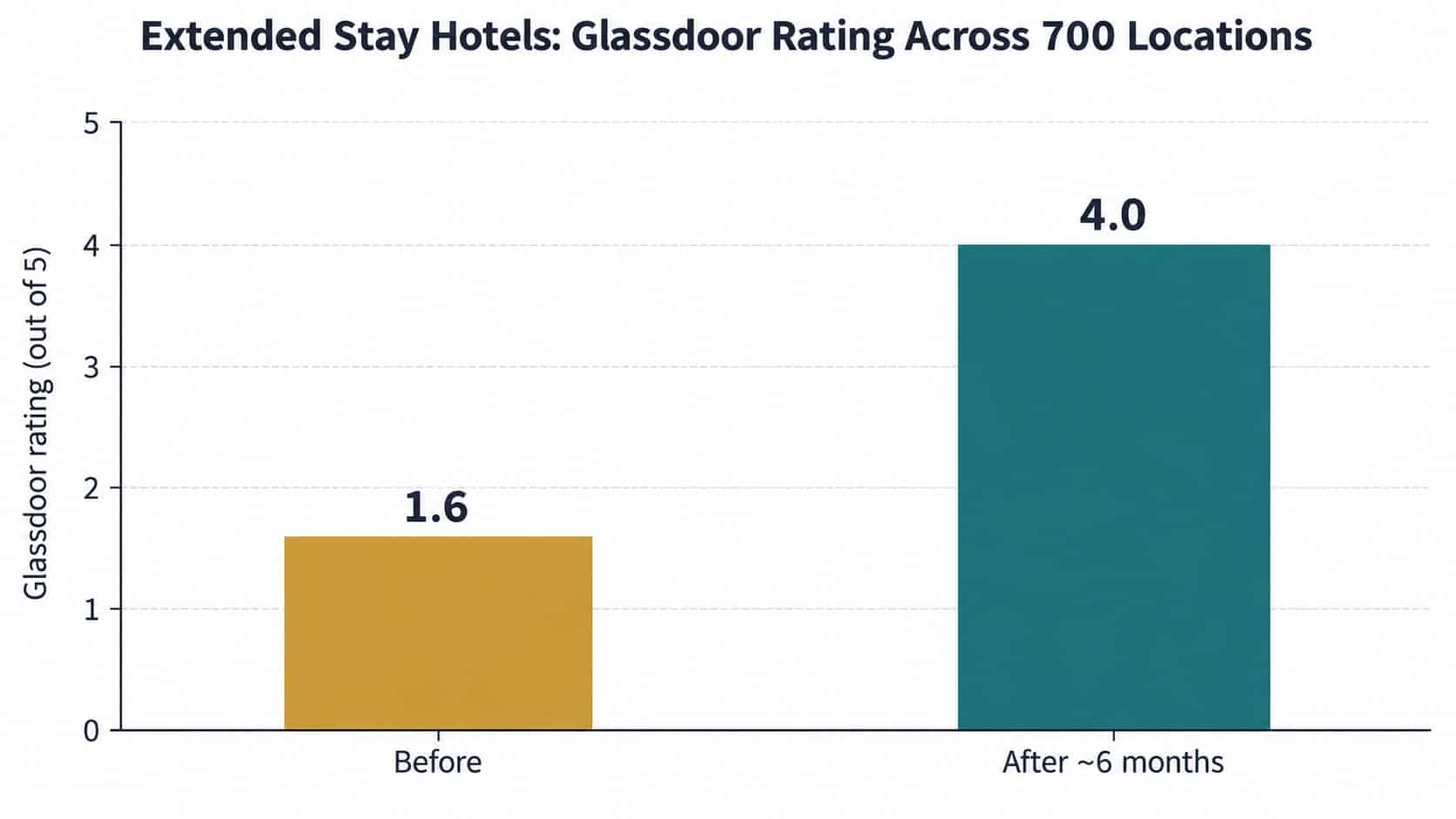
Extended Stay Hotels used HubEngage to create a direct communication channel for employees across nearly 700 locations. The platform helped the company reach distributed teams more consistently, share important updates, and improve employee connection. Result, the company’s Glassdoor rating increased from 1.6 to nearly 4 within six months of implementation.
Conclusion
Workplace transparency is about giving people the right information, context, and opportunities to ask questions. For distributed businesses, that means making communication equally accessible to frontline, deskless, remote, hybrid, and office employees.
Clear expectations, visible decisions, regular updates, accessible information, and closed feedback loops can gradually strengthen employee trust. If you want to create a more transparent employee experience then, explore our employee experience platform. Request a demo to see how communication, employee listening, and workforce tools can work together.
FAQs on Workplace Transparency
1. What is transparency in the workplace?
Workplace transparency means clearly sharing relevant information about decisions, policies, expectations, performance, and changes so employees understand what is happening, why it matters, and how it affects them.
2. How can you become a more transparent leader?
A transparent leader communicates regularly, explains decisions, sets clear expectations, welcomes questions, shares relevant updates, acknowledges uncertainty, and follows through on commitments to strengthen employee trust.
3. Is workplace transparency legally required?
Some workplace transparency practices are legally required, such as pay transparency in certain U.S. states. Broader transparency around communication, feedback, and decision-making usually goes beyond legal requirements.
4. How does transparency affect remote and hybrid teams?
Workplace transparency helps remote and hybrid teams stay aligned by providing clear written updates, documented decisions, accessible policies, regular communication, and reliable digital channels for questions and feedback.
5. What is the difference between transparency and radical transparency?
Workplace transparency shares information employees need to understand decisions and work effectively. Radical transparency makes much more internal information openly available, including performance data, discussions, and detailed feedback.
6. How can leaders be transparent without oversharing?
Leaders can practice workplace transparency by sharing relevant decisions, reasoning, impact, and next steps while protecting confidential employee, customer, financial, legal, security, and sensitive business information.
Related Resources
employee experience management | two way communication | workforce analytics | employee engagement surveys | ai chatbot