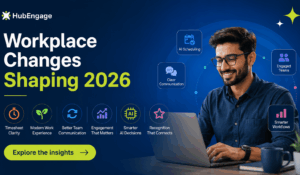
The workplace conversation in 2026 looks very different from what it did just a few years ago. Leaders today are not only managing performance or productivity. They are managing expectations. Employees want faster communication, easier access to information, stronger recognition, more personalized experiences, and a workplace that feels connected no matter where they work.
At the same time, organizations are facing growing skill gaps, changing workforce expectations, increasing digital adoption, and mounting pressure to improve employee engagement in measurable ways. This is exactly why conversations around the employee experience platform are becoming more important than ever.
At HubEngage, what we are seeing across industries is clear: organizations are moving away from fragmented workplace systems and toward connected employee experiences. Communication, recognition, feedback, learning, and employee support can no longer operate separately if businesses want stronger engagement outcomes.
In this edition, we bring to you some of the biggest workplace conversations shaping organizations right now and what they could mean for HR leaders, internal communication teams, people operations professionals, and business decision-makers preparing for the future of work.
Key Takeaways
- AI-powered employee experience platforms are helping organizations deliver faster communication, instant support, and a more connected workplace experience.
- Workforce skill gaps are becoming a major business challenge, making continuous learning and employee development essential for long-term success.
- Employee recognition driven by AI can improve fairness and visibility, but meaningful human appreciation remains critical for building trust and engagement.
- Mobile intranet platforms are becoming the foundation of modern workplace communication, helping remote, hybrid, and frontline employees stay informed and engaged.
- HR leaders are increasingly using employee engagement metrics, satisfaction scores, participation rates, and communication analytics to make smarter workplace decisions.
- Organizations that integrate communication, recognition, learning, feedback, and support into one employee experience platform are better positioned to improve engagement, retention, and workplace culture in 2026 and beyond.
1. AI Chatbots Are Changing Everyday Employee Communication
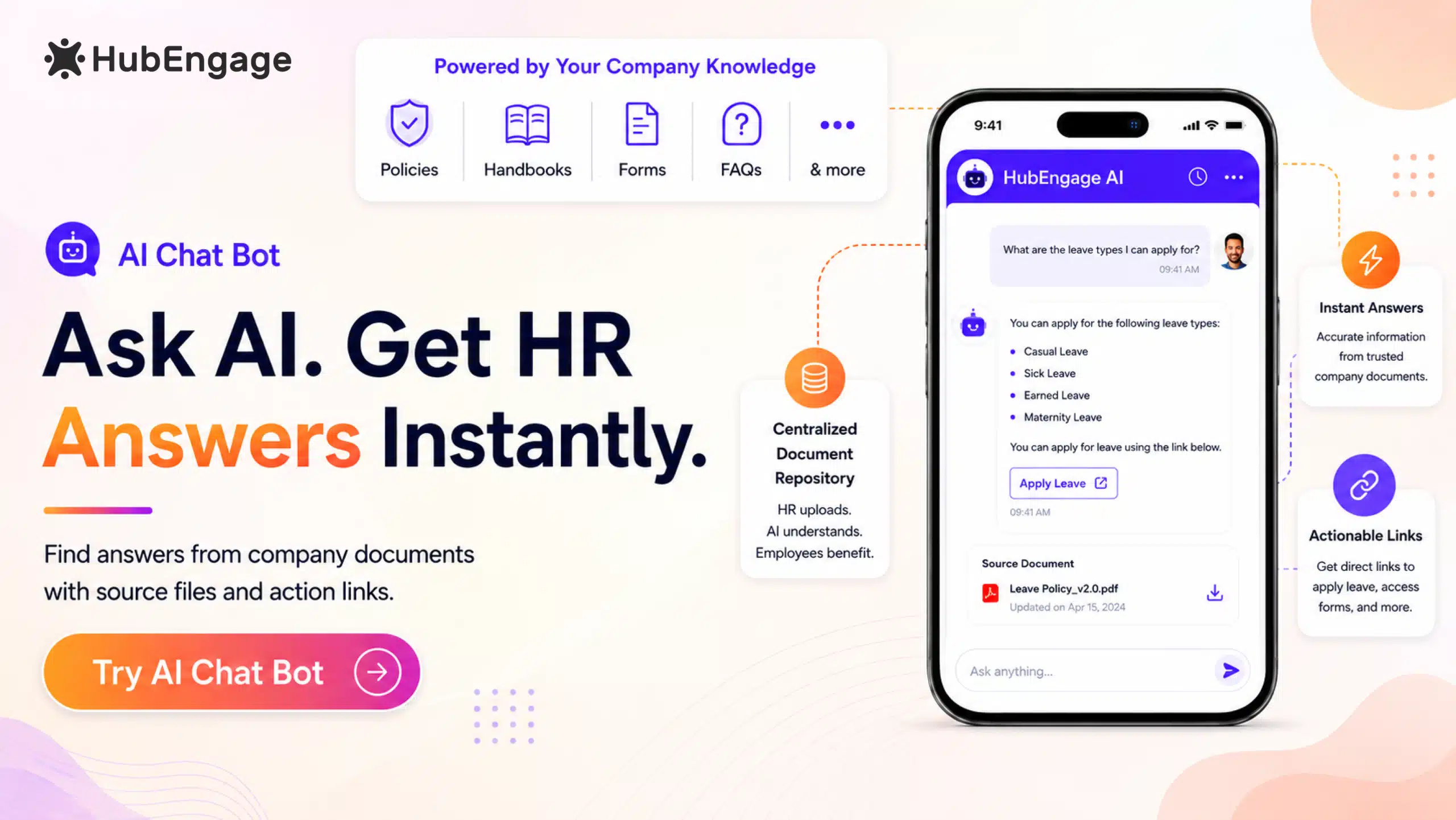
One of the clearest workplace shifts happening right now is the growing use of AI in everyday employee communication. For years, employees relied on emails, HR tickets, spreadsheets, shared folders, or internal portals to find answers to routine workplace questions.
Whether it was a leave policy, payroll timeline, onboarding information, benefits clarification, or workplace updates, employees often had to wait for responses or search across multiple systems.
That experience is quickly changing. AI-powered employee chatbots are helping organizations make workplace support faster, more accessible, and significantly less frustrating for employees.
What we think organizations are beginning to realize is that workplace communication should function with the same simplicity employees experience outside work. If employees can instantly find answers through consumer apps, they naturally expect workplace support to feel equally responsive.
This is where an employee experience platform becomes valuable. Instead of employees navigating multiple disconnected systems, workplace chatbots can centralize support and create one consistent employee experience. Employees can receive immediate answers to common questions while HR teams spend less time managing repetitive requests and more time focusing on strategic priorities.
More importantly, AI chatbots help improve communication reach, especially in distributed workplaces. Whether employees work remotely, on the frontline, in manufacturing units, retail environments, healthcare facilities, or corporate offices, access to workplace information becomes more consistent.
At HubEngage, we believe the conversation around AI should not be about replacing human connection. It should be about reducing friction in employee experiences. The better question leaders should ask is not “Should we use AI?”, instead, they should ask “How can we make work easier for employees?”
Organizations that answer this question well often see stronger communication outcomes, faster support resolution, and improved employee satisfaction scores.
2. The Workforce Skill Gap Is Becoming a Business Risk
While technology is reshaping workplaces, another major challenge continues to grow quietly in the background: workforce readiness. Across industries, leaders are facing widening skill gaps.
Business models are evolving faster than employee capabilities can adapt. New technologies, changing customer expectations, automation, and digital transformation are creating pressure on organizations to rethink workforce development.
What we are seeing globally is a shift from occasional training programs toward continuous learning models. Organizations increasingly understand that learning is no longer just an employee benefit. It has become a business necessity.
Employees today want opportunities to grow. They expect organizations to invest in their professional development and future career readiness.
At the same time, leaders recognize that skill shortages directly affect productivity, innovation, retention, and long-term competitiveness. This is particularly important because employee engagement and learning are deeply connected.
Employees who feel supported in their development often report stronger workplace satisfaction and higher commitment levels. From our perspective at HubEngage, organizations should move beyond treating learning as an isolated HR initiative.
Learning should become part of the employee experience itself. This means making development opportunities visible, personalized, and easy to access through one connected workplace environment.
What we are seeing increasingly is that organizations with stronger employee participation in learning initiatives often report better engagement participation rates, stronger internal mobility, and improved retention outcomes. Simply put, employees stay longer when they believe the organization is investing in their growth.
3. AI-Powered Recognition Is Raising Important Workplace Questions
Recognition has always mattered at work. But the way organizations approach recognition is beginning to evolve. As AI becomes part of employee engagement programs, new workplace conversations are emerging around fairness, consistency, and trust.
- Can AI help identify overlooked contributions?
- Will workplace recognition become more inclusive?
- Is it possible for organizations to reduce unconscious bias in appreciation programs?
These are important questions because traditional recognition systems often depend heavily on manager visibility. In fast-moving organizations, great work can easily go unnoticed.
Technology can help surface patterns, contributions, and milestones that might otherwise be missed. However, what we think organizations must be careful about is making recognition feel automated.
Employees still want appreciation to feel authentic. Recognition loses meaning when it feels generated rather than genuinely earned.
At HubEngage, we believe technology should strengthen human recognition, not replace it. The strongest workplace cultures often combine structured recognition platforms with meaningful human appreciation. This is especially important because recognition directly influences workplace trust, employee morale, collaboration, and retention.
More importantly, it significantly impacts employee satisfaction scores, which remain one of the strongest indicators of workplace health. Organizations increasingly track employee sentiment through pulse surveys and engagement feedback to understand whether employees genuinely feel valued.
When employees feel recognized, they participate more actively, collaborate better, and often demonstrate stronger emotional commitment to organizational goals. Recognition, therefore, is no longer just a culture initiative. It has become a measurable business driver.
4. Mobile Intranet Is Becoming the Backbone of Connected Workplaces
Perhaps one of the biggest workplace shifts leaders cannot ignore anymore is mobility. The modern workforce no longer operates from one desk.
Organizations today manage hybrid teams, remote employees, frontline workers, field staff, healthcare professionals, retail teams, manufacturing employees, and geographically distributed workforces. This shift has changed internal communication forever.
Employees now expect workplace information to be available anytime, anywhere, and on any device. Unfortunately, many organizations still rely heavily on desktop-first communication models. The challenge is simple i.e. communication only works when employees actually receive and engage with it.
An announcement nobody sees is not communication. A recognition message employees miss loses impact. Any survey nobody opens creates incomplete data. This is why mobile intranet platforms are becoming increasingly important for organizations looking to strengthen communication and engagement.
A strong employee experience platform creates centralized communication where employees can access updates, recognition, surveys, resources, announcements, and workplace interactions directly through mobile devices.
What we are seeing in successful organizations is a stronger focus on measuring active users and communication reach. Leaders increasingly want answers to practical questions:
- Are employees actually reading workplace communication?
- Which departments are less engaged?
- Are frontline workers participating?
- What communication channels drive the best response?
The organizations succeeding in 2026 are not necessarily communicating more but are communicating smarter.
5. Global HR Trends Are Moving Faster Than Ever
Another major workplace reality leaders are recognizing is that HR priorities are changing rapidly. Research from HR Executive shows several workplace shifts happening simultaneously. Organizations are navigating changing employee expectations, workforce planning challenges, leadership development needs, evolving workplace flexibility, and growing digital transformation efforts.
At the same time, HR leaders are under pressure to deliver measurable outcomes. This is why workplace metrics are becoming significantly more important.
Organizations no longer want to rely on assumptions around engagement. Instead, leaders increasingly monitor workplace indicators such as:
Engagement Participation Rate
This metric helps organizations understand how employees interact with workplace programs, recognition initiatives, campaigns, events, and engagement activities.
Higher participation often reflects stronger employee involvement and workplace trust.
Active Users
Employee platforms only succeed when employees consistently use them. Daily and monthly active users help organizations measure platform adoption and communication effectiveness.
Employee Satisfaction Scores
Organizations increasingly rely on employee satisfaction data to understand workplace sentiment and identify areas requiring improvement. Continuous listening models, pulse surveys, and feedback mechanisms are becoming more common.
Survey Completion Rates
Survey participation often reflects workplace credibility. Employees engage more when they believe feedback will lead to meaningful action.
Communication Reach
Communication success today is measured by visibility and engagement, not just delivery.
Organizations increasingly track read rates, open rates, mobile engagement, and interaction behavior to improve workplace communication strategies.
At HubEngage, we believe data should simplify decisions, not complicate them. The purpose of workplace metrics is not reporting, it is improvement.
6. What HR Leaders Should Prioritize in 2026
As organizations continue preparing for the future of work, several priorities are becoming increasingly important for HR leaders. First, organizations must focus on creating connected employee experiences rather than disconnected employee programs.
Employees do not experience work in silos. They experience it as one journey. Communication, learning, recognition, listening, and support should feel integrated rather than fragmented.
Second, leaders should focus on workforce development and future readiness. The organizations investing in learning today are better positioned for tomorrow’s challenges.
Third, organizations should rethink employee communication through a mobile-first lens. Employees cannot engage with communication they never receive.
Finally, workplace technology should support human experiences rather than complicate them. AI, automation, analytics, and digital tools should help employees feel more informed, recognized, and connected.
How HubEngage Addresses these gaps?
At HubEngage, what we are seeing is simple: organizations that prioritize employee experience are building stronger workplace cultures, better engagement, and more measurable business outcomes.
The future of work will not be defined by technology alone. It will be defined by how effectively organizations use technology to create meaningful employee experiences.
And that is exactly where an employee experience platform becomes a strategic advantage. Because in 2026 and beyond, organizations that communicate better, recognize more meaningfully, listen continuously, and support employees consistently will ultimately build workplaces people genuinely want to be part of.