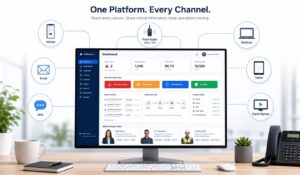
When leaders ask if internal communications are working, teams often look at email opens, intranet views, newsletter clicks, or town hall attendance. These metrics are useful, but they do not show whether employees truly understand or act on the message. This matters even more for distributed teams, where frontline, remote, deskless, and field employees may use different communication channels. Learning how to measure internal communications effectiveness means looking beyond activity and focusing on awareness, understanding, action, and business outcomes. Our blog covers the key metrics, KPIs, tools, and measurement practices businesses can use to improve internal communication across their workforce effectively.
Key Takeaways
- Businesses should connect communication metrics with employee understanding, behavior, engagement, and business outcomes.
- Distributed teams need channel-level measurement because frontline, remote, and office employees communicate differently.
- Surveys, polls, acknowledgments, analytics, feedback, and business KPIs provide a more complete view of communication performance.
- Communication should be measured regularly and compared against an established baseline.
- The best measurement strategy uses a small number of meaningful KPIs tied directly to business objectives.

Common Challenges while measuring internal communication effectiveness
Traditional internal communications measurement usually focuses on outputs. Measuring internal communication is not always straightforward, especially across distributed teams. A report from Fast Company shows 60% of internal communications professionals do not measure communication effectiveness which leads to following problems.
- Limited Budget: Small teams may lack analytics tools, platforms, or measurement resources.
- Frontline Reach: Deskless employees may have limited access to traditional workplace communication channels.
- Limited Time: Teams may struggle to consistently collect, analyze, and report communication data..
- Low Survey Response: Poor participation can make employee feedback less reliable and representative.
- Disconnected Channels: Multiple communication tools can create fragmented data and inconsistent reporting.
Why measuring internal communications effectiveness is important?
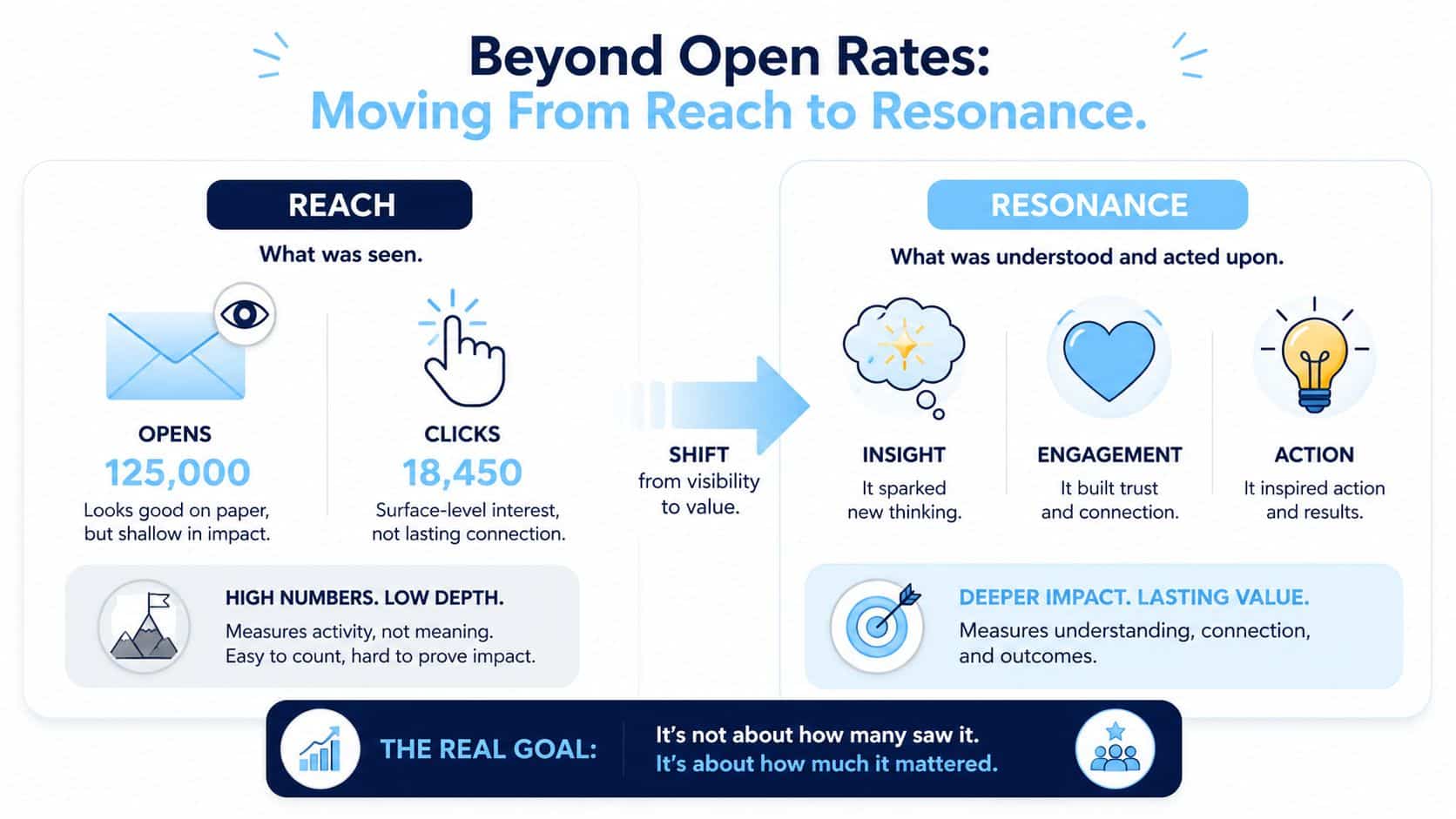
Understanding how to measure internal communications effectiveness gives organizations a clearer picture of the way information moves across the workforce. Here are six reasons measurement matters.
1. Establish a Communication Baseline
Understand current communication performance and measure improvements against future results.
2. Identify Communication Problems
Find communication gaps, delays, overload, and access issues across teams.
3. Understand Employee Communication Preferences
Learn which channels employees prefer based on roles and work environments.
4. Use Communication Resources Better
Focus budget and effort on channels delivering stronger communication results.
5. Build Employee Trust
Show employees their feedback leads to visible action and improvement.
6. Demonstrate Communication Value
Connect communication efforts with engagement, productivity, retention, and business outcomes.
10 Essential KPIs for measuring internal communication effectiveness
There is no single KPI that measures communication effectiveness. Businesses should combine various KPIs mentioned below:
| KPI | Role in Measurement | Best Use Case |
| Communication Effectiveness Score | Measures clarity, timeliness, usefulness, and employee understanding. | Evaluating overall internal communication quality. |
| Employee Engagement Score | Shows how informed, connected, and aligned employees feel. | Measuring communication impact on engagement. |
| Employee Turnover Rate | Highlights possible communication issues affecting employee retention. | Identifying communication-related causes of turnover. |
| Communication Channel Performance | Compares how well email, apps, intranet, SMS, and events perform. | Choosing the most effective communication channels. |
| Employee Feedback | Explains why messages or campaigns work or underperform. | Understanding employee needs and communication gaps. |
| Leader Communication Effectiveness | Measures how clearly and consistently leaders communicate with teams. | Improving manager and leadership communication. |
| Business Performance and Productivity | Connects communication efforts with measurable operational outcomes. | Proving communication impact on business results. |
| Benchmark Data | Tracks improvement by comparing current and past performance. | Monitoring progress over time. |
| Employee Advocacy | Shows how willing employees are to support or recommend the organization. | Measuring employee connection and brand advocacy. |
| Workforce Segment Trends | Identifies differences across roles, locations, shifts, and employee groups. | Measuring communication across distributed workforces. |
1. Communication Effectiveness Score
A communication effectiveness score measures whether employees receive timely, clear, and useful information. Use survey questions about message clarity, leadership communication, information access, and understanding. Tracking responses over time helps identify improvements, recurring issues, and communication gaps.
2. Employee Engagement Score
Employee engagement scores help show whether employees feel informed, connected, and aligned with company priorities. Compare engagement results with communication survey data to identify patterns, while remembering that communication is only one of several factors influencing overall engagement.
3. Employee Turnover Rate
Turnover data can reveal communication-related issues affecting the employee experience. Review exit surveys for patterns such as unclear expectations, poor manager communication, limited transparency, or confusion during change. These insights can help internal communications teams address recurring concerns.
4. Communication Channel Performance
Channel performance shows how effectively employees use different communication methods. Track email opens, app activity, intranet visits, SMS responses, town hall attendance, and survey participation. Comparing channels helps teams understand which formats work best for different employee groups.
5. Benchmark Data
Benchmark data helps teams understand whether communication performance is improving over time. Compare current campaigns with previous results, month-over-month trends, locations, departments, or employee groups. Consistent benchmarking makes it easier to set realistic performance targets.
6. Leader Communication Effectiveness
Leader communication effectiveness measures how clearly and consistently managers share information with employees. Survey teams on message clarity, timeliness, accessibility, and responsiveness. Results can highlight strong communicators and identify leaders who may need additional communication training, support, or resources.
7. Business Performance and Productivity
Connect communication efforts with measurable business outcomes such as training completion, policy acknowledgment, software adoption, safety compliance, task completion, or schedule adherence. This helps show whether communication influenced employee behavior and supported broader operational or productivity goals.
8. Employee Feedback
Employee feedback helps explain why communication performs well or poorly. Use pulse surveys, polls, focus groups, comments, and manager conversations to understand employee needs. Feedback can reveal whether messages were clear, timely, relevant, useful, and easy to act on.
9. Employee Advocacy
Employee advocacy can indicate how connected employees feel to the organization. Track employee referrals, ambassador participation, recognition activity, content sharing, and willingness to recommend the workplace. Use advocacy alongside engagement and communication metrics for a more complete picture.
10. Workforce Segment Trends
Workforce segment trends reveal communication gaps hidden by company-wide averages. Compare results by location, role, department, shift, or employee type. This helps identify whether frontline, remote, deskless, and office employees receive and engage with information differently.
Tools for Measuring Internal Communication Effectiveness
Different tools measure different stages of the communication journey. Here are the best internal communication tools which you can check out and use
| Tool | Purpose |
| Modern Intranet & Employee Apps | Provides one central space for company updates, policies, files, and resources accessible across employee devices. |
| Chat & Instant Messaging | Supports instant conversations, team chats, and real-time collaboration between employees and departments. |
| Email Platforms | Distributes internal newsletters and updates with audience targeting, automation, and communication performance tracking. |
| Employee Text Messaging Platforms | Sends important alerts and workplace updates quickly to employees, especially frontline and deskless teams. |
| Digital Signage | Shares company news, recognition, and important updates through workplace displays and connected screens. |
| Meeting & Video Tools | Enables online meetings, video calls, and virtual collaboration for remote and distributed teams. |
How to measure internal communications effectiveness step by step?
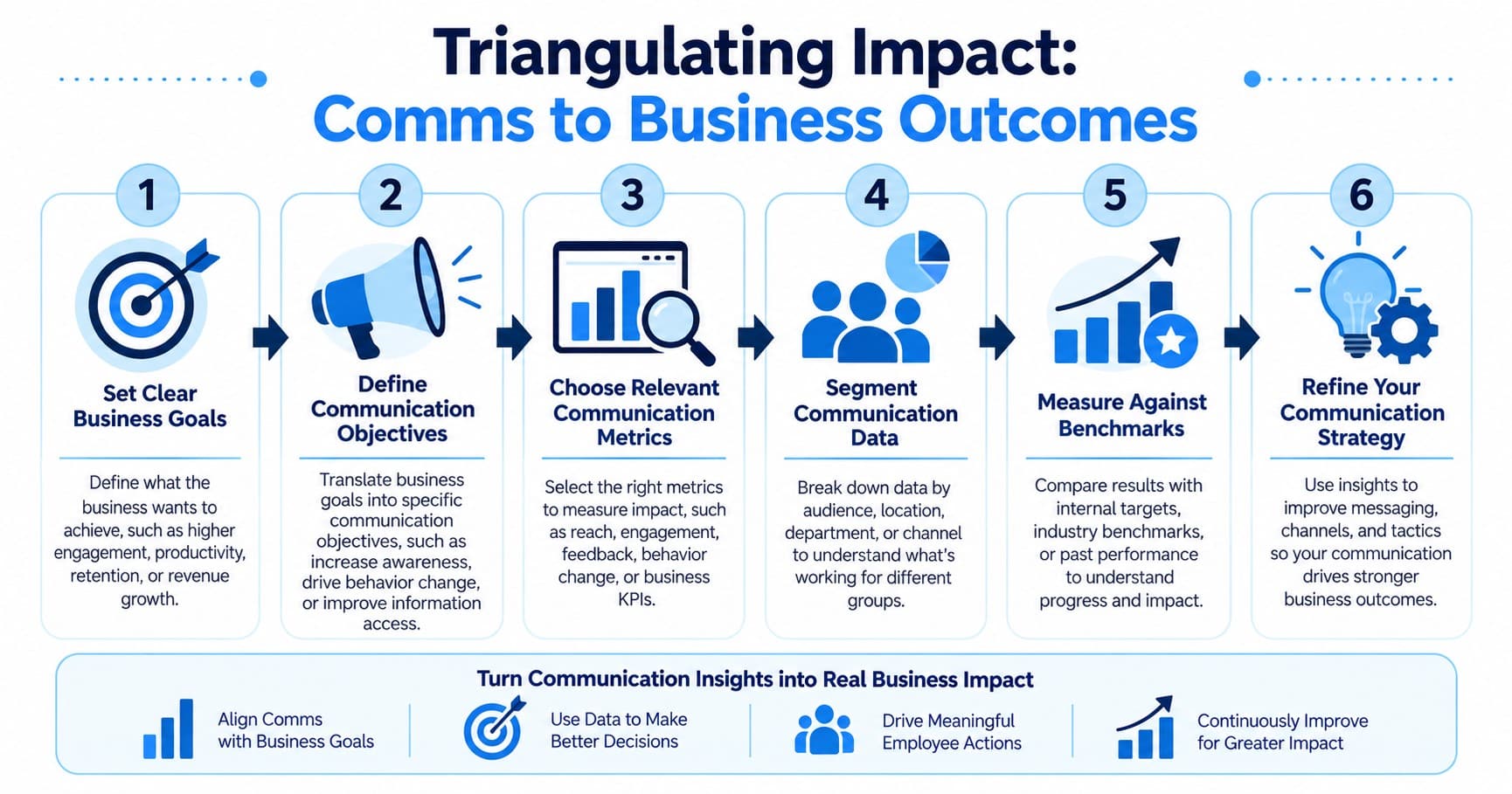
A simple measurement framework can make internal communication reporting much easier. Below is a simple process you can follow:
Step 1: Determine the Business Goal
Define the business result your communication efforts should help achieve more effectively.
Step 2: Define the Communication Objective
Clarify what employees need to know, understand, or do after communication delivery.
Step 3: Select Meaningful Metrics
Choose metrics that measure reach, understanding, action, and resulting business outcomes clearly.
Step 4: Segment the Data
Break data down by role, location, shift, department, or employee type carefully.
Step 5: Compare Against a Baseline
Compare current results against previous campaigns or established benchmarks to track progress.
Step 6: Improve the Strategy
Use insights to improve message format, timing, channels, targeting, and frequency continuously.
Internal Communication Strategy Template
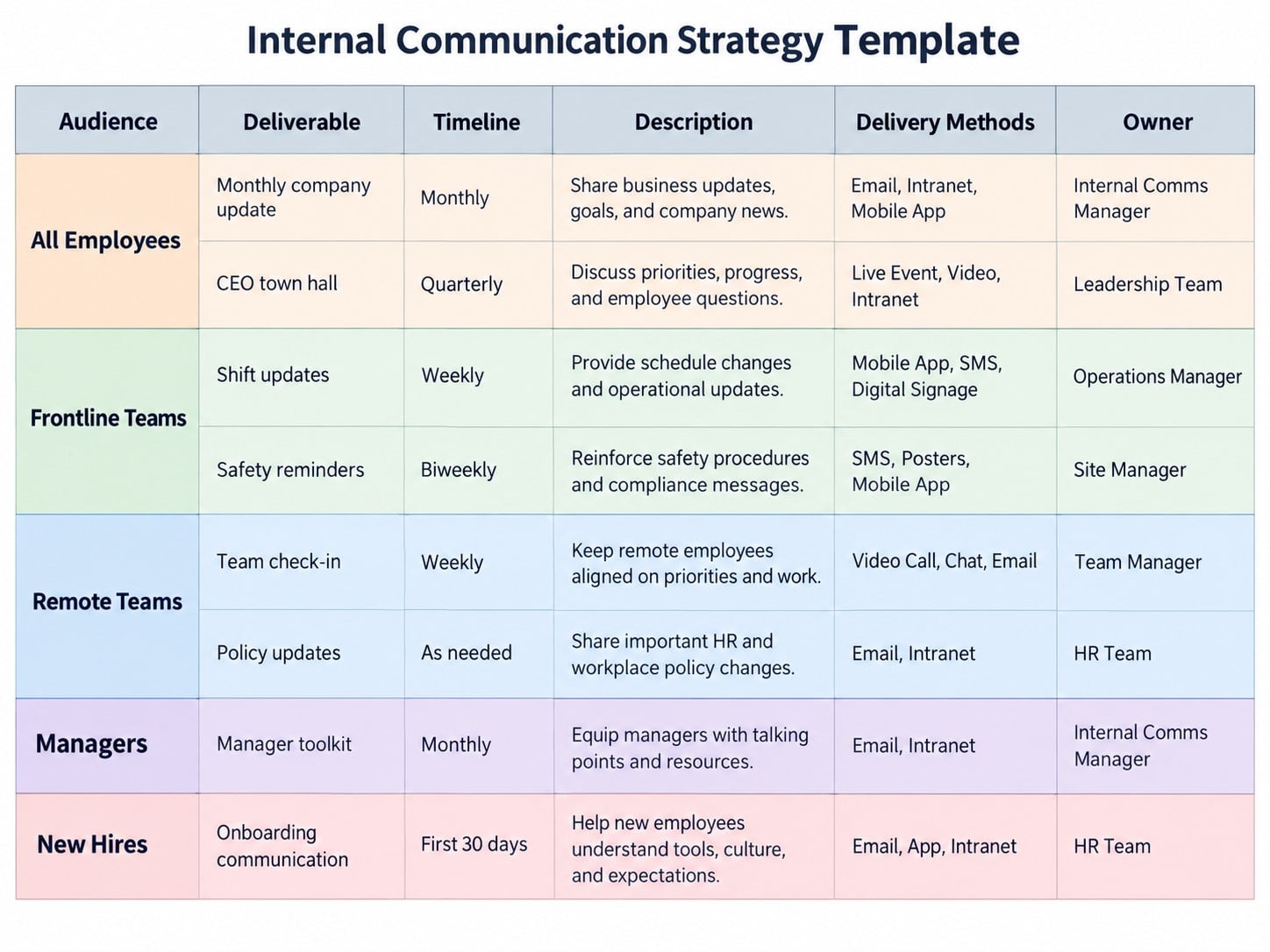
A practical internal communication strategy should connect objectives, audiences, channels, and measurement. Use this basic framework:
How HubEngage Improves Internal Communication Effectiveness?
Our internal communication platform is part of its broader employee experience platform, helping organizations keep distributed teams informed, connected, and engaged. It brings top-down communication, peer engagement, and real-time team messaging into one place, reducing silos across frontline, remote, deskless, and office employees.
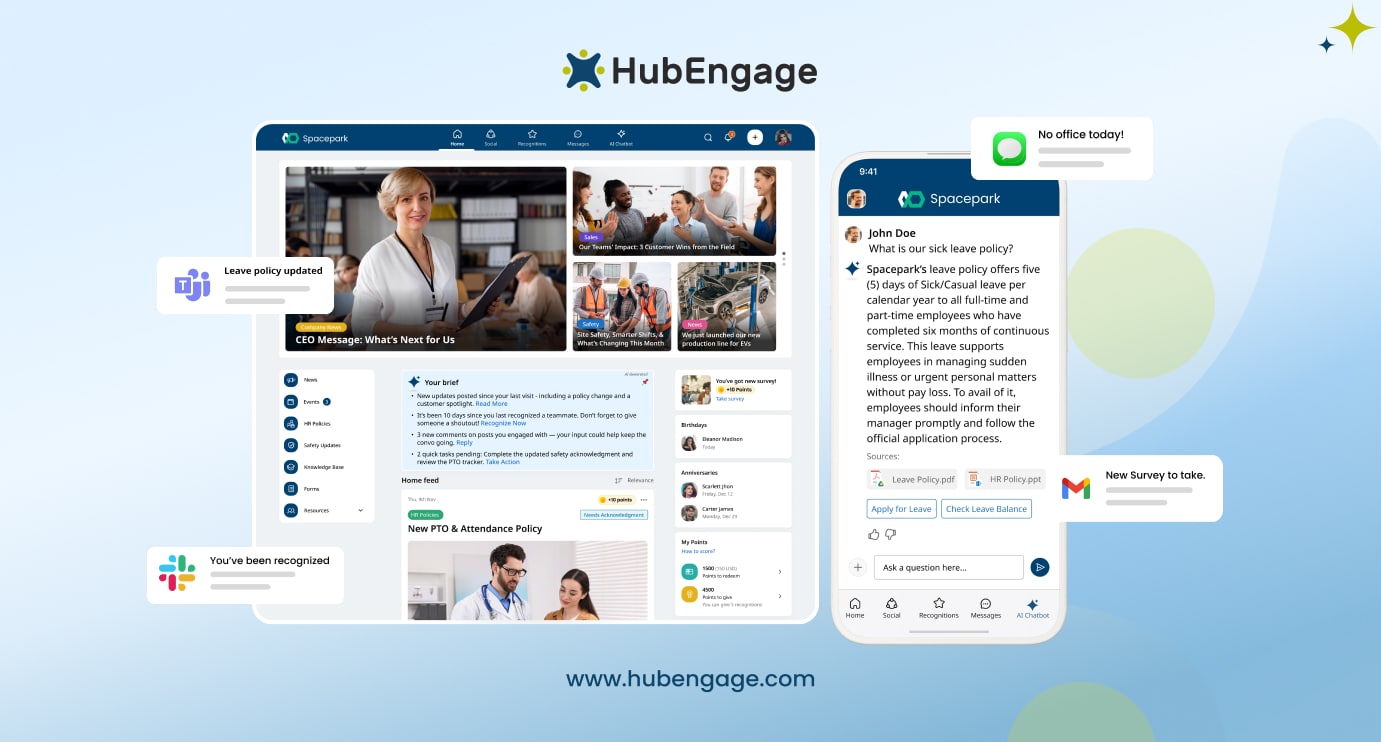
Businesses can deliver targeted announcements through mobile, web, email, SMS, digital signage, Teams, and Slack, while using surveys, social feeds, recognition, messaging, analytics, and an AI chatbot to strengthen engagement.
With HRIS integrations, SSO, audience segmentation, and enterprise-grade security, the platform enables seamless communication while improving collaboration, participation, and visibility across the employee experience at every workplace level.
Conclusion
Measuring internal communication effectiveness is about understanding whether employees receive, understand, and act on information. For distributed teams, combining channel analytics, employee feedback, engagement data, and business outcomes gives leaders a clearer view of what works and where gaps remain.
Regular measurement also helps communication teams improve strategy, reach frontline and remote employees more effectively, and demonstrate business value. Explore our employee experience platform and see how it can support your communication goals by taking a demo.
FAQs on how to measure internal communications effectiveness
1. How can AI be used effectively in internal communication?
AI can help internal communication teams summarize content, translate messages, personalize updates, analyze feedback, improve search, draft communications, identify trends, and help employees quickly find relevant workplace information and answers.
2. What are the 7 C’s of effective communication?
The 7 C’s of effective communication are clear, concise, concrete, correct, coherent, complete, and courteous. These principles help teams create messages employees can easily understand, trust, remember, and act on.
3. How to measure internal communication effectiveness in healthcare?
Healthcare organizations can measure communication effectiveness through message reach, acknowledgments, policy understanding, training completion, employee feedback, manager communication, and compliance outcomes, while comparing results across locations, roles, and shifts regularly.
4. How can internal communications improve the employee experience?
Effective internal communications improve employee experience by delivering information, clear expectations, accessible resources, leadership updates, and feedback opportunities. This helps employees feel informed, connected, supported, involved, and confident at work.
5. How often should internal communications be measured?
Review operational communication metrics weekly, broader trends monthly, and strategic outcomes quarterly. Measure major campaigns, organizational changes, and emergency communications separately to identify gaps quickly, improve future messages, and track progress.
Related Links
internal communication strategy | internal communications | internal communication platform | internal communication tools | improve internal communication