When businesses evaluate new software, they often look first at the subscription price, but this rarely shows the full cost. A $20,000 per year tool may also need integrations, training, IT support, and ongoing admin work.
Another tool with a higher price can still cost less if it replaces multiple systems and reduces effort. This is why companies should look at total cost of ownership, not just price, before choosing software.
Our blog will help you understand TCO and make better software decisions for your business and avoid hidden costs when selecting multi-channel communication platform .
What is the Total Cost of Ownership?
Total cost of ownership (TCO) is the complete cost of purchasing, implementing, operating, maintaining, and eventually replacing a product or system. In software, TCO includes much more than the license or subscription fee.
For example, imagine your company pays $15,000 per year for an employee communication platform. That may appear to be the total cost. However, your business may also need to pay for:

Once those expenses are included, the real cost of the software could be much higher. A TCO analysis helps businesses understand that complete financial picture before making a purchase.
What does Total Cost of Ownership comprise?
The total cost of ownership (TCO) of software includes more than the price shown on a vendor quote. To understand the true cost of a software investment, businesses should consider three main categories: direct costs, indirect costs, and hidden costs.
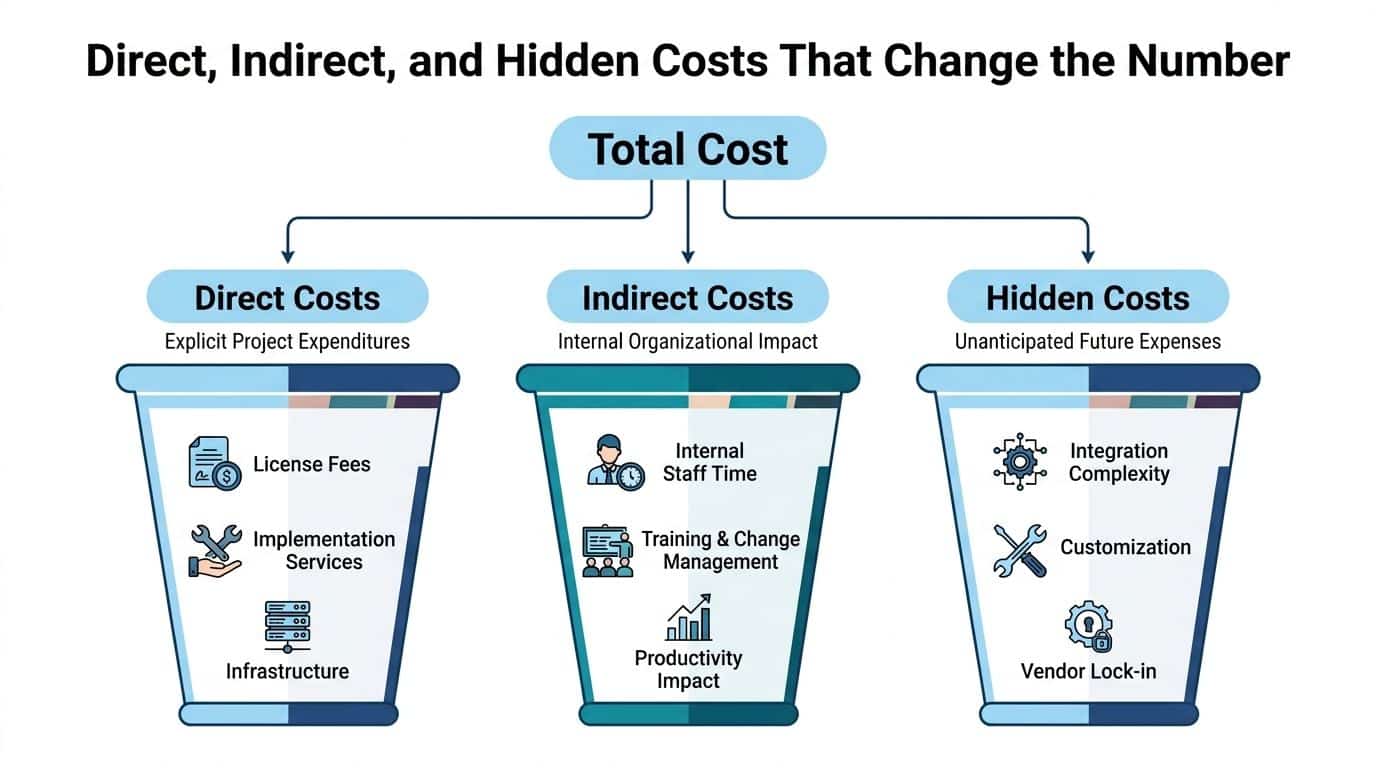
Understanding these three categories gives businesses a more complete picture of software total cost of ownership. A platform with a low subscription price may still have a high TCO if it requires extensive administration, training, integrations, or customization.
Direct vs. Indirect vs. Hidden TCO Costs
| Cost Category | What It Covers | Common Examples |
| Direct costs | Expenses directly related to purchasing and implementing software | License fees, subscriptions, implementation services, infrastructure |
| Indirect costs | Internal time and resources required to adopt and operate software | Staff time, training, change management, administration, productivity impact |
| Hidden costs | Less obvious costs that may emerge over time | Integration complexity, customization, vendor lock-in, migration and exit costs |
How to Calculate Total Cost of Ownership?
Calculating the total cost of ownership (TCO) means looking beyond the software’s subscription or purchase price and identifying every expense associated with using that software over its full lifecycle. A basic TCO formula looks like this:
TCO = Initial Costs + Implementation Costs + Operating Costs + Maintenance Costs + Support Costs + Exit Costs
Each part of this formula represents a different type of expense:
| Cost Type | What It Includes |
| Initial costs | Software licenses, subscription fees, setup charges, add-ons, or required hardware |
| Implementation costs | Configuration, data migration, integrations, customization, and employee onboarding |
| Operating costs | Day-to-day use like admin time, employee effort, cloud storage, and extra licenses |
| Maintenance costs | Software updates, integration upkeep, security changes, and system improvements |
| Support costs | Vendor support fees and internal HR/IT time spent resolving issues |
| Exit costs | Data export, migration to new tools, rebuilding integrations, and retraining employees |
Businesses should calculate these expenses over a defined period, such as 3 to 5 years, rather than looking at only the first-year cost. This gives decision-makers a clearer view of the long-term financial impact of a software investment.
Total Cost of Ownership Practical Example
Let’s look at a common situation many small and mid-sized businesses face. Imagine a company with 300 employees spread across offices, remote roles, and frontline locations. To manage daily work, the company uses several different software tools instead of one unified system. On the surface, the costs look simple:
- Employee communication software: $12,000 per year
- Recognition software: $8,000 per year
- Learning software: $10,000 per year
- Survey software: $6,000 per year
That brings the visible software spend to $36,000 per year.
At first glance, this may seem reasonable. But this is only the subscription cost. It does not reflect the real effort required to run these tools every day. In reality, companies spend hidden time and money managing users, integrations, reports, and support.
Managers switch tools, and employees juggle logins. These costs make ownership higher than subscription fees, so businesses should evaluate total cost of ownership over 3 years. Here is what that might look like in a real-world scenario:
| Cost Component | Amount |
| Software subscription (3 years) | $60,000 |
| Implementation & migration | $10,000 |
| Training | $5,000 |
| Integration work | $12,000 |
| Internal administration | $25,000 |
| Support & maintenance | $8,000 |
| Migration or exit costs | $5,000 |
| Total TCO (3 years) | $125,000 |
As you can see, the real cost is more than just the subscription fees. It includes setup work, ongoing management, employee training, system maintenance, and even future migration planning. This is why businesses should repeat this calculation for each platform they are evaluating as it also reveals hidden expenses that are missing from software proposals.
Benefits of calculating Total Cost of Ownership
Calculating TCO gives decision-makers a more realistic view of software spending. Below are some of its benefits:
Better Budget Planning
TCO helps businesses identify costs that appear after implementation. It enables budgeting beyond licensing by including integration, administration, training, maintenance, and ongoing support expenses for accurate financial planning.
Easier Vendor Comparisons
An internal communication software rfp template by two different software vendors may offer similar features but very different long-term costs. TCO helps organizations compare total spending, not just features, enabling clearer and more accurate purchasing decisions.
Reduced Software Sprawl
Software sprawl occurs when departments add multiple overlapping tools without coordination. TCO analysis highlights redundant platforms, helping organizations consolidate systems and reduce unnecessary software costs and complexity.
Better Product Decisions
Software product leaders use TCO to assess long-term customer impact. It helps evaluate whether a platform reduces complexity through easier implementation, integration, administration, and ongoing support requirements.
Stronger ROI Analysis
TCO improves ROI analysis by revealing the full cost of technology ownership. Without understanding total costs, companies cannot accurately measure returns or make informed investment decisions.
Best Practices to reduce the Total Cost of Ownership of a software
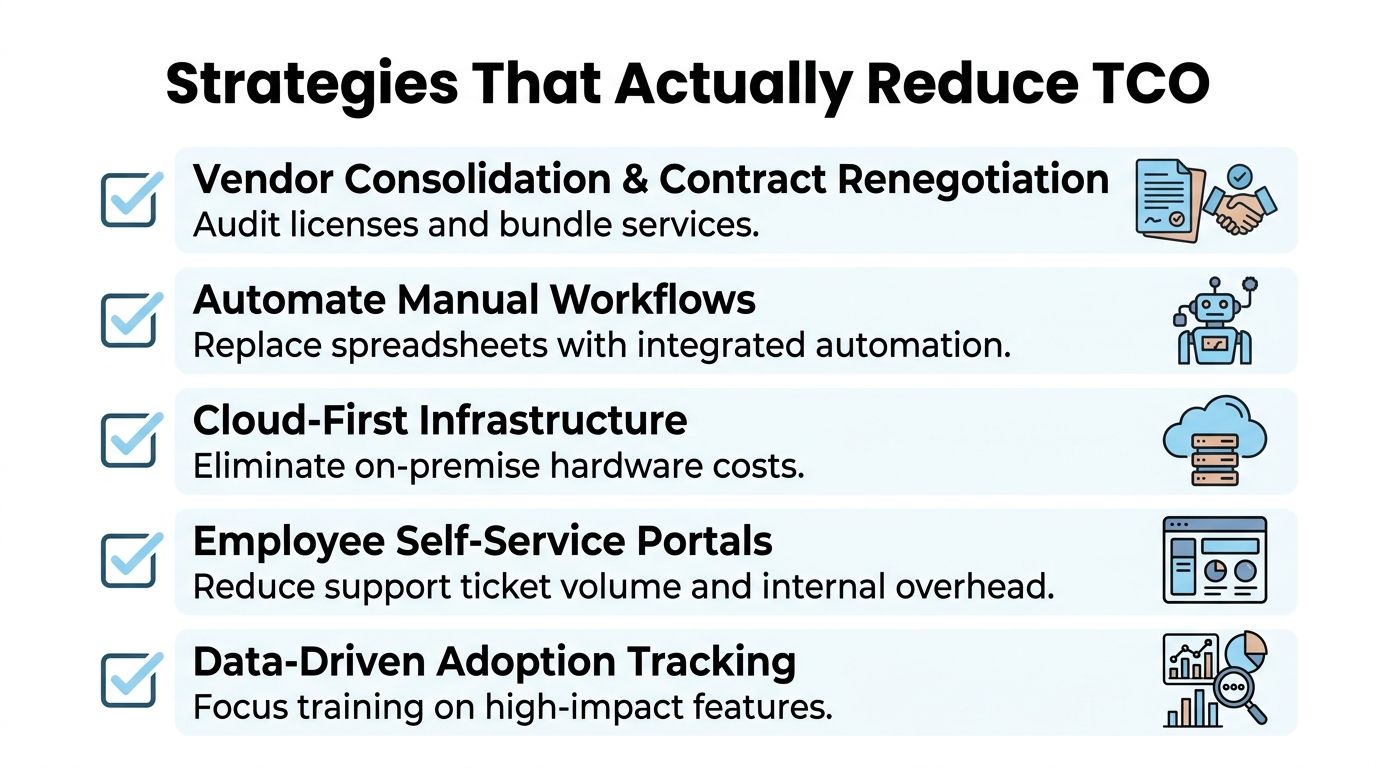
Businesses do not always need cheaper software. They need software that creates less operational cost. Here are several ways to reduce software TCO.
How HubEngage helps you lower Total Cost of Ownership?
HubEngage is an all-in-one employee experience platform that combines communication, engagement, recognition, learning, and productivity tools in a single system. A digital employee experience platform helps organizations build a connected and motivated workforce by improving how employees receive information and interact with their company.
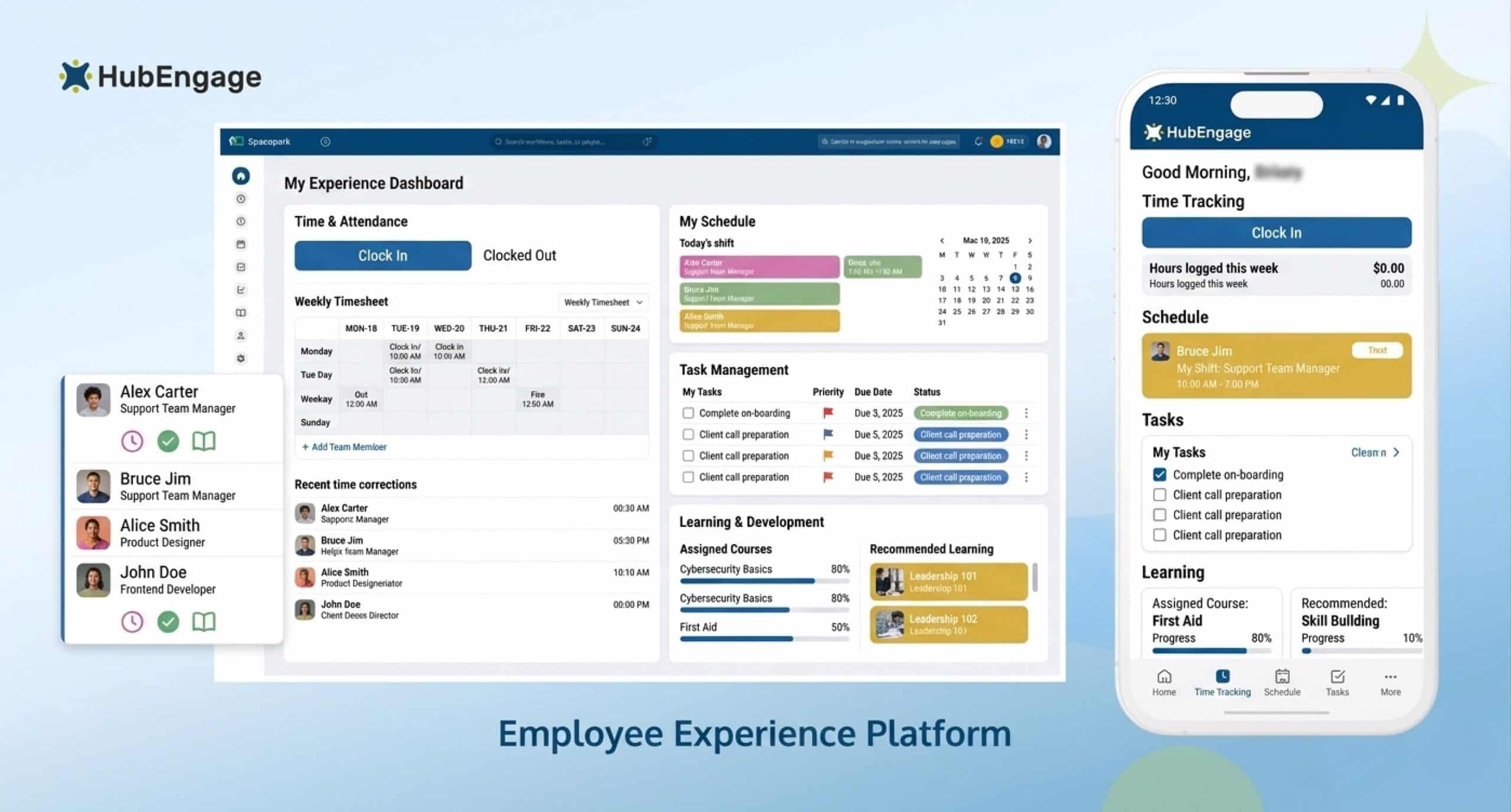
With mobile, web, email, and SMS access, teams can stay informed anywhere. HubEngage also reduces tool sprawl, improves efficiency, and lowers total cost of ownership for businesses of all sizes.
Multiple Tools vs. HubEngage Unified Platform
| Decision Factor | Using Multiple Tools | HubEngage Unified Platform |
| Admin load | Higher because teams switch between systems | Lower because more work happens in one place |
| Integration upkeep | Higher because every tool needs connections | Lower because fewer connectors are required |
| Manager experience | Fragmented and repetitive | More consistent and easier to support |
| Reporting | Split across multiple systems | Easier to centralize |
| Hidden cost risk | Higher | Lower when adoption is strong |
A good tech stack can work when each tool is specialized and company has strong IT teams to manage integrations. However, this approach increases cost. Small businesses and distributed teams save money reduce total cost of ownership by consolidating tools.
Conclusion
The total cost of ownership helps businesses evaluate software beyond subscription price. It includes implementation, training, integrations, administration, support, maintenance, productivity loss, and future migration costs. For small businesses, distributed teams, and software leaders, this broader view prevents costly technology mistakes.
The goal is not the cheapest tool, but the one that delivers value with minimal complexity over time. Consolidating communications, engagement, operations, and learning reduces hidden costs. To see this in action, book a demo today.
FAQs on Total Cost of Ownership
What is the difference between total cost of ownership and ROI calculator of an employee experience platform?
Total cost of ownership measures costs of buying, implementing, operating, supporting, maintaining, and replacing software. A unified employee platform ROI calculator measures the value gained from that investment. Businesses should evaluate both before choosing software.
What hidden costs are most often missed in workforce software quotes?
Hidden costs include employee training, internal administration, change management, support tickets, integration maintenance, downtime, productivity loss, and migration expenses. These costs can make low priced software more expensive over time.
What kinds of purchases benefit from a total cost of ownership analysis?
A TCO analysis is useful for major purchases with ongoing expenses, including software, computers, machinery, vehicles, infrastructure, and equipment. It helps businesses compare upfront prices with long term operating costs.
What resources can help determine total cost of ownership?
Businesses can determine TCO using vendor proposals, finance records, IT data, employee time estimates, implementation plans, usage reports, and operating costs. Independent research can also estimate maintenance and replacement expenses.
Why is total cost of ownership important for small businesses?
TCO is important for small businesses because limited budgets and staff make hidden costs significant. It helps companies avoid software that appears affordable but requires costly support, administration, or integrations.
Related Links
digital employee experience platform | multi-channel communication platform | internal communication software rfp template | unified employee platform ROI calculator