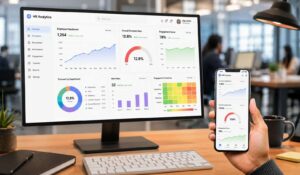
Small businesses often make workforce decisions based on what managers can see, who is performing well, which teams seem engaged, and where workforce management problems are emerging.
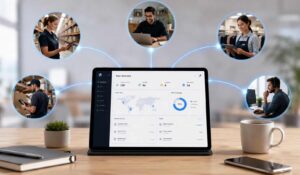
But this becomes harder when employees are spread across offices, remote locations, stores, warehouses, job sites, or the field. Workforce analytics helps businesses turn employee data into useful insights for better decision-making.
From identifying turnover patterns to measuring employee engagement, workforce analytics gives HR teams and business leaders a clearer picture of what is happening across their workforce. Our blog will explain what is workforce analytics, important metrics to track, and how small businesses can use it across frontline, office, and remote teams.
Key Takeaways
- Workforce analytics turns employee data into clear insights that help businesses improve hiring, retention, engagement, communication, and workforce planning.
- Small businesses can start with existing data from HR systems, surveys, attendance records, recognition programs, and communication tools.
- The four main types of workforce analytics are descriptive, diagnostic, predictive, and prescriptive analytics, each supporting different business decisions.
- Important metrics include turnover, retention, absenteeism, employee engagement, communication reach, and workforce growth.
- Workforce analytics is very useful for frontline, remote, office, and distributed teams, where leaders need better visibility across different employee groups.
- AI-powered workforce analytics can identify patterns, and predict workforce trends. It help businesses make faster, and more informed decisions.

What is Workforce Analytics?
Workforce analytics is the process of collecting, measuring, and analyzing workforce data to improve employee and business outcomes. The goal is to turn workforce data into decisions you can act on.
For a small business, workforce analytics does not have to involve complicated data science. It can start with information you already collect through HR systems, employee surveys, communication platforms, recognition programs, attendance records, and performance tools.
Why Workforce Analytics is important for a successful business?
Workforce analytics helps businesses identify the communication gaps earlier and make decisions based on evidence rather than guesswork. It can support decisions related to hiring, retention, engagement, communication, scheduling, performance, and employee experience.
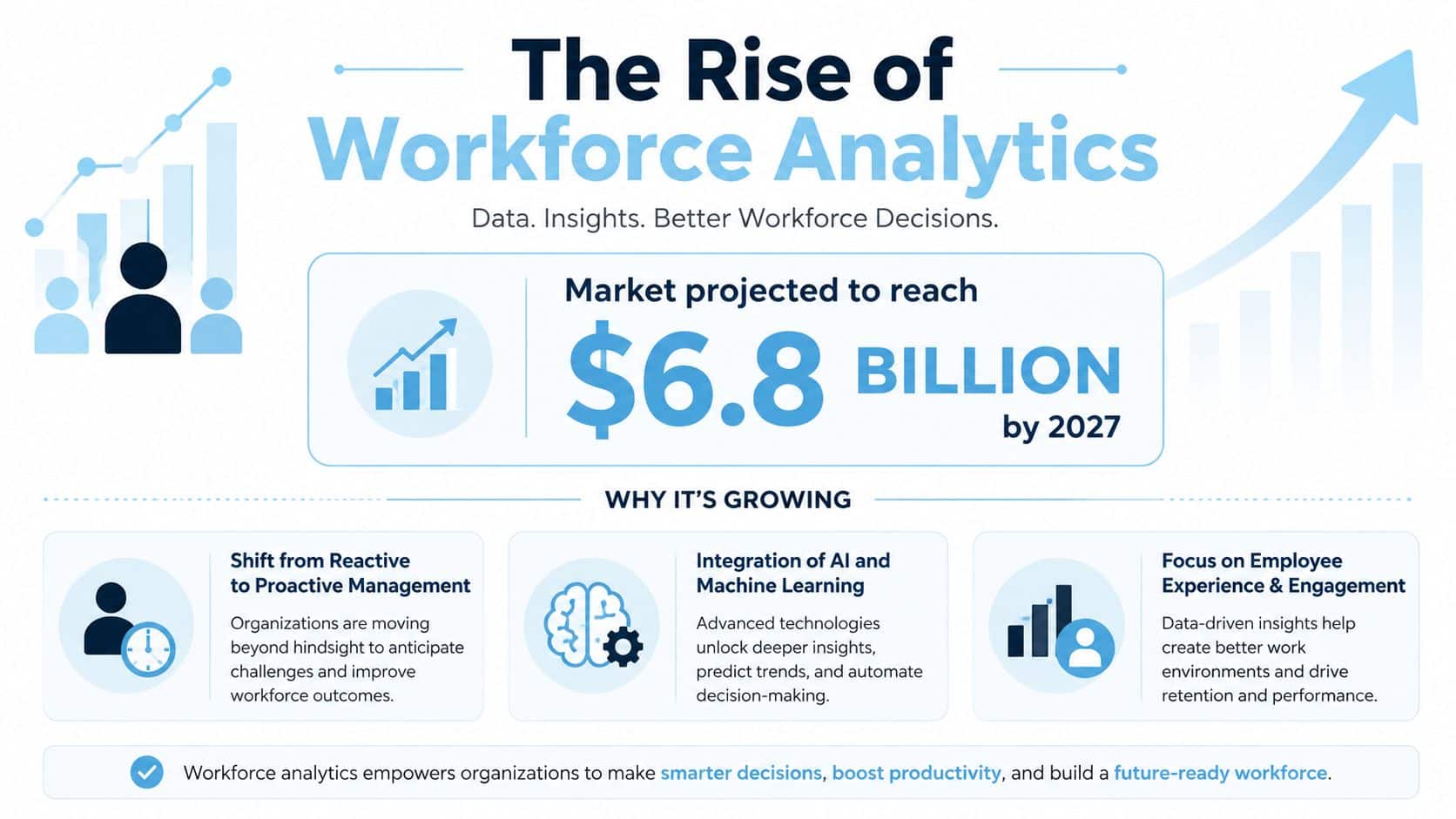
As per report by Market Us, the workforce analytics market is expected to reach $9.9 billion by 2032, growing at a 13.4% CAGR driven by businesses using workforce data to manage employees better, reduce operating costs, and understand employee behavior and workplace trends.
The scale of that growth shows the category is no longer limited to specialized HR teams. For small businesses with limited HR resources, this visibility can be especially valuable because teams need to know where to focus their time and budget.
Components of a Workforce Analytics System
An effective workforce analytics system typically includes several connected components like:

Workforce Analytics vs HR Analytics
Workforce analytics and HR analytics are closely related, but they can have different scopes.
| HR Analytics | Workforce Analytics |
| Focuses mainly on HR processes and outcomes. | Takes a broader view of the entire workforce. |
| Covers hiring, pay, benefits, training, absence, and turnover. | Includes engagement, communication, productivity, recognition, and workforce behavior. |
| Mainly supports HR decision-making. | Supports HR, managers, operations, and business leaders. |
| Looks closely at employee lifecycle data. | Connects employee data with broader business performance. |
| Helps improve HR efficiency. | Helps improve workforce planning, engagement, and overall performance. |
Types of Workforce Analytics
It is broadly classified into four key types, each offering different insights.
1. Descriptive Workforce Analytics
Descriptive analytics provides a historical view of employee data. It answers “What happened?” For example, a business might discover that voluntary turnover increased from one quarter to the next.
2. Diagnostic Workforce Analytics
Diagnostic analytics explores why something happened. If turnover increased, the business could compare departments, locations, engagement survey responses, manager feedback, or recognition activity to identify possible contributing factors.
3. Predictive Workforce Analytics
Predictive analytics happens by an ai powered workforce management software which uses historical data, statistical models, and sometimes machine learning to estimate what could happen next. Businesses may use it to forecast hiring requirements, staffing demand, attrition risk, and future engagement trends.
4. Prescriptive Workforce Analytics
Prescriptive analytics focuses on “What should we do next?” It uses available insights and predictions to recommend actions that may improve team outcomes.
Benefits of Workforce Analytics for Businesses
Understanding the data of employees plays an important role for any business by giving following advantages:

Workforce Analytics Examples
Here are a few examples of analysis of employee data for small and distributed businesses:
1. Frontline Engagement:
HR tracks participation, feedback, recognition, and communication activity to understand how engaged frontline employees are across different shifts and locations.
2. Communication Reach:
Companies measure whether frontline workers are opening and reading important operational updates.
3. Turnover Comparison:
HR compares turnover across remote, office, and frontline employees.
4. Recognition Gaps:
Managers analyze recognition activity to find teams receiving limited appreciation.
5. Survey Insights:
Leadership compares employee survey results by department or location to identify recurring concerns.
Key Workforce Analytics Metrics
For a workforce analytics software, these five metrics are the most essential because they give a balanced view of retention, engagement, attendance, communication, and workforce growth.
| Key Metrics | What it does? | How It Helps |
| Employee Turnover Rate | Tracks the percentage of employees leaving over a period. | Helps identify retention problems and teams or locations with higher workforce risk. |
| Employee Retention Rate | Measures how well the organization keeps employees. | Shows whether engagement, management, and employee experience efforts are working. |
| Absenteeism Rate | Tracks how often employees are absent from work. | Helps spot attendance issues, workload concerns, and possible employee disengagement. |
| Employee Engagement Score | Measures how connected and motivated employees feel. | Helps leaders identify engagement gaps across frontline, office, and remote teams. |
| Communication Reach and Read Rates | Measures how many employees receive and read company messages. | Shows whether important updates are reaching the right employees across the team. |
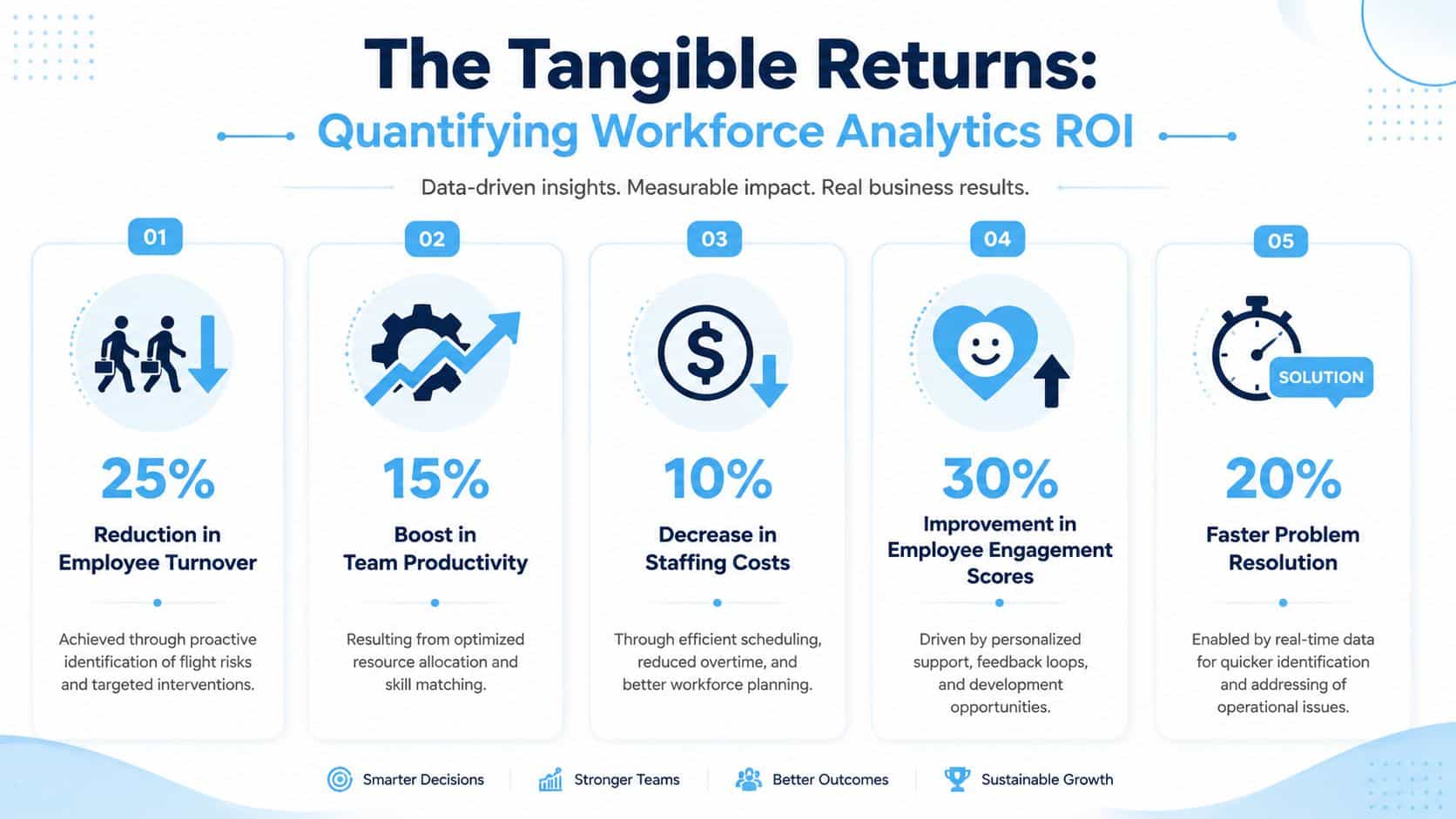
Workforce Analytics ROI
Employee data becomes more valuable when it is connected as it can provide broader context. For small businesses, the potential ROI comes from making faster decisions, focusing limited resources more effectively, improving communication, and identifying possible risks before they become more expensive problems. You can also use unified employee platform ROI calculator to find out the correct roi of workforce analytics as per your business needs
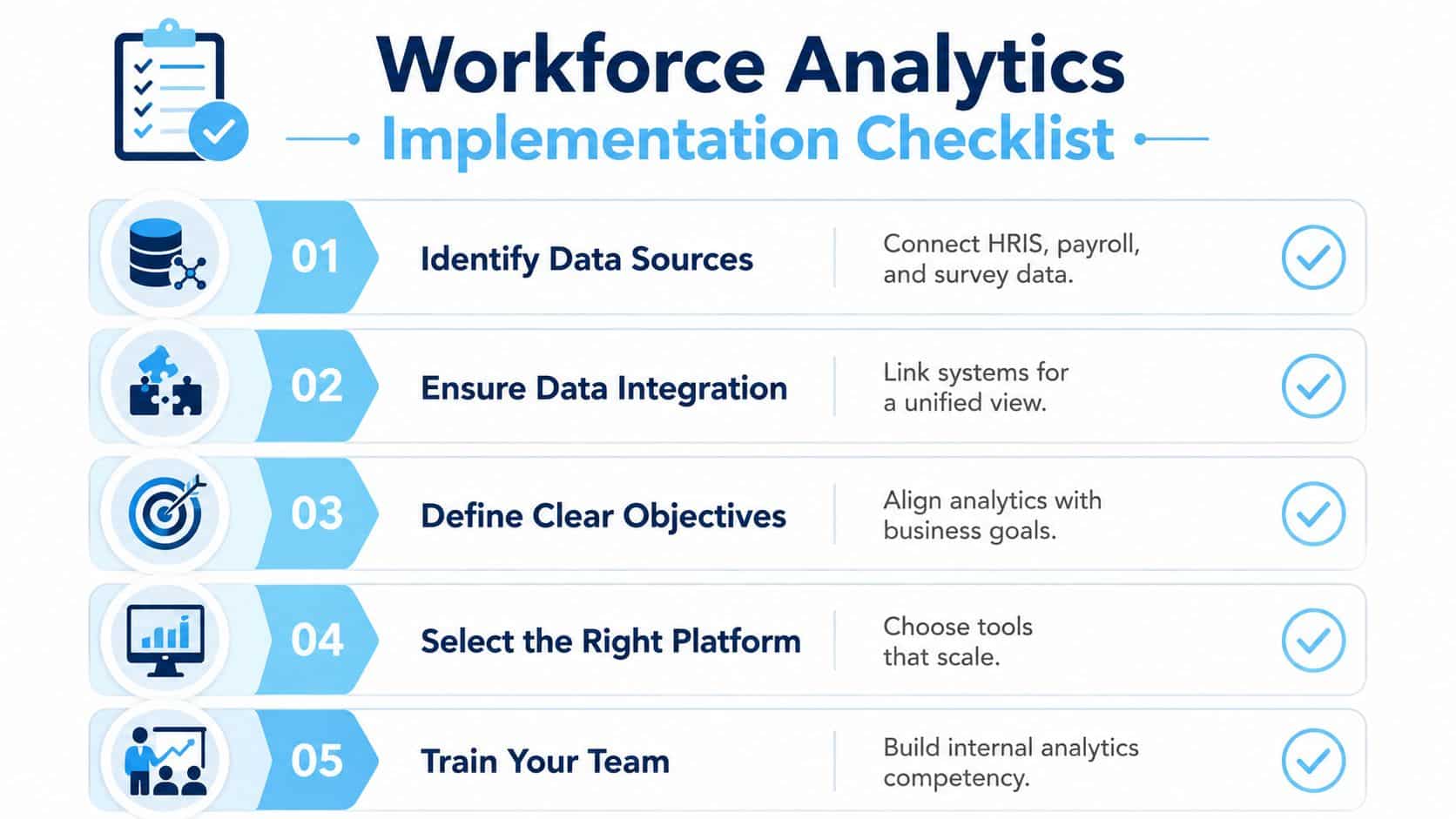
Checklist to implement Workforce Analytics
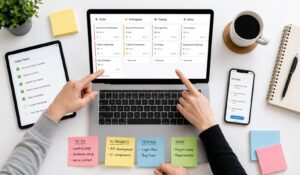
Small businesses can get started with this without having a specific department. You can use the below checklist:
AI-Powered Workforce Analytics by HubEngage
Our workforce analytics platform helps you connect employee communication, engagement, surveys, recognition, and business operations in a single digital space.
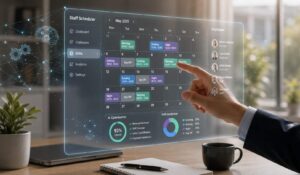
For businesses managing frontline, office, remote, or distributed employees, this tool provides analysis of time tracked, employee schedules, tasks status, etc that can help leaders understand how employees are engaging across different locations and workforce groups.
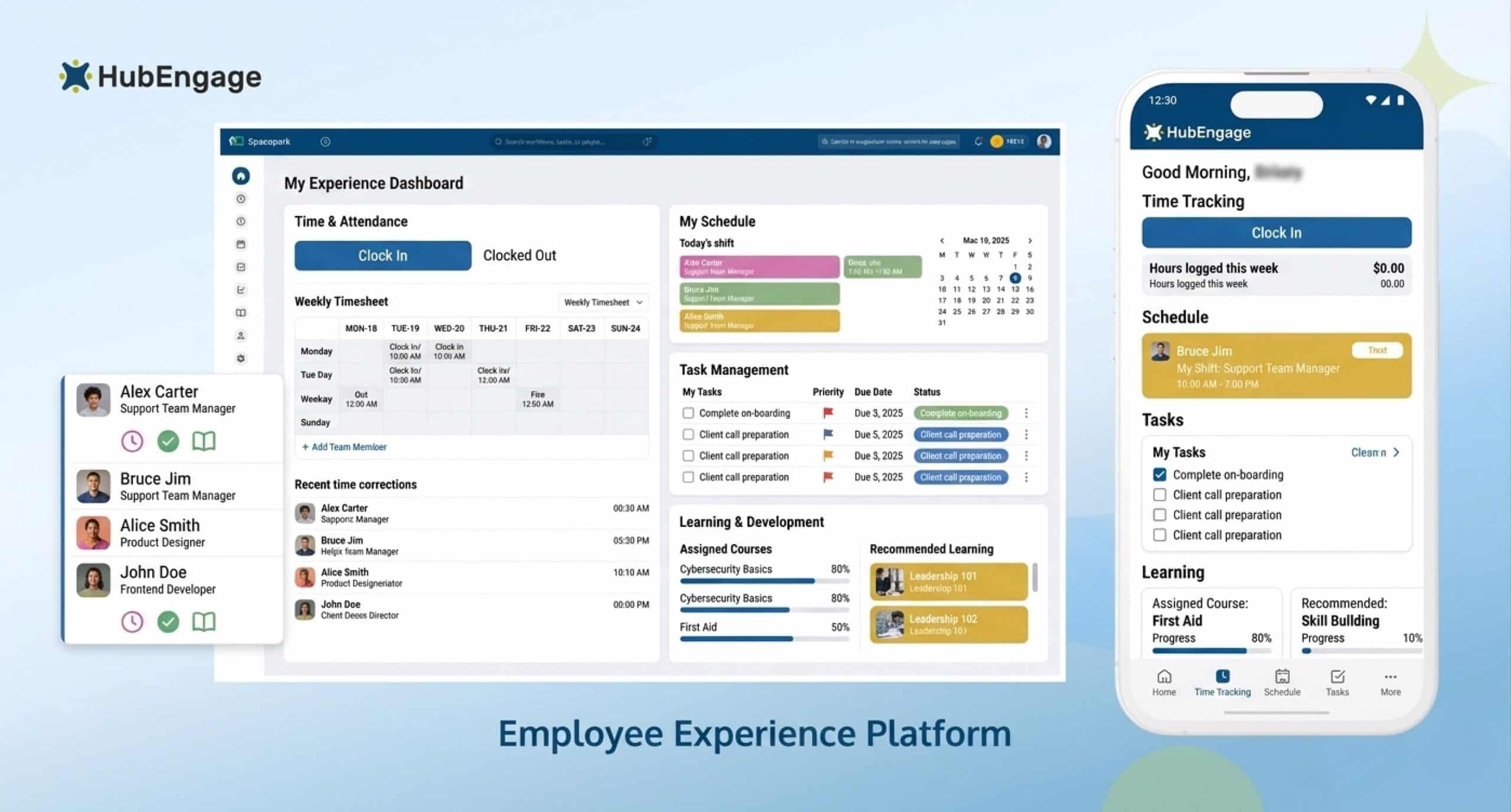
Business managers can use the data to identify patterns and make more informed workforce decisions. Instead of viewing employee experience data in isolation, businesses can gain greater visibility into how different parts of their workforce are engaging with the organization.
Conclusion
Understanding what is workforce analytics helps businesses make smarter, data-driven people decisions. Small businesses can start simply by identifying challenges, collecting reliable data, tracking meaningful metrics, and turning them into action.
As teams become more distributed across frontline, office, and remote environments, having a software to analyze employee data provides valuable visibility into employee needs, engagement, and trends.
To bring these workforce insights together and support better employee experiences, explore our employee experience platform by taking a personalized demo today.
FAQs about Workforce Analytics
How can HR managers ensure data privacy when using workforce analytics?
By limiting access, using secure platforms, anonymizing sensitive information, and collecting only necessary data. Clear privacy policies and regular security reviews also help maintain employee trust and compliance.
What are the main challenges of implementing workforce analytics?
Poor data quality, disconnected systems, privacy concerns, limited analytics skills, and unclear goals are common challenges found. Small businesses can overcome these challenges by starting with reliable data and a few measurable objectives.
How does workforce analytics improve company culture?
By identifying trends in employee engagement, communication, recognition, and feedback, leaders can use these insights to address concerns, support managers, recognize employees, and create better experiences across teams.
Is workforce analytics only for HR teams?
Business leaders, managers, operations teams, and internal communication teams can use it to improve staffing, engagement, communication, retention, productivity, and overall employee experience.
What is the role of AI in workforce analytics?
AI helps workforce analytics process large amounts of employee data, identify patterns, predict trends, and surface useful insights. It can help businesses understand turnover risks, engagement trends, staffing needs, and potential workforce issues faster.
Related Links
workforce analytics platform | workforce management | unified employee platform ROI calculator | ai powered workforce management software |