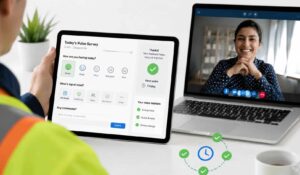
Meaningful employee to feedback loop is linked to engagement, trust, and retention. Yet many organizations still collect feedback too rarely and take too long to understand the results. By the time leaders respond, small concerns may have become problems such as manager distrust, frontline frustration, or employee turnover.
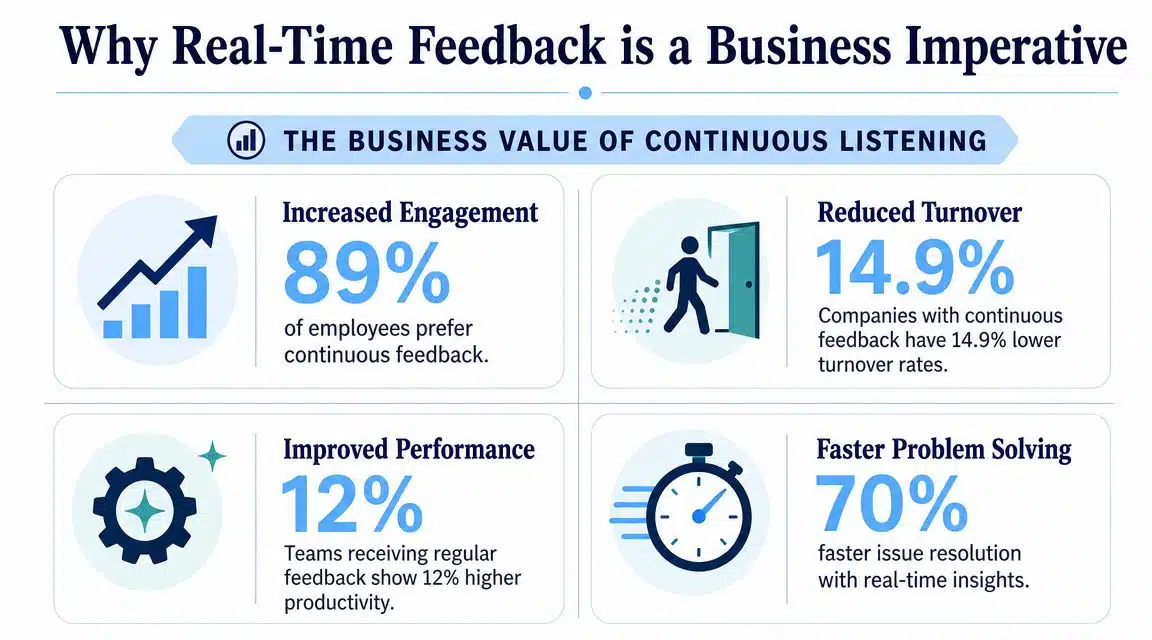
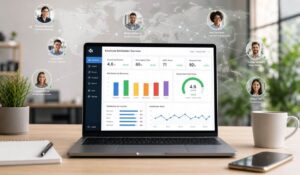
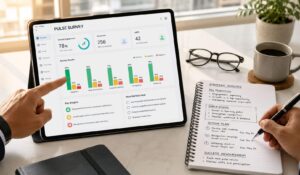
Real-time employee feedback platforms solve this gap through continuous listening, pulse surveys, live dashboards, AI-powered analysis, and faster action planning. They help HR teams identify patterns while the experience is still fresh and useful.
Gallup research shows that 80% of employees who received meaningful feedback in the past week reported being fully engaged.
In this blog, we will compare the top real-time employee feedback platforms for growing businesses along with a selection checklist to help you pick the right platform.
Key Takeaways
- Real-time feedback platforms help businesses identify employee concerns before they become larger problems.
- The best platforms combine surveys, anonymous feedback, analytics, segmentation, and action planning.
- Mobile, SMS, email, and multilingual access are important for frontline and distributed workforces.
- AI sentiment and thematic analysis can reduce the time required to review open-text responses.
- Growing businesses should select a platform that can scale without creating additional administrative work.
Best Real-Time Employee Feedback Platforms And Softwares
The market is crowded, but the platforms below are the ones that most often come up in serious evaluations. They differ in scope, ideal customer, and how extensively they use AI. Some are purpose-built listening tools. Others sit inside broader performance or employee experience suites.
1. HubEngage
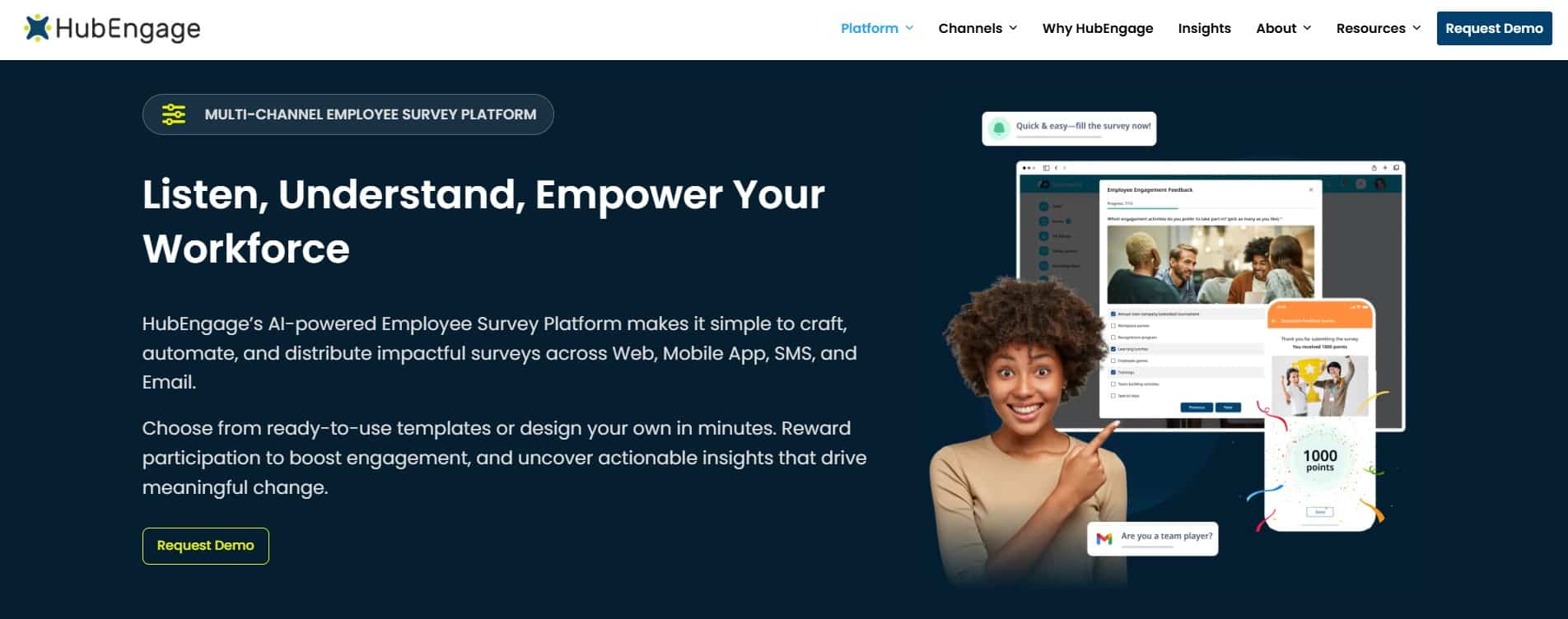
Our AI-driven employee feedback software designed to help organizations create surveys, measure employee satisfaction, collect real-time feedback, and turn responses into clear actions. HR teams can use ready-made templates or AI-assisted custom questions to build pulse, engagement, lifecycle, and anonymous surveys.
Surveys can be distributed through web, mobile apps, SMS, email, intranet, and digital signage, making it easier to reach frontline, deskless, remote, and office employees. The platform uses AI sentiment and thematic analysis to identify trends, repeated concerns, and important feedback themes without requiring manual review.
HubEngage also supports more than 30 languages, automated reminders, participation analytics, engagement scores, and gamified rewards such as points and gift cards. With SSO, HRIS integrations, ISO 27001, SOC 2, HIPAA, and GDPR compliance, it helps HR teams collect, understand, and act on employee feedback faster.
Top Features
- AI-powered sentiment and thematic feedback analysis
- Pulse, engagement, lifecycle, and anonymous surveys
- Multichannel distribution through mobile, web, SMS, email, intranet, and digital signage
- Real-time dashboards, participation analytics, and automated reminders
- Support for 30+ languages and gamified employee rewards
Pros
- Strong choice for frontline, deskless, remote, and distributed workforces
- Reduces manual work with AI-assisted survey creation and response analysis
- Connects employee feedback with communication, recognition, and engagement tools
Cons
- Initial setup may needs lot of tech and operations support
2. Sogolytics
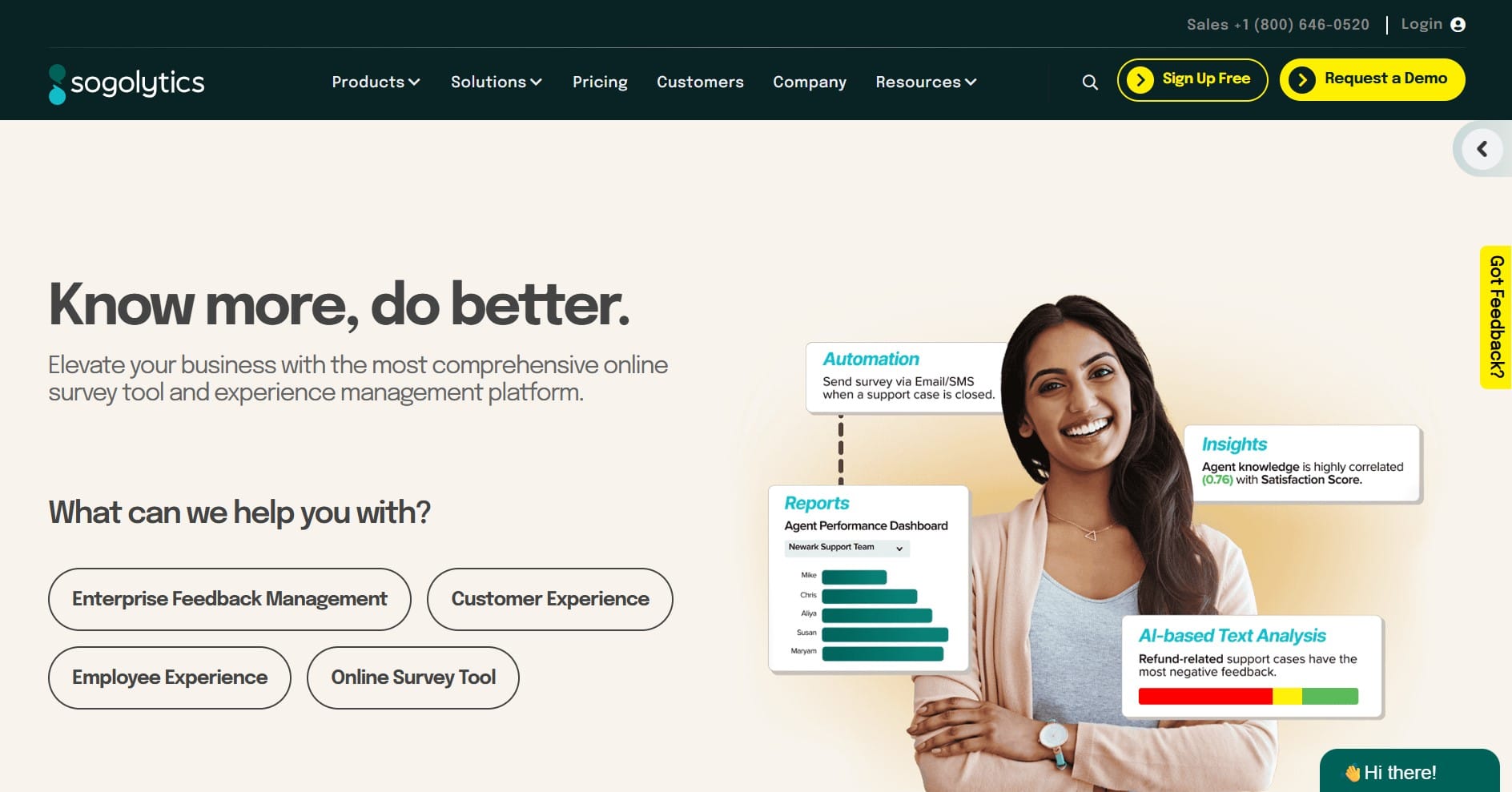
Sogolytics is an employee feedback and experience platform that helps businesses run automated pulse surveys, engagement surveys, and workplace assessments. It provides customizable questionnaires, anonymous responses, advanced analytics, and detailed reports for understanding employee sentiment.
Top Features
- Automated employee pulse surveys
- Advanced reports and employee data segmentation
- Custom survey templates and anonymous responses
Pros
- Offers strong survey customization and reporting
- Helps identify engagement trends across employee groups
Cons
- The platform may feel complex for small teams
- It is less focused on performance goal management
3. ThriveSparrow
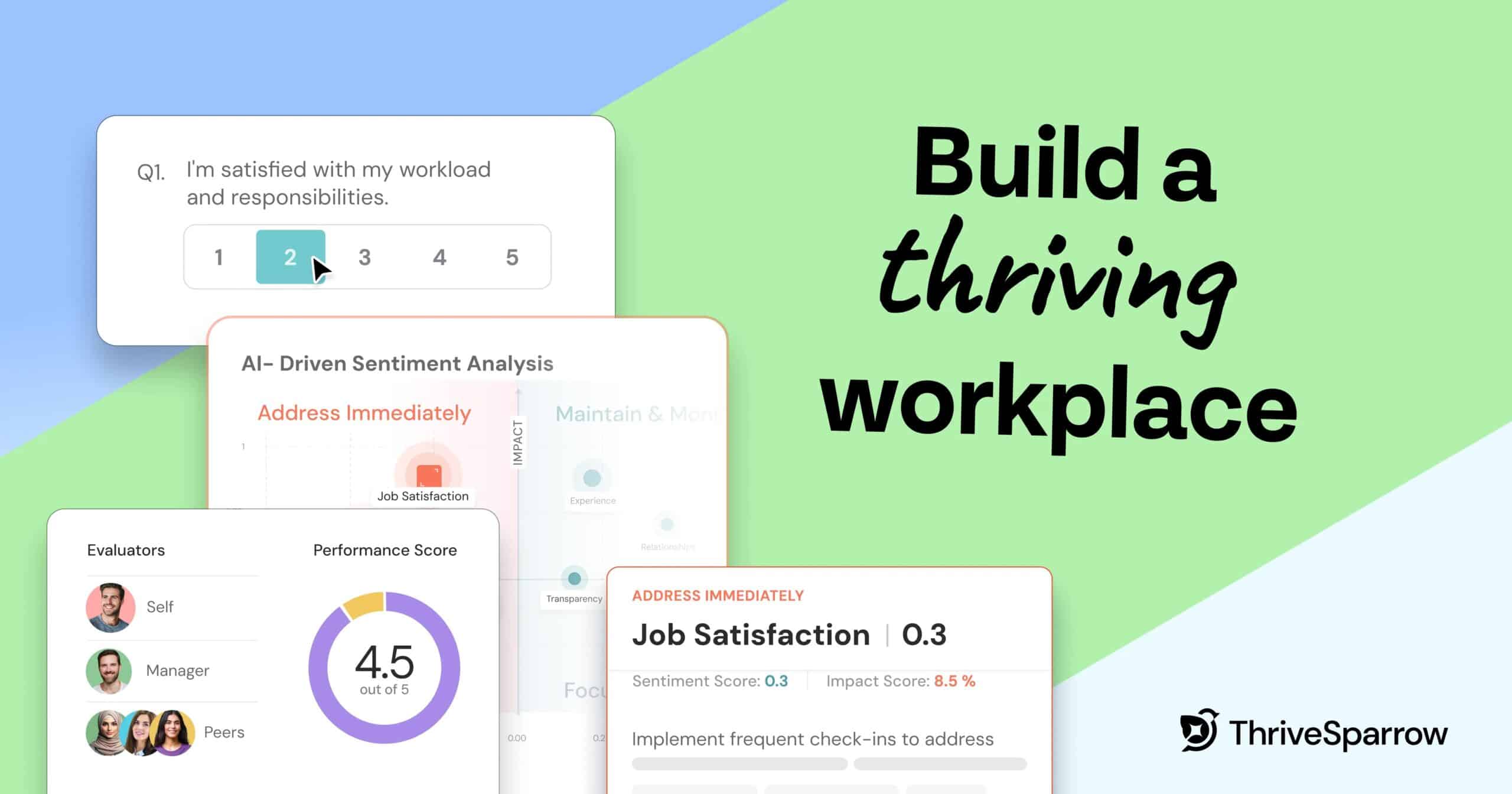
ThriveSparrow is employee feedback software that combines pulse surveys, sentiment analysis, recognition, and performance tools. It helps HR teams regularly collect employee opinions, identify workplace concerns, and turn feedback results into practical action plans.
Top Features
- Recurring pulse surveys with AI sentiment analysis
- Feedback tracking and workplace action plans
- Employee recognition and 360-degree feedback
Pros
- Helps convert feedback into clear improvement steps
- Combines engagement, recognition, and performance tools
Cons
- Survey-only users may not need every feature
- Managers must regularly review and act on results
4. Deel HR
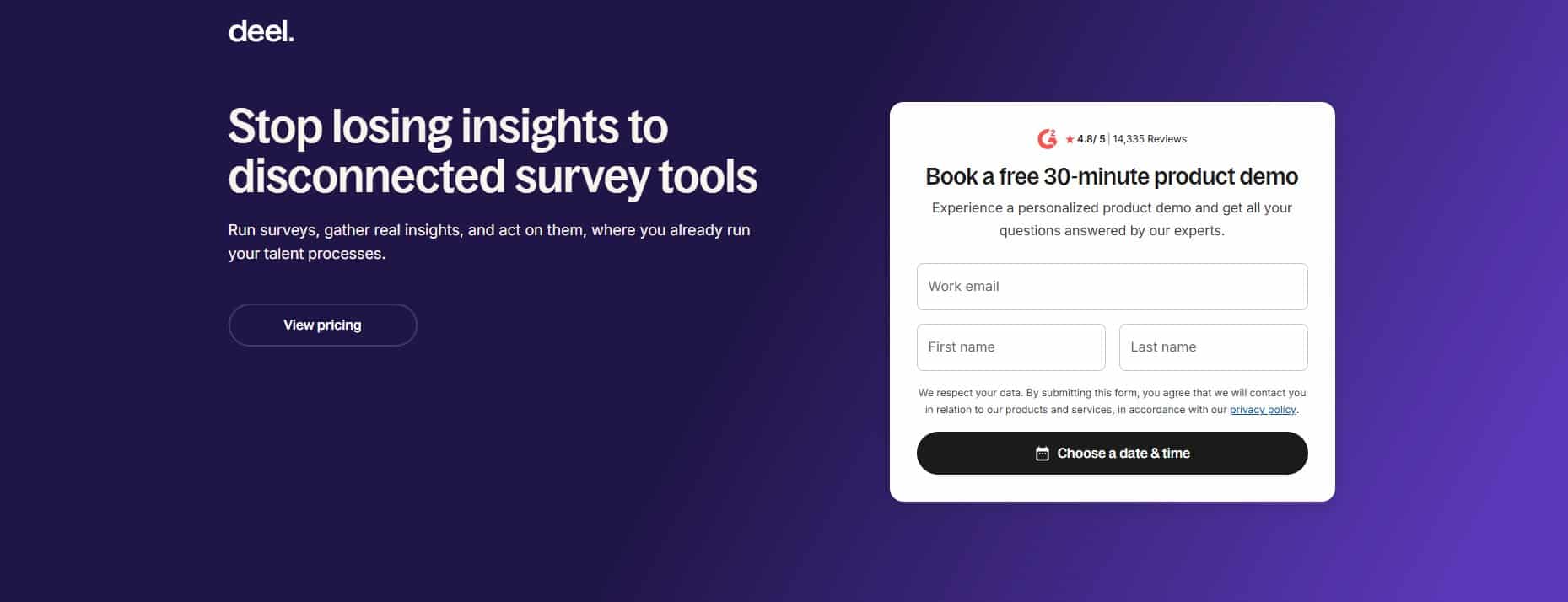
Deel HR provides employee survey tools through its wider global HR and talent management platform. Businesses can create pulse, engagement, and custom surveys while connecting employee feedback with performance reviews, goals, development plans, and learning programs.
Top Features
- Custom and automated employee surveys
- Centralized survey dashboards and action planning
- Feedback connected with goals and development plans
Pros
- Strong option for remote and international teams
- Keeps surveys connected with wider HR processes
Cons
- Feedback tools are part of a broader product suite
- Small businesses may not require every included module
5. Express Evaluations
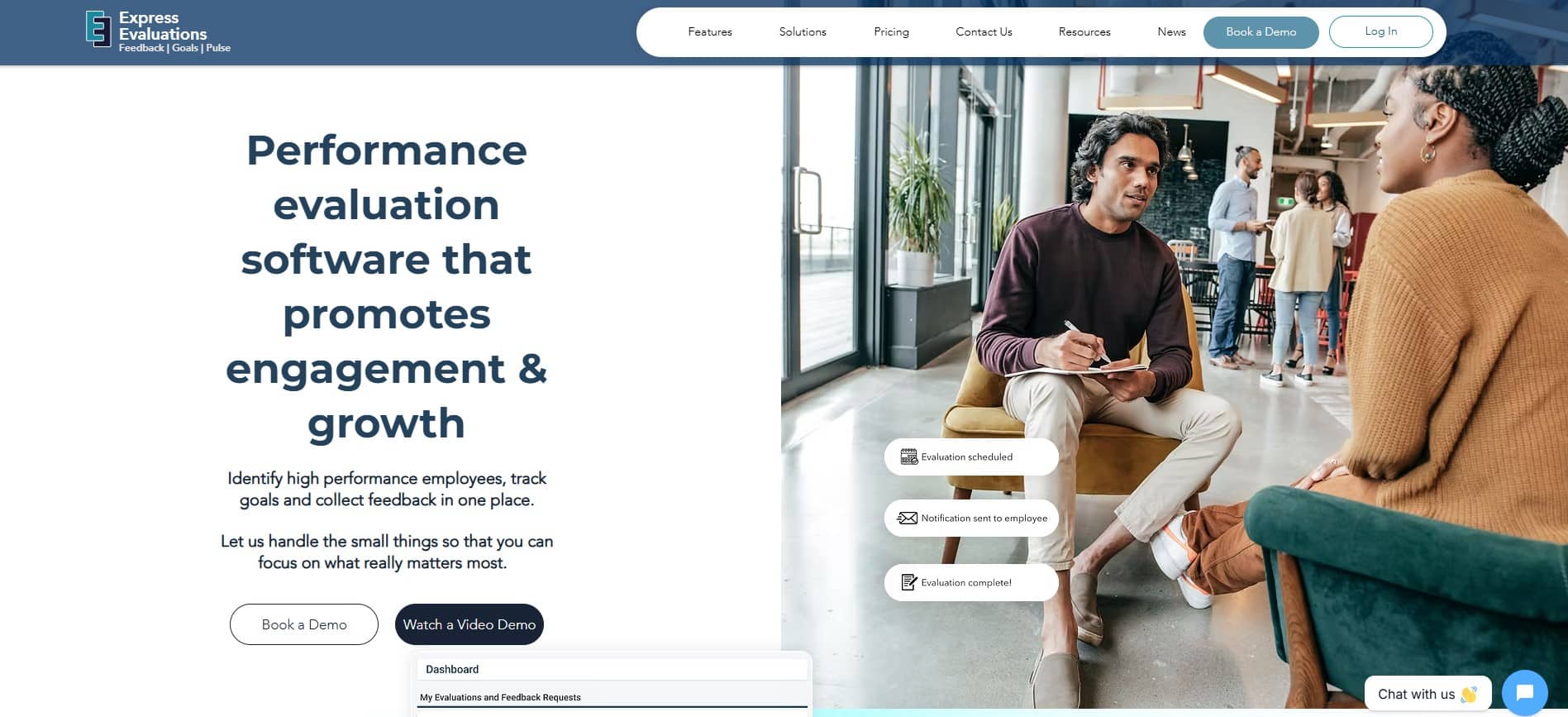
Express Evaluations is employee feedback and performance evaluation software designed for small businesses, government organizations, and nonprofits. It helps managers run evaluations, collect employee feedback, track goals, and send pulse surveys from one platform.
Top Features
- Anonymous employee pulse surveys
- Performance evaluations and employee goal tracking
- Custom evaluation forms and automated reminders
Pros
- Combines employee feedback with performance evaluations
- Offers a focused solution for smaller organizations
Cons
- It is more focused on reviews than continuous listening
- Advanced survey analytics may be limited
6. FeedbackPulse
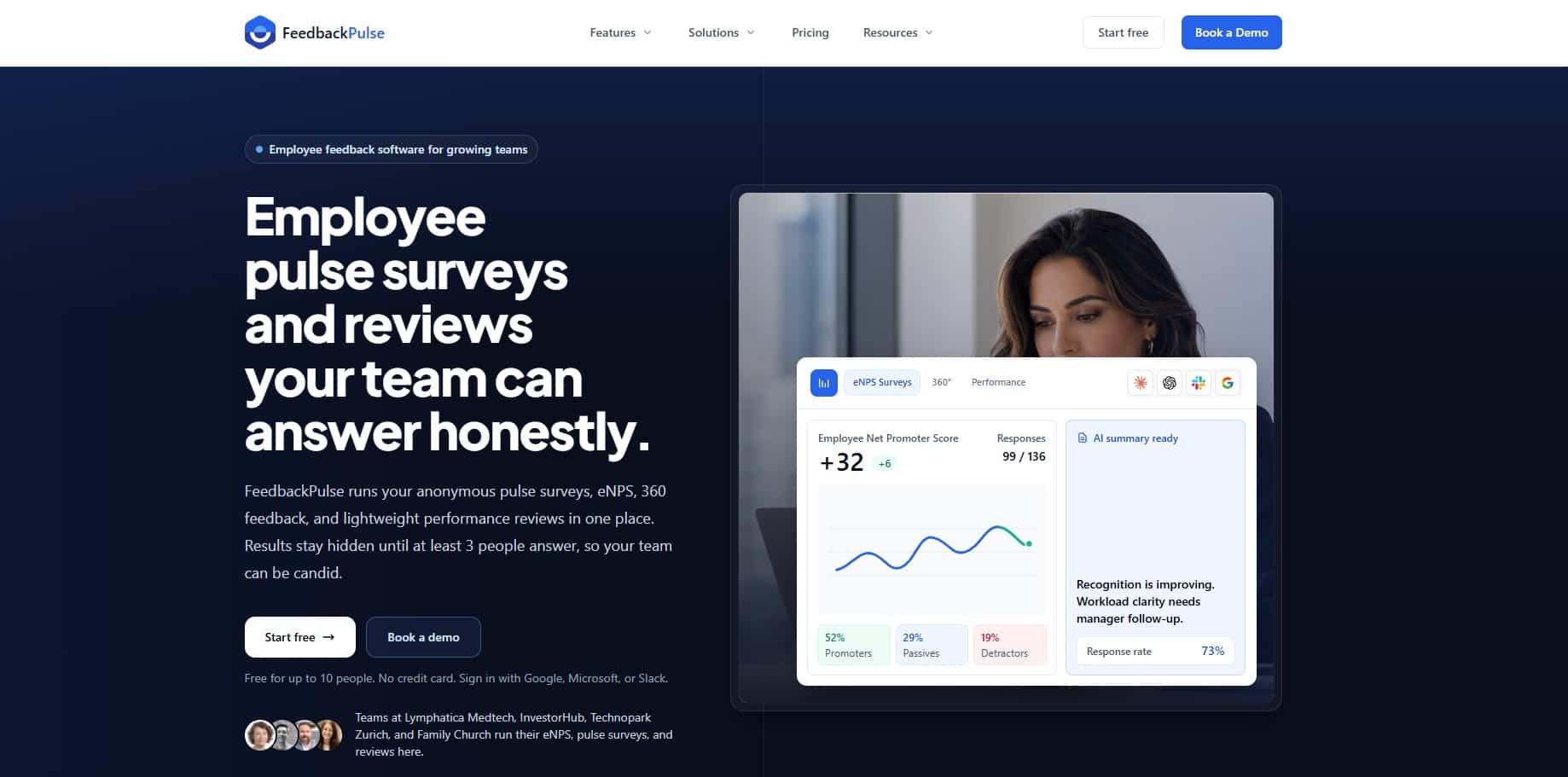
FeedbackPulse is a lightweight employee feedback platform designed for small and growing teams. It supports anonymous pulse surveys, eNPS tracking, performance reviews, and 360-degree feedback while using fixed privacy safeguards to protect employee identities.
Top Features
- Anonymous pulse and employee engagement surveys
- eNPS tracking, 360 feedback, and performance reviews
- Recurring survey schedules with privacy safeguards
Pros
- Strong anonymity controls encourage honest feedback
- Simple to use for small and growing businesses
Cons
- Reporting may be limited for large enterprises
- It has fewer integrations than complete HR platforms
7. Factorial
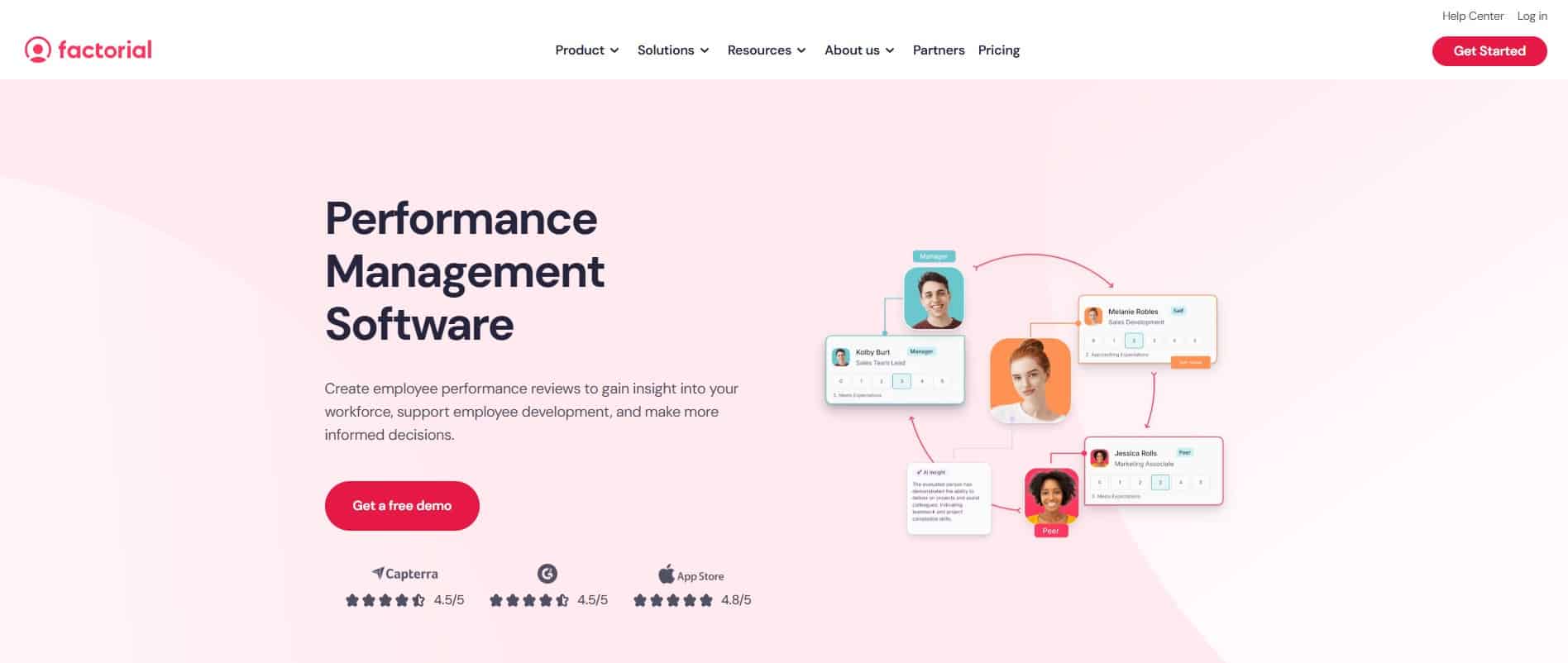
Factorial is an HR management platform that includes employee feedback, performance reviews, goals, and OKR tracking. It helps managers collect structured feedback and connect employee development discussions with individual and business performance goals.
Top Features
- Structured employee and manager feedback
- Performance reviews linked with goals and OKRs
- Custom review cycles and employee progress tracking
Pros
- Connects feedback directly with performance goals
- Keeps employee data and HR processes in one system
Cons
- Feedback mainly supports performance management
- It offers fewer continuous listening features than survey platforms
8. PerformYard
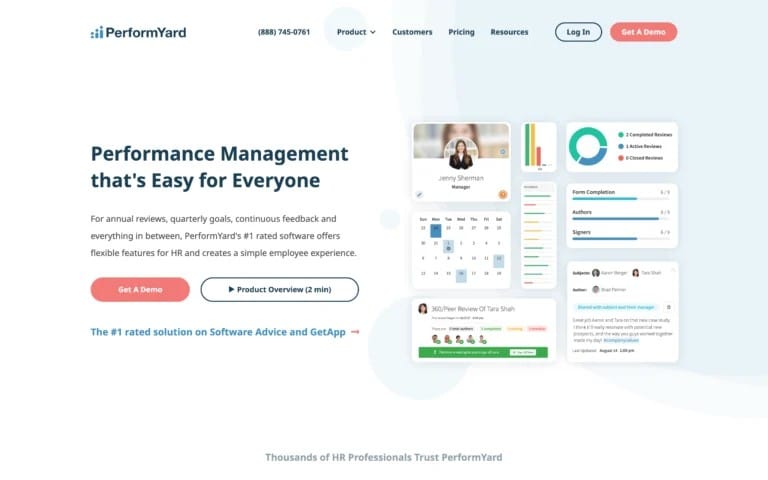
PerformYard is performance management and employee feedback software that supports 360-degree employee engagement surveys reviews, check-ins, goals, and continuous feedback. It allows businesses to build structured review processes based on their existing performance management methods.
Top Features
- Configurable 360-degree employee feedback
- Continuous feedback connected with review cycles
- Employee check-ins and performance goal management
Pros
- Supports flexible and customizable review processes
- Brings feedback, goals, and evaluations into one place
Cons
- It is primarily designed for performance management
- It may be too structured for simple pulse surveys
9. Effy AI
Effy AI is AI-powered employee feedback and performance review software for small and growing businesses. It automates review forms, reminders, feedback collection, and summaries for peer, manager, self-assessment, and 360-degree review processes.
Top Features
- AI-generated employee feedback summaries
- Automated 360-degree and performance reviews
- Review templates with automated response reminders
Pros
- Reduces manual work during performance reviews
- Simple for small businesses to set up and use
Cons
- It focuses more on reviews than real-time sentiment
- It does not replace a complete HR platform
10. SurveyLegend
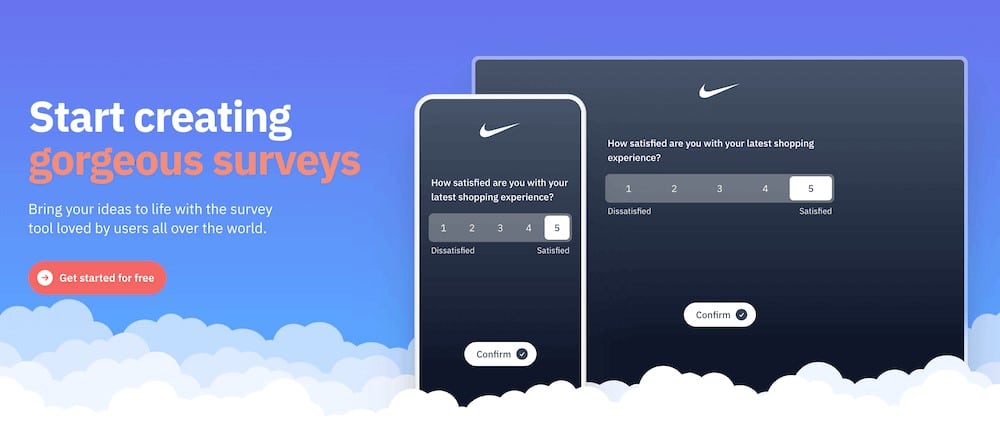
SurveyLegend is an online survey platform that businesses can use for employee engagement, satisfaction, onboarding, exit, and manager feedback surveys. It provides mobile-friendly survey designs, ready-made templates, conditional logic, and real-time response analytics.
Top Features
- Mobile-friendly employee survey builder
- HR survey templates and real-time analytics
- Conditional logic and customizable survey designs
Pros
- Surveys work smoothly across mobile and desktop devices
- Easy to create attractive and engaging questionnaires
Cons
- It is not built only for employee feedback
- Action planning may require additional software
Best Real-Time Employee Feedback Platforms And Softwares Comparison
| No. | Real-Time Employee Feedback Platform | Best For |
|---|---|---|
| 1 | HubEngage | Real-time feedback for distributed and frontline teams |
| 2 | Sogolytics | Automated employee pulse surveys |
| 3 | ThriveSparrow | Turning employee feedback into action plans |
| 4 | Deel HR | Employee surveys for remote teams |
| 5 | Express Evaluations | Government, small businesses, and nonprofits |
| 6 | FeedbackPulse | Anonymous feedback with fixed safeguards |
| 7 | Factorial | Linking feedback with performance goals |
| 8 | PerformYard | 360-degree employee feedback |
| 9 | Effy AI | Turning feedback into AI-powered insights |
| 10 | SurveyLegend | Mobile-friendly employee surveys |
Selection Checklist For Real Time Employee Feedback Platforms
Growing businesses should choose a platform that fits their team size, available resources, and employee listening goals. You can use the following checklist to select the right one.
| Area | Importance |
|---|---|
| Workforce access | The platform should make it easy for frontline, remote, hourly, and office employees to participate from any device. |
| Survey types | Different survey formats help businesses collect feedback across engagement, onboarding, employee lifecycle, satisfaction, and loyalty stages. |
| Feedback channels | Multiple channels such as mobile, email, SMS, web, and QR codes help improve survey reach and participation. |
| Anonymity | Anonymous feedback gives employees a safer way to share honest concerns, ideas, and workplace experiences. |
| Analytics | Clear analytics help HR teams understand sentiment, repeated themes, changing trends, and differences between employee groups. |
| AI capabilities | AI can quickly summarize written responses, identify common concerns, and reduce the need for manual feedback review. |
| Manager tools | Manager dashboards and action plans help team leaders understand feedback and respond with clear improvement steps. |
| Languages | Multilingual surveys allow employees to provide feedback in a language they understand and feel comfortable using. |
| Integrations | HRIS, SSO, communication, and collaboration integrations reduce manual work and keep employee information connected. |
| Scalability | A scalable platform can support more employees, teams, departments, and locations as the business continues to grow. |
| Security | Strong security and compliance features protect employee feedback, personal information, and confidential organizational data. |
| Ease of use | A simple platform allows HR teams and managers to create, send, and analyze surveys without technical assistance. |
Conclusion
Real time employee feedback platforms help growing businesses understand employee needs before small concerns become larger workforce problems. The right platform should help employees measure engagement surveys easy to create, distribute, analyze, and convert into action.
Businesses should consider workforce access, anonymity, AI analytics, manager tools, integrations, and scalability before selecting a solution.
If you have frontline, deskless, remote, and office team then, you must explore the our Employee Experience Platform. Take a demo to see how continuous feedback can help with better engagement.
FAQs on Real Time Employee Feedback Platforms
How does real-time employee feedback software work?
The software sends short surveys or feedback requests, collects employee responses, and displays results through live dashboards. Advanced platforms also analyze sentiment, identify themes, compare teams, and recommend improvement actions.
How often should businesses collect employee feedback?
Many businesses run focused pulse surveys monthly or quarterly. Surveys may be sent more frequently during onboarding, organizational change, manager transitions, or workplace events that require immediate employee input. Explore more on pulse survey best practices
Are real-time employee surveys anonymous?
Many platforms support anonymous or confidential surveys. Businesses should clearly explain their anonymity rules, reporting thresholds, data access, and privacy practices before asking employees to submit sensitive workplace feedback.
Can employee feedback platforms support frontline workers?
Yes. Platforms with mobile apps, SMS, QR codes, kiosks, multilingual surveys, and simple authentication can reach frontline employees who may not regularly use company email or desktop-based HR systems.
How can a businesses respond to negative employee feedback?
Leaders should review the issue, identify repeated patterns, communicate what they learned, and assign clear actions. Employees do not expect every request to be accepted, but they expect a transparent response.
How much time does it takes to get used to a real-time feedback platform?
It depends on how much automation the platform provides. In older models, HR teams spent lot of time building surveys and analyzing comments. With AI-assisted creation, scheduling, sentiment analysis, and theme detection, the workload shifts toward reviewing insights and assigning action rather than compiling raw results.
Related Links:
employee survey tools | employee engagement surveys | how to measure employee satisfaction | pulse survey best practices | feedback loop