Running a small business means many responsibilities, and keeping employees safe is one of the most important. Whether your team works in an office, warehouse, store, or remotely, a HR compliance training for employees helps reduce risks and protect people at work.
It means following safety laws, spotting hazards, training employees, and keeping clear records. For small and distributed teams, this can feel challenging, but it does not have to be complex.
With simple rules, regular training, easy access to safety information, and clear communication, businesses can create safer workplaces and reduce risks. Our blog explains how small businesses can manage workplace health and safety regulatory compliance standards effectively.
Key Takeaways
- Workplace health and safety compliance helps protect employees and reduce business risks.
- Key areas include risk checks, safety policies, training, inspections, and recordkeeping.
- Safety compliance should be reviewed and updated regularly.
- Businesses must follow applicable OSHA, state, local, and industry safety rules.
- Strong compliance can reduce injuries, fines, legal issues, and operational disruptions.

What is Workplace Health And Safety Regulatory Compliance?
Health and safety compliance is the process of following workplace safety laws, regulations, policies, and recognized safety practices designed to protect employees from injury and illness.
In the US, the Occupational Safety and Health Administration (OSHA) establishes and enforces many workplace safety requirements. Some states also operate their own workplace safety programs. Depending on your business, compliance may involve federal, state, local, and industry-specific requirements.
Components of Workplace Health And Safety Regulatory Compliance
An effective workplace safety program usually includes several connected areas such as:
1. Risk Assessments and Hazard Identification
Understanding what could harm employees is the most important step in workplace safety. Businesses should regularly check work areas to find possible dangers and fix them early to prevent accidents.
Example: A worker using a bad chair may develop back pain over time.
2. Occupational Health and Employee Well-Being
Workplace safety is not only about preventing accidents. It also includes protecting long-term employee health and comfort.
Example: A company provides standing desks to reduce back pain for office workers.
3. Employee Safety Training
Safety rules only work when employees understand them clearly. Short learning methods like microlearning for employees are often better because they are quick and easy to remember.
Example: A 5-minute video on safe lifting techniques can help prevent back injuries.
4. Workplace Inspections and Safety Audits
Regular inspections help find safety problems before they cause injuries. Businesses should check workplaces, equipment, and safety records on a routine basis.
Example: A worker notices a broken chair and reports it so it can be replaced before someone gets hurt.
5. Clear Safety Policies and Procedures
Employees need clear instructions on what to do when safety issues happen. Written policies help everyone follow the same rules, no matter where they work.
Example: Using a policy management software to keep all policies in one online system which is easy to access.
Legal requirements of Workplace Health And Safety Regulatory Compliance
Workplace health and safety laws vary by country and location. Businesses need to understand and follow the rules that apply to where they operate. These requirements may include:
Health and Safety Compliance Checklist
| Compliance Area | Action Step |
| Safety laws | Follow national, state, and local workplace safety rules |
| Industry regulations | Meet safety requirements specific to your industry |
| Accident reporting | Report workplace accidents and injuries when required |
| Employee training | Provide workers with the required safety training |
| Safety records | Keep accurate records of inspections, incidents, and training |
Employers should regularly check for changes in safety regulations and update their policies and procedures to stay compliant.
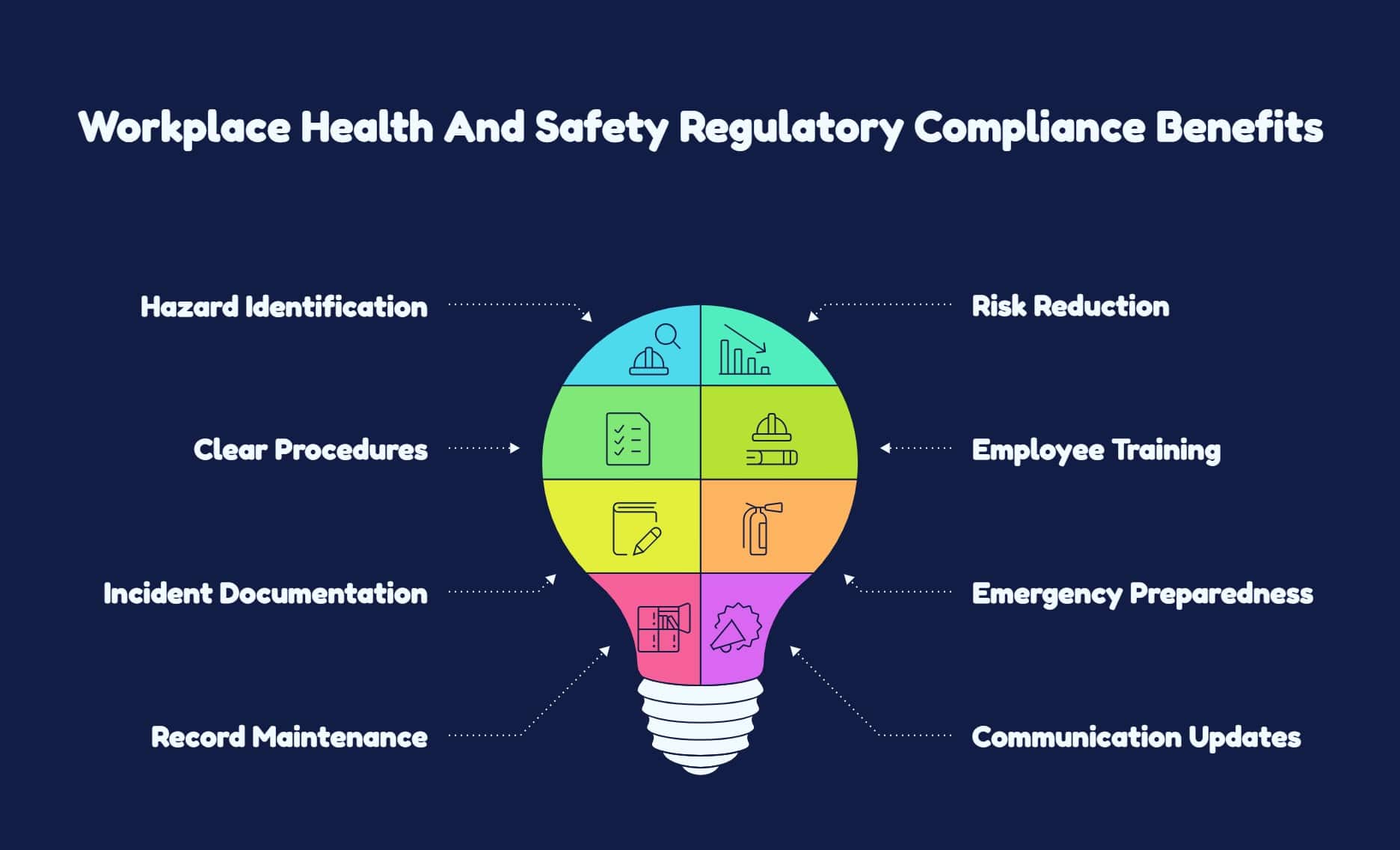
Benefits of Workplace Health And Safety Regulatory Compliance
Maintaining health and safety compliance can provide several business benefits.
What happens when a business ignores Workplace Health And Safety Regulatory Compliance?
Health and safety non-compliance can create significant consequences. Depending on the violation and applicable regulations, businesses may face:
| Risk Area | Business Impact |
| Government fines or penalties | Financial charges from regulators for breaking safety rules |
| Employee injuries | Workers getting hurt or sick on the job |
| Legal disputes | Lawsuits or legal action against the business |
| Operational shutdowns | Work stopping due to safety issues or investigations |
| Reputational damage | Loss of trust from customers, employees, and partners |
For small business, even one serious workplace incident can create significant financial and operational pressure. Compliance should therefore be treated as an ongoing business process.
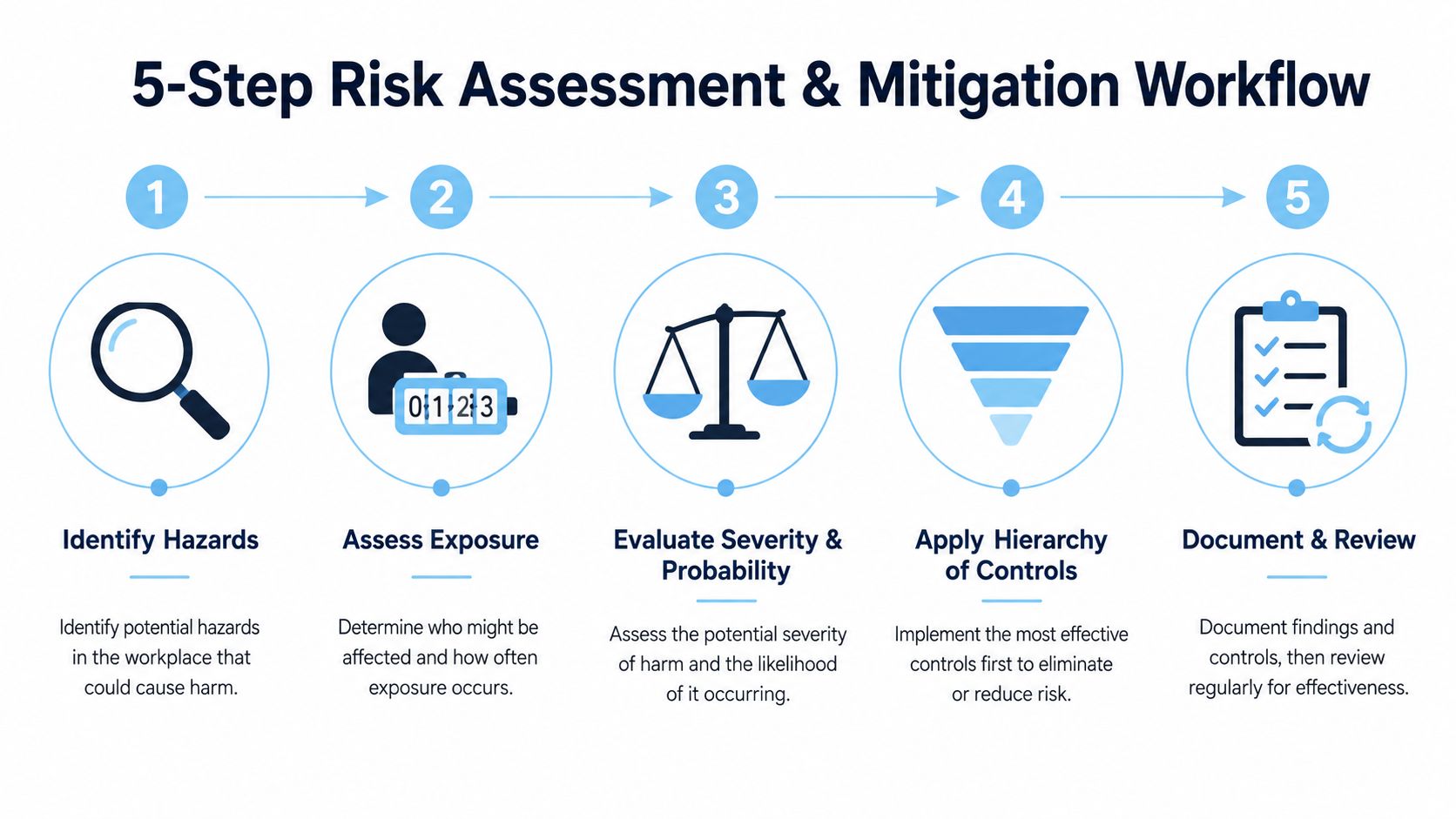
What are the steps to create a safer Workplace Health And Safety Regulatory Compliance?
Safety compliance standards provide organizations with a framework for creating safer work environments. By establishing structured safety systems, identifying hazards, and following regulatory requirements, organizations can protect workers and improve operational performance.
How HubEngage ensures Workplace Health and Safety Regulatory Compliance?
With our employee experience platform, organizations get a powerful compliance training solution designed for today’s workforce. It comes with an internal Knowledge Hub to access the information, and an AI-powered chatbot for quick support. The microlearning method make training simple as well as easy to understand.
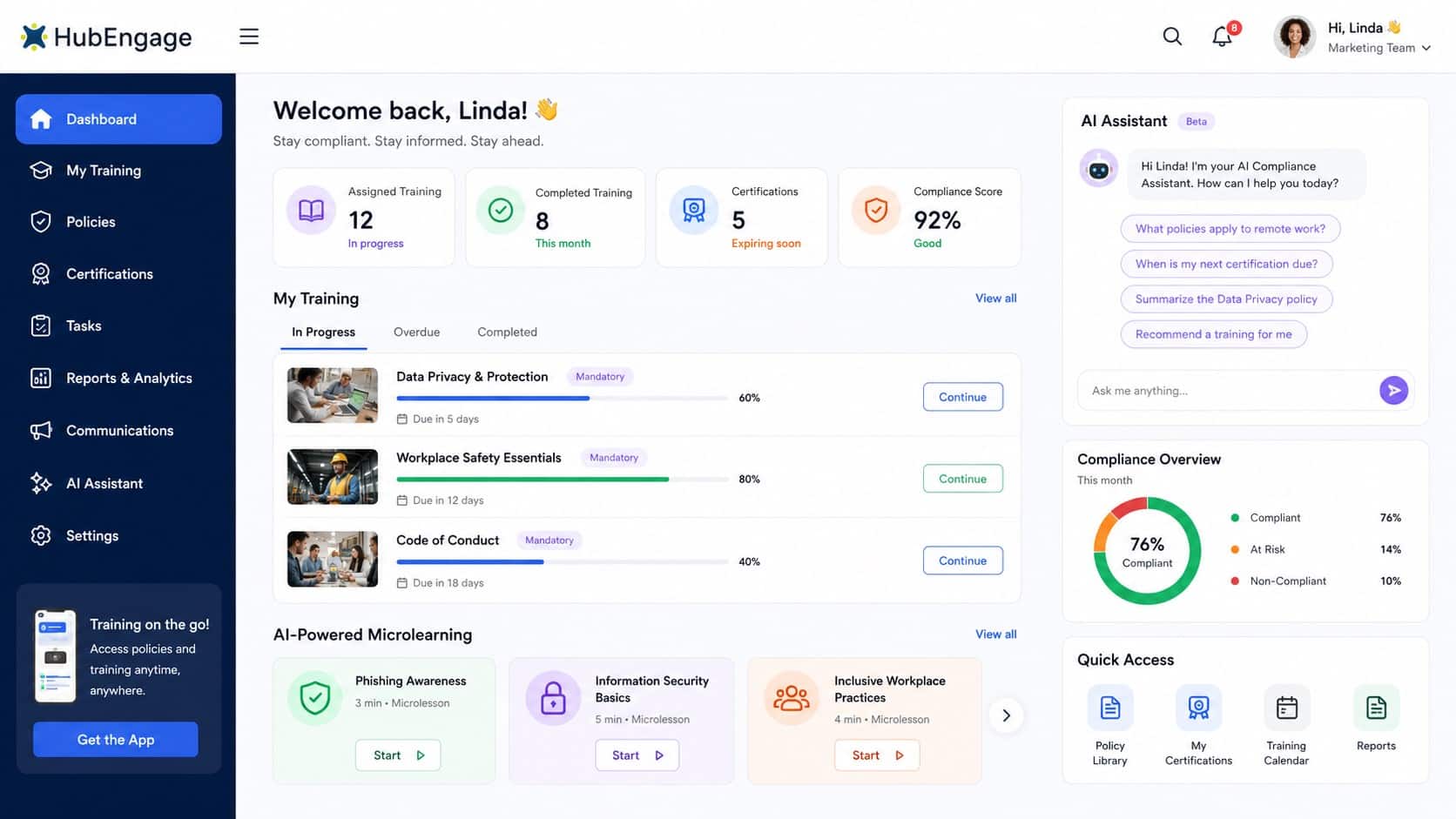
Employees can quickly find answers, complete short lessons, and stay updated on safety and compliance requirements anytime, anywhere. This ensures consistent learning across frontline, remote, and office teams while improving engagement, retention, and audit readiness across the organization.
Conclusion
Health and safety compliance is essential for protecting employees, reducing risks, and building strong, reliable operations for small businesses and distributed teams. A simple, consistent approach with clear policies, training, and communication helps create safer workplaces every day.
To strengthen workplace safety communication and compliance, explore the HubEngage Employee Experience Platform by taking up a demo today and see how it helps centralize training, and policies
FAQs on Workplace Health and Safety Regulatory Compliance
How do organizations ensure they comply with workplace safety standards?
Organizations ensure compliance by following safety laws, identifying risks, creating clear policies, giving internal knowledge base, training employees, and doing regular inspections. They fix issues quickly and update safety programs to match new rules and workplace changes.
How does OSHA support Workplace Health and Safety Regulatory Compliance?
OSHA supports workplace safety by creating and enforcing safety rules in the U.S. It offers training, inspections, and guidance to reduce risks. OSHA also protects workers’ rights and helps employers build safer workplaces.
How do ISO and ANSI contribute to Workplace Health and Safety Regulatory Compliance?
ISO and ANSI provide safety standards that help companies improve workplace safety. ISO 45001 builds safety systems, and ANSI gives technical guidelines. Businesses use them to reduce risks and protect employees.
Why are safety audits important?
Safety audits help businesses find risks before accidents happen. They review policies, equipment, and training. Audits improve safety, ensure compliance, and help workplaces follow rules consistently.
How often should employees receive Workplace Health and Safety Regulatory Compliance training?
Employees should get safety training during onboarding, when roles change, and when new risks appear. Regular refresher training helps keep knowledge updated and ensures safe work practices.
Does Workplace Health and Safety Regulatory Compliance apply to remote employees?
Yes, workplace safety applies to remote employees too. They may face risks like poor posture or unsafe setups. Employers should provide safety guidance and training for safe home work environments.
Related Links
compliance training software | HR compliance training for employees | policy management software | internal knowledge base | microlearning for employees