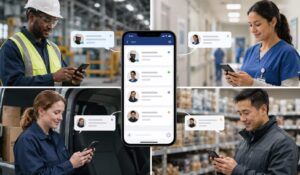
A company announces an important shift change at 4:00 p.m. Office employees see the email within minutes. Remote employees notice it in team chat. But frontline workers are already busy, field employees are travelling, and the night shift hears about it only when they arrive.
By morning, managers are repeating the same answers, employees are frustrated, and work is delayed. This is a common challenge for distributed teams as well as small business.
An omnichannel communication strategy connects different internal communications tools and channels like email, chat, mobile apps, intranet, and manager updates, helping every employee receive the right information through the right channel at the right time, wherever they are working.
In this guide, we will explain how to build an omnichannel communication strategy that keeps a distributed workforce informed as well as connected.
Key Takeaways
- An omnichannel communication strategy connects email, mobile apps, SMS, chat, intranet, and other channels into a unified platform.
- It helps distributed, remote, frontline, and shift-based teams receive the right message through the right channel at the right time.
- An omnichannel communication connects every channel, keeps data unified, and supports more personalized messaging.
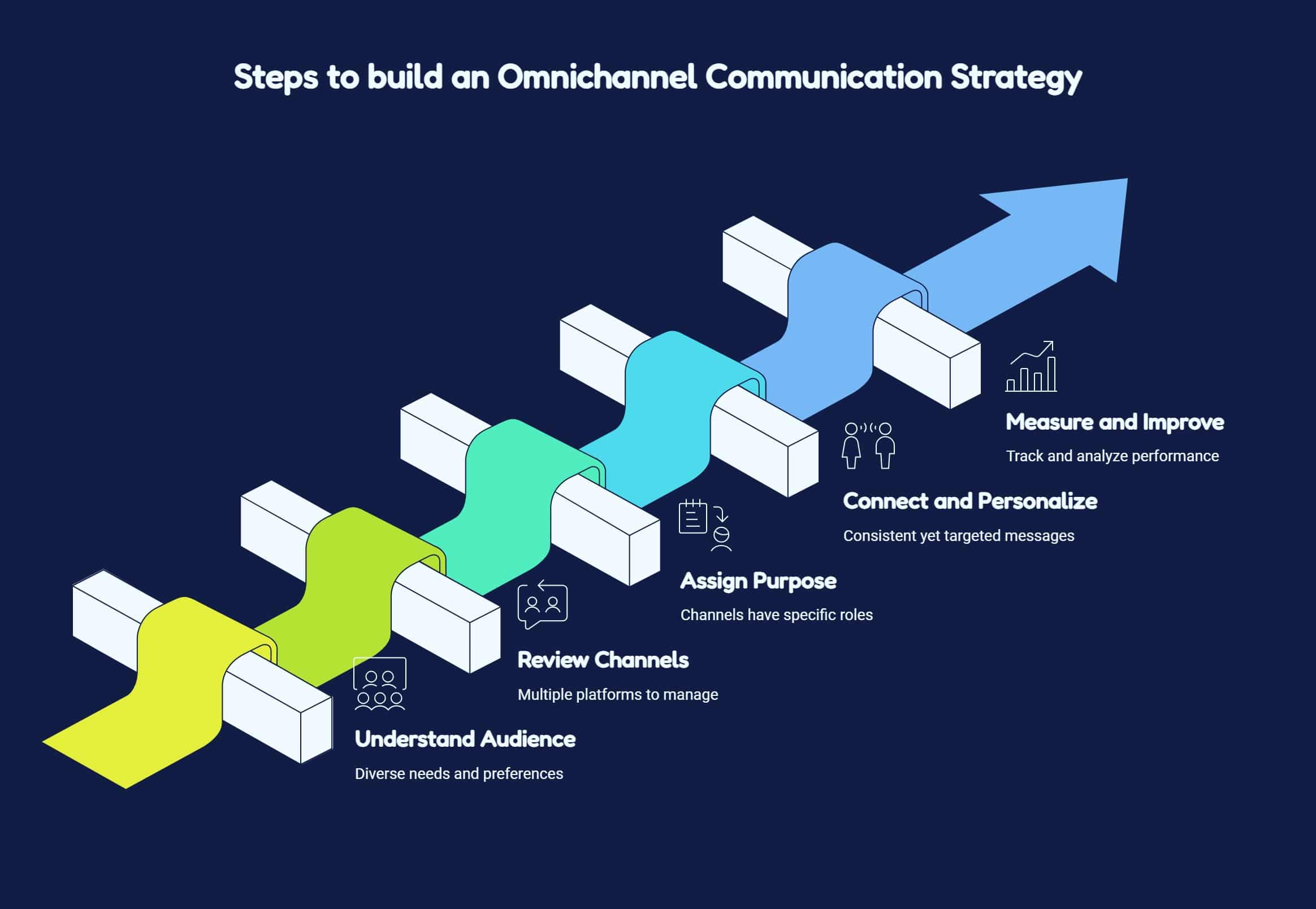
- A strong strategy starts with understanding the audience, reviewing channels, assigning clear channel roles, personalizing messages, and measuring results.
- Best practices include using one central platform, offering mobile-first access, supporting multiple languages, gamification and using AI tools.
Why Omnichannel Communication Strategy is important for every business?
Omnichannel communication creates connected, and uniform experiences in different channels. Let us explore its key benefits below:
Improved Customer Satisfaction
Customers are often ready to pay more for better experiences, and omnichannel supports this through smooth channel changes and more personalized internal communication strategy across every interaction.
Increased User Engagement
Businesses can improve engagement by reaching customers through their preferred channels and sharing useful messages that build stronger relationships.
Increased ROI
Omnichannel strategies help businesses use marketing budgets wisely by finding effective channels, reducing customer loss, and generating better overall returns.
Higher-Value Conversions
Personalized omnichannel campaigns based on customer actions can increase conversions among the most valuable users.
Omnichannel vs. Multichannel Communication Strategy
The main difference is how the two channels work together. Omnichannel communication connects all channels to create one consistent and personalized experience. Multichannel communication uses several channels, but each channel often works separately.
| Factor | Omnichannel Communication | Multichannel Communication |
|---|---|---|
| Channel integration | Connects all communication channels. | Uses multiple channels separately. |
| User experience | Creates one consistent experience. | May create a fragmented experience. |
| Personalization | Personalizes messages for each audience. | Often sends general messages. |
| Data management | Keeps data in one connected system. | Stores data across separate tools. |
| Main goal | Focuses on engagement and relationships. | Focuses mainly on message reach. |
Omnichannel Communication Strategy Example
A retail company needs to inform employees about a new weekend promotion. Office employees receive the complete campaign details through email. Store employees receive a short update through the employee mobile app.
While push notifications remind shift workers before their working hours. Store managers discuss key instructions during shift meetings, and all promotional materials are stored on the company intranet.
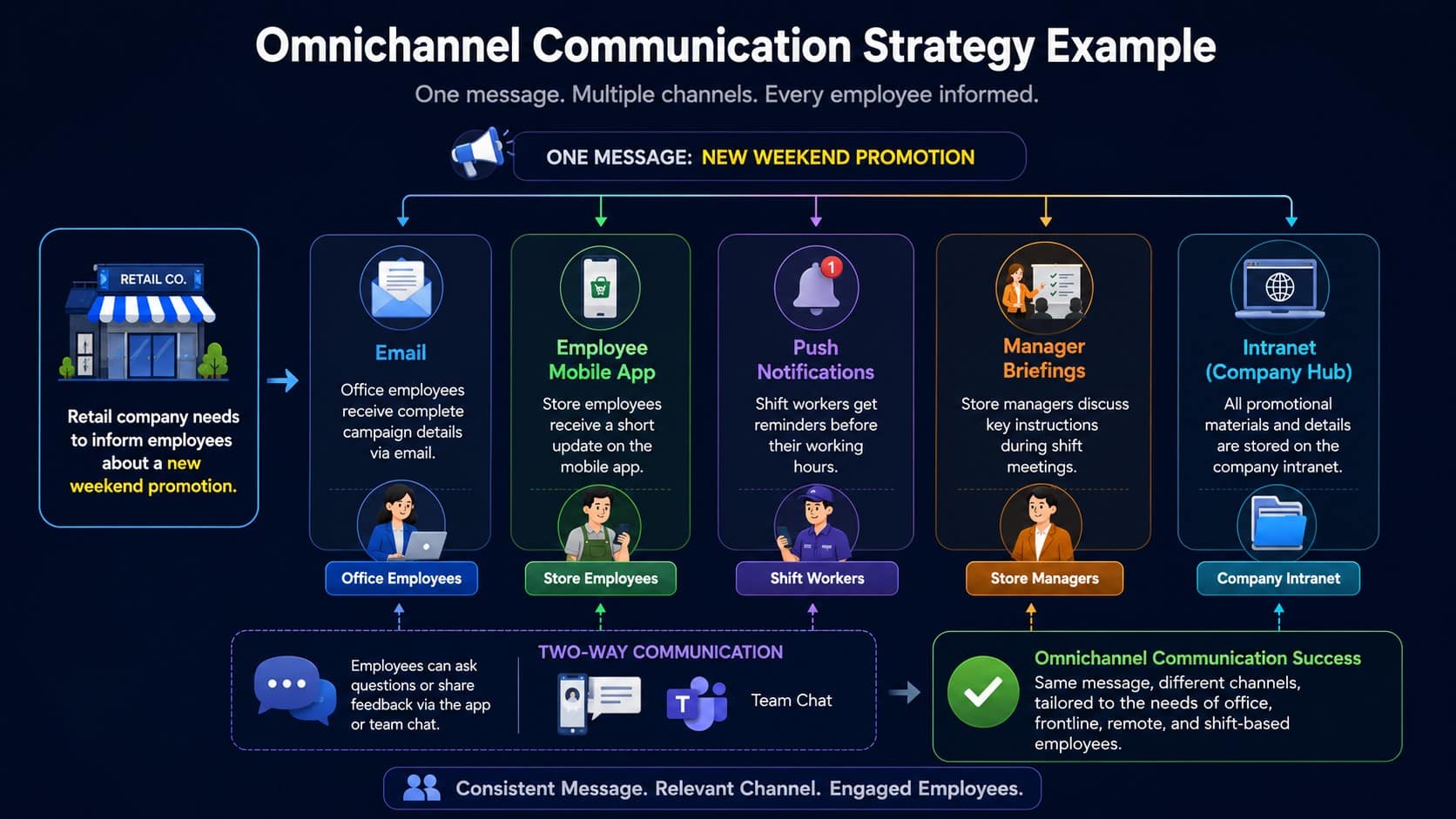
Employees can also ask questions through the app or team chat. This is an example of omnichannel communication strategy because every channel shares the same message while meeting the needs of office, frontline, remote, and shift-based employees.
What communication channels are used in an Omnichannel Communication Strategy?
An omnichannel communication strategy combines different internal communications tools ensuring consistent, timely, and connected messages across every touchpoint.
| Channel | Role it plays |
|---|---|
| SMS | Sends short, urgent updates such as alerts, verification codes, reminders, and time-sensitive information. |
| Shares newsletters, detailed updates, documents, announcements, and longer-form communication. | |
| Live Chat | Provides real-time support for simple questions and helps users receive quick answers. |
| Chatbots | Automates common responses, guides users to useful information, and provides support at any time. |
| Social Media | Builds engagement, shares brand updates, answers questions, and supports direct audience interaction. |
| Push Notifications | Delivers instant alerts, reminders, promotions, and important updates directly to mobile devices. |
| In-App Messaging | Shares personalized information with users while they are active inside an application. |
How to create an Omnichannel Communication Strategy?
Follow these five simple steps to build a connected, consistent, and effective omnichannel communication strategy.
Omnichannel Communication Strategy Best Practices
You can follow the best practices to improve communication across your distributed team:
1. Use One Communication Tool
Use one central platform to reduce tool sprawl, and remove friction caused by switching between multiple systems.
2. Provide Mobile-First Access
Make communication easy to access on smartphones, as employees often use mobile devices more than desktop computers.
3. Use AI-Powered Tools
Using AI for internal communication helps answer employee questions and surveys to collect feedback, measure understanding, and improve communication.
4. Support Multiple Languages
Translate important messages into employees’ preferred languages to improve understanding, and communication across global teams.
5. Use Gamification and Rewards
Use points, badges, challenges, and rewards to encourage employees to read updates, complete surveys, and participate actively.
How HubEngage improves your Omnichannel Communication Strategy?
Our workforce experience platform includes an employee communication module that helps organizations build a clear omnichannel communication strategy. It supports distributed, remote, frontline, and shift-based teams across different business environments.
With multi-channel delivery options such as team messaging, social feeds, email, SMS, mobile, web, digital signage, Microsoft Teams, and Slack, businesses can share updates from one central platform.
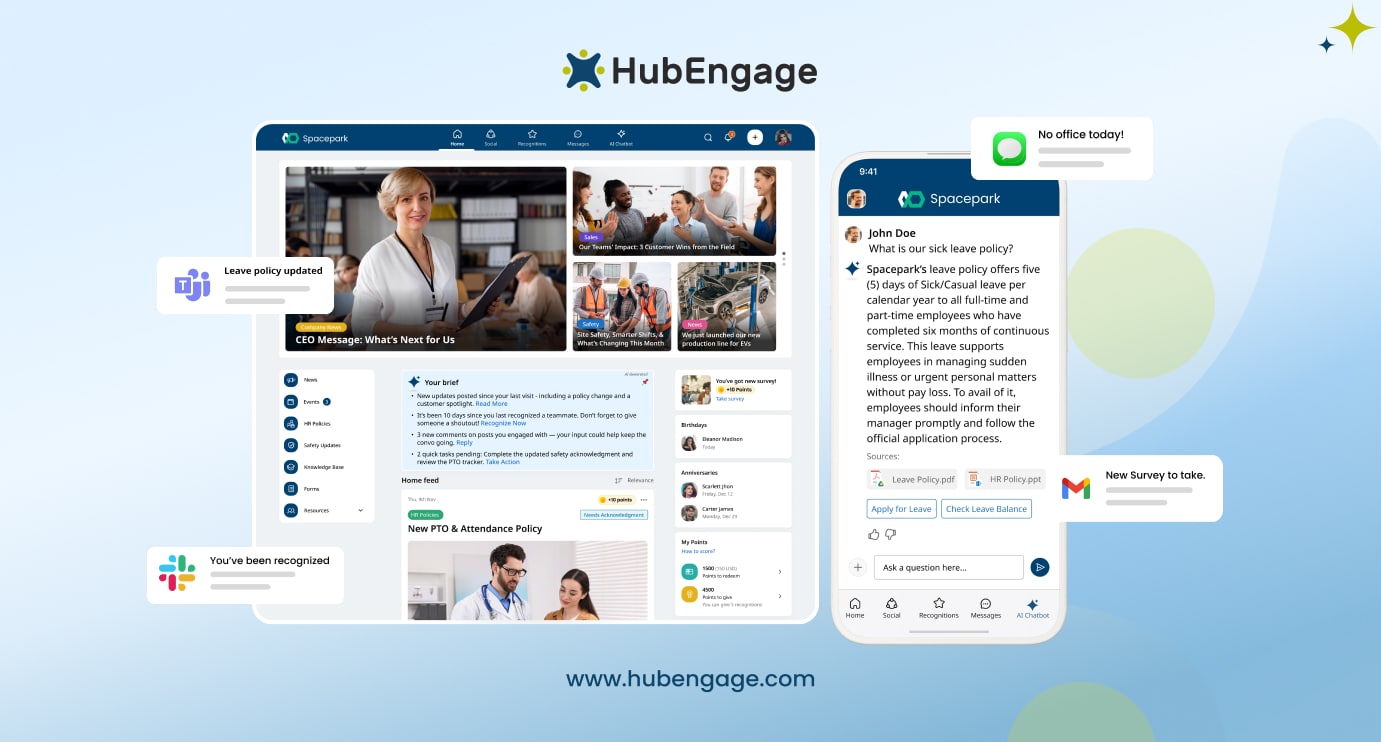
Messages can be targeted by role, location, or department while the AI-driven analytics help teams measure reach, engagement, and communication effectiveness across different channels.
Gamification features, including points, badges, challenges, and rewards, can encourage employees to read updates, complete surveys, and participate more actively. With collaboration tools, AI support, and enterprise-grade security, this employee communications hub helps keeps employees informed, connected, and engaged wherever they work.
Conclusion
An omnichannel communication strategy helps distributed teams stay informed, connected, and ready to act, regardless of location, shift, device, or role.
By combining the right channels, clear messaging, audience targeting, and AI-powered support, organizations can reduce communication gaps and create a more consistent employee experience.
The goal is not to use more tools, but to make every message easier to access and understand. Explore the HubEngage Employee Experience Platform and take a demo to see it in action.
FAQs For Omnichannel Communication Strategy
What is an omnichannel communication strategy?
An omnichannel communication strategy connects employee communication channels so messages remain clear and consistent across email, mobile apps, intranet platforms, text messages, chat, meetings, and manager updates.
How can omnichannel communication reduce information overload?
An omnichannel strategy defines which channels should be used for each type of message. It also allows organizations to target relevant employees instead of sending every update to the entire workforce. For example messaging frontline workers while are more active on mobile devices.
Is omnichannel communication only relevant to large businesses?
No, omnichannel communication benefits businesses of every size. Small and mid-sized companies can connect a few channels to reduce missed updates, improve access, and support distributed employees effectively at work.
What role does AI play in omnichannel communication?
AI helps personalize messages, automate delivery, recommend the best channels, translate content, summarize updates, and measure internal communication effectiveness. It improves speed and relevance while keeping human oversight essential for accuracy and trust.
What are the challenges of Omnichannel customer communication?
Common challenges include disconnected tools, inconsistent messages, poor data integration, privacy concerns, slow responses, limited personalization, and difficulty maintaining a seamless customer experience across every channel.
Related Links
employee communications hub | internal communications tools| internal communication strategy | AI for internal communication | messaging frontline workers | measure internal communication effectiveness