Employee engagement surveys help organizations understand employee sentiment, motivation, and workplace challenges. As engagement increasingly influences retention, productivity, culture, customer satisfaction, and business performance, organizations need reliable ways to gather employee feedback.
Employee Survey Softwares give measurable insights into how employees perceive leadership, communication, recognition, career development, well-being, and overall workplace experiences.
When employees feel heard and valued, they are more likely to remain committed and contribute positively to organizational goals. Leaders can use survey data to identify strengths, uncover problem areas, and prioritize improvements.
A well-designed employee engagement survey creates a structured process for collecting feedback and driving meaningful change. Our guide explains how employee engagement surveys work, why they matter, and how to use results effectively.
Key Takeaways:
- Employee engagement surveys measure motivation, satisfaction, and commitment, helping organizations improve retention, productivity, and workplace culture.
- Using both annual as well as pulse surveys will help in balancing deep insights with real-time feedback to avoid survey fatigue.
- High-performing organizations achieve 75–85% response rates by using clear communication, mobile-friendly surveys, and leadership endorsement.
- Well-designed surveys focus on actionable areas like manager effectiveness, growth opportunities, and recognition.
- Turning survey data into action is critical as companies that act on feedback can get higher engagement with time.
- Employee engagement directly impacts business outcomes such as higher profitability, lower turnover, and better customer experience.

Why are Employee Engagement Surveys important?
Employee engagement surveys are important because they help organizations listen to employees at scale. In large or distributed workplaces, it can be difficult for leaders to understand what employees are really experiencing. Surveys create a structured way to collect honest feedback from the entire workforce.
NIH Research shows that engagement enablers such as personal development, strategic alignment, recognition, employee voice, manager support, and work environment make up 62% of overall employee engagement.

This proves that surveys help organizations understand which cultural factors most influence employee motivation, commitment, and workplace experience.
Employee Engagement Surveys vs Employee Satisfaction Surveys
Employee engagement and employee satisfaction are often used interchangeably, but they are not the same. Let us explore each below:
| Employee Satisfaction | Employee Engagement |
| Focuses on how happy employees are with their job conditions | Focuses on how emotionally connected employees are to their work and organization |
| Influenced by pay, benefits, work environment, and flexibility | Influenced by purpose, recognition, growth, leadership, and culture |
| Measures comfort and contentment | Measures motivation and commitment |
| Employees may be satisfied but not highly productive | Engaged employees are more likely to go above and beyond |
| Often reflects short-term workplace conditions | Reflects long-term connection to organizational goals |
| Helps understand employee happiness | Helps predict performance, retention, and advocacy |
Table-1: Difference between Employee Satisfaction and Employee Engagement
Employee engagement surveys are more strategic as they help organizations understand what truly drives performance, retention, and workplace culture.
Types of Employee Engagement Surveys
There is no single type of employee engagement survey that works for every situation. Most organizations benefit from using a combination of survey formats.
Annual Employee Engagement Surveys
Give a comprehensive view of workforce sentiment, measuring engagement levels, leadership effectiveness, communication quality, workplace culture, recognition, development opportunities, well-being, and retention risks.
Pulse Engagement Surveys
These are brief, frequent surveys that capture timely employee feedback, helping organizations monitor sentiment, identify emerging issues, measure progress, and respond proactively.
Lifecycle Surveys
Collect feedback at important employee journey stages, including onboarding, role transitions, development milestones, and exits, helping organizations improve experiences and retention.
Manager Feedback Surveys
Assess leadership effectiveness, communication, coaching, recognition, fairness, and support, providing actionable insights that improve team engagement.
Key Benefits of Employee Engagement Surveys
Employee engagement surveys offer benefits across the entire organization. Some of the most important include:
Better Employee Retention
Employees who feel heard and supported are more likely to stay. Engagement surveys help organizations identify early warning signs of turnover.
Improved Communication
Surveys reveal whether employees understand company goals, receive timely updates, and feel informed about decisions that affect them.
Stronger Manager Effectiveness
Survey data can show whether employees feel supported, coached, respected, and fairly treated by their managers.
Increased Productivity
Engaged employees are more motivated and focused. Surveys help identify barriers that prevent employees from doing their best work.
Better Workplace Culture
Employee engagement surveys uncover how employees experience company culture and whether they feel included, respected, and recognized.
More Data-Driven Decisions
Surveys with data-driven results help leaders move from assumptions to evidence-based action.
Employee Engagement Survey Key Features
Below are the must have features of a good Employee Engagement Survey Software:
| Feature | Significance |
| Custom Survey Templates | Tailors surveys to specific organizational needs. |
| Pulse Survey Capabilities | Enables frequent monitoring of employee sentiment. |
| Mobile Access | Makes surveys accessible from any device. |
| Anonymous Feedback Options | Encourages honest and candid employee responses. |
| Real-Time Dashboards | Provides instant visibility into survey results. |
| Segmentation and Reporting | Reveals insights across different employee groups. |
| Engagement Trend Tracking | Tracks engagement changes over time. |
| Open-Ended Comment Analysis | Uncovers themes and insights from employee feedback. |
| Automated Reminders | Boosts survey participation rates. |
| Action Planning Tools | Supports follow-up actions based on survey findings. |
| HRIS Integrations | Connects survey data with HR systems for deeper insights. |
Table-2: Employee Engagement Survey Tool Features
What does Employee Engagement Surveys measure?
Effective employee engagement surveys measure the key drivers that influence how employees feel and perform at work. While every organization is different, most surveys should include the following areas.
Leadership and Trust
Measures confidence in leadership transparency, credibility, decision-making, and organizational direction.
Manager Support
Evaluates whether managers provide guidance, feedback, recognition, and ongoing support.
Communication and Alignment
Assesses clarity of organizational goals, expectations, updates, and information sharing.
Recognition and Appreciation
Determines whether employees feel valued, acknowledged, and rewarded for contributions.
Career Growth and Development
Examines opportunities for learning, advancement, skill development, and career progression.
Work-Life Balance and Well-Being
Measures workload manageability, stress levels, wellness support, and work-life balance.
Belonging and Inclusion
Evaluates feelings of inclusion, respect, fairness, psychological safety, and belonging.
Intent to Stay
Assesses employee likelihood of remaining with the organization in future.
Employee Engagement Survey Questions and Examples
The quality of survey questions has a major impact on the quality of insights. Here are examples of employee engagement survey questions by category.
Overall Engagement Questions
Measures employee motivation, commitment, organizational pride, purpose alignment, advocacy, and intent to stay. For example:
- Do you feel motivated to do your best work each day?
- How much will you recommend this organization as a great place to work?
- How likely are you to still be working here one year from now?
Leadership Questions
Shows employee trust in leadership, confidence in decision-making, transparency, organizational direction, and alignment with company values. You can ask questions like:
- Do senior leaders communicate a clear vision for the future?
- How much do you trust the decisions made by senior leadership?
- Does leadership keep employees informed about important organizational changes?
Manager Effectiveness Questions
You can check manager support, coaching quality, feedback effectiveness, fairness, recognition, and employee-manager relationships. Ask questions like:
- How well does your manager support your growth and development?
- Do you feel comfortable sharing concerns with your manager?
- Does your manager recognize and appreciate good work?
Communication Questions
Helps you evaluate communication clarity, information sharing, organizational alignment, cross-functional collaboration, and access to important updates. Best questions are:
- Do you receive the information you need to do your job effectively?
- How effective is communication between departments?
- Are important updates communicated clearly and in a timely manner?
Recognition Questions
You can overview employee appreciation, acknowledgment of contributions, fairness of recognition practices, and the overall recognition culture. Following questions works well
- Do you feel appreciated for the work you do?
- Is good performance recognized within your team?
- Are your contributions valued by your manager and colleagues?
Growth and Development Questions
Shows you learning opportunities, career advancement, skill development, training effectiveness, and support for professional growth. Common examples are:
- Do you have opportunities to learn new skills?
- Does the organization support your professional development?
- Are you getting the training needed to succeed in your role?
Well-Being Questions
It shows you workload management, work-life balance, employee wellness, stress levels, and access to well-being resources.
Examples of questions:
- Are you able to maintain a healthy work-life balance?
- Does the organization support employee well-being?
- Do you have the resources you need to manage stress at work?
Open-Ended Questions
These give employees space to explain their answers and provide context. Examples include:
- What is one thing the organization should improve?
- What would help you feel more engaged at work?
- Is there anything you need from a company to be more successful?
How to create an Effective Employee Engagement Survey
A successful employee engagement survey starts with thoughtful design. Below are some ways to help you make effective surveys
Define the Survey Purpose
Clearly identify the survey’s objective before writing questions. Whether measuring engagement, evaluating leadership, assessing change initiatives, or identifying retention concerns, a defined purpose ensures focused and meaningful feedback.
Keep Questions Clear and Actionable
Each survey question should address a single topic and provide insights leaders can act upon. Clear, specific questions improve response accuracy and help organizations make targeted improvements.
Use the Right Survey Scale
Choose a consistent response scale that employees can easily understand and complete. Common options include Likert scales, frequency ratings, and recommendation-based questions that support reliable analysis.
Balance Quantitative and Qualitative Feedback
Combine rating-scale questions with open-ended responses to capture both measurable trends and employee perspectives. This balanced approach provides deeper insights into workplace experiences and engagement drivers.
Keep the Survey the Right Length
Survey length should align with its purpose and audience. Shorter surveys encourage higher participation, while longer surveys should remain focused to avoid fatigue and incomplete responses..
How to analyze Employee Engagement Survey results?
Below are some ways to help you analyze employee survey data to find out the area of action.
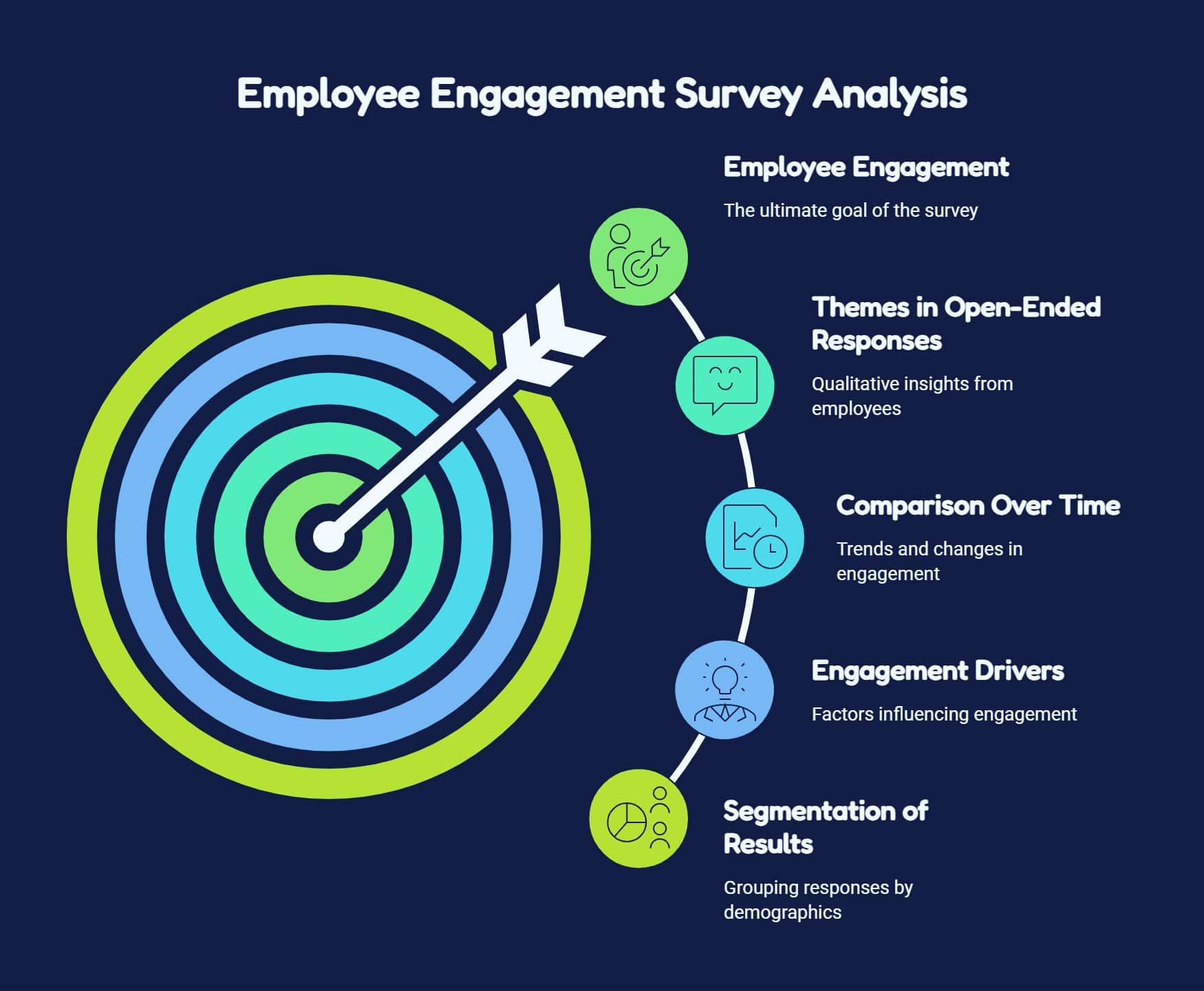
How to turn Employee Engagement Survey results Into Action?
The most important part of any employee engagement survey is acting on feedback and demonstrating meaningful improvements.
Share the Results Transparently
Communicate findings openly, highlighting strengths and improvement areas to build employee trust consistently.
Prioritize Key Action Areas
Focus on high-impact issues affecting engagement rather than attempting too many improvements simultaneously.
Create Action Plans
Develop clear goals, responsibilities, timelines, and success measures to guide improvement efforts.
Involve Employees in Solutions
Include employees in discussions and planning to create practical, effective workplace improvements.
Hold Managers Accountable
Provide managers insights, support, and coaching to strengthen engagement within their teams.
Close the Feedback Loop
Explain actions taken from feedback so employees see their input drives change.
Top Employee Engagement Survey Tools
Explore leading employee engagement survey tools, compare features, and find the best platform fit.
| Tool | Best For | Key Features |
| HubEngage Employee Survey Tool | Employee engagement, pulse surveys, and workforce feedback | Mobile-first, anonymous feedback, pulse surveys, multilingual support, real-time analytics, automated reminders, action planning, frontline employee accessibility, AI-Powered |
| Qualtrics EmployeeXM | Enterprise employee experience management | Advanced analytics, benchmarking, lifecycle surveys, dashboards |
| SurveyMonkey | Simple employee surveys | Custom surveys, templates, reporting, integrations |
| Workday Peakon Employee Voice | Real-time employee feedback | Continuous listening, driver analysis, manager dashboards |
| Culture Amp | Engagement and performance management | Engagement surveys, development tools, people analytics |
Table-3: List of Top Employee Engagement Survey Tools
How to select the right Employee Engagement Survey Tool?
When choosing employee engagement survey software, do consider following factors:
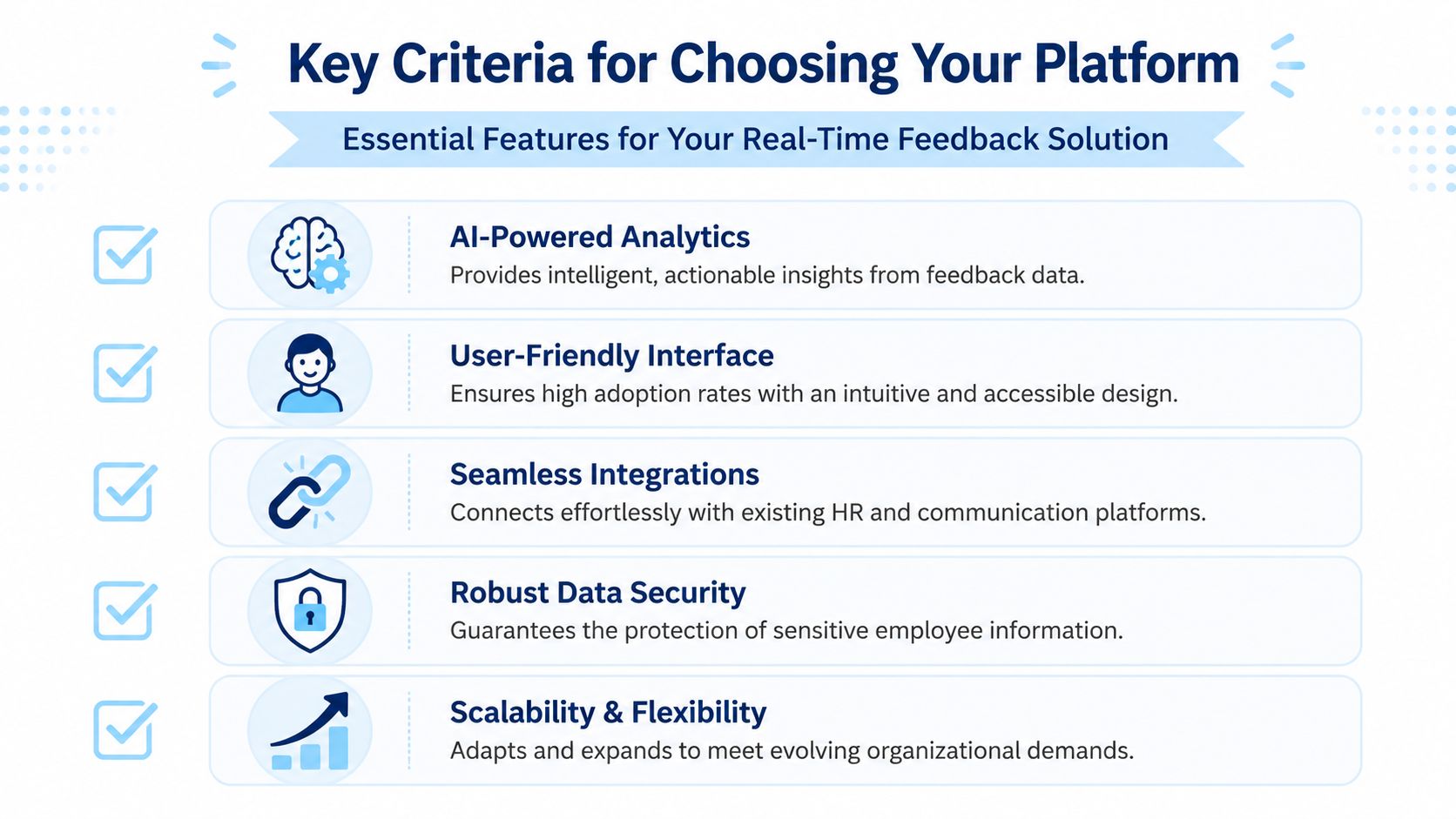
For organizations with frontline or deskless employees, mobile-first access is especially important. Employees who do not sit at a desk may not regularly check email, so surveys should be accessible through mobile apps, QR codes, SMS links, or employee communication platforms.
Employee Engagement Survey Metrics to Track
To measure engagement effectively, organizations should track certain metrics of employee surveys mentioned below:
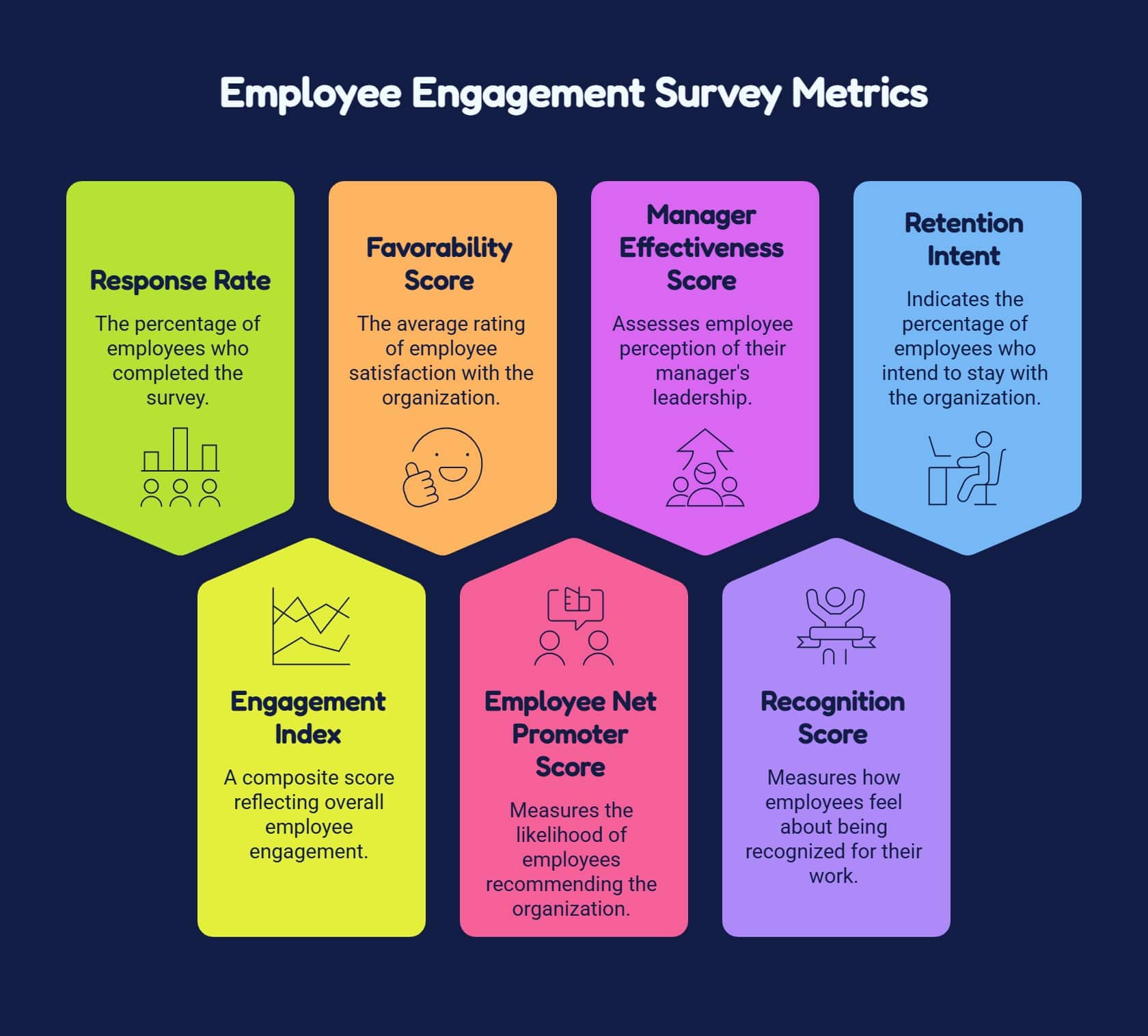
Measuring the ROI of Employee Engagement Surveys
Employee engagement surveys can deliver measurable business value when they lead to meaningful action. To measure ROI, you can focus on common areas to track such as:
| Metric | What It Measures | ROI Impact |
| Employee Turnover | Employee retention and departures | Lower hiring and replacement costs |
| Absenteeism | Employee attendance patterns | Reduced productivity losses |
| Productivity | Employee output and efficiency | Higher business performance |
| Customer Satisfaction | Customer experience and service quality | Increased loyalty and revenue |
| Safety Incidents | Workplace accidents and risks | Lower compliance and injury costs |
| Quality Issues | Errors, defects, and rework | Improved operational efficiency |
| Internal Mobility | Employee promotions and transfers | Better talent retention and development |
| Manager Performance | Leadership effectiveness | Stronger team engagement and results |
| Employee Referral Rates | Employee willingness to recommend the company | Reduced recruiting costs and improved hiring quality |
Table-5: Employee Engagement Survey Software ROI Table
The ROI of employee engagement surveys does not come from the survey itself. It comes from using employee feedback to make better decisions.
Common Employee Engagement Survey Mistakes to Avoid
Employee engagement surveys can lose effectiveness when organizations make avoidable mistakes.
Too Many Questions
Long surveys can reduce participation and create fatigue. Keep questions focused on what matters most.
Asking Questions You Cannot Act On
Every question should serve a purpose. If the organization cannot use the answer to improve something, the question may not belong in the survey.
Failing to Communicate Results
Employees should not feel like their feedback disappeared. Sharing results is an essential part of the process.
Not Taking Action
This is the biggest mistake. If employees take the time to provide feedback and nothing changes, trust can decline.
Ignoring Managers
Managers are critical to engagement. Organizations should equip managers with insights, training, and tools to support their teams.
Not Protecting Confidentiality
If employees do not trust the process, they may avoid participating or provide less honest feedback.
Over-Surveying Employees
Frequent surveys without visible action can frustrate employees. Survey cadence should be intentional and balanced.
Employee Engagement Surveys Best Practices
Below are some of the best practices for conducting surveys effectively without any hassle.
Communicate the purpose before launch
Clearly explain survey goals, timing, confidentiality, and usage to build participation and employee trust.
Protect Anonymity and Confidentiality
Ensure employees understand privacy protections, encouraging honest feedback without fear of identification.
Make the Survey Easy to Access
Provide mobile-friendly surveys across channels, ensuring convenient participation for all employee groups.
Encourage Participation Without Pressure
Invite participation positively while ensuring employees feel free to respond honestly and voluntarily.
Send Reminders
Use respectful reminders to boost response rates while reinforcing feedback importance and value.
Avoid Survey Fatigue
Limit survey frequency, focus questions, and share actions taken from previous employee feedback.
How AI is transforming Employee Feedback Systems?
AI-powered feedback works more like a digital camera. Responses appear immediately, patterns form quickly, and leaders can act while the moment still matters. Organizations often build elaborate annual surveys because they assume they only get one good shot to ask employees what matters. That creates a second problem. Open-text analysis becomes a heavy manual project. In one real-world customer context shared for this article, creating a large annual survey took about a week, and reviewing responses from a workforce of 4,000 could consume a full-time employee for three months before an action plan was ready.
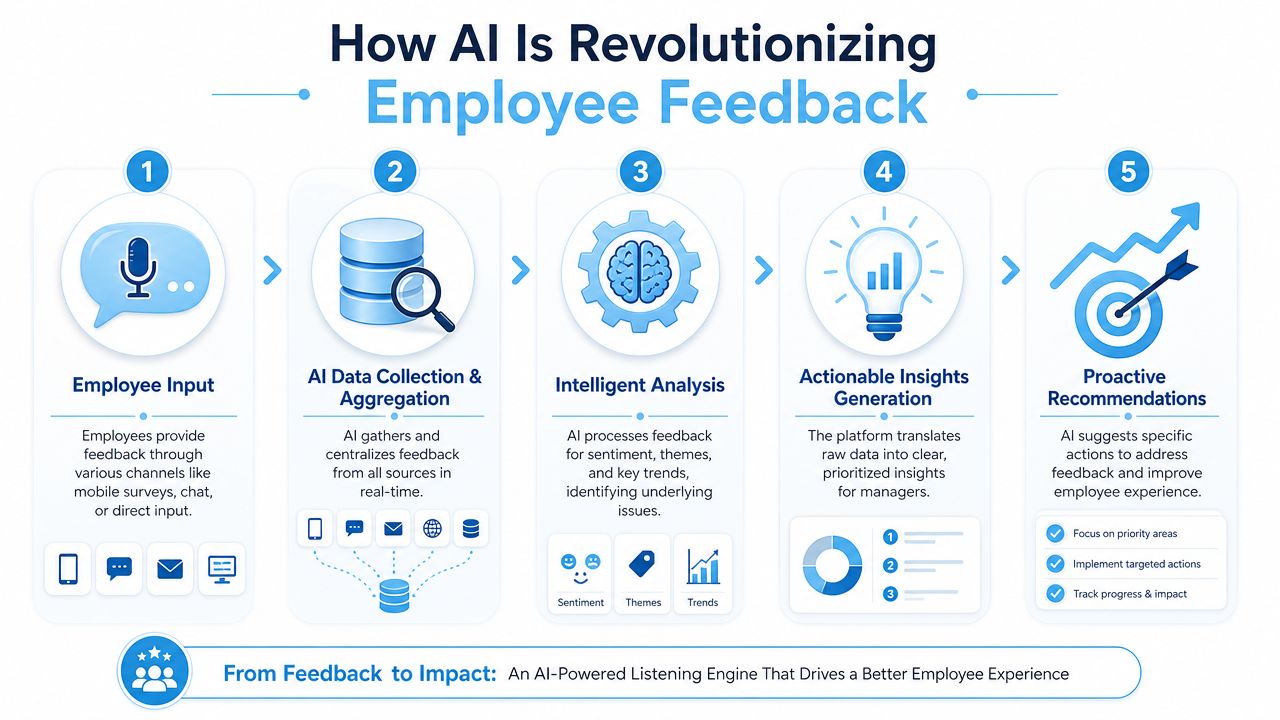
AI changes that workflow in several ways:
- Survey creation becomes lighter: The platform can generate question sets based on lifecycle moments or business goals.
- Distribution becomes automatic: Surveys trigger after onboarding, on a monthly cadence, after shift completion, or during exit.
- Analysis happens instantly: The system can detect sentiment, cluster open-text comments into themes, and flag patterns without manual coding.
Conclusion
Employee engagement surveys help organizations uncover meaningful insights that drive stronger workplace cultures, higher retention, improved productivity, and better employee experiences.
The greatest value comes from consistently listening to employees, acting on feedback, and creating measurable improvements that build trust and engagement over time.
By combining the right survey strategy with ongoing action, organizations can make informed decisions that support both employees and business goals. To see this in action, explore our Employee Experience Platform by scheduling a demo today.
Employee Engagement Survey FAQs
What is an employee engagement survey?
An employee engagement survey measures employee motivation, satisfaction, commitment, and workplace experience to improve organizational performance.
Why are employee engagement surveys important?
Employee engagement surveys help identify workplace issues, improve retention, boost productivity, and strengthen company culture.
How often should employee engagement surveys be conducted?
Most organizations conduct annual employee engagement surveys and quarterly pulse surveys to monitor employee feedback regularly.
What questions should be included in an employee engagement survey?
Questions should cover leadership, manager support, communication, recognition, growth, well-being, belonging, and overall engagement.
Are employee engagement surveys anonymous?
Many organizations use anonymous or confidential surveys to encourage honest feedback. It is important to clearly explain how employee privacy is protected.
What is a good employee engagement survey response rate?
A strong response rate depends on organization size and culture, but higher participation generally indicates stronger trust and better survey accessibility.
What should companies do after an employee engagement survey?
Companies should analyze results, share key findings, create action plans, involve employees in solutions, and communicate progress regularly.