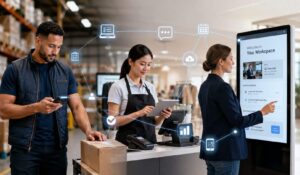
Deskless workers keep essential industries running across factories, hospitals, stores, construction sites, warehouses, hotels, restaurants, and field locations. Unlike office employees, they rarely work at computers, making email, intranets, Slack, and virtual town halls ineffective. Many lack company email, cannot check updates during shifts, or work across locations and schedules. As a result, they may miss schedule changes, safety information, training, and important company news. Having good communication solutions for deskless workers address these gaps through mobile apps, SMS, digital signage, employee intranets, AI chatbots, surveys, and other frontline-friendly channels. Our blog will show you practical ways to keep deskless employees informed, connected, and engaged.
Key Takeaways
- Common communication solutions for deskless workers are mobile apps, SMS, digital signage, intranets, and shared-device tools.
- Mobile-first communication makes company updates easier to access for employees who rarely use desktop computers.
- Modern platforms support targeted messaging, multilingual content, two-way communication, surveys, recognition, and employee feedback.
- AI chatbots help frontline workers quickly find policies, documents, training information, and workplace answers.
- Integrated employee experience platforms bring communication, recognition, feedback, knowledge, and engagement tools into one system.
- Organizations should choose communication tools based on workforce accessibility, ease of use, integrations, analytics, and communication needs.

What are the different communication challenges faced by Deskless Workers?
Communication is often more difficult for frontline and deskless teams because their work environment is very different from that of office employees. Gallup has estimated that low employee engagement costs the global economy trillions of dollars in lost productivity.
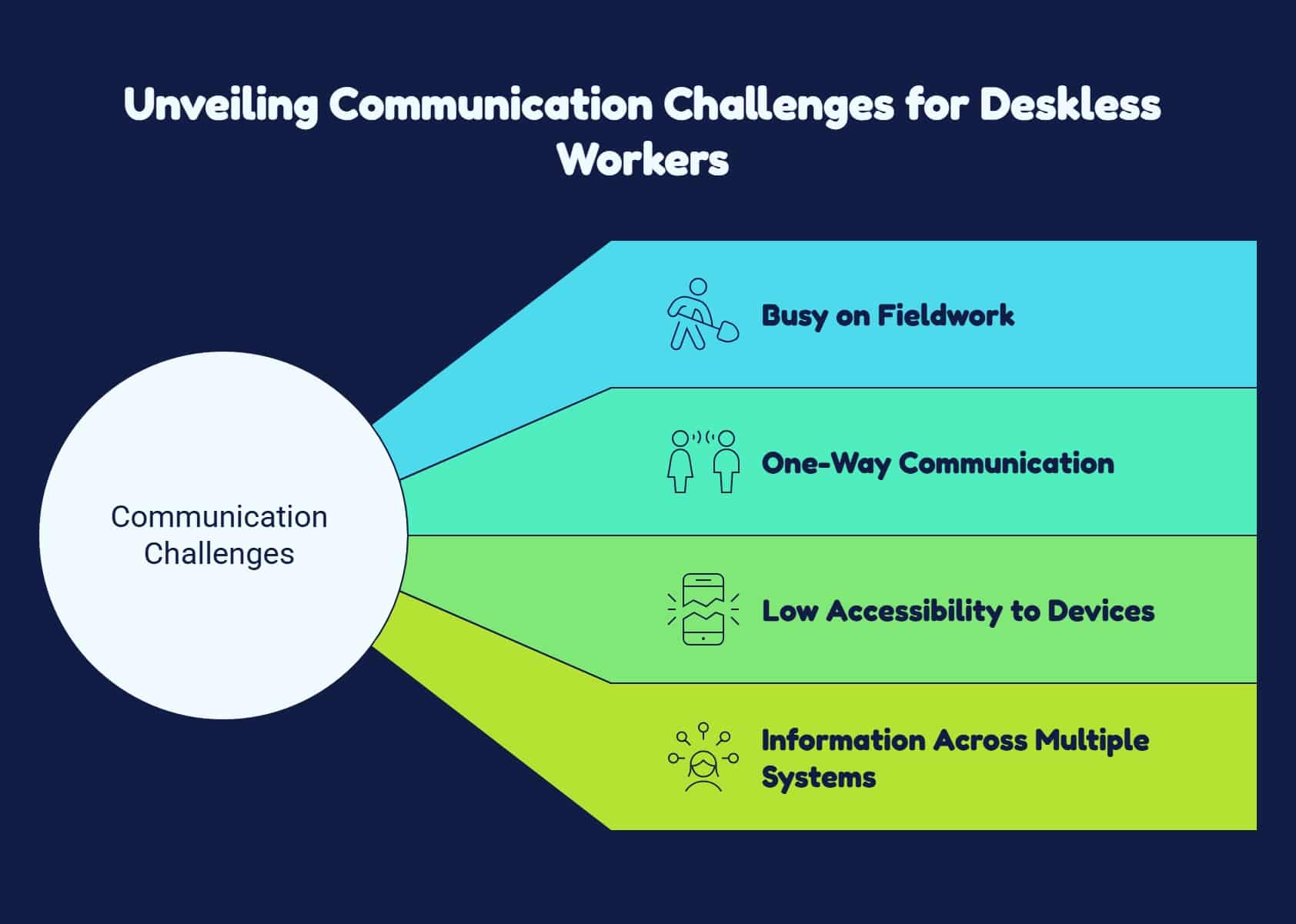
Communication alone does not solve engagement, but employees who constantly miss important information can quickly feel disconnected. Here are some of the biggest communication challenges deskless workers face:
Involved in fieldwork
Frontline workers spend most of their working hours performing physical, operational, or customer-facing tasks. Manufacturing employees operate machinery. Nurses care for patients. Warehouse workers move inventory. Retail associates help customers. Expecting these employees to regularly check email or log into a desktop intranet is unrealistic. Communication needs to reach workers where they already are.
Limited Time and Access
Shared computers, kiosks, and break-room terminals provide access, but shift workers may lack time to check them regularly. Important announcements can remain unread when operational responsibilities, safety tasks, and customer needs take priority.
Communication Often Feels One-Way
Many deskless employees receive information through supervisors lacking two-way communication opportunities creating communication delays and limiting opportunities to ask questions, provide feedback, share concerns, or participate in workplace conversations.
Information Is Spread Across Different Systems
Schedules, policies, training, and HR information often exist separately, forcing frontline employees to search multiple systems. Connected communication platforms centralize essential resources and simplify access.
Effective Communication Solutions for Deskless Workers
There is no single communication channel that works for every deskless workforce. Here are the various that you can look for:
| Communication Solution | How It Helps Deskless Workers |
|---|---|
| Mobile-First Employee Apps | Deliver updates, schedules, training, surveys, and messages directly to smartphones. |
| Modern Employee Intranet | Centralizes policies, news, documents, training, and personalized workplace information. |
| Digital Signage | Displays important updates, safety alerts, recognition, and reminders in shared workspaces. |
| AI Chatbots | Provide quick answers and help employees find policies, procedures, and HR information. |
| Employee Recognition Programs | Reward achievements with points, badges, and recognition to improve motivation and engagement. |
| Employee Social Network | Connects frontline teams through discussions, updates, recognition, and shared resources. |
| Employee Surveys and Feedback | Collects employee feedback and uses AI to analyze sentiment and common themes. |
1. Mobile-First Employee Apps
This communication platform is designed for smartphone access. An employee app delivers announcements, push notifications, shift updates, directories, surveys, recognition, training, documents, and messaging. Deskless workers receive important information directly, without finding a computer, making communication faster and more accessible across locations, shifts, and job sites.
2. Modern Employee Intranet
It is a centralized digital hub that provides workplace information through desktop and mobile devices. It organizes news, policies, benefits, safety documents, training, and operational updates. Deskless workers can quickly access relevant resources based on their role, location, and preferred language. This improves consistency as well as reduces information gaps.
3. Digital Signage
Involves use of screens in workplaces to display announcements, safety reminders, recognition, events, training notices, operational updates, and emergency messages. It reaches deskless workers who may not regularly use mobile apps or email. Placing an employee digital signage in break rooms, warehouses, hospitals, stores, and factories reinforces important information through visible, timely communication.
4. AI Chatbots
Works a digital assistant that helps employees find workplace information and answers quickly. It can search connected policies, procedures, onboarding materials, and HR resources. Deskless workers receive immediate support without searching folders or waiting for HR, while organizations reduce repetitive questions and improve access to essential knowledge.
5. Employee Recognition Programs
With an employee recognition program, you can highlight achievements, milestones, and contributions from individuals or teams. Managers and peers can give rewards, points, badges, and leaderboards to celebrate achievements. For deskless workers, employee gamification improves visibility, participation and motivation which helps building a better work culture.
6. Employee Social Network
A social hub connects deskless workers through updates, discussions, recognition, and shared resources in one accessible space. Employees can stay informed, celebrate achievements, ask questions, and share feedback from their mobile devices. With this you can strengthen workplace connection, improve collaboration, and ensure frontline teams feel included regardless of location or shift.
7. Employee Surveys and Feedback
Employee surveys and feedback tools collect opinions from frontline workers through polls, pulse surveys, and forms. They create two-way communication by giving deskless employees a convenient way to report concerns and share ideas. Now with AI-powered capabilities, it can do thematic and sentiment analysis helping managers understand the needs of the team.
How to choose the right communication solution for deskless workers?
Below is our quick selection checklist that will help you the right internal communications tools for your deskless or frontline team.
| Key consideration | What to look for |
| Mobile access | A mobile-first platform for updates, schedules, resources, and messages. |
| Communication channels | Push notifications, SMS, email, in-app messaging, and digital signage. |
| Two-way communication | Surveys, feedback, questions, and employee discussions. |
| Multilingual support | Translation tools for clear communication across languages and locations. |
| Security | Encryption, access controls, authentication, permissions, and compliance features. |
| Integrations | Connections with HR, payroll, scheduling, learning, and collaboration tools. |
| Analytics | Engagement metrics, delivery tracking, survey results, and communication insights. |
| Usability | Simple navigation, easy adoption, and minimal training requirements. |
| Scalability and pricing | Flexible plans, user capacity, implementation costs, and long-term value. |
| Support | Onboarding, training, implementation guidance, and responsive customer support. |
How HubEngage is the right Communication Solution for Deskless Workers?
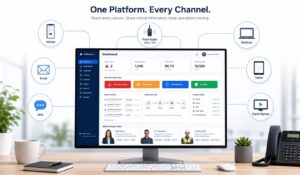
Deskless communication is easier when organizations use one platform for employee communication and engagement. To make this happen, we offer messaging, employee apps, intranet resources, AI chatbots, surveys, feedback, recognition, and gamification together in a centralized employee experience platform.
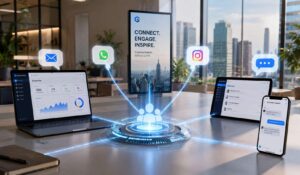
Organizations can share targeted updates through SMS, email, push notifications, and mobile channels, helping frontline employees stay informed across locations.
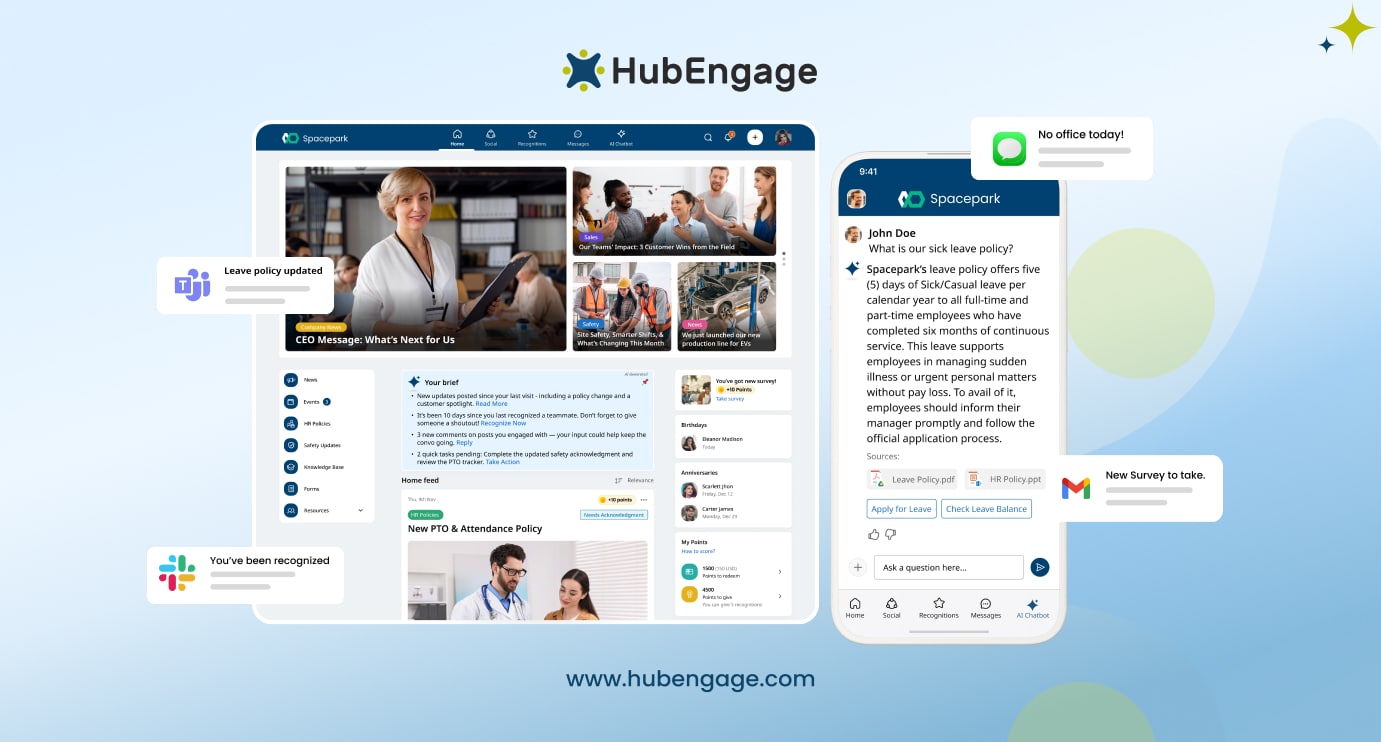
AI-powered tools make information easier to find, while employee survey tool offers sentiment analysis help leaders understand workforce needs. Recognition features support motivation, and two-way communication gives employees opportunities to provide feedback, recognize colleagues, and raise concerns. This creates a more connected experience for distributed teams.
Conclusion
Effective communication solutions for deskless workers requires more than occasional emails or desktop-based updates. Mobile-first, multilingual, two-way communication helps frontline employees stay informed, connected, and engaged wherever their work takes them.
By combining messaging, surveys, recognition, AI-powered support, and digital signage in one connected platform, organizations can reduce information gaps and strengthen workplace culture across locations and shifts. Explore our employee experience platform by taking up a demo to see how it can support your distributed workforce.
FAQs on Communication Solutions For Deskless Workers
Which industries mostly have deskless workers?
Deskless workers are common in manufacturing, healthcare, retail, hospitality, logistics, transportation, construction, field services, restaurants, and warehousing. These employees usually work away from traditional office desks and often need mobile-first or location-based communication tools.
Is digital signage a good option for frontline or deskless workers?
Yes. Digital signage is useful for sharing announcements, safety messages, recognition, reminders, and operational updates in common workplace areas. However, it works best when combined with mobile apps, SMS, or other channels that support personalized and two-way communication.
How can companies improve communication with frontline employees?
Companies can improve frontline communication by sending relevant real-time updates, enabling employee feedback, using multiple communication channels, recognizing employees, providing easy knowledge access, and measuring message reach, readership, and engagement.
Why mobile-first communication is one of the best communication solutions for deskless workers?
Deskless workers rarely have regular access to company computers or email. Mobile-first communication gives frontline employees direct access to announcements, schedules, policies, training, recognition, and workplace updates from wherever they work.
Related Links
internal communications tools | employee intranets | two-way communication | employee app | employee digital signage | employee gamification | employee survey tool