If you’re running a growing business with multiple locations, remote staff, or frontline teams, you probably already have plenty of performance data. You can see output, attendance, service levels, and maybe turnover. What you often can’t see clearly is whether employees feel supported, informed, motivated, and if they’re becoming disengaged.
That gap matters most in distributed workforces. Deskless and hourly employees may not sit in front of email all day. Remote workers may miss context that office teams absorb naturally. Managers may sense something is off, but by the time it shows up in resignations or customer issues, the problem has already become expensive and disruptive.
The practical answer is to treat employee satisfaction as a major part of employee engagement survey system. If you are thinking to create such a system then our blog will give you the best ways to measure employee satisfaction that works for SMBs, frontline teams, and distributed workforces.
Key Takeaways
- Employee satisfaction should be measured continuously, not only through one annual HR survey.
- The best way to measure employee satisfaction is by combining surveys, comments, manager check-ins, and workplace behavior data.
- SMBs and distributed teams should use simple, mobile-friendly pulse surveys to reach frontline, remote, and deskless employees.
- Key employee satisfaction metrics include eNPS, Employee Satisfaction Index, turnover, absenteeism, communication engagement, and recognition activity.
- Open comments help explain survey scores and reveal hidden issues like scheduling problems, poor communication, and weak manager support.
- Employee feedback only creates value when leaders act on insights and clearly show employees what has changed.
Why you should measure Employee Satisfaction?
As per Great Place to Work’s discussion employees are less likely to participate in future surveys if they feel leadership ignores their feedback. Here are five simple reasons companies should focus on this important practice today
Improves employee retention
Tracking employee satisfaction helps identify causes of turnover early. Addressing these issues reduces hiring costs, improves stability, and keeps experienced employees engaged and committed to your organization.
Boosts productivity and performance
Satisfied employees are more motivated, engaged, and productive. They take fewer absences, collaborate better, and align with company goals, helping improve overall efficiency and workplace performance.
Identifies areas for improvement
Employee satisfaction data reveals workplace strengths and weaknesses. Feedback highlights gaps in support, skills, or communication, helping leaders improve management, benefits, and work-life balance effectively.
Supports business growth and success
Satisfied employees contribute more to company success. Stronger collaboration and communication improve customer experiences, increase referrals, and support sustainable growth and better financial performance.
Enhances company culture and reputation
Measuring satisfaction helps build a positive workplace culture. Happy employees strengthen your reputation, attract top talent, and act as ambassadors who promote your organization externally.
How to measure Employee Satisfaction?
By following below steps you will be able to easily measure employee satisfaction:
1. Define your measurement goals
A strong employee satisfaction program starts with a clear business goal. Decide whether you want to improve onboarding, reduce turnover, fix communication gaps, or support managers better. Use a simple planning grid before launch:
| Goal | Best listening method | What you will learn? |
|---|---|---|
| Onboarding issues | New-hire pulse plus manager check-ins | Where employees get stuck early |
| Communication gaps | Short pulse surveys and open comments | See if people can find information and support |
| Manager effectiveness | Team-level pulse plus one-on-ones | Whether employees feel heard and helped |
| Retention concerns | Satisfaction survey plus turnover review | Which teams need targeted action |
Clear goals help you ask focused questions, choose the right listening method, and turn feedback into useful action. If you’re formalizing the process, explore this practical walkthrough on employee survey strategy and implementation.
2. Choose the right mix of Satisfaction Metrics
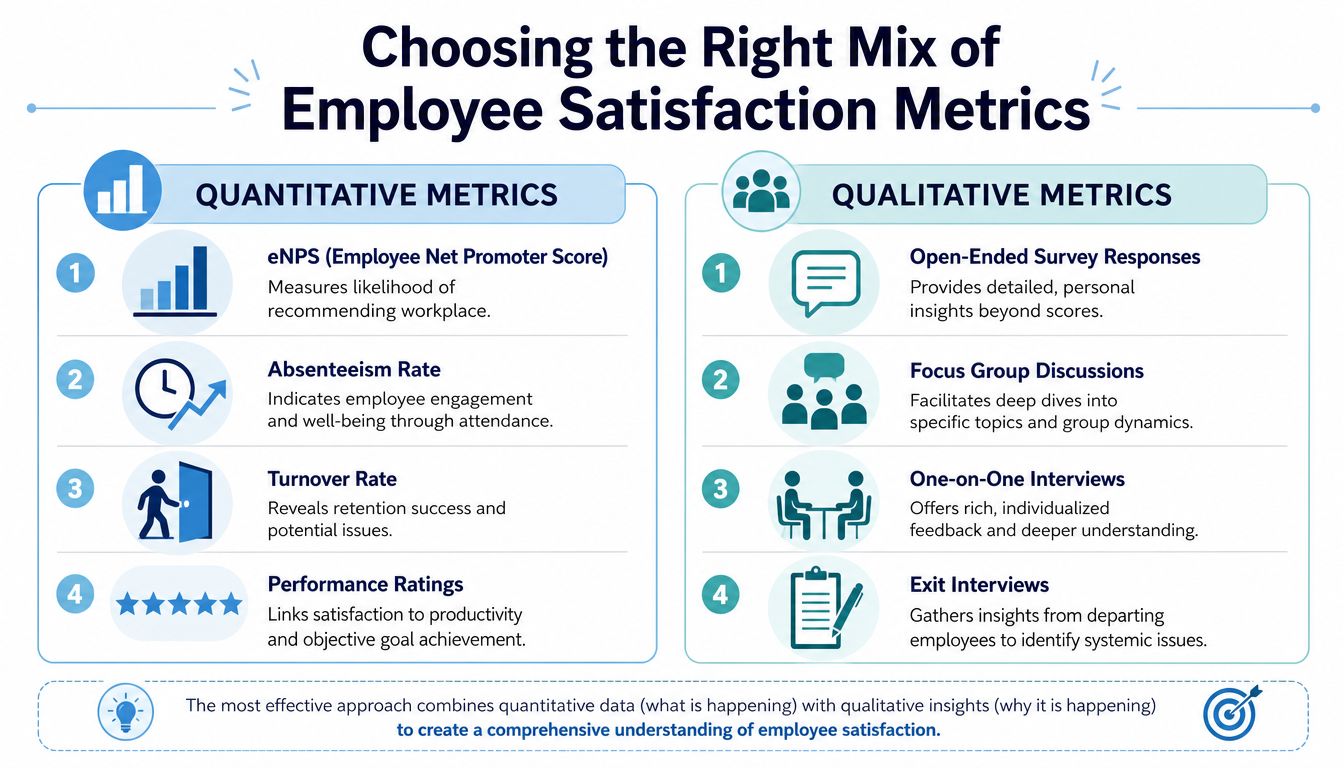
Employee satisfaction is measured best by combining quantitative metrics like eNPS, absenteeism, turnover, and performance ratings with qualitative metrics such as surveys, interviews, focus groups, and exit discussions. Together, these insights show what is happening and why it matters.
3. Design your listening program for Frontline Teams
A strong frontline listening program should be simple, accessible, and built around how employees actually work. Use short pulse surveys, baseline surveys, and manager check-ins to capture honest feedback. Keep questions easy, offer mobile or SMS access, and always include a comment field so employees can explain what support they need.

For organizations trying to improve reach with deskless staff, these frontline worker communication tools show what effective delivery infrastructure looks like.
4. Analyze Feedback and Share Actionable Insights
Employee satisfaction scores become useful when leaders do deep analysis by team, role, location, and manager group. Combine survey trends with open comments, sentiment patterns, and workforce behavior to find real issues. Simple dashboards help managers track themes, assign actions, and show employees that feedback leads to visible improvements.

If you want to centralize the analysis, employee analytics tools can help combine survey data with communication and engagement signals in one place. Remember, your team don’t need perfect scores in the first quarter, they need visible progress, cleaner insight, and proof that leaders are paying attention.
5. Turn Insights into Action and Close the Feedback Loop
Most listening programs break when leaders gather input, discuss results internally, then fail to tell employees what changed.
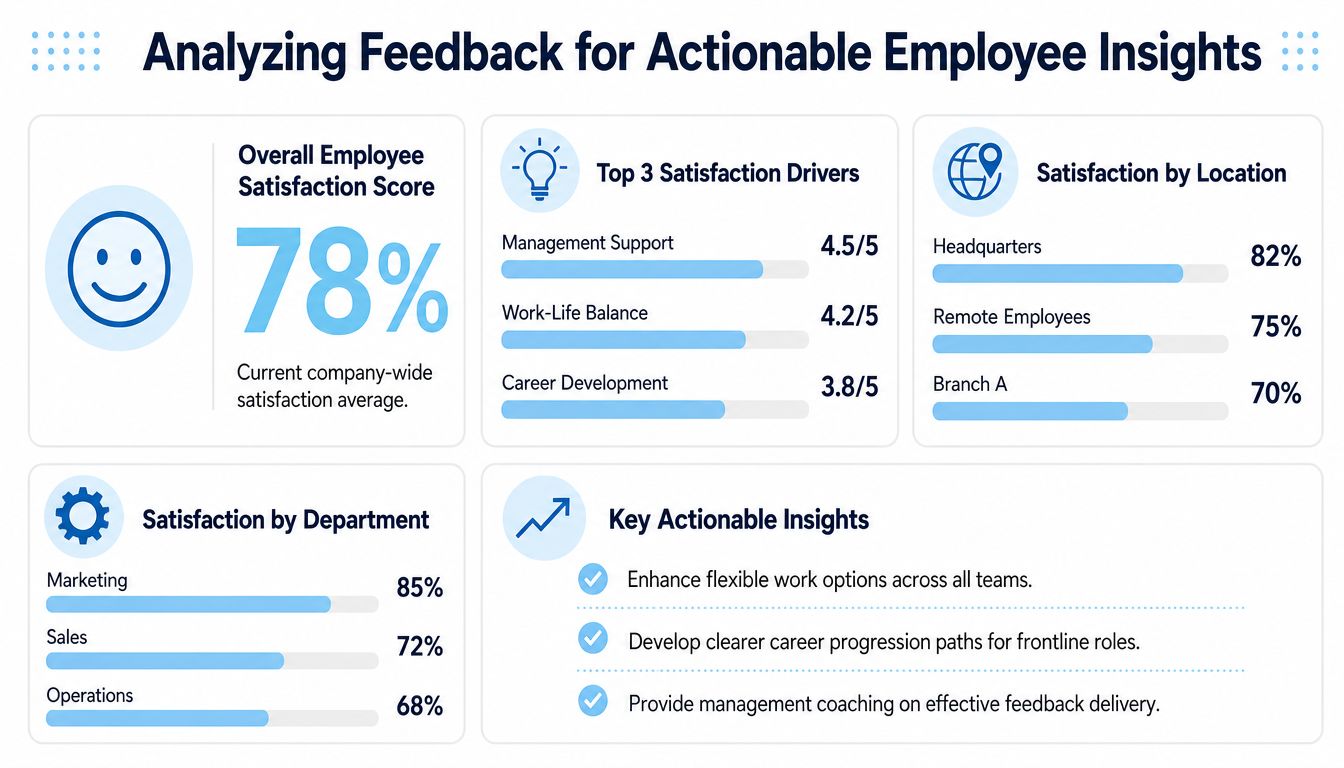
Employee feedback creates value only when leaders act on it. Focus on one or two priority themes, assign clear ownership, set timelines, and report progress back to employees. When teams see what changed, trust improves and future participation becomes stronger.
How HubEngage improves your Employee Satisfaction Strategy?
Our AI-driven survey platform helps organizations to create questionnaires, measure employee satisfaction, capture real-time feedback, and turn responses into action.
Teams can quickly create surveys using ready-made templates or custom questions with the help of AI, then distribute them across web, mobile app, SMS, email, intranet, and digital signage.
Employees can respond easily from anywhere, which supports higher participation across frontline, deskless, remote, and office teams.
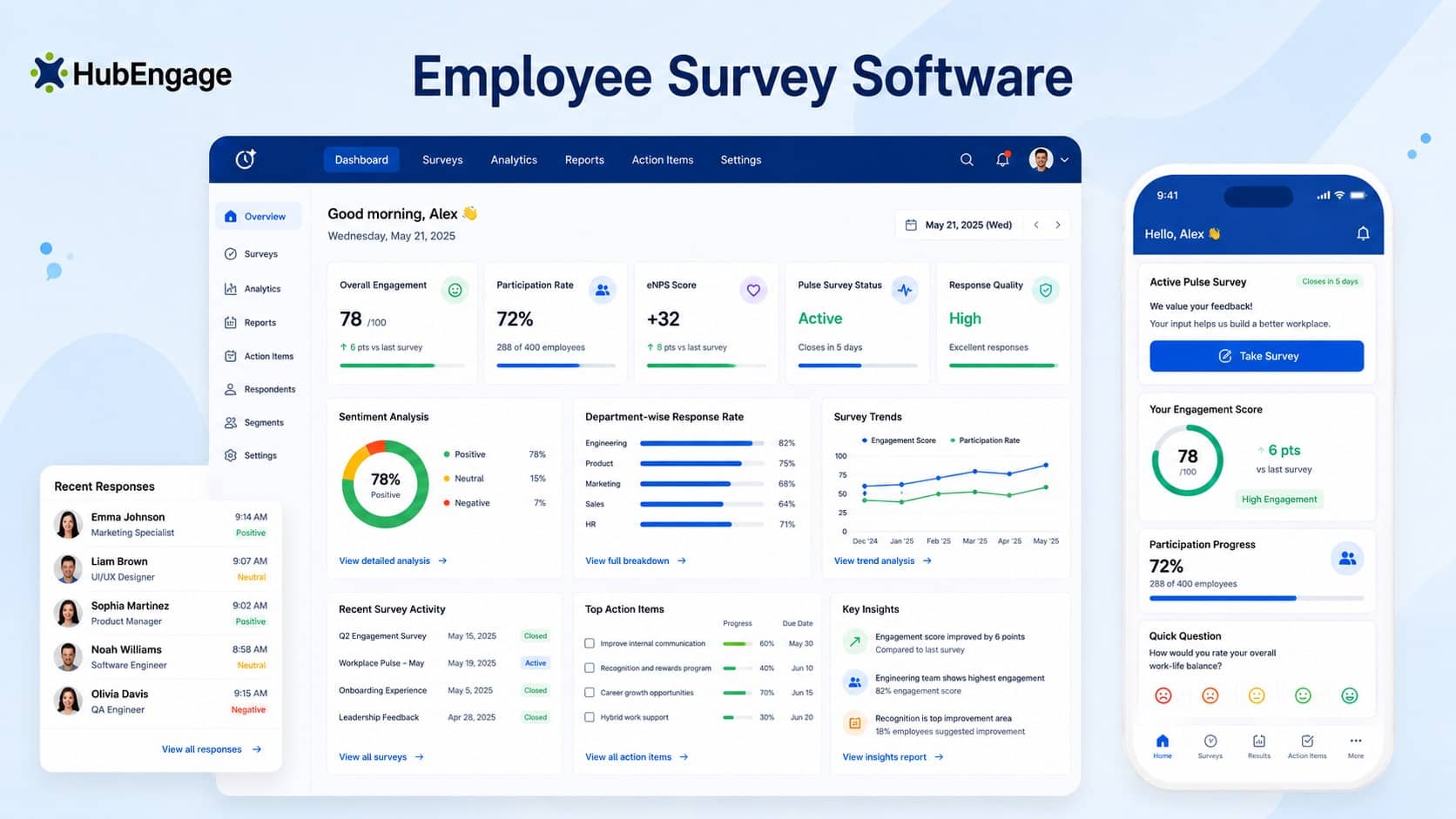
The platform uses AI sentiment and thematic analysis to uncover trends, concerns, and key feedback themes without manual review. It also supports pulse surveys, lifecycle surveys, anonymous feedback, 30+ languages, automated reminders, and gamified rewards like points and gift cards.
With secure integrations, SSO, HRIS support, ISO 27001, SOC 2, HIPAA, and GDPR compliance, HubEngage helps HR teams listen, analyze, and act faster.
Conclusion
Employee satisfaction is not something organizations measure once a year. It’s something they build through continuous listening, meaningful action, and consistent communication.
The strongest organizations combine employee feedback with engagement data, manager conversations, and workforce insights to identify problems before they affect retention, productivity, or customer experience.
HubEngage helps organizations bring surveys, communications, recognition, analytics, and employee engagement together in one connected workforce experience platform.
If you are ready to build a more effective employee satisfaction strategy for your frontline, remote, and distributed teams then, explore our platform with a personalized demo.
FAQs on Measuring Employee Satisfaction
How often should distributed teams measure employee satisfaction?
Distributed teams should run a full survey 1 to 2 times each year and use short pulse surveys every month or 3 months. Regular feedback helps to see changes, find issues early, and gives better employee experience.
What is the best way to measure employee satisfaction in growing businesses?
The best method is a mix of surveys, open comments, manager check-ins, and behavior data like turnover or absenteeism. This will gives a complete picture of employee experience and helps you make better decisions.
What are the most important employee satisfaction metrics?
Key metrics are eNPS, Employee Satisfaction Index, turnover rate, absenteeism, and engagement levels that help businesses understand the sentiment of employee, retention risks, and the culture of workplace.
How can remote or frontline employees share feedback easily?
With mobile-friendly tools like apps, SMS surveys, QR codes, etc make it easy for employees without regular use of email to take part and give feedback from anywhere.
Why are employee comments important in surveys?
Comments helps you find out the reasons behind survey scores by showing you real problems like less communication or too much work to help leaders understand what all is important to make their experience better.
What should companies do if survey response rates are low?
Start by making surveys simple and easy to use. Clearly explain why feedback are important and show employees how their input helps in making real changes. Keep in mind that participation increases with time.
What is the biggest mistake companies make while measuring employee satisfaction?
The biggest mistake is collecting feedback without taking any action. When employees do not see improvements, then their trust decrease causing less engagement, and future surveys become less effective.
Related Links
employee survey tools | employee engagement surveys | employee survey strategy and implementation. | frontline worker communication tools | employee analytics tools