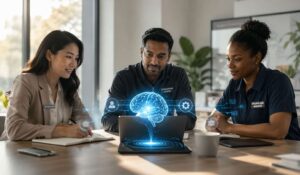
For most SMBs, especially those with frontline, deskless, or distributed teams, poor performance usually isn’t a motivation problem. It’s an operations problem. A shift lead misses an update, a new hire can’t find the latest process, a field employee waits on a manager for an answer, and the day slows down one avoidable interruption at a time.
That’s why efforts to improve workplace performance often fail when leaders treat it like a coaching issue alone. Performance improves when people can get the right information, in the right format, at the right moment, without hunting across inboxes, chats, binders, and verbal handoffs.
A useful way to think about it is friction versus flow. Friction shows up as missed updates, unclear expectations, scattered knowledge, weak onboarding, low recognition, and poor manager visibility. Flow happens when employees know what matters, where to find answers, how to get feedback, and what good performance looks like. Our blog will help you with practical ways to decrease this friction and improve performance of your team.
Key Takeaways
- Workplace performance problems often begin with missed communication, unclear roles, and disconnected tools.
- Employees perform better when they understand expectations and feel supported by managers.
- Frontline and deskless teams need mobile-first access to updates, training, and workplace information.
- Small operational improvements are often more effective than general employee motivation campaigns.
- Communication, microlearning, feedback, recognition, and onboarding help remove everyday performance barriers.
- A connected employee experience platform gives employees one place to access updates, knowledge, support, and feedback.

Methods to Improve Workplace Performance
Below are simple ways to get better workplace performance, ease communication, and help employees work better across teams.
1. Targeted Mobile-First Communication for Shift and Location-Based Updates
The performance problem in the workplace is largely the result of employees not receiving the right information at the right time. A mobile-first employee communications platform that sends targeted updates by role, location or shift and features like push notifications and read receipts help make sure important messages are seen and acted on.
Best Practices:
- Target messages by role, shift, or location.
- Use push notifications for urgent updates.
- Track acknowledgments, not just message delivery.
- Keep employee lists synced with HR or scheduling systems.
2. Microlearning and AI-Powered Knowledge Access for Just-in-Time Support
Employees waste precious time looking for SOPs, policies or process documentation. Instead of long training sessions, organizations should give employees bite-sized learning and AI-powered knowledge access to use when they need answers.
Microlearning in a searchable knowledge hub helps employees find role-specific information quickly, complete bite-sized training, and stay productive without disrupting workflows.
Best Practices:
- Create short, role-based learning modules.
- Organize content with clear tags and categories.
- Provide AI-powered search for instant answers.
- Regularly update and remove outdated content.
3. Pulse Surveys and AI-Driven Sentiment Analytics for Real-Time Feedback
Performance problems seldom pop up overnight. They creep in over time because of communication breakdowns, vague expectations, or operational difficulties. Pulse surveys can help organizations detect these issues early by collecting regular, actionable employee feedback.
AI-powered sentiment analysis tool enables leaders to quickly detect patterns across locations, shifts or departments, and take corrective action before issues impact productivity or retention.
Best Practices:
- Send short surveys after key events or changes.
- Analyze responses by team, location, or manager.
- Include open-text feedback for deeper insights.
- Share actions taken to build employee trust.
4. Gamified Peer Recognition and Performance-Based Rewards
Employees are more motivated when excellent work is consistently recognized. A formal recognition program supports good behaviors such as working together as a team, safety, customer service and sharing knowledge.
Frontline and distributed teams are more likely to participate when there is gamification with badges, points, rewards or leaderboards, which also creates a culture of appreciation.
Best Practices:
- Recognize behaviors that improve business outcomes.
- Encourage peer-to-peer recognition.
- Use meaningful rewards and timely recognition.
- Keep criteria transparent and role-specific.
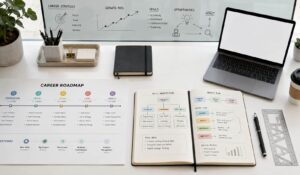
5. Structured Onboarding and Role-Specific Knowledge Packages
Inconsistent onboarding slows productivity and increases errors. A structured, and role-based employee onboarding experience ensures every new employee receives the same training, resources, and expectations from day one.
Providing digital checklists, learning modules, knowledge resources, and progress tracking helps employees become productive faster while reducing managers’ administrative workload.
Best Practices:
- Create standardized onboarding paths for each role.
- Centralize training, policies, and job resources.
- Deliver onboarding through mobile-friendly platforms.
- Track learning progress and completion.
How HubEngage Employee Experience Platforms Improves Workplace Performance?
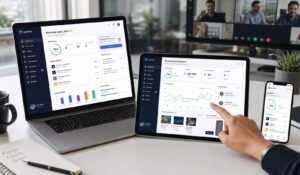
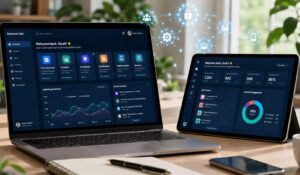
Our employee experience platform helps improve workplace performance by bringing communication, learning, recognition, feedback, and employee support into one easy-to-use platform. Employees can get targeted updates, get policies and training, find quick answers using an AI chatbot, and give tasks updates from mobile or web.
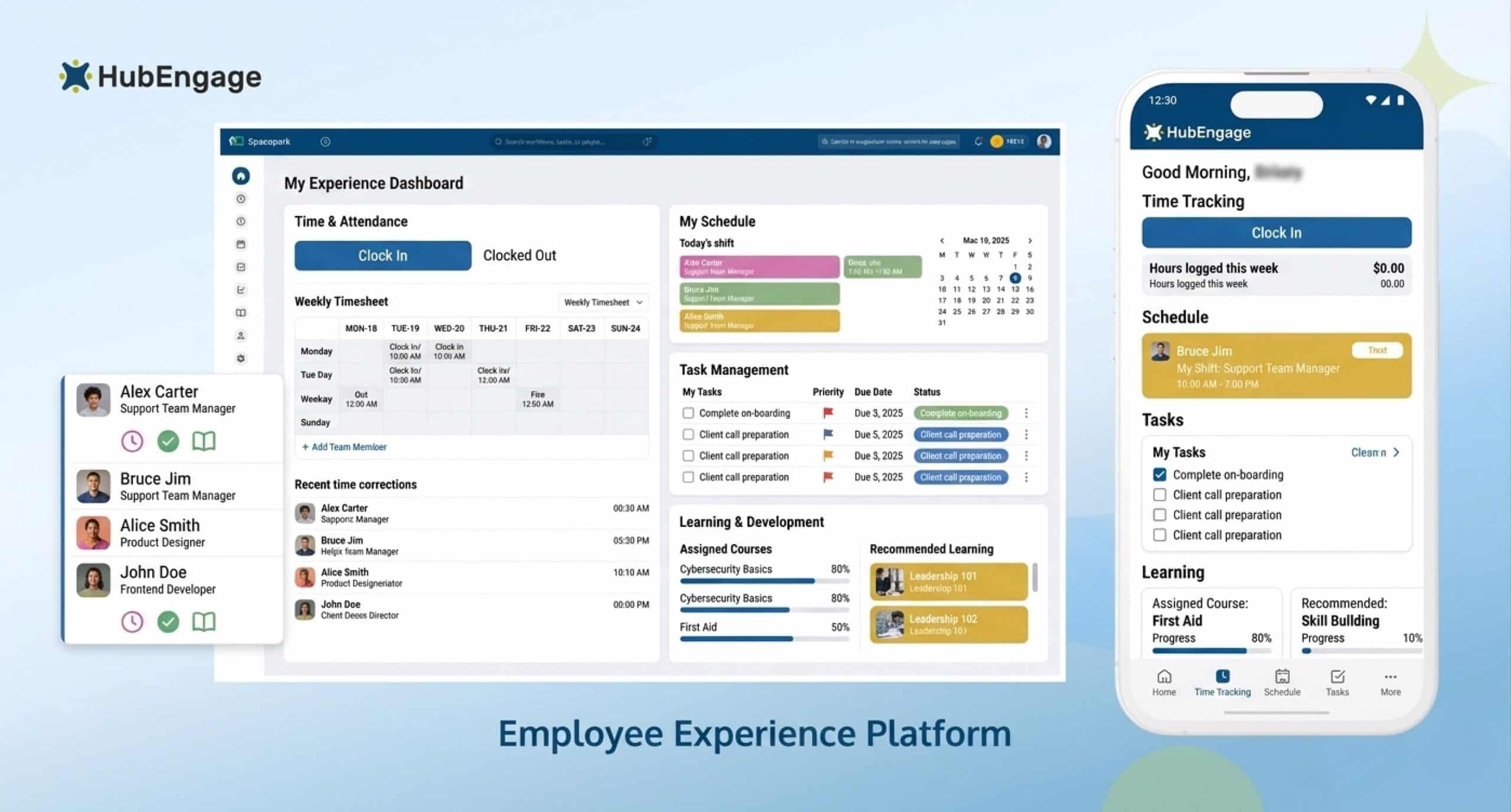
Business Owners will get better visibility into engagement, survey responses, learning progress, and workplace needs which decreases gaps, confusion, and repeated questions across teams.
By giving frontline, deskless, and office employees the right information at the right time, HubEngage helps organizations with better productivity, strong collaboration, support better decisions, and create a more connected work environment for every team.
Conclusion
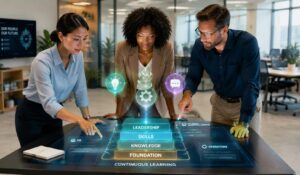
Improving workplace performance starts with removing the everyday friction that slows employees down, not simply asking them to work harder. When communication, knowledge, feedback, recognition, and onboarding work together, employees can perform with greater confidence, consistency, and efficiency across every shift and location.
If you are looking to create a more connected and productive workforce, explore the HubEngage Employee Experience Platform by scheduling a personalized demo and see how it can support your organization.
FAQs on Improve Workplace Performance
What does it mean to improve workplace performance?
Related Links
employee experience platforms | mobile-first employee communications platform | Microlearning | AI-powered sentiment analysis tool | formal recognition program | employee onboarding experience