Skip to content

How To Make An Employee Listening Strategy For Small Businesses?

Many organizations still take yearly surveys to understand their employees, while others are starting to use methods like pulse surveys, onboarding feedback, and manager check-ins. This change shows a clear need for a better employee listening strategy. Normal surveys are generally too slow and miss important data, especially for frontline and remote workers. Feedback can easily get lost before it reaches to the leaders. Using employee engagement surveys helps you collect feedback regularly, understand patterns, and take action quickly. In this blog, you will learn practical ways to build an effective employee listening strategy that works for all types of teams and improves employee experience.

Key Takeaways

  • Effective employee listening combines pulse surveys, lifecycle feedback, and operational data.
  • Frontline access is essential. Email-only listening programs exclude many deskless and hourly employees.
  • Action matters more than collection because employees want to see what changed because of their feedback.
  • AI can summarize comments, identify themes, route issues, and detect emerging workforce risks.
  • Manager-led follow-up turns employee feedback into practical local improvements.
  • A unified platform reduces the tool sprawl that slows down listening and action.
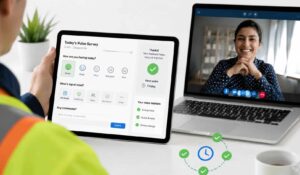
employee engagement survey conduced in digital devices

What happens when companies ask for feedback but do not act?

Listening alone does not improve engagement. Companies must act on feedback so employees see real change.

If surveys do not lead to improvements, employees stop sharing honest views. When leaders do not take action and only take feedbacks then three important observations are found:

Issue 

Impact 

Lack of visible action on feedback

Employees lose trust

Ignored survey responses

Lower participation rates

Unresolved workplace issues 

Reduced engagement and retention

8 Ways To Create An Employee Listening Strategy

Here are 8 practical ways that we suggest you to create an employee listening strategy that drives workplace action.

1. Use Pulse Surveys and Real-Time Sentiment Analysis

A person holding a smartphone showing an employee engagement survey app with sentiment tracking and pulse questions.

Pulse surveys are short, regular check-ins to understand employee mood. They help small teams act quickly on issues. Keep questions simple and mobile-friendly. You can get real-time employee feedback, better participation, and clearer insights from frontline and remote employees.

2. Build a Multi-Channel Feedback Collection System

Multi-channel feedback  means collecting input through tools employees already use. Using a multi-channel communication platform you can easily reach out to frontline and remote workers. Use SMS, apps, or chat tools. Expect higher response rates, better coverage, and more inclusive feedback across your workforce.

3. Create an Employee Suggestion Program with Transparent Tracking

Suggestion programs collect employee ideas and track progress openly. They help improve operations and engagement. Show updates on each idea. Expect more participation, trust, and useful ideas from employees across different locations.

4. Apply AI-Powered Predictive Analytics and Early Warning Systems

A professional woman viewing a predictive employee retention dashboard on her laptop screen at home.

AI, big data in HR and effective analysis helps you spot patterns and risks before they grow. It supports better decisions using employee data. Start with simple trends and signals. Expect early warnings, smarter planning, and improved employee experience across locations and roles.

5. Use Social Listening and Peer Feedback

Social listening tracks everyday employee conversations and comments. An enterprise social network helps you uncover real issues early. Encourage open discussions on internal platforms. Expect honest insights, shared experiences, and faster identification of problems affecting distributed teams.

6. Use Exit Interviews and Alumni Feedback to Improve Retention

Exit interviews gather feedback when employees leave. They help identify hidden issues. Review patterns and act early. Expect better retention strategies, improved onboarding, and stronger workplace practices for future employees.

7. Create Manager-Led Listening Cadences

A professional manager and employee having a one-on-one meeting in a modern, bright office setting.

Manager-led listening means regular check-ins between managers and employees. With on manager employee communication you can build trust and gather feedback. Use simple questions and repeat often. Expect stronger relationships, clearer concerns, and better support for frontline and remote teams.

8. Organize Focus Groups for Major Workplace Changes

Focus groups are small discussions to understand employee views on changes. They help clarify concerns and improve decisions. . Workday’s discussion of overlooked frontline worker well-being shows that 42% of frontline workers believe leadership is not good at communicating with them, while 48% say the communications they receive are not relevant to their roles. Include different roles and shifts to get deeper insights, better planning, and smoother adoption of new process.

How can managers turn employee survey results into clear actions?

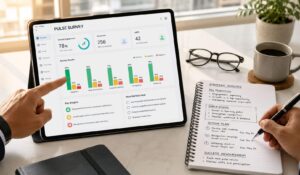
Well-designed questions produce more useful insights. A simple action framework helps managers translate those insights into practical changes. Better questions reveal actionable priorities, while visible follow-through increases trust and encourages employees to provide more honest feedback in the future.

employee listening strategy framework

Build a Connected Workforce with HubEngage

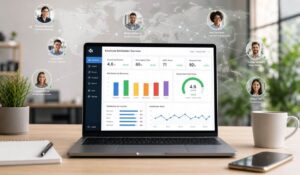
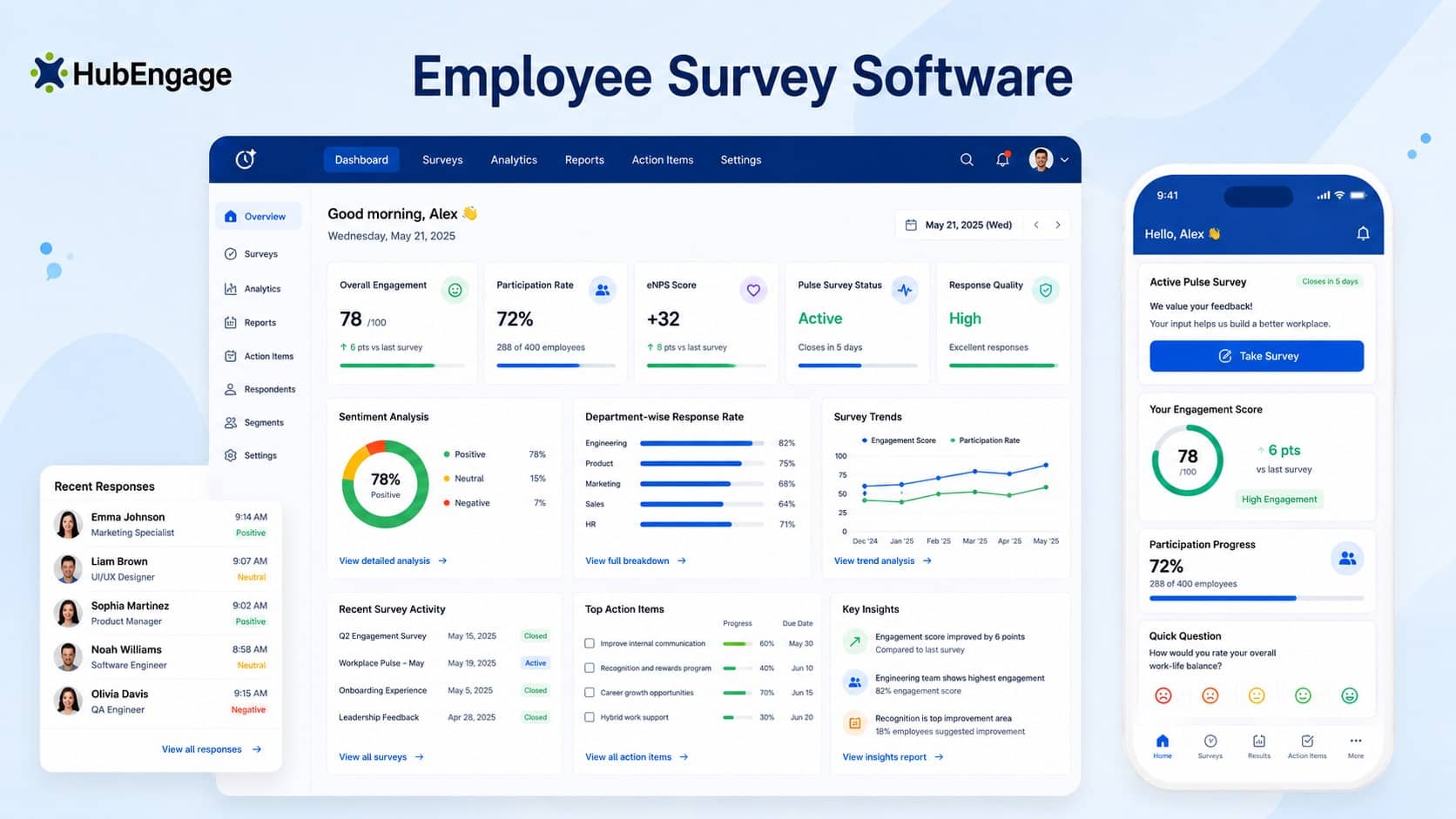
Our AI-powered tool for employee survey helps you build an effective employee listening strategy in one connected platform. It helps you create pulse, onboarding, exit, lifecycle, and always-on feedback surveys, then distribute them through mobile apps, intranet, Microsoft Teams, Slack, and other channels. With an AI-powered sentiment analysis as well as thematic analysis you can turn responses into real-time, actionable insights. HubEngage Employee Survey Software dashboard with mobile survey app showing engagement scores, pulse surveys, participation analytics, and employee feedback insights helping with an effective employee listening strategy Gamification rewards employees with points for completing surveys, helping improve participation. Our employee survey tool also supports multiple languages, HRIS integrations, and mobile access for frontline teams. Enterprise-grade encryption, role-based access, HIPAA compliance, and GDPR compliance help protect employee privacy.
Conclusion

Building an effective employee listening strategy needs regular feedbacks, easy access, and clear action. When companies connect feedback channels and take quick actions then, employees feel valued. This helps improve engagement, trust, and overall workplace experience. Making listening a regular part of daily work helps organizations understand their people better. To see how this works, explore the HubEngage Employee Experience Platform by taking a demo and learn how it can support your employee listening journey.

FAQs on Employee Listening Strategy

What is an employee listening strategy?

An employee listening strategy is the system a company uses to gather, analyze, and act on workforce feedback across the employee lifecycle. It goes beyond annual surveys and includes methods such as pulse surveys, manager conversations, focus groups, suggestions, and exit interviews.

Why doesn’t an annual survey work by itself?

An annual survey gives you a delayed snapshot. It doesn’t catch issues as they emerge, and it often misses frontline context. That’s why many organizations are moving toward continuous listening.

How do you build an employee listening strategy for frontline workers?

Start with channels frontline workers can access, such as mobile, SMS, app notifications, and digital signage. Then segment insights by role, shift, and location so frontline issues don’t get buried inside enterprise averages.

What role does AI play in an employee listening strategy?

AI helps teams analyze open-ended comments, detect trends, summarize large volumes of feedback, and identify emerging issues earlier. The best use of AI is to help leaders act faster, not to automate away human judgment.

How often should companies collect employee feedback?

The right cadence depends on the issue and the employee group. Ongoing pulse listening, manager check-ins, lifecycle moments, and targeted sessions around major changes usually work better than relying on a single annual event.

What is the biggest mistake in employee listening strategy?

Collecting feedback without visible follow-through. If employees don’t see what changed, trust drops and response quality declines in the next cycle.

Related Links

employee survey tool  | employee engagement surveys | real-time employee feedback | multi-channel communication platform | enterprise social network | manager employee communication

Get Insights

Subscribe to our weekly newsletter to get more tips on effective employee engagement and communications!

Join Our Community

Join Turn On Engagement (TOE) to interact with other employee engagement and people experience professionals. Share and get new ideas!

An expert content writer specializing in creating comprehensive, insight-driven content for technology and SaaS products. With more than three years of hands-on experience working closely with HR, internal communications, and leadership teams, he helps organizations turn employee engagement challenges into measurable outcomes. His writing is grounded in real customer experiences and focuses on practical strategies that boost productivity, improve communication, and strengthen workplace culture. Known for his ability to simplify complex technology concepts, he translates them into clear, actionable insights that resonate with HR professionals, talent acquisition leaders, and business owners alike. His work consistently reflects a strong commitment to trust, credibility, and people-first innovation, supporting organizations as they navigate employee experience, digital workplace transformation, and modern workforce engagement strategies.

Other posts you might enjoy

Back To Top