Many organizations struggle with low productivity, skill gaps, and poor employee engagement due to ineffective learning methods. Research and Markets report shows that companies worldwide spend billions of dollars every year on employee training programs. However, most training programs fail to deliver measurable results, leaving organizations frustrated with wasted resources and unchanged performance.
Employee training programs help solve these challenges by improving workforce skills, boosting confidence, and supporting better business performance across teams. The difference lies in choosing the training programs for employees and the microlearning tools that align with your workforce needs.
Whether you are in manufacturing, healthcare, hospitality, or any other industry that exists, the right training program for employees transforms individual performance and drives organizational success. In this blog we will break down the most effective training approaches that deliver real results across industries.
Key Takeaways
- Employee training programs help businesses reduce skill gaps, improve productivity, and increase employee engagement.
- Skills-based training, onboarding, leadership development, and compliance training are some of the most effective employee training methods.
- A strong Learning Management System (LMS) helps organizations manage, track, and improve employee training programs more efficiently.
- Measuring training ROI through KPIs like completion rates, performance improvement, and employee retention helps businesses improve results.
- Compliance training supports workplace safety, reduces legal risks, and helps organizations meet industry regulations.
- Continuous improvement, employee feedback, and clear training goals help businesses build successful long-term training strategies.
Types of Employee Training Programs
Understanding the different types of training programs helps you match solutions that will fit your business needs. Each type serves distinct purposes and works best in particular situations.
Skills-Based Training Programs
Skills-based training focuses on developing specific competencies required for job performance. These programs target technical abilities, soft skills, or industry-specific knowledge gaps.
| Training Type | Main Purpose | Common Example |
| Technical Skills Training | Improves job-specific technical knowledge | Software or equipment training |
| Soft Skills Development | Builds communication and teamwork skills | Leadership or customer service training |
| Compliance Training | Ensures workplace safety and legal compliance | OSHA or workplace safety training |
| Cross-Training | Increases employee flexibility across roles | Retail staff handling multiple tasks |
For example, retail businesses often cross-train employees to handle customer service, billing, and inventory tasks when needed.
Onboarding or Orientation Programs
Structured onboarding programs reduce new employee turnover as well as significantly improve productivity. These programs integrate new hires into company culture while providing essential job knowledge.
For example, many companies use 90-day onboarding programs to help new employees adapt faster, understand workplace expectations, and improve productivity from the beginning.
Leadership Development Programs
Leadership training prepares employees for management roles and improves decision-making at all levels. These programs typically include:
- Management Training for Managers: Helps managers improve supervisory skills, lead teams effectively, and handle employee performance more confidently.
- Executive Development: Focuses on building strategic thinking, leadership abilities, and decision-making skills for senior-level roles.
- Succession Planning: Prepares skilled employees for future leadership positions and supports long-term business continuity.
For example, hospitals often train department heads to improve patient care management, while manufacturing companies focus on leadership training for workplace safety and operations.
Training Program Design and Development
Creating effective training programs requires systematic planning and alignment with business objectives. The most successful programs follow proven design principles.
Assessment and Analysis
Before developing any training program, conduct a thorough needs assessment to identify skill gaps and performance issues. This analysis should examine:
| Assessment Area | What It Focuses On | Business Benefit |
| Performance Data | Employee productivity and work quality | Identifies skill gaps and improvement areas |
| Employee Feedback | Employee opinions and learning needs | Improves training relevance and engagement |
| Business Objectives | Company goals and operational needs | Aligns training with business growth |
| Regulatory Requirements | Industry rules and compliance standards | Reduces compliance and safety risks |
Such assessments results guided program content, delivery methods, and success metrics. Companies that skip this step often create training that addresses perceived rather than actual needs.
Learning Objectives and Outcomes
Clear learning objectives define what employees will know and do after completing training. Effective objectives are specific, measurable, achievable, relevant, and time-bound (SMART). A well-defined learning objectives significantly improve training effectiveness because they focus content and provide clear success criteria.
ADDIE Model
The ADDIE model (Analysis, Design, Development, Implementation, Evaluation) is the most widely used instructional design framework in corporate learning. It gives L&D teams a repeatable process for building any training program for employees, from a 20-minute safety refresher to a six-month leadership curriculum.
- Analysis: Identify the performance gap and root cause
- Design: Define learning objectives, sequence, and assessment strategy
- Development: Build content, activities, and materials
- Implementation: Deliver training to learners
- Evaluation: Measure results against objectives
Training Delivery Methods
Modern training programs combine multiple delivery methods to accommodate different learning styles and operational constraints. Below are some of them that you can use as per your need.
| Method | Best For | Advantages | Considerations |
| Instructor-Led Training | Complex topics, hands-on skills | Personal interaction, immediate feedback | Higher costs, scheduling challenges |
| E-Learning | Knowledge transfer, compliance | Flexible scheduling, consistent content | Less interaction, requires self-motivation |
| Blended Learning | Comprehensive programs | Combines benefits of multiple methods | More complex to manage |
| On-the-Job Training | Role-specific skills | Real-world application, immediate relevance | Quality depends on trainer expertise |
Learning Management Systems (LMS) for training
Having a strong Learning Management System streamlines training delivery, tracking, and reporting. The right LMS becomes the central hub for all employee development activities.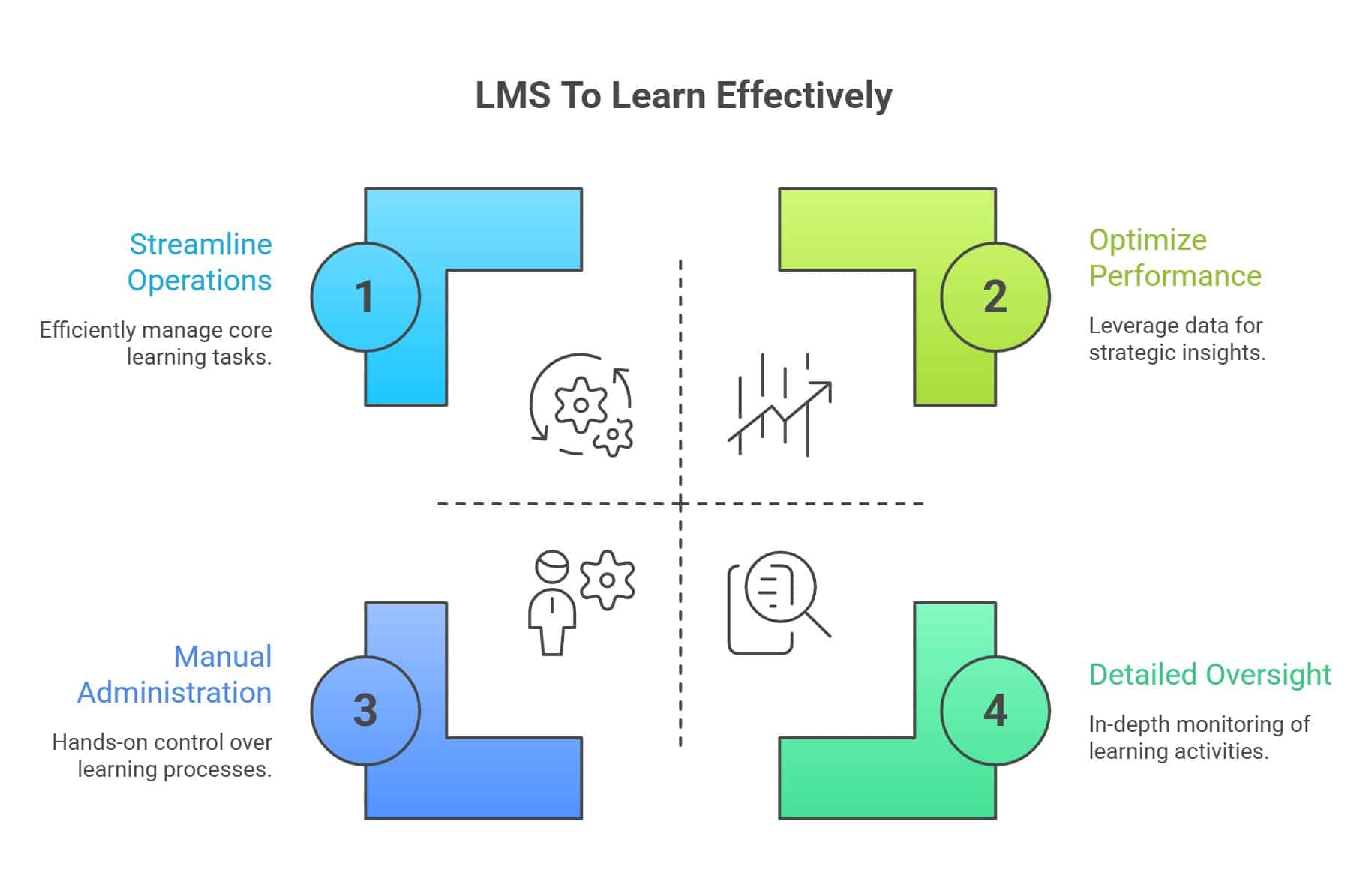
LMS Platforms
Leading LMS platforms like HubEngage serve different organizational needs and budgets. Enterprise solutions offer comprehensive features but require significant investment. While selecting an LMS consider common factors such as:
| LMS Selection Factor | Main Purpose | Business Benefit |
| User Capacity | Supports growing employee training needs | Helps businesses scale training easily |
| Content Creation Capabilities | Simplifies training content management | Saves time and improves learning consistency |
| Integration Options | Connects with HR and business tools | Improves workflow and data management |
| Ongoing Support | Provides technical help and updates | Ensures smooth LMS performance and user experience |
Measuring Training Effectiveness and ROI
Measuring training impact proves program value and identifies improvement opportunities. The most effective measurement approaches combine multiple metrics and evaluation levels.
Kirkpatrick’s Four Levels of Evaluation
The Kirkpatrick model provides a framework for comprehensive training evaluation: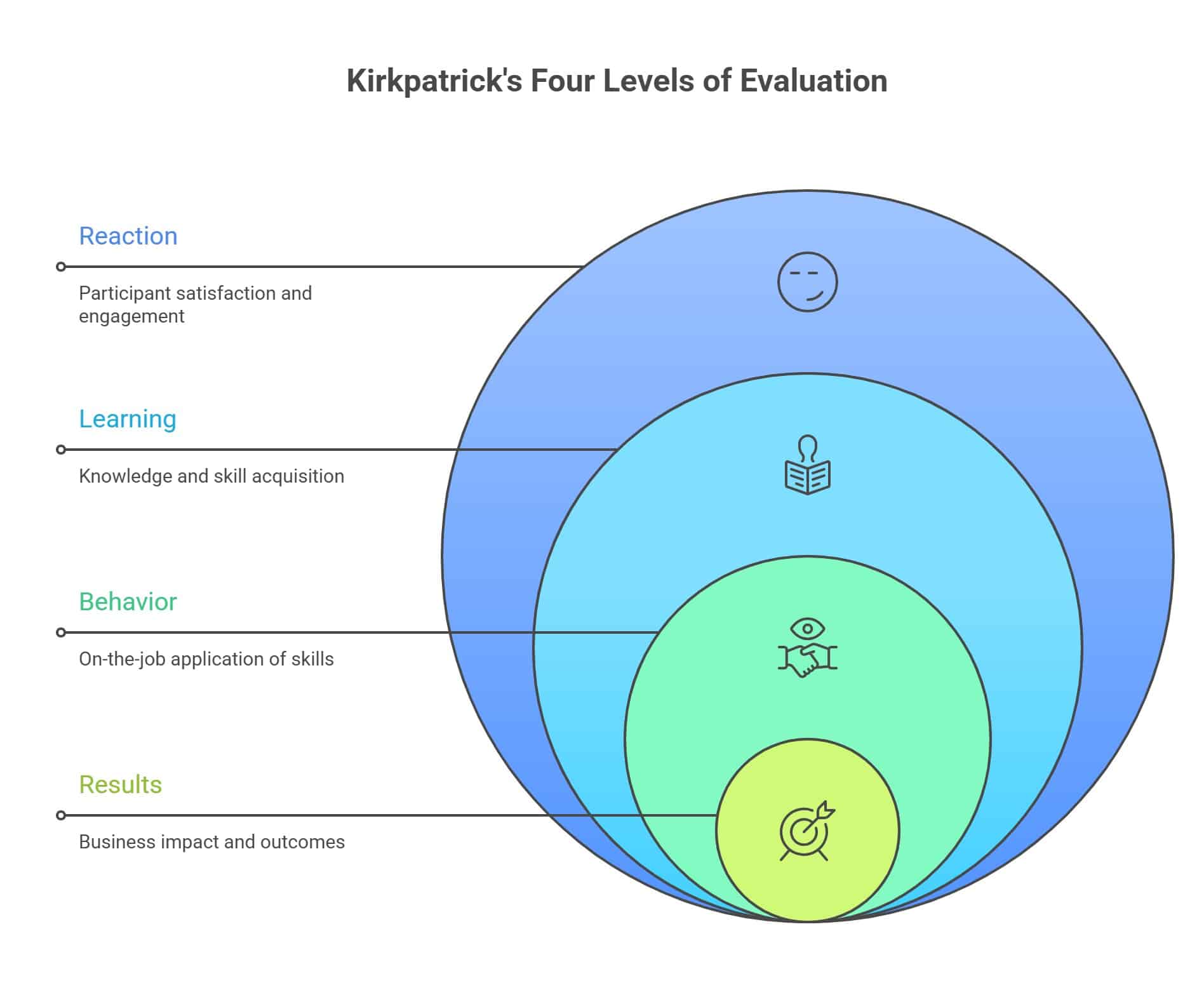
Key Performance Indicators:
Effective training measurement tracks both leading and lagging indicators:
| Training KPI | What It Measures | Business Impact |
| Completion Rates | Employee training participation | Improves compliance and learning consistency |
| Assessment Scores | Knowledge and skill understanding | Helps measure training effectiveness |
| Time to Competency | Speed of employee skill development | Increases workplace productivity faster |
| Performance Improvement | Changes in employee productivity | Reduces errors and improves efficiency |
| Employee Retention | Employee engagement and turnover | Supports long-term workforce stability |
Organizations that systematically measure training ROI see higher returns on their training investments compared to those that do not track results.
Compliance and Regulatory Training Requirements
Compliance training protects organizations from legal liability while ensuring employee safety and regulatory adherence. Requirements vary significantly by factors like industry and location.
Industry-Specific Requirements
Different industries face distinct compliance obligations:
| Industry | Main Training Focus | Common Compliance Areas |
| Healthcare | Patient safety and privacy | HIPAA and infection control |
| Manufacturing | Workplace safety and operations | OSHA and hazardous materials |
| Hospitality | Customer safety and service | Food safety and harassment prevention |
Occupational Safety and Health Training
It forms the foundation of workplace safety programs. OSHA requires specific training for various job roles and hazards. Common OSHA training requirements include:
- General Safety Orientation: Helps employees understand basic workplace safety rules and safe working practices.
- Hazard Communication: Teaches employees how to safely handle chemicals and understand safety labels and instructions.
- Personal Protective Equipment: Explains how to properly use and maintain safety gear like gloves, helmets, and masks.
- Emergency Procedures: Prepares employees to respond quickly during emergencies such as fires, accidents, or evacuations.
Documentation and Record Keeping
Compliance training requires detailed documentation to demonstrate regulatory adherence. Essential records include:
| Documentation Type | Purpose | Business Benefit |
| Training Certificates | Tracks completed employee training | Helps maintain compliance records |
| Curriculum Details | Outlines training topics and goals | Improves training consistency |
| Instructor Qualifications | Verifies trainer expertise | Ensures quality employee training |
| Refresher Schedules | Monitors renewal training timelines | Supports ongoing compliance and safety |
Employee Training Software and Platforms
Beyond the LMS, a training program for employees often requires tools for communication, and engagement. A training program for employees does not exist in isolation. Employees need to be informed about upcoming training, reminded to complete modules, and recognized when they finish.
HubEngage Employee Experience Platforms
Our employee experience platform combines communication, engagement, learning, recognition, and productivity tools in one place. It helps organizations create a more connected, informed, and engaged workforce.
The platform includes features like internal communication, surveys, social engagement, recognition, and AI-powered support tools to improve employee participation and workplace experience. Employees can easily access information and stay connected through mobile, web, email, SMS, and digital signage.
By bringing multiple workplace tools into a single platform, HubEngage helps reduce confusion, improve collaboration, and simplify employee experience management. Organizations can also expand the platform with additional modules as their business needs grow.
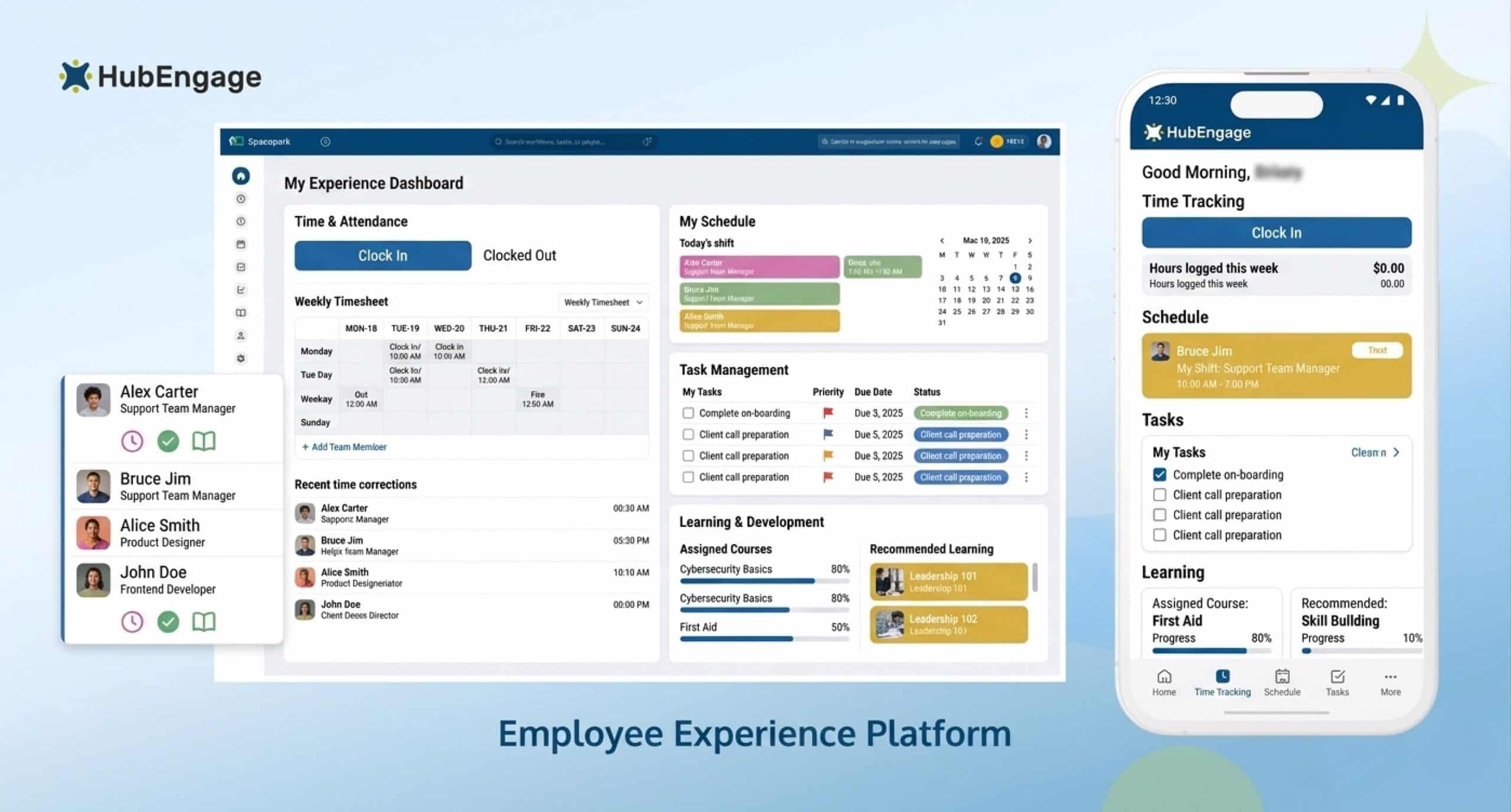
Key Features:
- Scheduling Solution: Helps managers plan shifts and schedules across teams and locations.
- Time Tracking: Tracks attendance, work hours, and employee productivity insights.
- Learning Platform: Supports employee training, upskilling, and knowledge sharing.
- Task Management: Makes it easier to assign, track, and complete daily tasks.
- Multi-Channel Access: Allows employees to connect through mobile, web, email, SMS, and signage.
- Real-Time Collaboration: Improves communication, teamwork, and workflow management.
- AI-Powered Chatbot: Provides quick support, answers, and access to information.
- Scalable Modules: Allows organizations to add more features as workforce needs grow.
With this you can push training reminders, collect feedback on program quality, and track participation across frontline and deskless teams. For organizations in manufacturing, healthcare, and hospitality where email reach is limited, this kind of mobile-first communication layer is what closes the gap between a training program existing and employees actually completing it.
You can also explore how Benefits of a Company Intranet supports training delivery by giving employees a single destination for learning resources, policy updates, and course links.
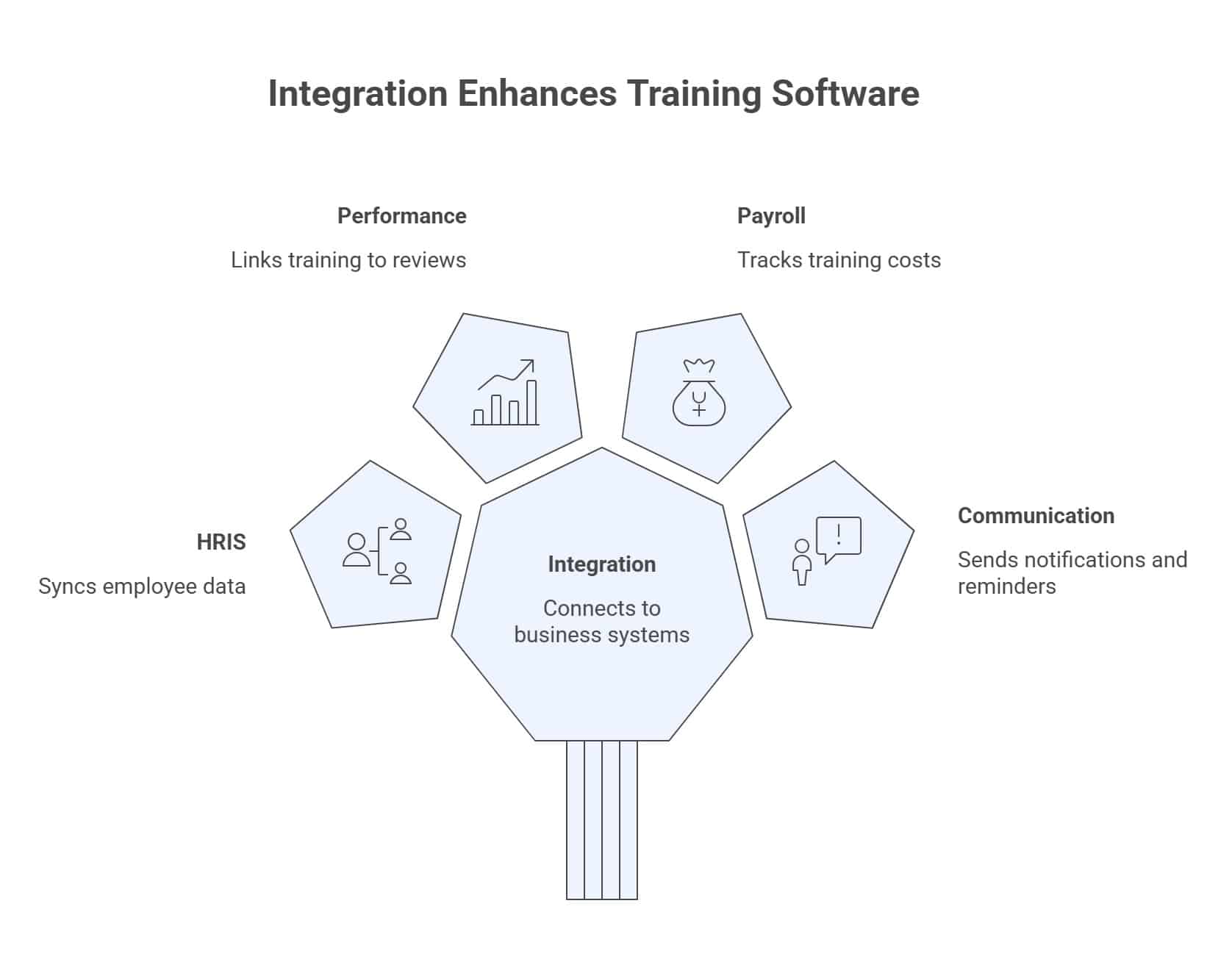
Integration Capabilities
Training software works best when integrated with existing business systems. Common integrations include:
Best Practices for Corporate Training Implementation
Successful training implementation requires strategic planning, stakeholder buy-in, and ongoing optimization. The most effective programs follow proven best practices.
Leadership Support and Communication
Executive sponsorship drives training program success. Leaders must actively communicate training importance and participate in programs themselves. This visible commitment encourages employee engagement and reinforces learning culture.
Training Plans for Employees
Individualized training plans align employee development with career goals and business needs. Effective training plans for employees include:
- Current Skill Assessment: Helps identify an employee’s existing skills, strengths, and areas that need improvement.
- Development Goals: Sets clear learning targets to support employee growth and better job performance.
- Learning Path: Provides step-by-step training modules that guide employees through their development journey.
- Timeline: Creates realistic schedules and deadlines to help employees complete training on time.
Continuous Improvement Process
Training programs require ongoing refinement based on feedback and results. Regular program reviews should examine following:
| Improvement Area | Main Focus | Business Benefit |
| Content Relevance | Keeps training updated with industry needs | Improves employee skill development |
| Delivery Effectiveness | Uses the right learning methods | Increases employee engagement and learning |
| Resource Allocation | Manages training costs efficiently | Supports better budget planning |
| Technology Updates | Improves training platform experience | Enhances accessibility and user satisfaction |
Successful organizations treat training as an iterative process, constantly adapting to changing business needs and employee feedback.
Staff Training Program Implementation
Implementing a comprehensive staff training program requires careful coordination across departments and clear communication with all stakeholders.
Program Rollout Strategy
Phased implementation reduces risk and allows for adjustments based on early feedback. Consider starting with pilot groups before organization-wide deployment.
| Phase | Duration | Focus Area | Success Metrics |
| Pilot | 30-60 days | Test content and delivery | Completion rates, feedback scores |
| Department Rollout | 90-120 days | Scale to specific departments | Performance improvements, engagement |
| Organization-wide | 180+ days | Full implementation | ROI, compliance, retention |
Change Management Considerations
Training program success depends on strong change management and clear communication. Organizations should address employee concerns early so employees feel more comfortable accepting new training processes.
Leaders should also explain how training can improve everyday work performance, build confidence, and support long-term career growth. Clear communication helps employees understand why the training matters.
Communication strategies should focus on both personal and professional development opportunities instead of only discussing compliance requirements. This approach makes training feel more valuable and relevant to employees.
Employees are more likely to participate actively when they clearly understand the benefits of the training program and how it can support their future growth.
Conclusion
Effective employee training programs help organizations improve performance, boost employee engagement, and support long-term business growth. A well-planned training strategy also helps employees stay motivated and prepared for changing workplace demands.
By choosing the right training methods, setting clear goals, and tracking progress regularly, companies can create a stronger and more skilled workforce. To simplify and enhance your employee training experience, explore our Employee Experience Platform and schedule a demo to see how it can support your workforce development.
Training Programs for Employees FAQs
What makes a training program for employees effective?
Effective training programs align with business objectives, address real skill gaps, and use appropriate delivery methods for the target audience. They include clear learning objectives, engaging content, practical application opportunities, and measurable outcomes. The most successful programs also provide ongoing support and reinforcement after initial training completion.
How do you measure ROI for employee training programs?
Training ROI calculation compares program costs against measurable benefits. Costs include development expenses, delivery time, and employee wages during training. Benefits encompass productivity improvements, quality gains, reduced errors, and decreased turnover. The basic formula is: ROI = (Benefits – Costs) / Costs × 100. Organizations typically see positive ROI within 6-12 months for well-designed programs.
What is the difference between training and development programs?
Training focuses on current job skills and immediate performance needs, while development prepares employees for future roles and career advancement. Training addresses specific competency gaps, while development builds broader capabilities. Most organizations need both approaches to maintain current performance and prepare for future growth.
How often should employee training be updated?
Training content should be reviewed annually and updated when business processes change, regulations evolve, or technology advances. Compliance training often requires annual refreshers, while technical skills training may need quarterly updates. The key is maintaining relevance to current job requirements and industry standards.
What are the biggest challenges in implementing employee training?
Common implementation challenges include limited budget, scheduling conflicts, employee resistance, and lack of management support. Technical challenges involve selecting appropriate delivery methods and measuring effectiveness. Success requires addressing these obstacles through careful planning, stakeholder engagement, and phased implementation approaches.
How do you choose between in-person and online training?
The choice depends on learning objectives, content complexity, and practical constraints. In-person training works best for hands-on skills, team building, and complex topics requiring interaction. Online training suits knowledge transfer, compliance requirements, and situations requiring flexible scheduling. Many organizations use blended approaches combining both methods for optimal results.
How long should a training program for employees take?
Length depends on the complexity of the content and the learning objective. Compliance modules typically run 20 to 45 minutes. Onboarding programs span days or weeks. Skills development programs may run for months with spaced practice sessions. The right length is whatever it takes to achieve the learning objective.
What is the difference between a training plan and a training program?
A training program for employees is the overall system i,e, the content, delivery methods, and assessment strategy. A training plan is the individual document that maps which training a specific employee needs, by when, and how their progress will be tracked. Programs are built once and used many times; plans are personalized to individuals or roles.
How do you train employees who work non-desk jobs?
Frontline and deskless employees in manufacturing, healthcare, and hospitality need mobile-first training delivery. This means short microlearning modules accessible on a smartphone, push notifications for reminders, and offline capability for environments with limited connectivity. LMS platforms without a strong mobile app will not reach this population effectively.
What makes a training program for employees legally defensible?
Three things: documented completion records, dated assessments with passing scores, and evidence that training content matches the regulatory requirement it is meant to satisfy. Your LMS should generate these records automatically. Store them for at least the period required by the relevant regulation. For examples, OSHA generally requires three years for training records.
How often should training programs be updated?
Compliance training should be reviewed annually and updated whenever the underlying regulation changes. Skills training should be reviewed when job requirements change or when performance data suggests a gap. A training program for employees that has not been reviewed in two or more years is almost certainly out of date.
Related Links:
workforce management | remote employees | microlearning tools for employee training