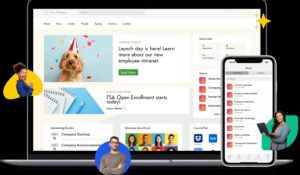
Beekeeper is a well-known modern intranet platform built specifically for frontline and deskless workers, bringing together messaging, workflows, and integrations into a unified mobile-first solution.
Organizations often evaluate Beekeeper when they are looking to replace fragmented communication tools with an unified employee experience platform that improves operational efficiency, team alignment, and workforce connectivity.
It is commonly considered by mid-sized to large enterprises in industries like retail, manufacturing, and hospitality aiming to better engage and manage distributed teams.
Despite its strong frontline focus, buyers frequently struggle to find clear, actionable insights around pricing transparency, scalability across growing teams, ease of use, and long-term platform flexibility.
Many decision-makers also seek clarity on how well the platform supports broader employee experience needs and whether it delivers measurable ROI compared to more comprehensive and modular alternatives.
In this guide, we provide a breakdown of Beekeeper covering its core features, strengths, limitations, pricing structure, and verified user reviews. We also compare it with some popular alternatives that offer greater flexibility, faster adoption, and cost-effective scalability.
Beekeeper Key Features
According to the official website of Beekeeper, below are the core features buyers look for:
1. Mobile-First Communication
Beekeeper is designed primarily for frontline workers, offering chat, announcements, and updates through a mobile app. This makes it highly accessible for non-desk employees.
2. Secure Messaging & Chat
The platform supports 1:1 and group messaging with role-based access controls, helping teams communicate quickly while maintaining data security.
3. Workflow Automation
Beekeeper allows organizations to digitize workflows such as task assignments, checklists, and approvals, improving operational efficiency.
4. Integrations with Operational Systems
It integrates with systems like HRIS, payroll, and scheduling tools, enabling centralized communication tied to daily operations.
5. Analytics & Insights
Basic analytics help track engagement, message delivery, and usage patterns, though reporting depth may vary based on plan.
6. Employee Engagement Tools
Includes surveys, polls, and content sharing features to gather feedback and improve workforce engagement.
Beekeeper Feature Matrix
After using the Beekeeper app, we have created a list of things that are good and things that can be made better.
| Feature | Strengths | Limitations |
| Mobile App | Strong for frontline access and usability | Limited desktop-first experience |
| Messaging | Real-time communication and secure channels | Can become cluttered at scale |
| Workflows | Helps digitize manual processes | Customization may require setup effort |
| Integrations | Connects with enterprise systems | Integration complexity reported by users |
| Analytics | Basic engagement tracking | Lacks advanced analytics depth |
| Engagement Tools | Surveys and feedback tools available | Not as robust as full EX platforms |
Beekeeper Pricing
Beekeeper does not publicly disclose detailed pricing on its website, which is a common concern for buyers evaluating multiple employee communication platforms. Instead of fixed plans, pricing is typically customized based on company size, number of users, required features, and integration needs.
This quote-based approach means organizations must go through a sales process to receive accurate pricing, making early-stage comparisons more difficult. It also limits visibility into how costs may scale as teams grow or require additional capabilities.
Beekeeper follows a custom, quote-based pricing model typically suited for mid-size to large enterprises with frontline teams. However, transparency is limited, as standard pricing tiers are not publicly available, making it harder for buyers to benchmark costs early in the evaluation process.
For decision-makers, this lack of upfront clarity can create challenges in budgeting, forecasting ROI, and comparing the platform against more transparent and modular alternatives.
Beekeeper Reviews
Based on the user feedback MangoApps reviews indicate positive sentiment around functionality. While it does raise concerns about how complex use of the software as well as its total cost.
Positive Response
- Strong mobile experience for frontline workers
- Easy communication across distributed teams
- Helpful for operational workflows and task management
- Good adoption in non-desk environments
User Challenges
- Limited customization options for specific workflows and branding needs
- Initial setup and configuration can require time and support
- Pricing is not transparent and may feel expensive for some teams
- User interface can feel inconsistent across features
- Notifications can become overwhelming without proper controls
- Reporting capabilities are basic for advanced analytics needs
Overall Sentiment
The tool is powerful but somewhat hard to use. Its strong features and integrations are valued, but usability issues, setup effort, and limited pricing clarity lower satisfaction, making it more suitable for enterprises that have resources for implementation and change management.
Beekeeper Review Summary Table
This is a summary table of Beekeeper reviews across various platforms that highlights what works well and which areas still need improvement for users .
| Source | Rating / Volume | What Users Like | What Users Flag as Cons |
| Capterra | ~4.6/5 | Ease of use, team communication | Difficulty in login, Less features |
| TrustRadius | ~8/10 | Engagement tools, workflow support | Limited reporting, setup complexity |
Beekeeper Alternatives
Below are some of the popular modern intranet platforms that you can check and compare with Beekeeper:
| Platform | Best Fit | What Stands Out | Pricing Style |
| HubEngage | All-in-one; SMBs to Enterprises; frontline teams | Multi-channel comms (push, SMS, email, Teams, Slack, WhatsApp); Recognition & gamification; Surveys & AI chatbot; Analytics & automation | Starting at $3/user/month |
| Microsoft SharePoint | Large enterprises, regulated industries | Document management, enterprise-grade governance, workflows | Included in M365 enterprise plans |
| LumApps | Enterprises using Google ecosystem | Social intranet + Google Workspace integration | Custom pricing |
| Staffbase | Regulated industries, global enterprises | Employee comms hub, branded mobile app, compliance controls | Quote-based enterprise pricing |
| Firstup | Enterprises with complex comms needs | Multi-channel messaging orchestration | Custom enterprise pricing |
| Simpplr | SMBs and midsize businesses | AI-powered intranet, intuitive UI, fast rollout | Per-user/month pricing |
| Blink | SMBs, retail & hospitality | Lightweight comms app, mobile adoption | Subscription-based |
| Unily | Multinationals, compliance-heavy orgs | Enterprise-scale, customizable, secure | Enterprise license |
| Workvivo | Enterprises focused on culture & engagement | Social feeds, recognition, integrations | Subscription-based |
| Interact | Organizations needing deep CMS + comms | Content publishing, governance, search | Quote-based |
| Axero | SMBs & midsize companies | Collaboration hub, knowledge base, forums | Tiered pricing |
| Jive | Enterprises needing social collaboration | Forums, communities, analytics | Custom pricing |
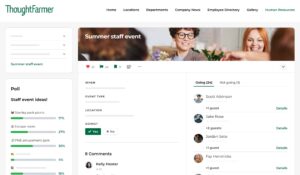
| ThoughtFarmer | Companies wanting social + intranet hybrid | Social features + structured intranet | Subscription |
| MyHub | SMBs on budget | Simple intranet builder, templates | Low-cost monthly plans |
| Bloomfire | Knowledge management & content sharing | Q&A, search, knowledge repository | Subscription |
Check out our intranet software guide to learn more about an intranet solutions and these softwares.
Why HubEngage is a better option?
Many intranet platforms find it difficult to clearly show the value they deliver compared to their cost, which often creates confusion for decision-makers. This is where HubEngage stands apart from traditional solutions.
Instead of requiring organizations to implement a full intranet system from day one, HubEngage allows companies to start with a single module such as modern intranet, communications, recognition, or surveys.
As business needs grow, organizations can expand into a complete employee experience platform. This flexible approach offers:
- Lower upfront investment
- Quicker time to value
- Higher adoption across teams
- Less tool fragmentation

Beekeeper vs HubEngage Comparison
Below is a simple comparison table on the basis of different factors that will help in comparing the two platforms with ease.
| Criteria | Beekeeper | HubEngage |
| Pricing | Custom pricing, limited transparency | Starts at $1/user/month, transparent and scalable |
| Platform Scope | Primarily communication & workflows | Full employee experience platform (comms, engagement, intranet, recognition) |
| Flexibility | Limited modular expansion | Highly modular—start with one feature and expand |
| Analytics | Basic insights | Advanced analytics and reporting |
| Engagement Features | Basic surveys and content | Gamification, recognition, rewards, surveys, AI-driven insights |
| Adoption | Strong for frontline | Works for both frontline and desk employees |
| ROI | Higher upfront uncertainty | Cost-efficient with phased rollout |
Conclusion
Beekeeper is a strong choice for organizations that focus on frontline communication and business processes. Its mobile-first approach makes it effective for deskless teams.
However, its limitations in lack of proper pricing , advanced analytics, and employee experience features can become a challenges as organizations grows. For companies looking for a more flexible as well as low cost solution, HubEngage gives a clear advantage.
With its modular approach, organizations can start with a single feature and expand into a complete employee experience platform without the need for multiple tools.
Beekeeper FAQs
What is Beekeeper used for?
Beekeeper is a good option for fieldwork communication, real-time messaging, and simple workflow, helping retail, hospitality, and manufacturing teams connect, work, and manage deskless employees easily.
Is Beekeeper pricing transparent?
No, Beekeeper follows a pricing model based on quotation, and detailed pricing tiers are not publicly available, making it harder for buyers to estimate costs and compare alternatives early.
What are common Beekeeper reviews saying?
Most reviews highlight strong mobile communication and ease of use, but frequently mention pricing concerns, limited options to do settings, and lack of advanced analytics features for better insights.
What are the best alternatives to Beekeeper?
Top alternatives include HubEngage, Staffbase, Simpplr, Workvivo, and LumApps, each offering different strengths across communication, intranet, and employee experience depending on your goals and scale.
Why consider HubEngage over Beekeeper?
HubEngage offers a modular platform with clear pricing, advanced analytics, and richer engagement features, which helps organizations to scale gradually while reducing costs and making better use across teams.
Is Beekeeper only for frontline employees?
Primarily yes, Beekeeper is designed for deskless and frontline workers, though it can support broader teams, it is not as optimized for full enterprise-wide employee experience use cases.