Employee engagement is now a key focus for modern organizations. Employees expect more than salary; they want meaningful work, recognition, growth, flexibility, and open communication.
Workplaces are also more diverse, with multiple generations, remote, hybrid, and frontline teams. This makes it important to use employee engagement programs that should suit different needs.
Effective programs help employees feel connected, improve communication, strengthen company culture, and support better retention, motivation, and overall workplace performance.
Our article explores why employee engagement matters, the best employee engagement ideas to look for, common mistakes to avoid, and how to choose the ones that will fit your team.
Key Takeaways
- Employee engagement ideas help modern teams stay connected, motivated, and productive by improving communication, recognition, growth opportunities, and workplace culture.
- The best employee engagement ideas focus on real employee needs, including well-being, career development, flexible work, rewards, feedback, and stronger team relationships.
- Employee engagement should be continuous, not a one-time activity. Regular surveys, recognition, learning programs, and two-way communication create stronger long-term engagement.
- Companies should choose employee engagement ideas based on workforce needs, business goals, budget, and work environment rather than simply following popular trends.
- Common engagement mistakes include ignoring employee feedback, using the same approach for every team, running too many activities, and failing to measure results.

Why every company needs strong Employee Engagement Ideas?
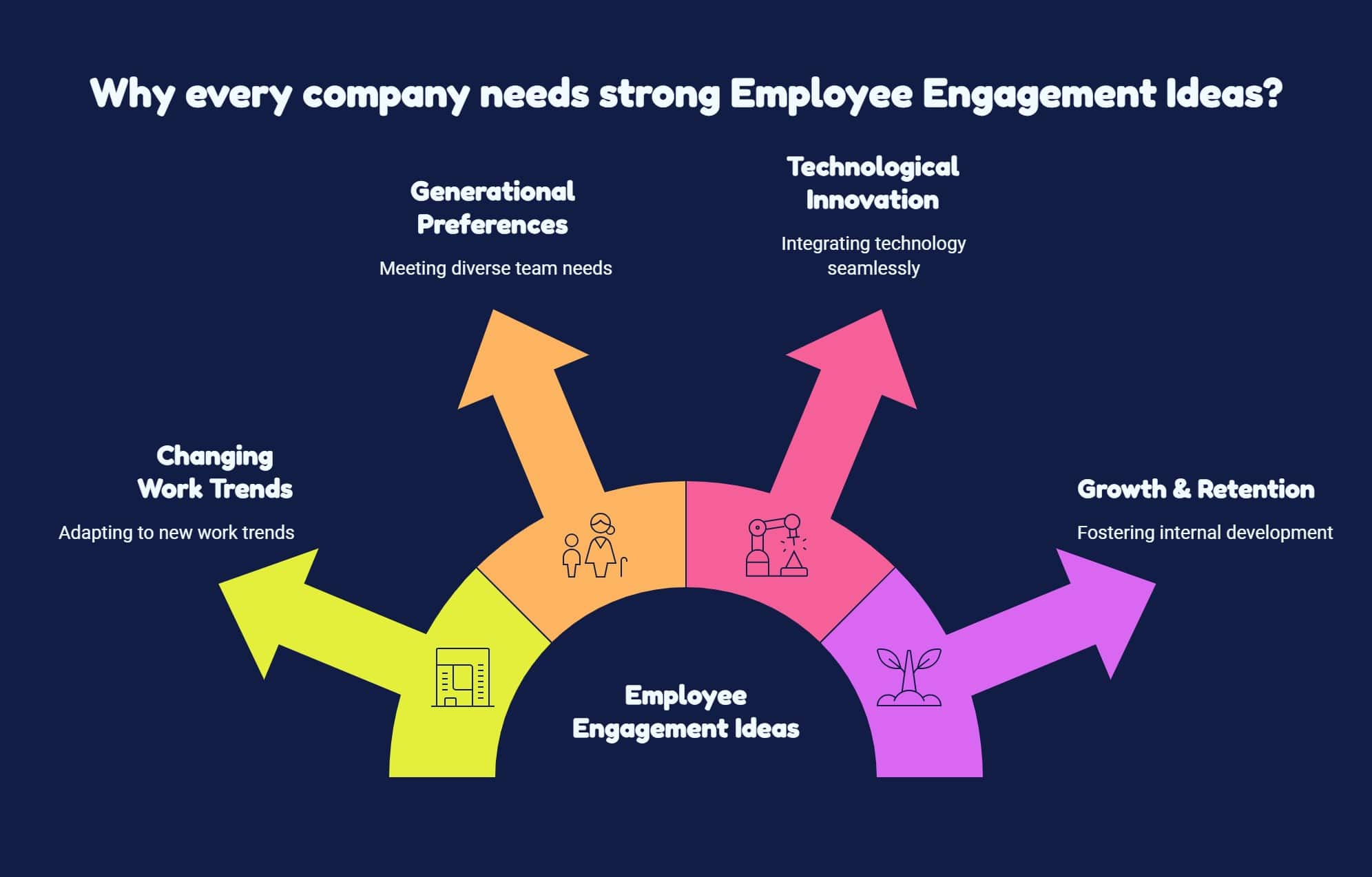
The workplace has changed significantly from traditional office models. Employees now expect organizations to provide better communication, development opportunities, flexibility, and a positive employee experience. As per Gallup, highly engaged employees leads to 21% decrease in employee turn-over rate. Here are some of the main reasons companies should invest in the right engagement ideas.
Employee Engagement Ideas every Modern Workplace should try
While there are many employee engagement ideas out there, we have listed out the common ones that businesses can consider:
1. Overall Well-Being Initiatives
Well-being programs support employees’ physical and mental health. They reduce stress and improve energy levels at work. A healthy workforce is more productive, focused, and engaged in daily tasks.
- Improves mental health
- Reduces workplace stress
- Boosts productivity
2. Defined Career Development and Upskilling Programs
Career development programs help employees see a clear future in the company. Training and mentorship improve skills and confidence. Upskilling also prepares employees for new technologies and roles, increasing long-term engagement and retention.
- Clear growth opportunities
- Improves employee skills
- Supports long-term retention
3. Establish a Rewards and Recognition Program
Regular appreciation improves motivation and loyalty. An employee recognition program makes employees feel appreciated for their work. It can include peer recognition, awards, or simple thank-you messages that build a positive work culture.
- Boosts employee motivation
- Encourages positive behavior
- Strengthens workplace culture
4. Manager and Leadership Training Programs
Good managers improve employee satisfaction and performance. Leadership training helps managers communicate better and handle teams effectively. It also builds emotional intelligence and prepares future leaders within the organization.
- Better team communication
- Strong leadership skills
- Improves employee motivation
5. Offer a Flexible Work-Life Balance Approach
Flexible work options help employees manage personal and professional life better. It reduces stress and improves productivity. Trust-based flexibility also increases job satisfaction and long-term engagement in the organization.
- Reduces employee stress
- Improves productivity levels
- Increases job satisfaction
6. Employee Groups, Forums, and Resources
Employee groups create a sense of belonging and community. They allow people to share ideas, support each other, and build relationships. These forums also help employees feel more involved in company decisions.
- Builds strong connections
- Encourages idea sharing
- Improves employee inclusion
7. Hackathons, Innovation Challenges, and Workshops
These activities encourage creativity and teamwork. Employees work together to solve real business problems. They also help different departments understand each other’s roles and improve collaboration across the organization.
- Encourages innovation
- Improves teamwork
- Builds cross-team understanding
8. Two-Way Feedback and Surveys
Two-way feedback helps employees feel heard and valued. It builds trust between managers and teams. Regular conducting employee engagement surveys and open communication improve workplace understanding and engagement. Acting on feedback is very important for success.
- Encourages open communication
- Builds trust in leadership
- Improves workplace decisions
9. Social Welfare and Volunteering Activities
Social activities give employees a chance to give back to society. These programs build pride and purpose in the workplace. They also strengthen team bonding through shared meaningful experiences.
- Builds social responsibility
- Strengthens team bonding
- Increases employee pride
10. Internal Talent Exchange Programs
Internal job rotations help employees learn new skills and explore different roles. It reduces boredom and increases engagement. These programs also help companies discover hidden talent within their workforce.
- Develops new skills
- Reduces job monotony
- Identifies hidden talent
How to choose the best Employee Engagement Ideas for your team?
Not every activity will work for every organization. The best ideas to engage employees should support a clear business or employee experience goal. Before choosing a program, consider three important factors:
| Factor | What to do? |
| Workforce needs | Understand employee roles, generations, locations, skills, and working styles to choose the right employee engagement ideas. |
| Business goals | Align engagement programs with key goals like retention, better communication, innovation, and leadership growth. |
| Budget and resources | Check time, cost, and support needed to run and maintain employee engagement programs successfully. |
It is usually better to run a simple engagement activity consistently than to launch an expensive program that disappears after a few months.
What are the common Employee Engagement Mistakes to Avoid?
Employee engagement initiatives work best when they have a clear purpose and match the needs of your workforce. Avoid these common mistakes:
1. Chasing Engagement Trends Blindly
Popular engagement trends may not suit your workforce. Choose activities based on employee needs, preferences, and workplace realities.
2. Using a One-Size-Fits-All Approach
Different teams have different needs and working styles. Tailor engagement activities to each department, role, and employee group.
3. Treating Engagement as a one-time activity
Employee engagement requires consistency. Regular communication, recognition, feedback, and development opportunities create stronger results than occasional events.
4. Collecting Feedback without taking action
Asking for feedback without acting on it can reduce trust. Share findings, explain decisions, and communicate improvements clearly.
5. Failing to measure employee engagement results
Track participation, feedback, and outcomes to understand what works. Measuring results helps improve future employee engagement initiatives.
6. Running too many activities at once
Launching too many activities can overwhelm employees and reduce participation. Focus on fewer, meaningful initiatives that teams can sustain.
How HubEngage helps you implement Employee Engagement Ideas?
We help organizations bring employee communication and engagement activities into one platform. Our digital employee experience platform comes with modules like survey, recognition, and social hub. The survey module provides AI-powered sentiment and thematic analysis.
The recognition module uses rewards and gamification to boost motivation as well as team participation. The social hub fosters openness, builds a connected culture, and encourages employees to share updates, post media, and collaborate.
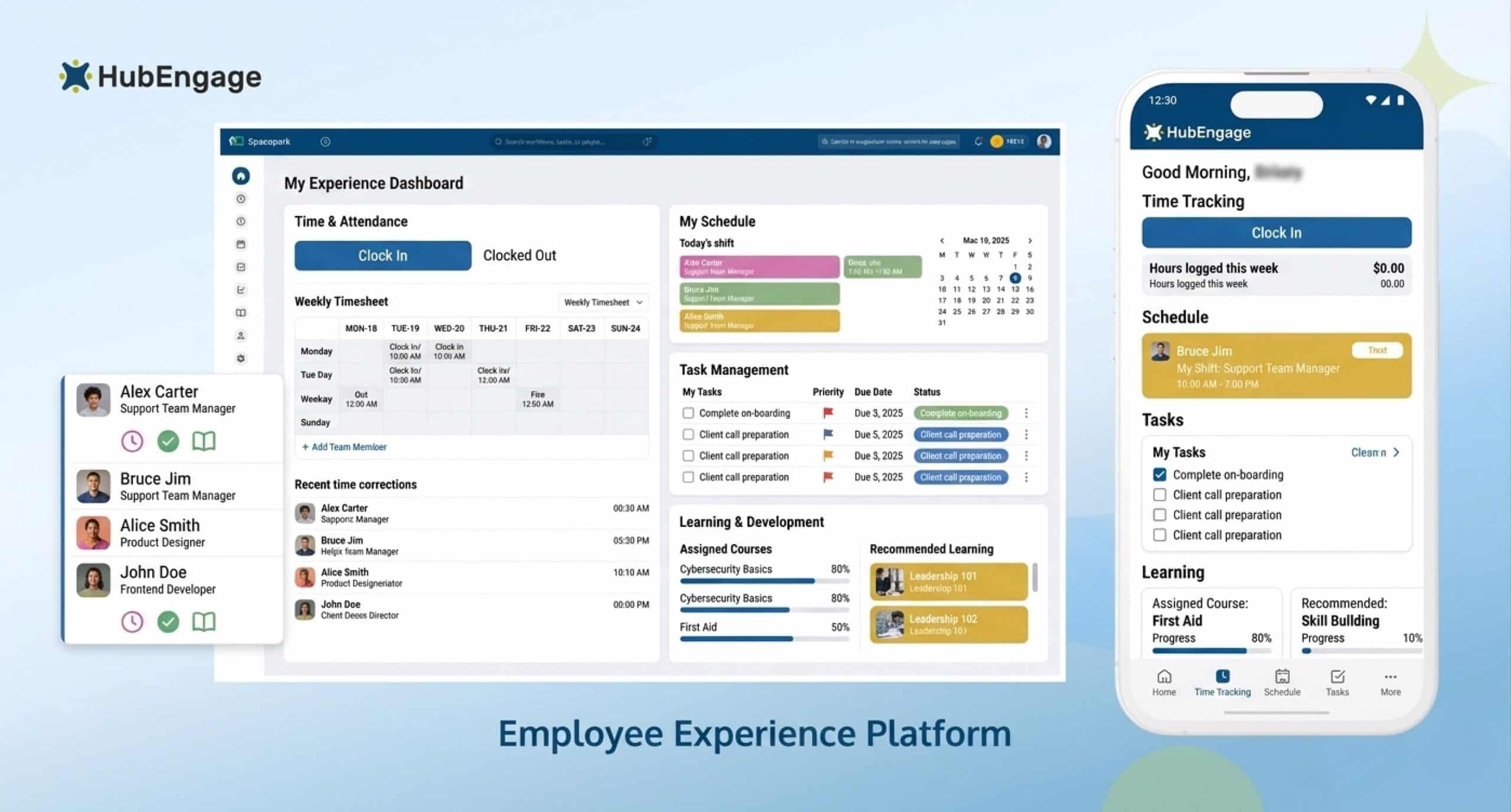
Together, these tools make it easier for companies to successfully plan and implement effective employee engagement ideas and create a more connected and motivated workplace.
Conclusion
Employee engagement is most effective when it is simple, consistent, and aligned with real employee needs. Small, meaningful actions like listening, recognition, and learning opportunities can create a strong workplace culture over time.
Instead of one-time efforts, focus on continuous improvement and steady engagement practices. To take your strategy further, explore the HubEngage Employee Experience Platform and book a demo to see how it can transform your employee engagement journey.
FAQs For Employee Engagement Ideas
What are the most effective employee engagement ideas for remote employees?
The most effective employee engagement ideas for remote employees include regular communication, virtual recognition, online team-building activities, feedback surveys, flexible schedules, and digital collaboration tools to keep teams connected and motivated.
What are the 5 C’s of employee engagement?
The 5 C’s are communication, connection, contribution, career growth, and celebration. These help employees understand goals, build strong relationships, share ideas, grow skills, and feel valued through recognition and appreciation at work.
What are the seven most challenging employee types?
Common challenging types include disengaged workers, poor communicators, resistant employees, complainers, low performers, overly competitive staff, and poor team players. Managers should understand causes, communicate clearly, and provide coaching to improve behavior and performance.
What are some examples of employee engagement activities?
Examples include surveys, recognition programs, mentoring, town halls, team building, wellness sessions, training workshops, volunteering, innovation challenges, and leadership Q&A sessions. These activities improve communication, learning, teamwork, and employee motivation across the organization.
What are some unique employee engagement ideas?
Unique ideas include reverse mentoring, job shadowing, employee podcasts, innovation days, skill-sharing sessions, leadership office hours, cross-team projects, culture ambassador programs, and internal workshops. These help employees learn, connect, and share ideas in creative ways.
Related Links
employee engagement programs | how to engage remote employees | employee recognition program | employee engagement surveys | digital employee experience platform |