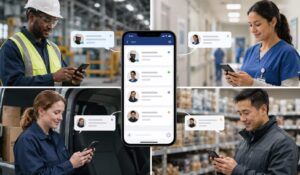
Frontline employees work closest to customers, patients, products, and daily operations, making effective communication essential. When they miss promotions, safety updates, policy changes, or service instructions, businesses may face lower productivity, compliance risks, poor customer experiences, and reduced employee trust. Traditional tools such as email, desktop intranets, and lengthy memos often fail to reach these teams. Using team communication apps makes frontline employee communication better by keeping workers informed, connected, engaged and more productive. Our blog helps users understand frontline communication challenges as well as discover practical ways to improve communication among the team.
Key Takeaways
- Frontline employee communication helps deskless, shift-based, and mobile employees stay informed in real time.
- Email and desktop tools often fail frontline workers because they are not designed for mobile or shift-based work.
- Mobile-first communication tools improve message reach through push notifications, targeted updates, surveys, and multilingual content.
- Better communication can improve safety, employee engagement, retention, customer service, and daily productivity.
- Two-way communication helps frontline employees share feedback, report issues, and feel heard by leadership.
- Tracking read rates, survey responses, and engagement data helps organizations improve communication over time.

What are the common challenges in Frontline Employee Communication?
As per Harvard Business Review, in US alone there are around 11 million frontline jobs that are vacant which must be causing due to below challenges. Explore the key barriers that prevent frontline teams from receiving timely, clear, consistent, and actionable workplace information.
1. Limited Access to Information
Many frontline employees do not work at desks and may lack regular access to computers, company email, or internal portals. As a result, important updates can be missed, creating risks for safety, service quality, productivity, and performance.
2. Too Many Communication Channels
Organizations often use email, bulletin boards, messaging apps, paper memos, shift meetings, and manager announcements. With so many channels, employees may miss updates, trust unreliable sources, or struggle to find accurate communication records.
3. Different Languages and Literacy Barriers
Frontline teams may include employees who speak different languages or have varying literacy levels. Complex, lengthy, or single-language messages can cause misunderstandings, increasing risks related to safety, compliance, policies, training, and daily responsibilities.
4. Communication gaps due to Different Shifts
Frontline employees often work across morning, evening, overnight, and rotating shifts. Information shared with one group may not reach others, causing inconsistent knowledge, missed instructions, operational delays, and communication gaps across locations and departments.
5. Delays Caused by Manager-Dependent Communication
Managers are essential communication links, but relying exclusively on supervisors can create delays and inconsistencies. Messages may be explained differently, important details may be forgotten, and organizations may lack confirmation that employees received the update.
6. Slow Communication Between HQ and Frontline Teams
In large organizations, messages often pass through leadership, regional managers, and supervisors before reaching frontline employees. Such corporate communication challenges can delay, shorten, or alter information, creating confusion, inconsistency, and misunderstandings across teams.

Best Practices for Frontline Employee Communication
Discover practical ways to keep frontline teams informed, connected, engaged, and aligned across every shift, location, and role.
1. Use Mobile-First Communication
Mobile-first communication delivers concise, accessible updates through devices frontline employees already use, helping them stay informed across locations, shifts, and working environments thereby giving:
- Faster access to important updates
- Higher message visibility and engagement
- Better communication across distributed teams
2. Centralize Information in One Hub
A centralized information hub gives frontline employees one reliable location for company news, policies, schedules, training, resources, and urgent updates which gives:
- Easier access to essential information
- Less time spent searching for answers
- Greater consistency across teams and locations
3. Enable Two-Way Communication
With the help of two-way communication, managers can messaging frontline workers and reach easily communicate. Also your frontline team can ask questions, share feedback, report concerns, and contribute ideas helping with:
- Stronger employee participation
- Faster identification of workplace issues
- Greater trust between employees and leadership
4. Train Managers as Communication Leaders
Training managers with clear resources, talking points, and communication tools helps them deliver consistent messages and reinforce important updates during daily operations. This gives you:
- More consistent communication delivery
- Higher adoption of communication tools
- Better alignment between managers and employees
5. Use Recognition to Build Connection
Recognition programs highlight employee contributions, team achievements, and workplace milestones, helping frontline employees feel appreciated and connected to organizational goals. This leads to:
- Increased employee motivation
- Stronger sense of belonging
- Improved workplace morale and retention
6. Make Communication Multilingual
Multilingual communication uses translation, simple language, and visual content to help employees understand important information regardless of their preferred language resulting in:
- Improved understanding of workplace updates
- Fewer communication-related misunderstandings
- More inclusive employee experiences
7. Measure Communication Performance
Measuring communication performance through surveys, engagement data, read rates, and feedback helps organizations evaluate reach, identify gaps, and improve future messaging. Also you will have:
- Clearer insight into employee engagement
- Faster identification of communication gaps
- More effective future communication strategies
8. Provide Quick Employee Support
Use chatbot for internal employees and frontline teams to get instant answers to common questions about policies, schedules, training, benefits, and workplace procedures. With this your team experience:
- Faster access to employee support
- Reduced workload for HR and managers
- More consistent answers to common questions
How to build a Frontline Employee Communication Strategy?
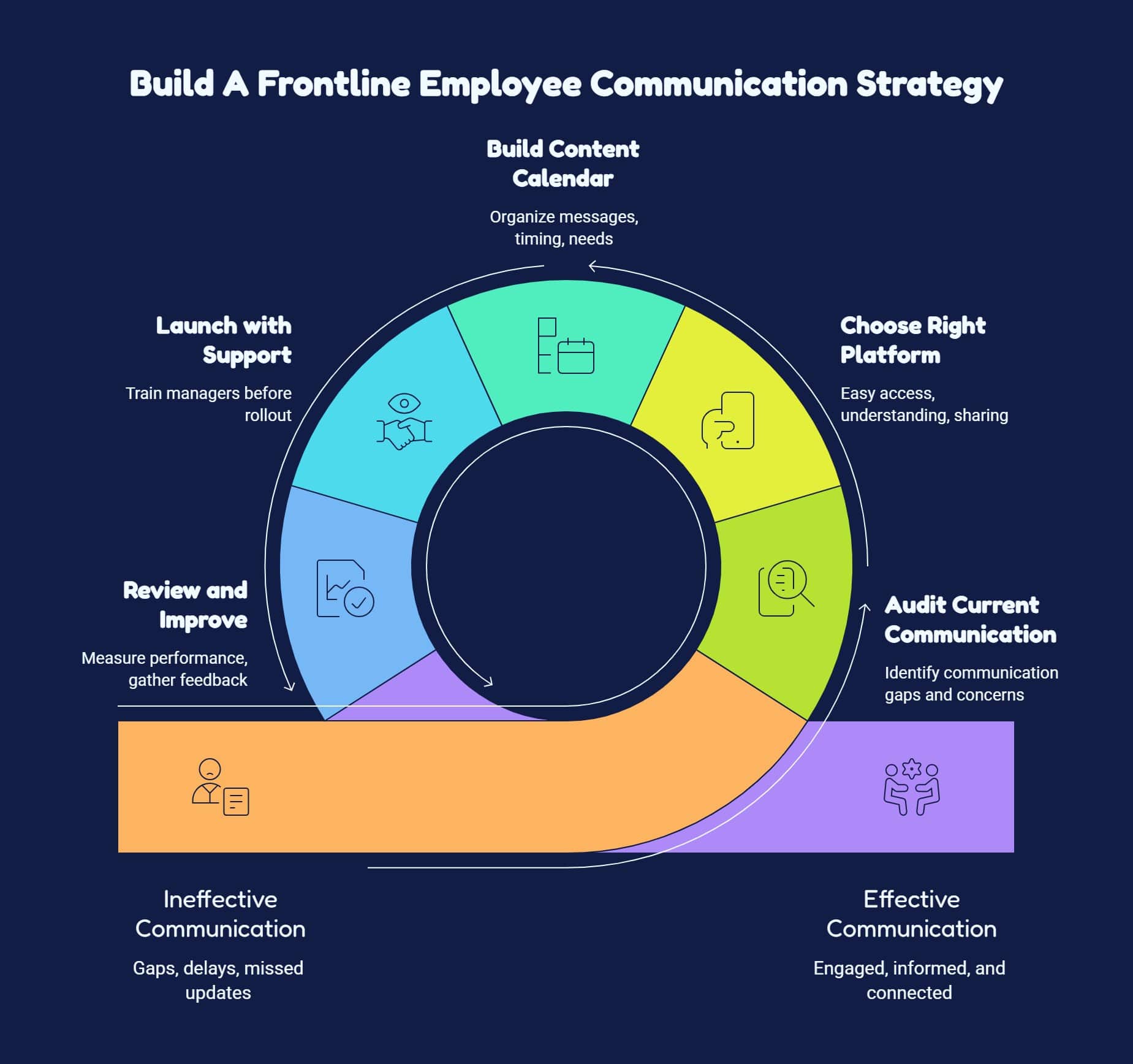
Follow these simple steps to keep your frontline employees informed, connected, and supported.
Step 1: Audit Your Current Communication
Review how information moves across your organization and identify communication gaps, delays, missed updates, and employee concerns.
Step 2: Choose the Right Communication Platform
Choose a frontline communication platform that makes updates easy to access, understand, share, and track.
Step 3: Build a Content Calendar
Create a content calendar that organizes important messages, communication timing, employee needs, and business priorities.
Step 4: Launch with Manager Support
Train supervisors and managers before launching the communication platform to all frontline employees.
Step 5: Review and Improve
Measure communication performance after launch by reviewing engagement, feedback, read rates, survey results, and employee participation.
How HubEngage Improves Frontline Employee Communication?
We offer a unified employee experience platform that brings together frontline, deskless, shift-based, and distributed employees. It comes with mobile access, push notifications, surveys, recognition, feedback, ai-powered chatbot and instant messaging software which creates real-time communication for frontline team.
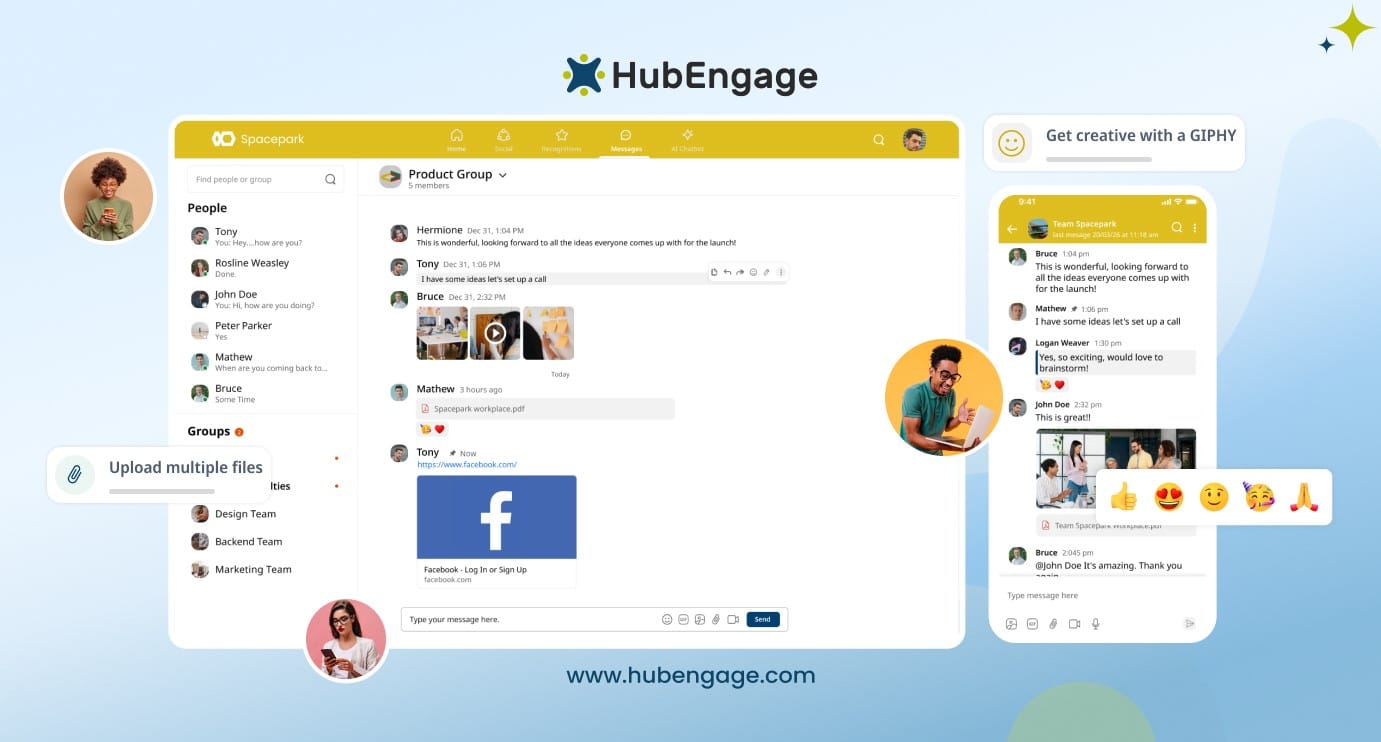
Employees can stay informed through a mobile app, regardless of location or shift. Multilingual auto-translation supports diverse teams, while integrations with HRIS, payroll, intranets, and SSO simplify access. With secure messaging, analytics, and employee engagement tools, our platform reduces communication gaps and improves the frontline employee experience.
Conclusion
Frontline employee communication is essential for keeping deskless teams informed, engaged, and connected. When updates are timely, targeted, and accessible, organizations can improve safety, productivity, service quality, and employee retention.
A strong strategy combines mobile-first communication, two-way feedback, recognition, manager support, and measurable engagement. HubEngage helps organizations reach frontline employees wherever they work with its unified digital solution. To discover how our employee experience platform can strengthen your frontline team communication, take up a demo today.
FAQs About Frontline Employee Communication
What makes frontline employee communication different from standard internal communication?
Standard internal communication often assumes employees use email and desktop tools. Frontline employee communication is built for mobile, shift-based, deskless, and multilingual workers who need fast, simple, and targeted updates.
How often should companies communicate with frontline employees?
It depends on the industry. Daily shift updates may work well for healthcare, manufacturing, retail, and logistics teams. Company-wide updates can be weekly. The key is consistency and relevance.
What is the biggest mistake in frontline communication?
The biggest mistake is treating communication as a one-way broadcast. Frontline employees need ways to ask questions, give feedback, and confirm they understand important updates.
How does frontline employee communication improve engagement?
Employees feel more engaged when they are informed, recognized, and heard. Better communication builds trust, improves belonging, and helps employees understand how their work supports company goals.
What tools work best for frontline employee communication?
Mobile-first platforms work best because frontline employees need quick access from phones or shared devices. Useful features include push notifications, surveys, messaging, recognition, translation, and knowledge search.
Related Links
team communication apps | instant messaging software | corporate communication challenges | messaging frontline workers | chatbot for internal employees