A supervisor texts asking where the new safety checklist lives. A new hire asks how to clock in for a split shift. An hourly employee needs the benefits enrollment deadline before the end of the day. The answers exist somewhere, but they’re buried across email threads, PDFs, shared drives, HR portals, LMS modules, and manager memory.
That’s why having a modern internal knowledge base matters. It isn’t just a digital filing cabinet. It’s the place employees go to get clear answers, complete tasks correctly, and keep moving without waiting for HR, IT, or a manager to respond. For organizations with frontline, remote, and distributed teams, that shift changes daily work.
Many organizations already have content. What they don’t have is a system that helps people retrieve it quickly and confidently. Our blog will explain how an AI powered intranet can turn a buried policy or SOP into an immediate answer helping workforce with quick information accessibility.
Key Takeaways
- An internal knowledge base centralizes policies, procedures, FAQs, training, and operational guidance for employees.
- Scattered information across multiple systems slows productivity and creates inconsistent decision-making.
- Mobile-friendly search, intuitive navigation, and task-based content are essential for frontline employees.
- AI improves knowledge access with instant answers, summaries, recommendations, and conversational search.
- The best knowledge bases continuously evolve by combining centralized content with frontline employee insights.

What Are the common challenges of an Internal Knowledge Base?
These are the common challenges workforce are facing while using knowledge bases:
-
Outdated Content – Old information causes confusion, errors, and inconsistent employee decisions.
-
Low Employee Adoption – Employees avoid platforms that are difficult to use or navigate.
-
Poor Search Experience – Slow, inaccurate search prevents employees from finding answers quickly.
-
Duplicate Documentation – Multiple document versions create confusion and reduce information reliability.
-
Lack of Ownership – No accountability leads to outdated, inaccurate, and unmanaged knowledge.
-
Information Overload – Excessive content makes finding relevant information difficult and time-consuming.
-
Lack of Governance – Missing review processes reduce content quality, accuracy, and consistency.
-
Employees Don’t Trust Content – Inaccurate information discourages employees from using the knowledge base.
Why do we need a modern Internal Knowledge Base?
The old model of an internal knowledge base was simple. Upload documents. Create folders. Add a search box. Hope people can find what they need. That model doesn’t hold up in real operations. A desk-based employee might tolerate hunting through nested pages. On the other hand a field technician, nurse, store associate, or hotel housekeeper won’t. They need answers quickly, often on a phone, often between tasks, and often with limited patience for navigation.

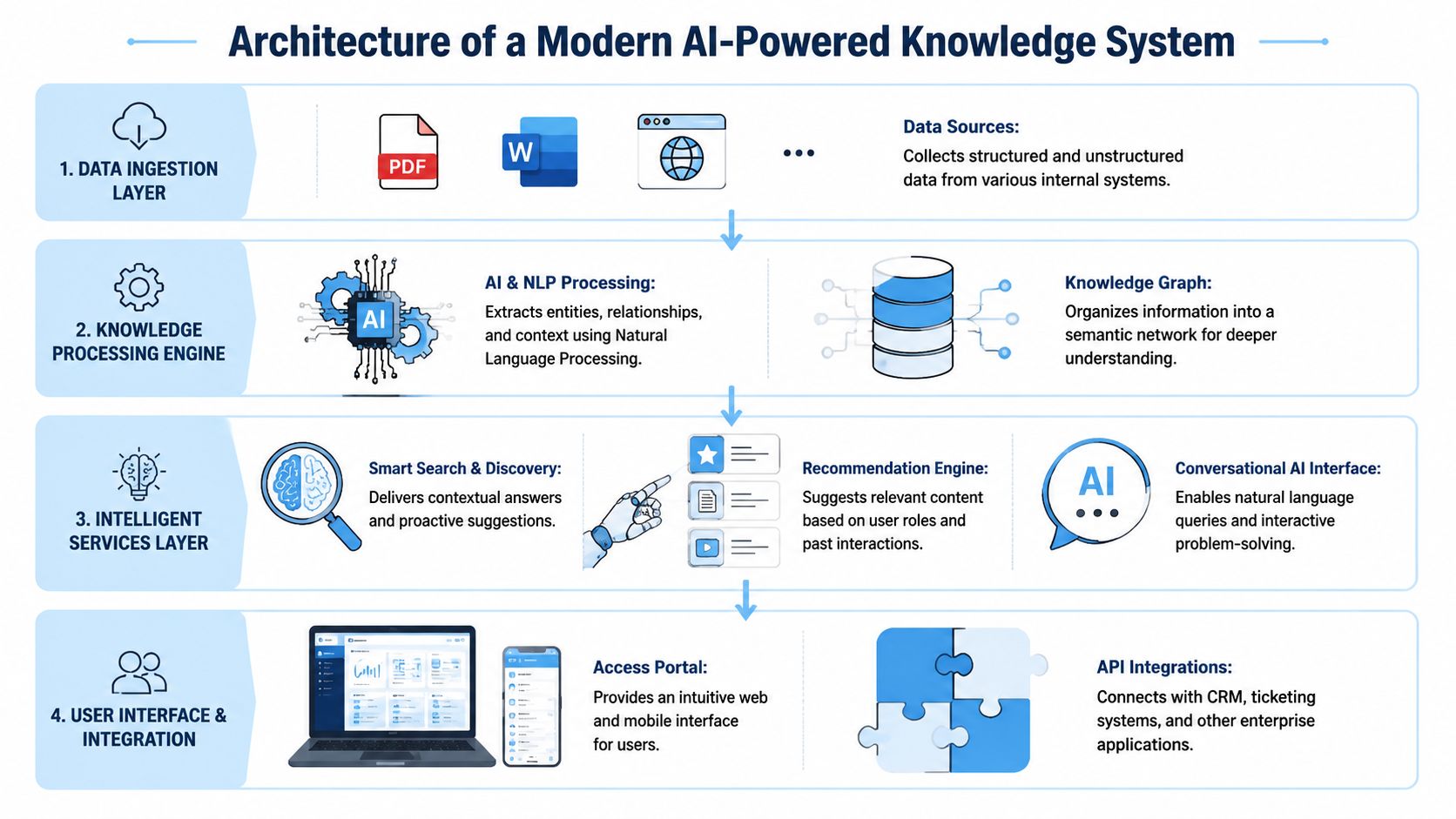
Components an AI-Powered Knowledge System
A modern internal knowledge base is more than a content editor and a search bar. It needs architecture that helps people find, trust, and apply knowledge in real work situations. Such systems collect policies, SOPs, training, organizes content and enables smart search. Also, it summaries and delivers trusted answers across web, mobile, chat, and everyday workplace tools.
How AI is making Internal Knowledge Bases better?
Traditional knowledge bases require employees to search through lengthy documents before finding the answer they need. AI changes that experience completely. An AI-driven internal knowledge bases helps you with:
- AI-Powered Content – AI helps keep content updated, finds knowledge gaps, and recommends improvements automatically.
- Smart Search – Employees can search using simple questions and quickly find the most relevant answers.
- Employee Collaboration – Employees can share ideas, provide feedback, and help improve knowledge over time.
- Mobile Access – Employees can find information anytime from their phone, tablet, or desktop.
- Fast Self-Service – Employees get instant answers without waiting for HR, IT, or managers.
For frontline employees who often work under time pressure, these capabilities significantly reduce search time and improve decision-making. As AI continues to evolve, internal knowledge bases are becoming intelligent workplace assistants rather than static document repositories.
Best Practices for Building an Internal Knowledge Base
A good internal knowledge base should be easy to use, easy to search, and always up to date. These best practices help employees find accurate information faster.
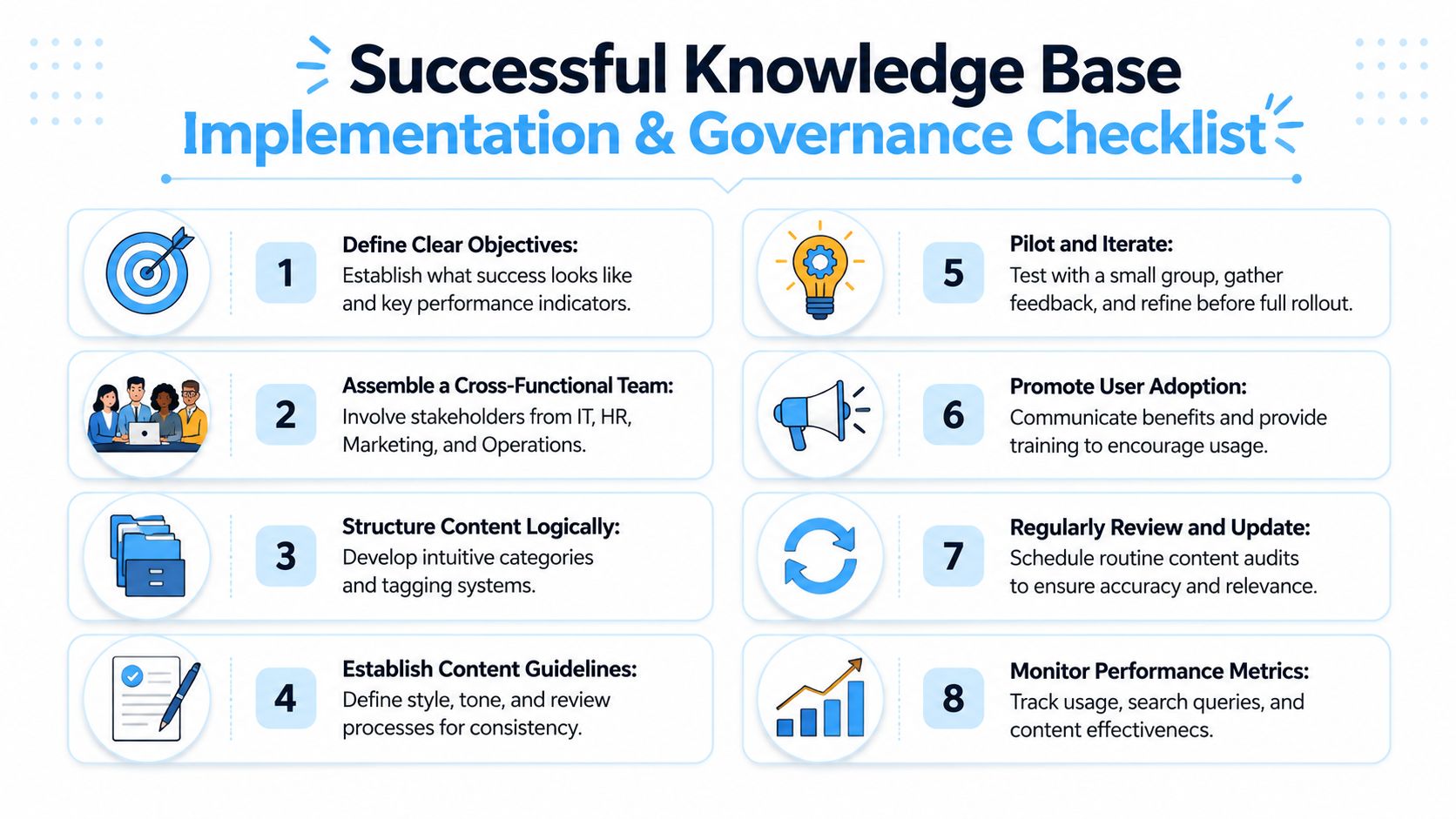
A practical setup usually includes:
- Organize by employee tasks – Use labels like “Report an Incident” or “Request Time Off” instead of department names.
- Use simple and consistent terms – Keep the same names across all articles to improve search results.
- Connect related content – Link policies, forms, FAQs, and procedures so employees can find everything in one place.
- Design for mobile users – Use short paragraphs, clear headings, and bullet points for employees working on the go.
- Review content regularly – Assign content owners and update articles to keep information accurate and reliable.
Teams that are also reworking the broader employee experience often borrow from intranet best practices because the design principle is the same. Organize around employee intent, not internal ownership.
How HubEngage stands among the best Internal Knowledge Base?
HubEngage works as a learning and knowledge hub where employees can quickly access training, policies, guides, and workplace information. Microlearning delivers short, easy lessons that employees can complete during the workday. An AI chatbot helps them search content, ask questions, and get instant answers.
Role-based learning paths, mobile access, gamification, and progress tracking improve participation. It is ideal for organizations training and supporting frontline, remote, and distributed teams.

HubEngage Connects Knowledge to Action
For organizations trying to reduce fragmentation, an employee intranet platform gives teams a practical way to connect information, communication, and execution in one place.
The result is faster onboarding, reduced support requests, improved consistency, and a better employee experience across the organization.
| Need | How it becomes actionable |
|---|---|
| Policy access | Employees reach policies, procedures, and support guidance through a unified intranet experience |
| Search and discovery | AI-assisted retrieval surfaces relevant answers without forcing employees to search across disconnected systems |
| Reinforcement | Knowledge articles can support microlearning, reminders, and ongoing training after the initial announcement |
| Workforce reach | Content can be distributed through the channels desk-based, frontline, and distributed teams already rely on |
| Operational follow-through | Knowledge can sit next to tasks, updates, and daily workflows so employees can act on the answer immediately |
Conclusion
An internal knowledge base is no longer just a document repository it’s a critical tool for enabling faster decisions, improving collaboration, and empowering employees with the right information at the right time.
As workplaces become more distributed and AI-driven, organizations need knowledge platforms that support communication, learning, and everyday work in one seamless experience.
If you are planning to modernize knowledge sharing and enhance your employee experience, explore the HubEngage Employee Experience Platform by scheduling a personalized demo today.
FAQs on Internal Knowledge Base
What is an internal knowledge base?
An internal knowledge base is a central digital system where employees find company policies, procedures, training, and FAQs. It helps teams quickly get accurate answers, reduce confusion, and work efficiently without relying on managers or support teams.
What should an internal knowledge base include?
An internal knowledge base should include employee handbooks, HR policies, SOPs, IT guides, onboarding materials, safety procedures, compliance documents, templates, and FAQs. This ensures employees can easily access essential information needed to perform tasks correctly.
What features should I look for in internal knowledge base software?
Choose software with AI-powered search, mobile access, role-based permissions, version control, analytics, and integrations. It should also support employee contributions, approval workflows, and multilingual content to improve usability and ensure accurate, up-to-date information.
How often should knowledge base content be updated?
Knowledge base content should be reviewed regularly, especially HR policies, compliance documents, and procedures. Assign content owners and set review schedules to keep information accurate, relevant, and trustworthy for employees across all departments.
How AI is transforming Internal Knowledge Bases?
AI transforms knowledge bases by providing AI Chatbot for instant answers, summarizing documents, and recommending relevant content. Employees can ask questions in simple language and get quick guidance, reducing search time and improving productivity, accuracy, and decision-making across the organization.
Related Links
intranet software | best intranet platforms | intranet best practices