There is a change of shift in ten minutes. HR has released a policy update . Operations dropped a version in team chat. The manager posted a notice in the break room. The new process is in use at one location. Another, continues to use the old one. By afternoon, employees are asking the same questions, supervisors are making up answers and leaders think the message has already been sent.
That’s usually when someone asks what is organisational communication, as if it’s a soft topic about newsletters and announcements. It is not. Organisational communication, in practice, is the system that helps people know what matters, where to find answers, who to trust, and what action to take next.
For busy HR and operations leaders, that distinction matters. If communication is treated as an occasional message, gaps multiply. If it’s treated as an operating system for the workforce, teams stay more aligned, especially when you’re managing frontline, hourly, remote, hybrid, or distributed employees. If you’re building that foundation, a practical internal communication strategy is the right place to start.
Key Takeaways
- It’s an operating system: Organizational communication supports execution, not just awareness.
- It’s not only top-down: Employees need ways to ask, clarify, share, and respond.
- Channel choice matters: Email alone won’t reliably reach frontline and distributed teams.
- Consistency beats volume: More messages don’t fix scattered communication.
- The goal is action: The right people need to receive, understand, and use the information.
Organizational Communication Is More Than Memos
Organizations don’t struggle because people won’t communicate they struggle because communication is fragmented, unclear, or difficult to access. Effective organizational communication is a system that delivers the right information at the right time, helping employees work consistently, resolve issues early, and stay connected.
A lot of companies still don’t run communication this way. 60% of companies do not have a long-term strategy for internal communications, and 74% of employees feel they are missing company news and updates, according to these internal communications statistics. That combination tells you the problem isn’t effort alone. It’s design.
What it looks like in practice
- Policy Communication: Keep employees informed about policy changes and effective dates.
- Manager Communication: Give managers the context needed to explain updates confidently.
- Feedback Loops: Enable employees to report questions, concerns, and operational issues.
- Knowledge Access: Ensure employees can easily find the latest information and resources.
- Recognition & Support: Celebrate achievements and provide channels for questions and assistance.
Practical rule: If employees don’t know where to find information, communication is already failing.
Effective organizational communication supports HR and operations by improving onboarding, change management, compliance, safety, and everyday execution.
The Real Meaning of Organizational Communication Today
The modern answer to what is organizational communication is simple. It’s a multi-directional system that helps an organization inform people, gather feedback, reinforce culture, and coordinate work.
That’s a very different model from the old one, where leaders broadcast information and hope it lands. Today’s workforce is spread across locations, devices, time zones, and job types. Some employees sit at desks. Others are in hospitals, stores, plants, trucks, schools, or field sites. Communication has to work for all of them.
For many teams, this also connects directly to culture. Stronger day-to-day communication habits often improve trust, collaboration, and understanding across teams, which is why interpersonal communication matters for organizational culture.

What belongs inside modern organizational communication
The practical scope is wider than teams like to think at first:
- Leadership Updates: Communicate company goals and priorities with actionable messaging.
- Manager Communication: Help managers communicate consistent updates specific to roles.
- Peer Recognition: Celebrate accomplishments and reinforce company values.
- Knowledge Sharing Make policies, SOPs and workplace resources readily available.
- Onboarding Communication: Provide new hires with timely information and support.
- Change & Crisis Communication: Get critical updates out fast to minimise confusion.
- Employee feedback Surveys, feedback and pulse checks to get insights.
- AI-Powered Assistance: Enable staff to find answers instantly with smart search.
Good organizational communication goes beyond sending messages, it ensures employees understand them and know what to do next.
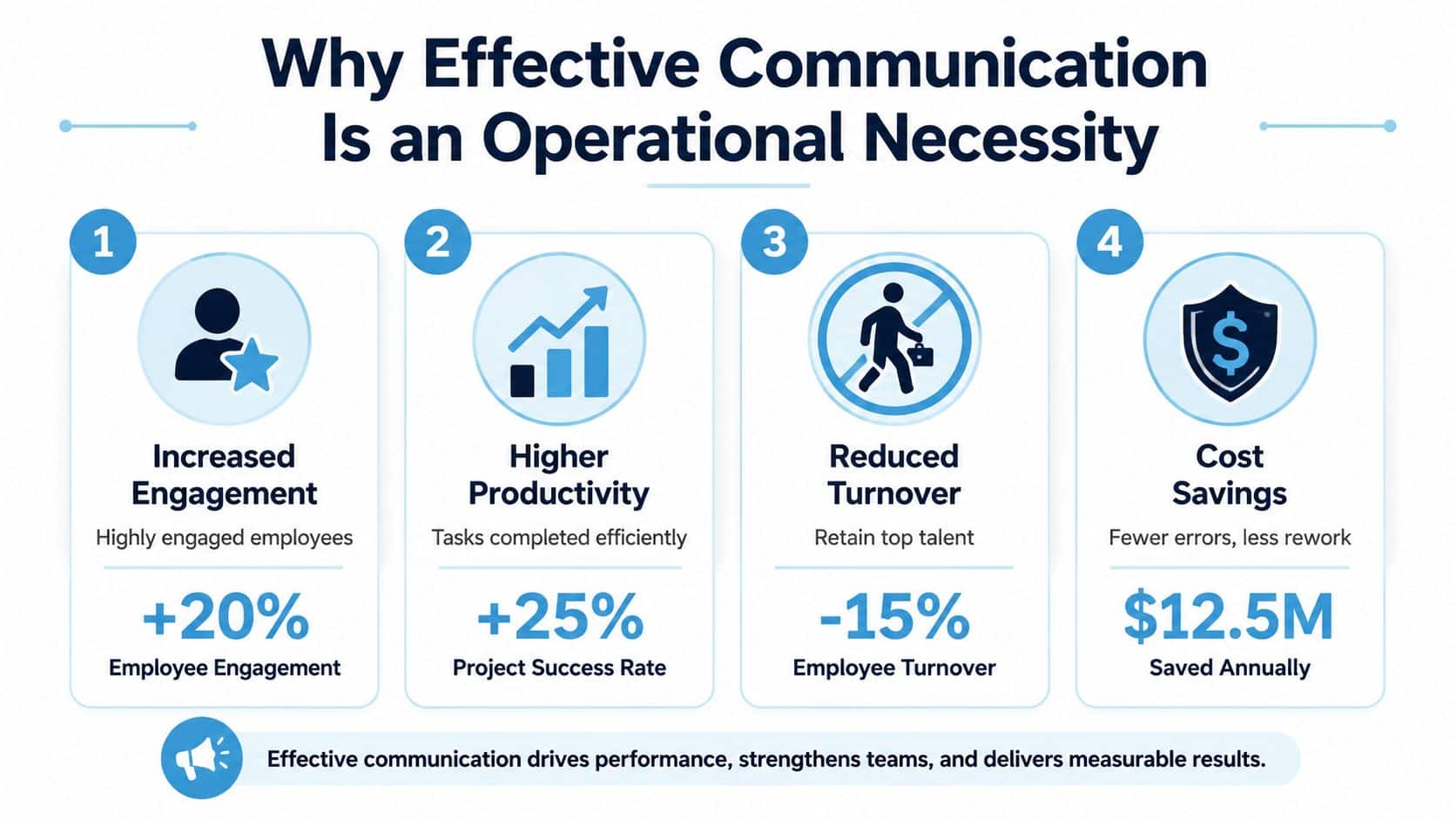
Why Effective Communication Is an Operational Necessity
A regional manager introduces a scheduling change, but inconsistent updates across locations quickly lead to payroll errors, confusion, and repeated questions. That’s why organizational communication is more than a support function, it’s essential to daily operations. When employees can’t access the latest information or get quick answers, productivity drops and execution suffers.
The cost shows up in daily friction. Supervisors repeat updates by hand. Employees rely on screenshots or hearsay. Policy changes reach office staff first and everyone else later, if they reach them at all. Teams trying to fix performance often need more than a process adjustment. They need a clearer system for getting the right information to the right people at the right time. That is why communication should sit inside broader efforts to improve workplace performance across locations and roles.
What strong communication protects
- Fewer Missed Updates: Employees receive accurate, up-to-date information consistently.
- Less Manager Work: Managers spend less time repeating or clarifying routine updates.
- More Consistent Execution: Teams follow the same processes across locations and shifts.
- Better Employee Retention: Clear communication helps employees feel informed, connected, and valued.
Retention is one of the clearest business outcomes. Axios HQ’s internal communications statistics note that workplaces with effective communication strategies see 4.5 times higher employee retention rates.
Why leaders keep underestimating the problem
Leaders often underestimate communication problems because they appear as everyday issues like repeated questions, inconsistent updates, delayed rollouts, and preventable mistakes. These aren’t isolated incidents, they’re signs that information isn’t reaching employees clearly or consistently. Frontline teams are especially affected when updates rely on emails or managers instead of accessible communication channels, leading to confusion, workarounds, lower productivity, and reduced trust.
The Core Flows of Modern Workplace Communication
The classic academic model talks about downward, upward, and lateral communication. That framework still helps, but most HR and operations leaders need a more practical lens. The better question is what each flow is supposed to accomplish.
A useful communication system supports real working conditions, including urgent messages, asynchronous updates, and role-based targeting. For many organizations, that means balancing synchronous vs asynchronous communication instead of forcing every message into a meeting or email.

Leadership and strategy communication
Downward communication includes policy updates, company goals, operational changes, and leadership messages. Simply sending an update isn’t enough, it should be relevant, role-specific, and include clear actions. For example, an attendance policy change should provide a summary, detailed policy, manager guidance, and mobile notifications so every employee receives consistent information.
Employee voice and upward communication
Upward communication gives employees a way to ask questions, share feedback, and report issues through surveys, pulse checks, Q&A forums, or feedback forms. This helps leaders identify operational challenges early and make informed decisions. Employees closest to the work often spot problems first, so the communication system should make those insights visible.
Peer-to-peer and team communication
This includes collaboration, recognition, knowledge sharing, and day-to-day problem solving across teams. It’s not just social. It helps work move.
Examples include:
- Peer recognition after a difficult shift or customer save
- Team updates between locations handling the same process
- Quick knowledge exchange when one manager solves a recurring issue
- Cross-functional coordination between HR, operations, and site leaders during rollout
Change, crisis, and lifecycle communication
Different situations require different communication. Crisis updates must be fast and clear, while change, onboarding, and training communications need ongoing reinforcement. Employees shape their workplace experience through these consistent interactions, not just one-time announcements.
Common Communication Breakdowns in the Real World
The breakdown usually doesn’t look dramatic at first. It looks ordinary. A message gets buried. A manager paraphrases it differently. A location misses the update because nobody there sits at a computer.

Three patterns that show up often
A safety update reaches office staff, not shift workers.
An operations team sends a critical notice through email and posts it on the intranet. The plant team is busy, mobile, and not checking either during the shift. Supervisors try to relay the message verbally. By the next day, different crews are following different instructions.
A new process rolls out differently by location.
Head office introduces a workflow change for store teams. One regional manager explains it well. Another shortens it. A third delays it until the weekly call. The result isn’t resistance. It’s variation.
Remote employees hear the facts but miss the context.
They get meeting invites and written updates, but they don’t know where to ask follow-up questions or see how decisions connect across departments. Over time, they feel detached from the business, even if they’re technically informed.
Why frontline communication is the sharpest gap
Frontline and deskless employees often face the hardest communication conditions. They may not have regular desktop access. They may be moving between tasks, customers, patients, or job sites. Traditional intranet-first communication doesn’t fit that reality.
That gap has direct consequences. For frontline and deskless workers, communication gaps are a primary factor in turnover, with data showing a 40% increase in turnover linked to feeling uninformed, according to Eastern Washington University’s workplace communication analysis.
What doesn’t work
- Email-only distribution for urgent or frontline updates
- Manager cascades without source materials or tracking
- Multiple versions of the same message across apps and printouts
- No read visibility for critical announcements
- No clear place to ask questions after an update goes out
When communication depends on every manager translating the message perfectly, inconsistency is built into the system.
The fix isn’t sending more. It’s building a clearer, more accessible path from message to understanding.
Unify Your Workforce With a Modern Communication Platform
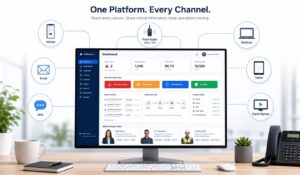
A missed policy update can quickly become a scheduling mistake, payroll issue, safety risk, or frustrated employee saying, “Nobody told us.” A multi-channel communication platform prevents this by delivering one approved message to the right employees through the channels they already use, while tracking who received and viewed it. When choosing a platform, look for features like audience targeting, mobile access, multi-channel delivery, analytics, feedback tools, and searchable knowledge. These capabilities help employees stay informed, reduce confusion, and improve execution. Better communication isn’t about sending more messages it’s about delivering the right message to the right people at the right time.
Final Thoughts
Organizational communication is most effective when it becomes part of everyday operations rather than a series of disconnected announcements. Clear, timely, and accessible communication helps employees make better decisions, reduces operational friction, and keeps teams aligned across locations and roles. By creating one trusted source for updates, knowledge, and feedback, organizations can improve execution while strengthening employee engagement. Explore the HubEngage Employee Experience Platform and schedule a demo to see how it can unify workforce communication.
FAQs on Organizational Communication
What is organizational communication in simple terms?
It’s the system a company uses to keep employees informed, aligned, and able to do their jobs. That includes leadership updates, manager communication, employee feedback, recognition, knowledge sharing, onboarding communication, and crisis messaging.
How is organizational communication different from internal communication?
Internal communication is part of organizational communication, but the broader term is more useful because it focuses on how information moves through the business as a system. It includes structure, feedback loops, collaboration, and how communication supports execution.
What are the main types of organizational communication?
In practical terms, most organizations rely on downward communication from leaders, upward communication from employees, peer-to-peer communication across teams, and external communication with customers or partners. The internal system works best when those flows connect instead of operating in silos.
Why do so many messages fail inside organizations?
Messages usually fail because they’re sent through the wrong channel, aimed too broadly, timed poorly, or left for managers to reinterpret. Employees may technically receive the message but still not understand what changed or what they should do next.
What’s the best channel for frontline employees?
There usually isn’t one universal channel. Frontline communication works best when it’s mobile-friendly, targeted, easy to access during the workday, and supported by a clear source of truth. Overreliance on desktop-only tools creates avoidable gaps.
How can an SMB improve organizational communication without building a full internal comms team?
Start with a few basics: define who owns employee communications, decide which channel is used for which message type, centralize important updates, train managers before major rollouts, and give employees one place to find current information and ask questions.
How do you measure whether communication is working?
Look for practical signals: whether employees can find key information, whether repeated questions decline, whether important messages are acknowledged, whether managers are relaying fewer corrections, and whether engagement differs by location or role.
What role should managers play?
Managers shouldn’t be the only delivery channel. They should reinforce messages, answer local questions, and add context. But the organization still needs a direct communication path so employees can access the original message themselves.
Related Links