Leaders often struggle to see what is happening across their workforce in real time. Risks like burnout, absenteeism, and communication gaps surface too late, leading to missed shifts, disengagement, and operational inefficiencies.
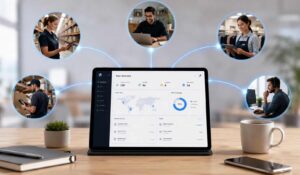
A Workforce Analytics Platform solves this by bringing fragmented data into one connected view. You can combines signals from schedules, surveys, communication, attendance, and task completion to give managers timely insights.
Instead of reacting after problems escalate, leaders can identify risks early and take action during the week. Our blog will help you understand why workforce analytics platforms matter for frontline teams, and how small business can use employee engagement surveys offered by these platforms to improve employee experience.
Key Takeaways
- A workforce analytics platform should support weekly operating decisions, especially for staffing, communication, and manager follow-through.
- Frontline teams need combined signals from scheduling, attendance, sentiment, training, and task completion.
- Tool sprawl creates blind spots that hide burnout risk, missed messages, and uneven execution across shifts.
- AI matters when it shortens response time and helps supervisors address issues before service levels drop.
- Connected systems reduce guesswork for both growing organizations and large multi-site employers.

The Rise of Data Driven Workforce Management
Data-driven workforce management is now part of daily work, not just reports. Engagement matters when linked to everyday tasks. Corporate Challenge Events on employee engagement makes that point well.
Companies are spending more on workforce analytics because they need quick, clear data to manage shifts, safety, and staffing. In frontline jobs, small issues like missed updates or callouts can quickly cause delays, safety risks, or staff shortages.
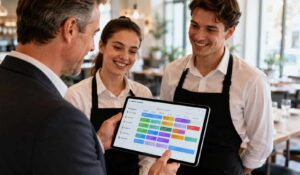
People feel connected when informed, included, and supported. For deskless teams, this depends on fair schedules, clear updates, and managers acting early when problems appear.
Hence, more organizations are adopting connected tools such as AI-powered workforce management software. The value comes from turning separate signals into clear decisions.
Understanding A Workforce Analytics Platform
A workforce analytics platform collects data from many systems and turns it into simple insights managers can use daily, unlike basic monthly HR reports which show past events. A good platform shows changes, highlights issues, and predicts needs. It also connects data with tools where teams can take action quickly.

What role does a Workforce Analytics Platform plays?
A strong platform usually handles five jobs at once:
| What it does | Why it matters |
|---|---|
| Collects workforce signals | Gives a complete view of employee activity |
| Normalizes the data | Makes trends easy to compare |
| Highlights exceptions | Helps spot risks early |
| Guides action | Enables faster, smarter decisions |
| Measures follow-through | Shows what works and what needs improvement |
For distributed teams, pulse feedback is one of the most useful inputs because it adds context to operational numbers. A staffing problem and a communication problem can look identical in turnover data. Continuous listening helps separate them, which is why tools like instant employee pulse using an app platform to deliver analytics matter inside the larger system.
For example, In a manufacturing unit, a supervisor sees more errors after hiring new workers. With data, they check training, communication, and schedules before blaming engagement. Good workforce analytics helps managers quickly understand problems and take the right action.
Workforce Analytics Platform Key Features
Explore the important features of a Workforce Analytics Platform designed to solve recurring shift-level challenges and support smarter workforce decisions.
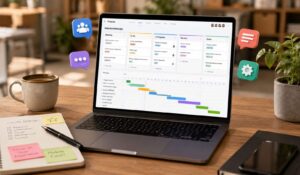
1. Predictive insight that managers can act on
AI can spot early signs employees may leave by tracking work patterns, absences, and engagement, helping managers act faster than slow surveys and prevent team burnout.
2. Communication analytics that reveal execution gaps
Many frontline issues happen because messages do not reach employees clearly or on time. Analytics shows who received, read, and understood updates, helping leaders fix gaps and improve communication delivery.
3. Integrations that remove the guesswork
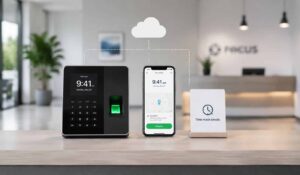
Having enterprise integrations for workforce systems connect different systems like HR, payroll, and scheduling into one place thereby removing manual data entry, reduces errors, and helps leaders see complete information.
4. Real-time performance dashboards for faster decisions
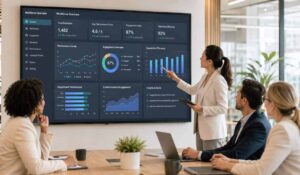
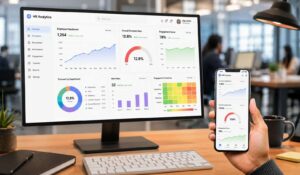
Dashboards provide live visibility into key workforce metrics such as attendance, productivity, and engagement. Managers can quickly identify trends, compare team performance, and take immediate action without waiting for periodic reports.
5. Automated alerts for workforce risks
The platform sends proactive alerts when it detects issues like rising absenteeism, declining engagement, or compliance risks. This helps managers respond quickly, address problems early, and maintain a stable and productive workforce.
Key Metrics for Frontline and Deskless Teams
Most workforce analytics content still leans too heavily on desk-based HR metrics. That misses the operating signals that matter most on shifts, routes, floors, and sites. Existing content often neglects real-time operational signals that are mentioned below table:
| Metric | What It Measures | Business Question Answered |
|---|---|---|
| Schedule adherence rate | Whether employees complete assigned shifts as planned | Are staffing plans working? |
| Overtime hours by team | Extra labor hours by team or location | Where is fatigue risk increasing? |
| Absenteeism trend | Changes in unplanned employee absences | Where may staffing or engagement issues exist? |
| Time to productivity | How quickly new hires reach expected performance | Is onboarding effective? |
| Task cycle time | Time needed to complete recurring tasks | Where are process delays happening? |
| Shift swap frequency | How often employees change assigned shifts | Are schedules matching employee availability? |
| Communication acknowledgment rate | Whether employees receive and confirm key updates | Are important messages reaching frontline teams? |
| Training completion by role | Required training progress by employee group | Which teams may have training gaps? |
| Pulse sentiment by location | Employee feedback by site or team | Which locations may need more support? |
For employee experience leaders, this is also where satisfaction measurement becomes more useful. Broad sentiment matters, but it’s stronger when paired with context such as location, shift, manager, and workload. That’s the practical value behind approaches like measuring employee satisfaction with ongoing feedback tools.
HubEngage: The Best Workforce Analytics Platform
Our survey platform driven with AI capabilities helps you design questionnaires, assess employee satisfaction, gather real-time feedback, and convert insights into meaningful action.
Teams can easily build surveys using pre-built templates or custom questions supported by AI, then share them across web, mobile apps, SMS, email, intranet, and digital signage. Employees can participate from any location, helping boost engagement across frontline, deskless, remote, and office teams.
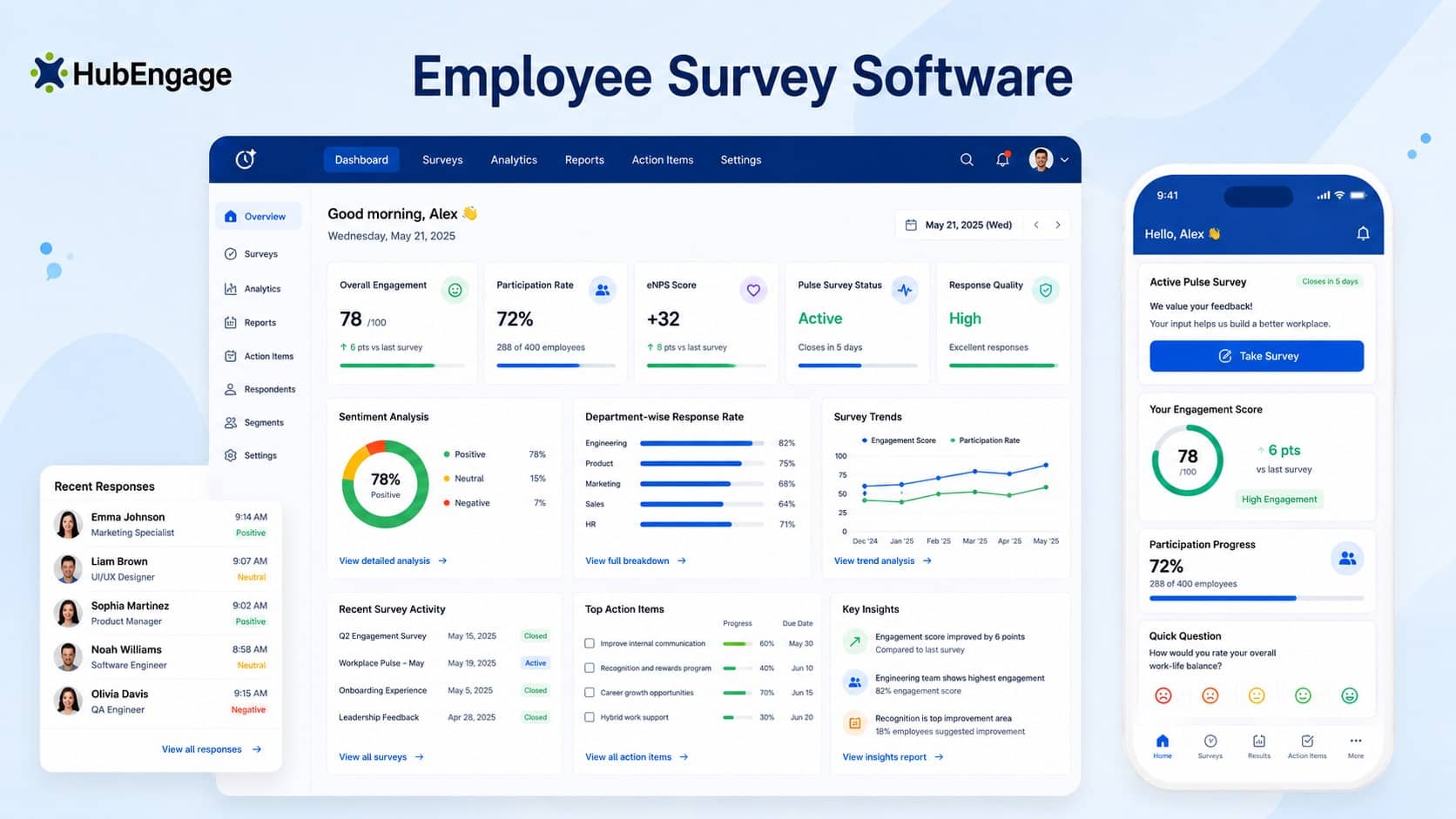
The platform leverages AI-powered sentiment and thematic analysis to identify patterns, concerns, and key feedback themes without manual effort. It also includes pulse surveys, lifecycle surveys, anonymous feedback, support for 30+ languages, automated reminders, and gamified incentives such as points and gift cards.
With secure integrations, SSO, HRIS compatibility, and compliance with ISO 27001, SOC 2, HIPAA, and GDPR standards, our platform enables HR teams to listen, analyze, and respond more efficiently.
Conclusion
Workforce analytics platform delivers the most value when employee feedback, operational data, and manager action work together.
A connected platform helps organizations understand survey results, identify workforce risks, and respond faster to absenteeism, burnout, communication gaps, and onboarding delays. For frontline, deskless, remote, and distributed teams, this creates clearer decisions and a more supportive employee experience.
Explore the HubEngage Employee Experience Platform connects surveys with workforce analytics and turn real-time insights thereby offering a practical way to unify the experience. To explore how this support frontline, deskless, remote, and distributed employees, take a demo session.
Workforce Analytics Platform FAQs
What is a workforce analytics platform?
A workforce analytics platform collects and analyzes employee, staffing, communication, attendance, learning, and operational data. It helps leaders identify workforce trends, understand risks, and make faster decisions about employees and daily operations.
Is a workforce analytics platform different from a BI tool?
Yes. A business intelligence tool such as Tableau focuses mainly on data visualization and often requires analysts to build and maintain dashboards. A workforce analytics platform is designed around workforce decisions, manager workflows, employee listening, and operational follow-through.
What data should organizations connect first?
Start with systems that reveal daily workforce friction. These usually include HRIS, payroll, scheduling, time and attendance, communication, surveys, and learning platforms. Additional operational and financial data can be connected when it improves decision-making.
Why is workforce data integration difficult?
Many organizations continue to separate HR data from operational and business information. Different systems also use different data formats, definitions, and reporting schedules, making it difficult for managers to create a complete workforce view.
How should organizations handle workforce analytics privacy?
Use role-based access and limit visibility to information employees need for their jobs. Organizations should clearly explain how the data supports staffing, communication, safety, employee experience, and workplace improvements rather than hidden employee surveillance.
What does a successful workforce analytics implementation look like?
A good implementation usually begins with a few high-priority use cases. Organizations should connect the correct systems, define manager actions, measure results, and expand gradually instead of attempting to analyze every workforce metric at once.
Can small businesses use workforce analytics platforms?
Yes. Small businesses can use workforce analytics to reduce manual reporting, control overtime, improve scheduling, monitor attendance, support new hires, and improve employee communication without purchasing several separate workforce tools.
How does workforce analytics help frontline employees?
Workforce analytics helps frontline teams by identifying scheduling pressure, communication gaps, training needs, absenteeism patterns, and burnout risks. Managers can then respond earlier and provide employees with better support during daily work.
Related Links
employee survey tools | employee engagement surveys | workforce management | AI-powered workforce management software | enterprise integrations | measuring employee satisfaction with ongoing feedback tools | unified employee platform ROI calculator